Trading Insights
Market analysis, educational content, and trading strategies to help you on your journey to consistent profitability.
Why Coaching Won't Fix a Process Problem
Most struggling ICT traders buy mentorship after blowing a funded account, convinced a coach has the missing piece. The gap is almost never conceptual. Here's what's actually broken.
Read More →
Why Mentorship Won't Save a Broken Process
Most traders treat mentorship as the missing piece. It isn't. If your process is broken before you hire an ICT trading mentor, you're paying for a more sophisticated reason to keep losing.
Read More →
Do You Actually Need an ICT Trading Mentor?
Most traders ask 'which ICT mentor should I choose?' I think the real question is whether you're psychologically ready for mentorship to work at all.
Read More →
Why Watching More Charts Makes You Worse
Most struggling traders treat screen time like a virtue. After 10+ years of trading, the pattern looks clear to me: obsessive chart-watching wears consistency down.
Read More →
Why Phase 2 Keeps Destroying You
Most funded traders blame their strategy when Phase 2 destroys them. In my view, the real killer is a psychological identity shift that happens the moment Phase 1 passes, and some prop firm rules make it worse.
Read More →
Why Getting a Mentor Won't Save You Either
Most traders treat mentorship the same way they treat indicators, as the missing piece. The brutal truth is this: if you blow accounts alone, you'll probably blow them under a mentor too. Here's why, and how to know if you're actually ready.
Read More →
Can a Trading Coach Make You Profitable?
No coach can guarantee profitability. Anyone who promises otherwise is disqualified immediately. Here's what coaching actually does, and what stays on you.
Read More →
Does Coaching Improve Prop Firm Pass Rates?
A lot of challenge failures come from one specific behaviour, and bad setups have little to do with it. Coaching is well placed to fix that behaviour. Here's the honest breakdown.
Read More →
Group vs One-on-One Trading Coaching: Which Fits Your Stage?
Group coaching wins on price, structure, and accountability. One-on-one wins when your specific errors need catching. Here's how to map each format to your actual stage.
Read More →
Are You Actually Ready for a Trading Coach?
Most traders ask when to get a trading coach. The better question is whether they're ready at all. Here's an honest readiness test from 10+ years of trading.
Read More →
Signals Groups vs Real Trading Coaching: The Honest Breakdown
Signals groups aren't inherently useless, the failure mode is treating them as education. Here's exactly how to tell the difference, and what actually builds a trader.
Read More →
Trading Mentor Red Flags That Cost Traders Thousands
Guaranteed returns, urgency tactics, income screenshots, refusal to discuss losses, signals sold as education. Here is exactly why each one correlates with a product that will drain your account.
Read More →
What to Ask a Trading Coach Before You Pay
Four questions that expose a bad coaching fit in one conversation, before you hand over a dollar. What good answers sound like, what red flags sound like, and why most traders never think to ask.
Read More →
Trading Coach vs Trading Course: Which Do You Need?
Both are legitimate. One is premature. Here's exactly how to know which one you need right now, based on a single diagnostic question.
Read More →
Your Stop Loss Is Why You Keep Losing
Most ICT traders obsess over perfect entries while treating stop placement as an afterthought. Here's the uncomfortable truth: your ICT knowledge can make your stops more predictable.
Read More →
Best ICT Trading Course: Hype vs. What Actually Works
After 10+ years trading ICT, here's what I think separates a course that builds a real edge from one that just sells concepts, and why the most popular option is rarely the best one.
Read More →
How to Pass a Funded Challenge Without Blowing It
Most traders fail funded challenges for a reason that has little to do with strategy. They trade the challenge differently than they trade in real life. Here's the exact process that separates passers from chronic resetters.
Read More →
You Know the Setup, So Why'd You Take the Bad Trade?
Most ICT traders assume skipping good setups and entering bad ones is a confidence problem. The way I see it, it's a timing problem with excitement, and the fix is a change to your chart routine.
Read More →
Why You're Still Losing After Learning ICT
You've studied ICT for months. You know the concepts. So why are you still losing? The answer isn't what most coaches will tell you, and fixing it means unlearning more than you think.
Read More →
Why Knowing ICT Concepts Isn't Making You Money
You can explain order blocks, FVGs, and liquidity sweeps in your sleep, so why is your account still bleeding? After 10+ years trading ICT, I think the answer is rarely what people expect.
Read More →
Your Trading Journal Is Lying to You
Most traders keep a journal the wrong way, logging entries and exits while ignoring the data point that tells them the most: their emotional state before the trade.
Read More →
Why You Keep Failing Phase 2 (Not Phase 1)
Most prop firm content obsesses over passing the challenge. But the dirty secret? Experienced ICT traders often breeze Phase 1, then quietly self-destruct in Phase 2. Here's the psychological shift nobody talks about.
Read More →
Why Knowing ICT Concepts Still Isn't Enough
You can recite every ICT concept perfectly and still blow your account. The pattern I see most often is a gap in execution under pressure.
Read More →
Why Knowing ICT Perfectly Won't Make You Profitable
You can recite every ICT concept flawlessly and still blow funded accounts. The gap I see most often is the bridge between understanding and executing under pressure.
Read More →
Why You Pass Phase 1 But Always Fail Phase 2
Most traders blame discipline when they fail Phase 2. The pattern I see is uglier: Phase 1 rewards a risk profile that Phase 2 punishes.
Read More →
Why Knowing ICT Perfectly Still Keeps You Broke
You can label every order block, FVG, and liquidity pool in hindsight, so why is your account still bleeding? The problem isn't your ICT knowledge. It's something most traders never diagnose.
Read More →
Why More Screen Time Is Making You Worse
A lot of struggling ICT traders think the answer is more hours on the charts. The pattern I see is different: after a few hours of focused screen time, you stop seeing setups and start manufacturing them.
Read More →
GDP Week Trading: Control Your Emotions, Not the Chart
A lot of GDP week damage happens before the number even drops. Anticipation in the 48 hours before the release locks traders into a directional story that price never agreed to tell.
Read More →
GDP Shock? How Smart Money Reacts vs. You
Most traders react to the GDP headline. The revised prior quarter data in the same report often matters more. Here's the cognitive trap that costs ICT traders money on GDP day.
Read More →
The Silence After a Loss: ICT Traders' Hidden Battle
Most trading psychology content tells you to 'move on' after a loss. But after 10+ years of trading, I think the real damage happens in the quiet days after, when traders corrupt their next few setups without ever knowing why.
Read More →
GDP Day Trading: What Smart Money Does First
Most ICT traders treat GDP like a spike event. After 10+ years of trading, I think the real tell often shows up in the hours before the number drops, and retail is usually last to notice.
Read More →
The Quiet Session Trap: Why Patience Kills Traders
Most trading psychology content warns you about impulsive overtrading. But the killer nobody talks about is what happens to your brain after three hours of watching a dead chart, when patience itself becomes the rationalization for a terrible trade.
Read More →
The Silence After a Loss Nobody Talks About
Everyone warns you about revenge trading. Nobody warns you about going so quiet after a loss that you systematically miss every setup that would have rebuilt your account, and your confidence.
Read More →
The Silent Trade That Reveals Your Real Risk Tolerance
A lot of traders discover their true risk tolerance not during losses, but during unexpected winners. When a trade goes 3R in your favor and you close it early out of fear, that moment reveals more about your psychological limits than any drawdown ever could.
Read More →
The Boredom That Kills ICT Traders
Fear and greed get all the attention. But after 10+ years of trading, I think a quieter account-killer is chronic boredom during dead sessions, and it works in more specific ways than most people realise.
Read More →
The Silent Killer of ICT Traders: Pattern Addiction
Most ICT traders don't fail from ignorance, they fail from knowing too much. After 10+ years of trading, a big problem I see is traders addicted to finding setups, forcing patterns where none exist. Here's how advanced ICT pattern fluency becomes a psychological trap.
Read More →
The Sunday Bias Trap: Why I Stopped Setting Weekly Bias
After 10+ years trading ICT concepts, I realised the Sunday bias ritual was costing me more than it saved. Here's the specific mental shift that changed everything.
Read More →
The Sunday Fear That Ruins Monday Trades
Most traders blame bad setups for Monday losses. The real damage starts Sunday evening, when anticipatory anxiety locks you into directional tunnel vision before price prints a single candle.
Read More →
The Sunday Night Lie Every ICT Trader Tells Himself
Most traders think Sunday prep is about analysis. After 10+ years of trading, I think the real pattern is darker: Sunday night 'preparation' is often a sophisticated form of emotional avoidance dressed up as readiness.
Read More →
The Sunday Night Lie Smart Money Traders Tell Themselves
Most traders treat Sunday bias-setting as a discipline ritual. It can also be a big source of the confirmation bias that kills funded accounts. Here's why, and how to fix it before Monday's New York open.
Read More →
The Quiet Confidence Trap in ICT Trading
Everyone warns you about fear and overconfidence. After 10+ years of trading, I think there's a quieter account-killer, a calm, zen-like certainty that feels exactly like mastery right before your worst decisions.
Read More →
The Quiet Hours That Destroy Disciplined Traders
The quiet hours can hurt disciplined ICT traders more than the losing trades. In the low-volatility dead zone around the New York lunch hour, boredom turns into a dangerous emotion.
Read More →
Why Smart Traders Feel Nothing After Big Wins
Most trading psychology content tells you to celebrate your wins. I think the best ICT traders do the opposite, and that emotional flatness helps keep their funded accounts intact.
Read More →
Why Revenge Trading Feels Like Discipline
The dangerous version of revenge trading doesn't feel like anger, it looks exactly like a valid ICT setup. Here's how to catch it before it costs you.
Read More →
The Boredom Problem: Why ICT Traders Self-Sabotage
Fear and greed get all the blame. But after 10+ years of trading, I think boredom between high-probability setups is an underrated account killer, and it strikes at predictable times.
Read More →
The Quiet Confidence Loop ICT Traders Miss
Most ICT traders don't lose confidence from losses, they lose it from model-hopping. Here's the 3-stage feedback loop that rebuilds certainty without needing a winning streak first.
Read More →
The Silence After a Big Win Destroys Traders
Everyone warns you about losing streaks. Nobody warns you about the days after your best trade, when overconfidence disguises itself as calm and your risk appetite quietly creeps up.
Read More →
Why Discipline Fails When You're Winning
Every trader gets warned about revenge trading after losses. Nobody warns you about the quiet rule-breaking that happens when everything is going right. That's the streak that kills accounts.
Read More →
Why Patience Feels Physically Painful in Trading
Impatience in trading isn't a discipline failure, it's a neurological response to uncertainty. Here's how ICT's killzone rules work as a surprisingly effective circuit breaker for impatience.
Read More →
Why Discipline Feels Harder After a Winning Streak
Everyone warns you about losing streaks breaking your discipline. Nobody talks about what a winning streak actually does to your brain, and why the trade after your best week can be your riskiest one.
Read More →
The Boredom Problem Every ICT Trader Ignores
Fear and greed get all the attention in trading psychology, but after 10+ years of trading, I think boredom is the one that gets ignored, and it quietly kills a lot of accounts.
Read More →
The Silence After a Win: Why Profits Break You
Most traders fear losses. But the psychological vacuum that follows a big winning streak, that quiet, restless emptiness, is what actually breaks discipline. Here's what nobody in the ICT space is talking about.
Read More →
Why Patience Feels Wrong in Profitable Trades
Holding a winning trade through a retracement doesn't feel like discipline, it feels like a mistake. After 10+ years of trading, here's why that discomfort is neurological, not personal, and why advanced market knowledge makes it worse.
Read More →
The Silence After a Loss Is Louder Than You Think
Everyone warns you about revenge trading. Nobody warns you about the days after, when you look calm, you feel fine, and you're quietly hurting your funded account one skipped setup at a time.
Read More →
The Silence After a Loss: What ICT Doesn't Teach
The hours after a stopped-out trade are when a lot of traders make their worst decisions while feeling calm. Here's why that happens, and a simple protocol to sit that window out.
Read More →
The Silence Before the Setup: ICT Patience
Most traders think discipline means following rules. After 10+ years of trading, I think the real skill is doing absolutely nothing for hours, and understanding how boredom quietly blows funded accounts.
Read More →
The Boredom That Blows Accounts
Fear and greed get all the blame. But after 10+ years trading ICT, I think boredom quietly wrecks as many funded accounts as any emotional blowup, especially during May's slow-grind chop.
Read More →
The Confidence Trap Killing ICT Traders
Everyone tells you to trade with confidence. After 10+ years trading ICT, I think the moment ICT concepts click is often the most account-destroying phase of a trader's journey.
Read More →
The Confidence Trap: Why Good Trades Ruin You
Most traders fear losing streaks. But a string of winning smart money concepts setups can be even more dangerous. It rewires your brain to skip confirmations, overtrade killzones, and size up right before the market punishes you.
Read More →
The Quiet Saboteur: Trading Boredom
Fear and greed get all the attention in trading psychology, but after 10+ years of ICT trading, I think boredom during slow, ranging markets is a quiet account-killer. Here's how to audit it before it costs you.
Read More →
The Revenge Trade Trap: Why Smart Traders Lose Double
Most revenge trading advice tells you to 'just walk away.' This breaks down the exact neurological loop that makes it feel rational, and why ICT traders are uniquely vulnerable to it.
Read More →
The Silence After a Loss: ICT Trader's Recovery Protocol
Most psychology content tells you to manage emotions after a losing trade. This looks at the 48 hours after a loss, when ICT traders either cement bad habits or reset properly, and why recovery is structural, not motivational.
Read More →
Stop Journaling Trades, Start This Instead
Traditional trade journaling keeps you focused on outcomes. After 10+ years trading ICT, I think repeat mistakes come from the trader's psychological state far more often than from the setup itself.
Read More →
The Quiet Bias Killing Your ICT Trades
Most ICT traders blame their setups when trades fail. After 10+ years in the markets, I've found the real culprit is something built into the methodology itself, and it's invisible until you know exactly what to look for.
Read More →
How Boredom Destroys ICT Traders
Fear and greed get all the attention, but after 10+ years of ICT trading, I think boredom during dead market hours is a quiet account-killer a lot of traders never see coming.
Read More →
Why Smart Traders Freeze at the Right Setup
More ICT knowledge doesn't always mean better execution. After 10+ years of trading, there's a specific psychological phase I call 'confluence paralysis' that hits intermediate traders hardest, and it's not fear. Here's what's actually happening.
Read More →
How Revenge Trading Rewires Your Brain
Most traders think revenge trading is a discipline problem. I think it looks more like a threat response, and ICT's precision framework makes you especially vulnerable to it.
Read More →
The Quiet Mind: Trading ICT With Zero Emotion
Most psychology content tells you to control fear and greed. Here's why that's the wrong goal entirely, and how a properly built ICT model makes emotional interference structurally impossible before it starts.
Read More →
The Silence Trap: Why Smart Traders Stop Journaling
Most journaling advice targets beginners. But after 10+ years trading ICT, a pattern I keep seeing is experienced traders quietly abandoning their trading journal during drawdowns, right when it matters most.
Read More →
Why Discipline Breaks Down After Winning Streaks
Everyone warns about revenge trading after losses. Nobody talks about the invisible overconfidence that follows 3-5 consecutive wins, and how it silently wrecks funded accounts built on smart money concepts.
Read More →
The GDP Trade: Why I Do Nothing
After 10+ years of watching GDP releases wreck otherwise disciplined traders, I've learned the most profitable move is a structured, rules-based decision to sit out, and why that's harder than any entry you'll ever take.
Read More →
The Quiet Session Ritual That Trains Your Brain
Most psychology content tells you to control your emotions. I'm arguing the opposite, that one deliberately boring, no-trade Asian session observed weekly as a ritual is one of the most underrated psychological training tools in ICT trading.
Read More →
The Silence Before the Trade: A GDP Prep Guide
Most traders obsess over what to trade before a GDP release. The real edge is in the 48-hour mental preparation ritual that stops emotional decision-making before price even moves.
Read More →
GDP Shock? How Smart Traders Stay Calm
Most traders think blowing up on GDP day is a risk management problem. After 10+ years of trading, I think the bigger problem is what you do in the first moments after the number drops. Here's the mental rehearsal protocol I use.
Read More →
GDP Week: How Smart Money Traps Traders Early
Most traders think GDP surprises create momentum trades. But the real trap is often set in the day or two before the release, and your urge to pre-position is exactly the liquidity smart money is hunting.
Read More →
The Patience Trap: Why ICT Traders Overtrade
Everyone says patience is the answer. But after weeks of waiting for the perfect ICT setup, something darker takes over, and it's not impatience. Here's the real reason disciplined traders force bad trades.
Read More →
The Quiet Session Trap That Drains Accounts
Most traders blame volatile news events for blown accounts. In my experience, a lot of the damage happens during the silence between killzones, when smart money concepts traders drift into forced entries, false pattern recognition, and lowered thresholds they'd never accept during London open.
Read More →
The Revenge Trade Loop: How to Break It
Willpower won't stop revenge trading. This article exposes the exact neurological loop, loss → shame → urgency → oversize → loss, and gives a concrete 3-step circuit breaker built specifically for ICT traders who blow funded accounts within hours of one bad trade.
Read More →
The Trader Identity Trap Keeping You Stuck
A lot of traders struggle because they've unconsciously fused their identity with their method. Here's how method-identity fusion quietly wrecks your execution, and what to do about it.
Read More →
The Calm Trader Myth: Why False Calm Hurts You
The trading industry worships emotional flatness, but after 10+ years trading ICT, I think artificially calm traders often skip confirmations because nothing feels urgent. Here's why a little alertness can work in your favour.
Read More →
The Revenge Trade Trap: How I Finally Broke It
Most revenge trading advice tells you to 'just step away.' After a decade of ICT trading, I found the real fix isn't willpower, it's catching the exact moment your brain turns a loss into a debt the market owes you.
Read More →
The Silence Before the Move: Trading Stillness
After 10+ years of ICT trading, one of the most useful habits I know has nothing to do with a new concept. It's 20 minutes of deliberate stillness before price even moves.
Read More →
The Silence Between Trades That Breaks Traders
After 10+ years of ICT trading, the hardest skill wasn't reading order blocks, it was tolerating the void between setups. Here's what actually happens in that silence, and the mental rituals that keep it from destroying your account.
Read More →
Why Discipline Feels Impossible on Winning Streaks
Every trader gets warned about revenge trading after losses. Nobody warns you about the silent discipline collapse that happens when you're winning, and it can cost you as much as any losing streak.
Read More →
GDP Shock? How Traders Spiral Into Revenge Mode
Most traders think revenge trading starts with a losing trade. It doesn't. The real trigger is cognitive dissonance, when a macro surprise like a GDP shock obliterates a bias you've held for weeks. Here's the exact mental loop, and why ICT traders are uniquely at risk.
Read More →
How GDP Week Can Wreck Your Trading Discipline
Most traders fear losing money during GDP releases. A quieter danger is winning. One lucky trade during a chaotic GDP spike can teach you to crave unstructured setups, and wear down your process long after the news passes.
Read More →
The Boredom Trade: ICT's Silent Account Killer
Fear and greed get all the press. After 10+ years of trading, I think boredom deserves more attention, because it doesn't feel like boredom. It feels like conviction.
Read More →
The GDP Trader's Curse: Why You Freeze Up
Most traders blame the volatility on GDP day. I think the bigger problem is the pressure of a headline release that only comes around four times a year.
Read More →
The GDP Trader's Paradox: Why Being Right Destroys You
One of the sneakiest psychological traps around GDP releases is being right about the direction and still underperforming your own trade plan. Here's why it happens and how to stop it.
Read More →
The Quiet Mind Protocol for High-Stakes Trades
Most trading psychology advice tells you to control your emotions before a trade. After 10+ years of trading, I think a bigger edge is a specific 3-phase mental reset performed AFTER a loss, because emotional residue can quietly change which price levels your eye gravitates toward on the chart.
Read More →
The Quiet Session Trap: Why You Trade Better Alone
Fear and greed get the blame, but after 10+ years of trading I think social noise before a session is an underrated performance killer. Here's why, and the routine I use to go dark.
Read More →
The Silence After a Big Win Is Dangerous
Everyone warns you about revenge trading. Fewer people warn you about the quiet confidence that follows a big winner, and how it can hurt a funded account just as badly as a losing streak.
Read More →
The Silence After a Loss Is Killing You
Everyone tells you to 'control your emotions' after a losing trade. But a lot of the damage happens in the quiet hours that follow, when your edge gets chipped away before the next setup even forms.
Read More →
The Silence Between Trades: Managing Boredom
Fear and greed get the attention, but boredom quietly hurts a lot of ICT traders. Here's how I turn deliberate inactivity into an edge, and the protocol I use during low-volatility sessions.
Read More →
The Silence Problem: Why ICT Traders Overtrade
After 10+ years of trading, I think a big cause of ICT overtrading is the discomfort of doing nothing in a system built to see patterns everywhere. Greed gets too much of the blame.
Read More →
Why Discipline Breaks Down at Profit Targets
Most traders assume discipline failures happen when they're losing. The real leakage happens the moment a trade moves into profit, and ICT's precision-based approach makes this worse, not better.
Read More →
When Trading Patience Turns Into Paralysis
Greed gets all the blame, but misapplied patience quietly hurts a lot of ICT traders. Here's what 10+ years of trading taught me about waiting for perfect instead of taking valid.
Read More →
Why Winning Trades Feel Worse Than Losing
After 10+ years of trading, I think an underrated performance killer is the discomfort of sitting in a winner. Here's why it bites hardest when a funded challenge is nearly done.
Read More →
Why Winning Trades Feel Wrong at First
After 10+ years of trading, I've noticed that good setups often feel the most uncomfortable to hold. Here's why that happens, and how to retrain the reaction.
Read More →
Why You Freeze When a Perfect Setup Appears
Most traders think freezing at a perfect ICT setup is a confidence problem. After 10+ years of trading, I think the real cause is often a subconscious veto built by your recent P&L history, and no amount of rule-reviewing will fix it without a physical pattern-interrupt routine performed in the 60 seconds before entry.
Read More →
Why You Revenge Trade After Winning, Not Losing
Every trading psychology article warns about revenge trading after a loss. After 10+ years trading ICT, I think the more destructive pattern fires after your best day.
Read More →
How Long to Learn ICT Trading?
Wondering how long it takes to learn ICT trading from scratch? I break down the real timeline, no hype, no shortcuts, based on 10+ years of trading.
Read More →
ICT Alone vs. Hiring a Coach: Honest Take
Thinking about whether to learn ICT trading alone or hire a coach? I break down the costs and trade-offs of both paths, no fluff, just honest answers.
Read More →
ICT Trading Coaching Cost: Worth It?
Wondering how much ICT trading coaching costs and whether it's actually worth the investment? Here's an honest breakdown from a coach with 10+ years in the markets.
Read More →
Patience Is Your Most Profitable ICT Skill
Why entering on the first touch of an order block hurts ICT traders, and how waiting for a second confirmation, plus a simple protocol for the wait, makes your entries cleaner.
Read More →
Why Patience Feels Like Losing (And How to Fix It)
Most traders know they need patience, yet waiting still feels like falling behind. Harvest unpacks why 'doing nothing' feels so uncomfortable, and shares the mental reframe he uses to stop forcing trades during dead market hours.
Read More →
Why Winning Trades Still Break Your Mindset
Everyone warns you about losing streaks. Nobody warns you about what a winning streak quietly does to your decision-making, until the damage is already done.
Read More →
Why Winning Trades Can Still Hurt Traders
Most traders fear losses. But a lucky win on a sloppy setup can do quieter, longer-lasting damage to your process. Here's the confidence trap behind it and the audit I use after a winning streak.
Read More →Why You Freeze Before Pulling the Trigger
Harvest Wright reveals why execution freeze isn't fear of losing money, it's fear of being wrong. A subtle distinction that ICT traders rarely hear, but need to.
Read More →
ICT Coaching Cost: Is It Worth It?
Wondering how much ICT trading coaching costs and whether it's actually worth paying for? Harvest Wright breaks down real pricing, what you get, and how to decide if mentorship is right for you.
Read More →
ICT Killzones: A Beginner's Guide
Stop wasting hours staring at dead charts. Learn exactly what ICT killzones are, why smart money concentrates moves within them, and a simple London/New York session routine that gives beginners an immediate structural edge.
Read More →
Retail Sales Week: How Smart Money Trades USD
Most ICT traders sleep through Retail Sales week. Smart money doesn't. Here's exactly how institutional players position on USD pairs in the 24-48 hours surrounding the release, and how you can frame high-probability entries before the number even drops.
Read More →
ICT Killzones vs Session Opens: How I Time Entries
After 10+ years trading, and ICT concepts for a good part of that, here's how I think about ICT killzones versus plain session opens for timing entries, and how I use both together.
Read More →
PPI Day Trading: Smart Money's 24-Hour Setup
Discover how smart money positions around PPI data releases using ICT concepts. Learn the 3-phase cycle I watch for, plus how I use order blocks and fair value gaps around the release.
Read More →
5 Signs You're Revenge Trading (And How to Stop)
Revenge trading is one of the fastest ways to lose a funded account. Learn the 5 warning signs and actionable fixes to protect your capital and trading psychology.
Read More →
ICT Killzones: Which Ones Actually Matter
The biggest ICT killzone myths, what I look for in the London, New York and Asian windows, and how to backtest them yourself.
Read More →
ICT Mitigation Block vs Order Block: Key Differences
Master the critical differences between ICT mitigation blocks and order blocks. Learn when to use each, identification techniques, and which offers better R:R ratios in different market conditions.
Read More →
ICT Trading for Complete Beginners: Your First Steps
Master ICT trading fundamentals with this complete beginner's guide. Learn market structure, liquidity concepts, and smart money principles step-by-step from an experienced ICT trader.
Read More →
Position Sizing Cheat Sheet for Funded Traders
Master position sizing for funded accounts with this quick-reference guide. Calculate lot sizes, manage risk, and protect your funded trading capital using proven formulas and practical examples.
Read More →
Scalping vs Swing Trading: Which Style Fits You?
After 10+ years trading ICT concepts, I break down the honest truth about scalping vs swing trading. Discover which style matches your personality, schedule, and goals.
Read More →
The 1% Rule: Why Small Risk Wins
Why the 1 percent rule is the backbone of ICT risk management, the math behind it, and how to make the switch if you're used to risking more.
Read More →
The Biggest Lie About Win Rate
After 10+ years of trading and passing an FTMO Challenge, I'm exposing the dangerous obsession with win rates that's destroying trading careers. Here's what actually matters.
Read More →
Boredom Trading: Why Sitting Still Is a Skill
Bad setups get all the attention, but forced trades on slow days do plenty of damage too. After 10+ years trading, here's how I think about boredom trading and the simple rules I use to stay out of it.
Read More →
My Weekend Backtesting Ritual for ICT Traders
A simple, structured weekend backtesting routine for ICT traders: the steps, the tools, and the mindset that make it stick.
Read More →
5 Trading Tax Deductions Most Traders Miss
Discover the top 5 trading tax deductions that most ICT traders overlook during tax season. Learn how to legally reduce your tax burden with home office, equipment, education, software, and data feed deductions from a 10+ year trading veteran.
Read More →
Smart Money vs Retail: 5 Mind Games You Fall For
After 10+ years trading and passing an FTMO Challenge, I've identified 5 psychological traps smart money uses to manipulate retail traders. Learn how understanding these mind games transforms your trading psychology and aligns your thinking with institutional flow.
Read More →
CPI Trading Psychology: The Pre-Data Mental Game
Inside look at the psychological warfare happening 24 hours before CPI releases: how retail traders panic while smart money positions calmly, and the mental frameworks that separate winning ICT traders from the crowd.
Read More →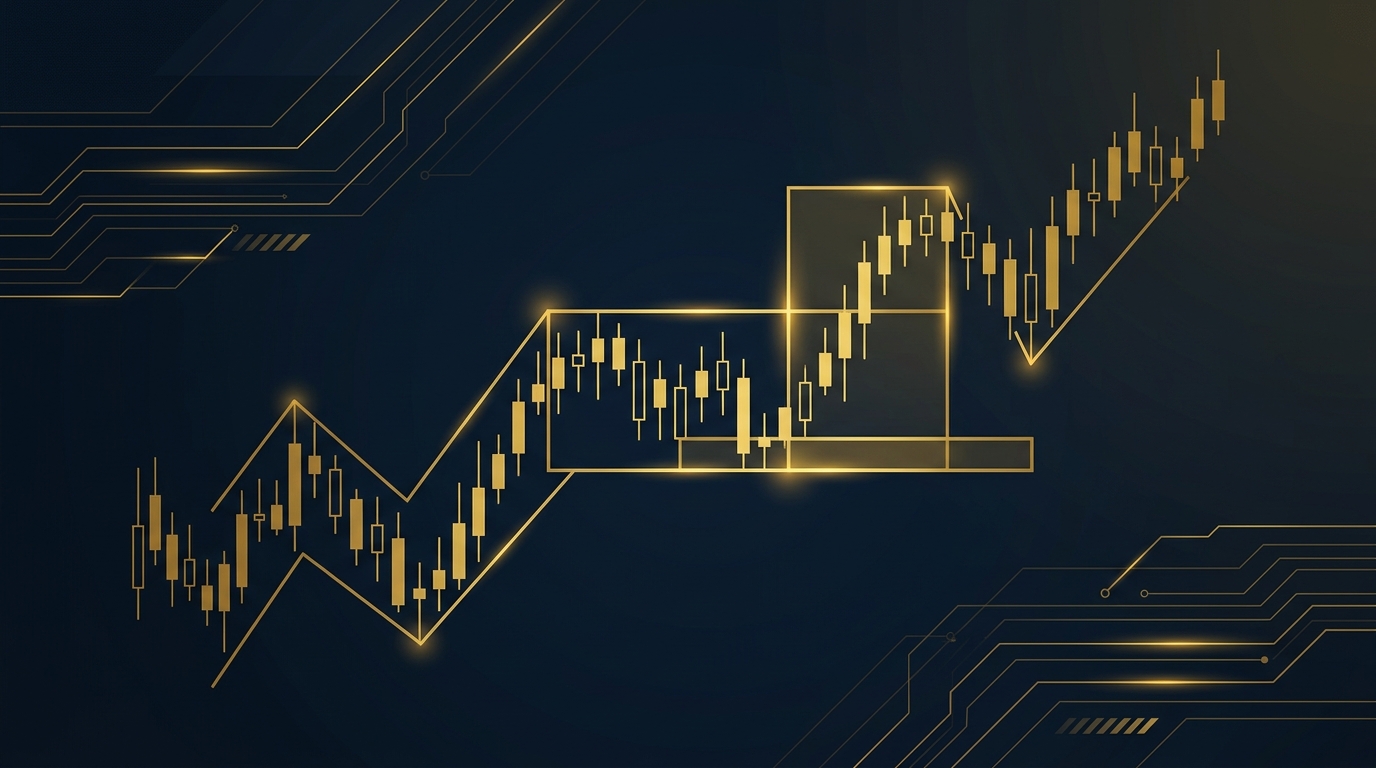
ICT Breaker Block Strategy: 3 Must-Have Confirmations
Master the overlooked ICT breaker block concept with 3 specific confirmation signals that separate profitable trades from false signals. Includes a worked chart example and precise entry rules.
Read More →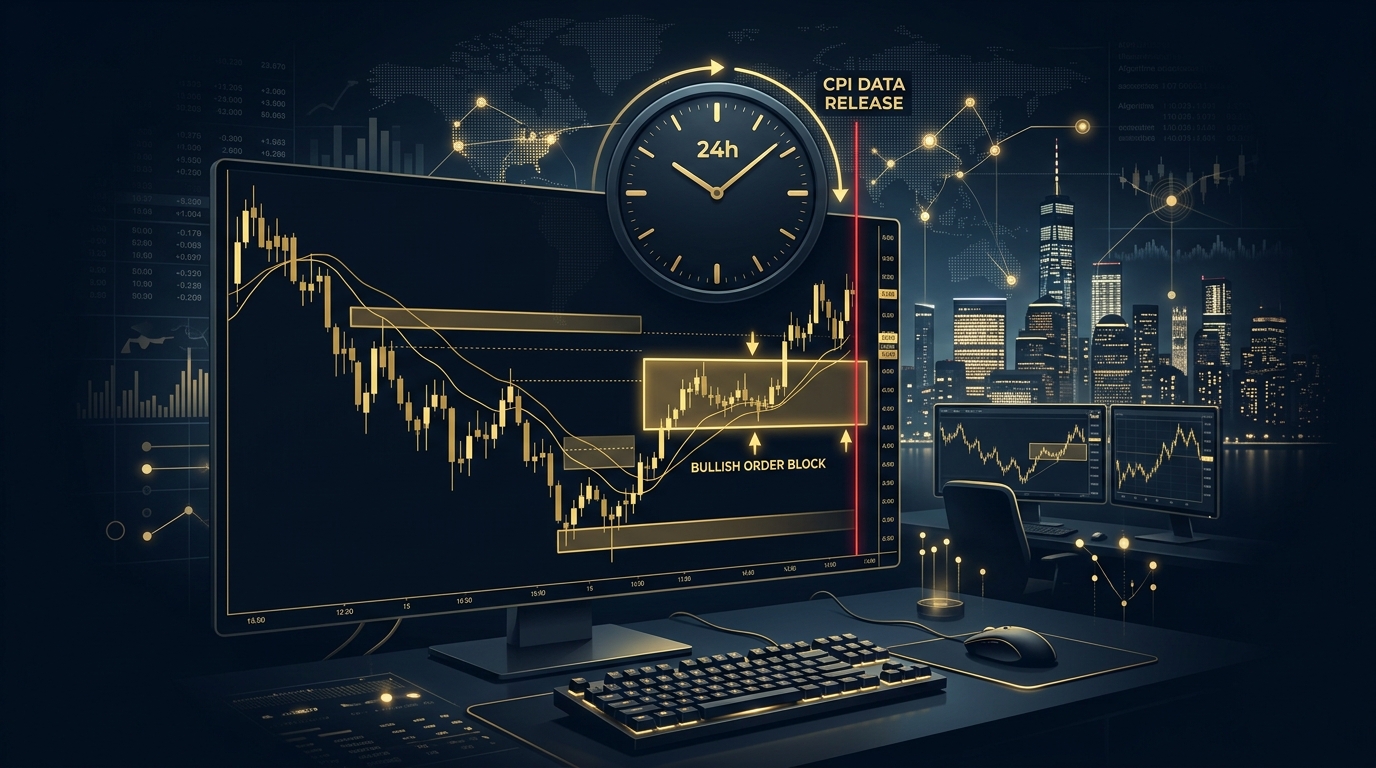
CPI Trading: Smart Money Positions Before Data
Learn how institutional traders use ICT order blocks to position 24 hours before CPI releases. Master pre-CPI liquidity patterns and post-release smart money moves with this complete strategy breakdown.
Read More →
Trade NFP Friday with ICT: Liquidity Playbook
Master NFP Friday with my 48-hour ICT trading playbook. Learn pre-positioning, liquidity sweeps, and post-release smart money moves that work during high-impact news.
Read More →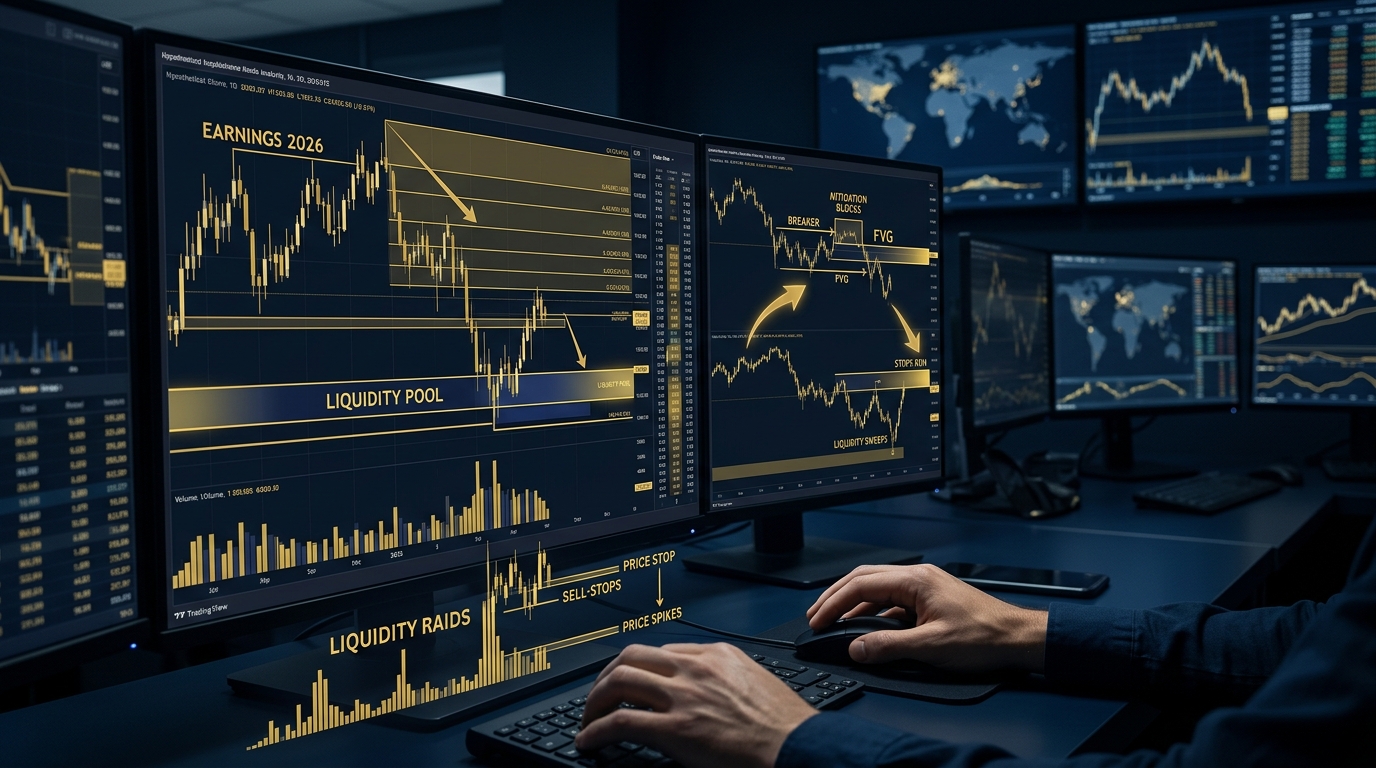
Earnings Season Liquidity Raids: 6 ICT Concepts
Master the institutional playbook during earnings season with these 6 essential ICT concepts. Learn how smart money manipulates liquidity during Q1 announcements and position yourself ahead of the algorithmic raids.
Read More →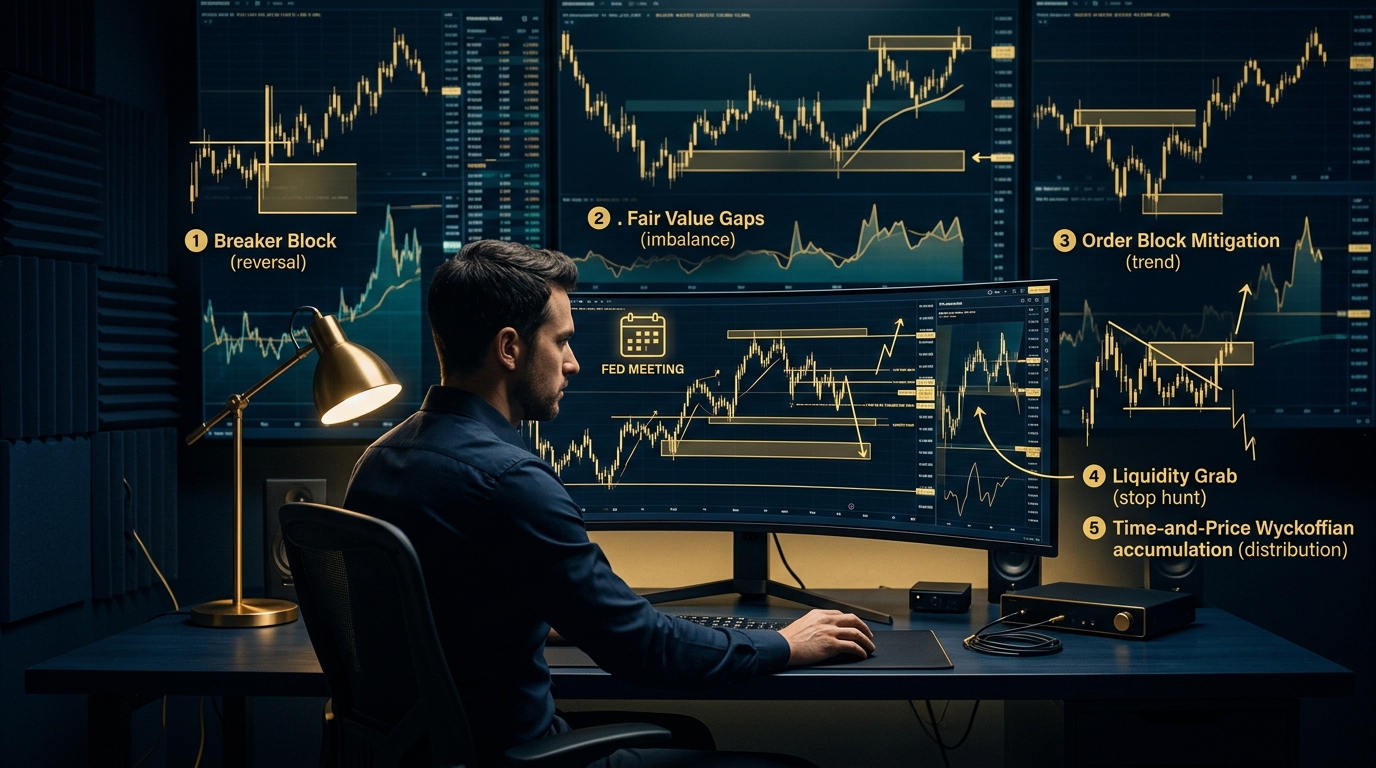
5 ICT Setups for Fed Meeting Uncertainty
Master these 5 powerful ICT trading setups specifically designed to capitalize on Federal Reserve meeting volatility. Complete breakdown of liquidity voids, institutional order flow, and session-based entries that perform best during central bank announcements.
Read More →
NFP Week Liquidity: ICT Entry Opportunities
How I map liquidity, order blocks and fair value gaps through NFP week so the release day isn't a coin flip.
Read More →
ICT Premium/Discount Arrays in Quiet Markets
How I adapt ICT premium/discount arrays when volatility compresses and ranges get tight, including a worked example.
Read More →
ICT Fair Value Gap Checklist: 9 Confirmations
Stop trading every gap you see. Use this 9-point validation checklist to filter profitable FVG entries from losers.
Read More →
Liquidity Grab vs Stop Hunt: 8 Key Questions
The most confusing aspect of ICT methodology finally explained. Learn to read institutional moves correctly.
Read More →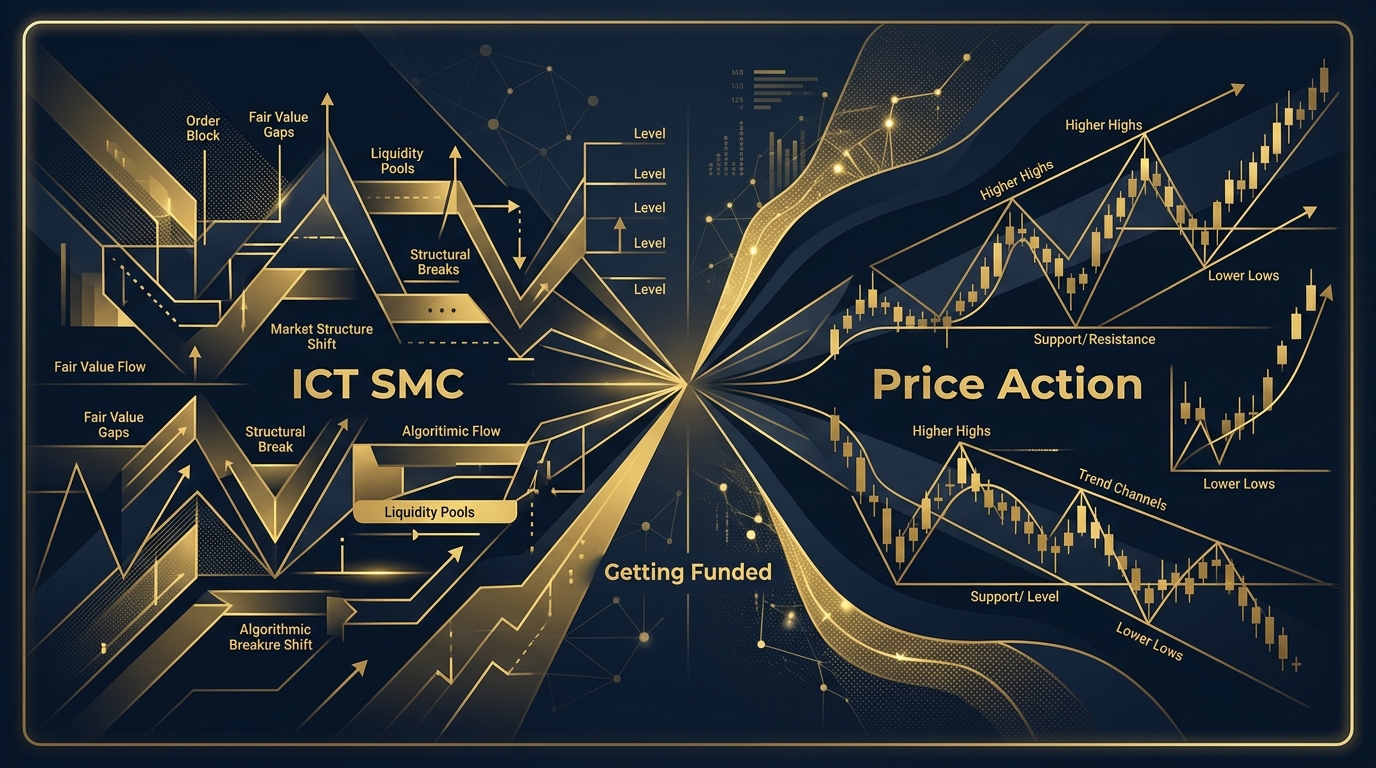
Smart Money vs Price Action: Which Gets Funded?
I compare ICT smart money concepts vs price action trading and explain which one I'd pick for a prop firm challenge.
Read More →
Why Order Blocks Fail in Ranging Markets (Fix)
Sideways markets break a lot of traditional order block strategies. Here's how I adapt order blocks to ranging conditions.
Read More →
7 Fatal Mistakes That Kill Your Funded Account
Discover the most common mistakes that sabotage funded account challenges and learn proven strategies to overcome them from an experienced ICT trader.
Read More →
The Truth About Funded Trading: What They Don't Tell You
Harvest reveals the hidden realities of funded trading that prop firms don't want you to know.
Read More →
When Market Structure Shifts Break ICT Setups
When market conditions change, classic ICT setups can stop behaving the way you expect. Here's how I think about adapting.
Read More →