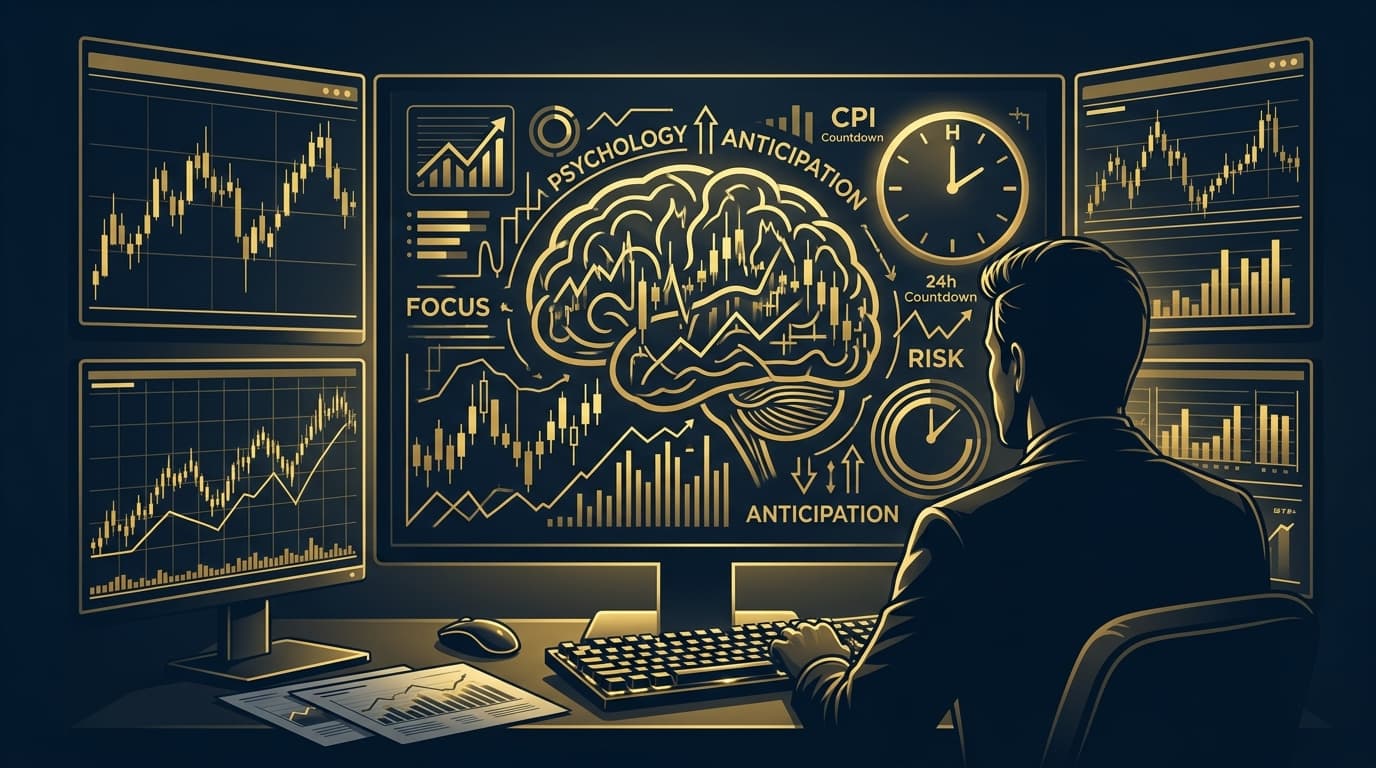
GDP Shock? How Smart Traders Stay Calm
There's a moment every trader knows, the GDP number flashes, the spread blows out, and price spikes in the blink of an eye. And then your hands start moving. Not because your plan said to. Because your nervous system took over and your trading psychology didn't have a chance.
I've seen that moment do more damage than a bad setup ever does.
Key Takeaway: The biggest failure point during GDP releases isn't risk management, it's the automatic stress response that fires in the first moments after the number drops, before your thinking brain can catch up. Traders who perform consistently through macro volatility don't have better rules. They've rehearsed their response to the chaos before the candle even prints.
Why GDP Volatility Is a Psychology Problem First
Most content you'll find about trading through GDP releases focuses on mechanics, widen your stops, reduce your position size, avoid entries 15 minutes before. That advice isn't wrong. But it's treating the symptom.
Here's the contrarian take after a decade of watching macro events wreck accounts that had perfectly sound strategies: GDP volatility doesn't kill trades. The emotional override that follows the spike does.
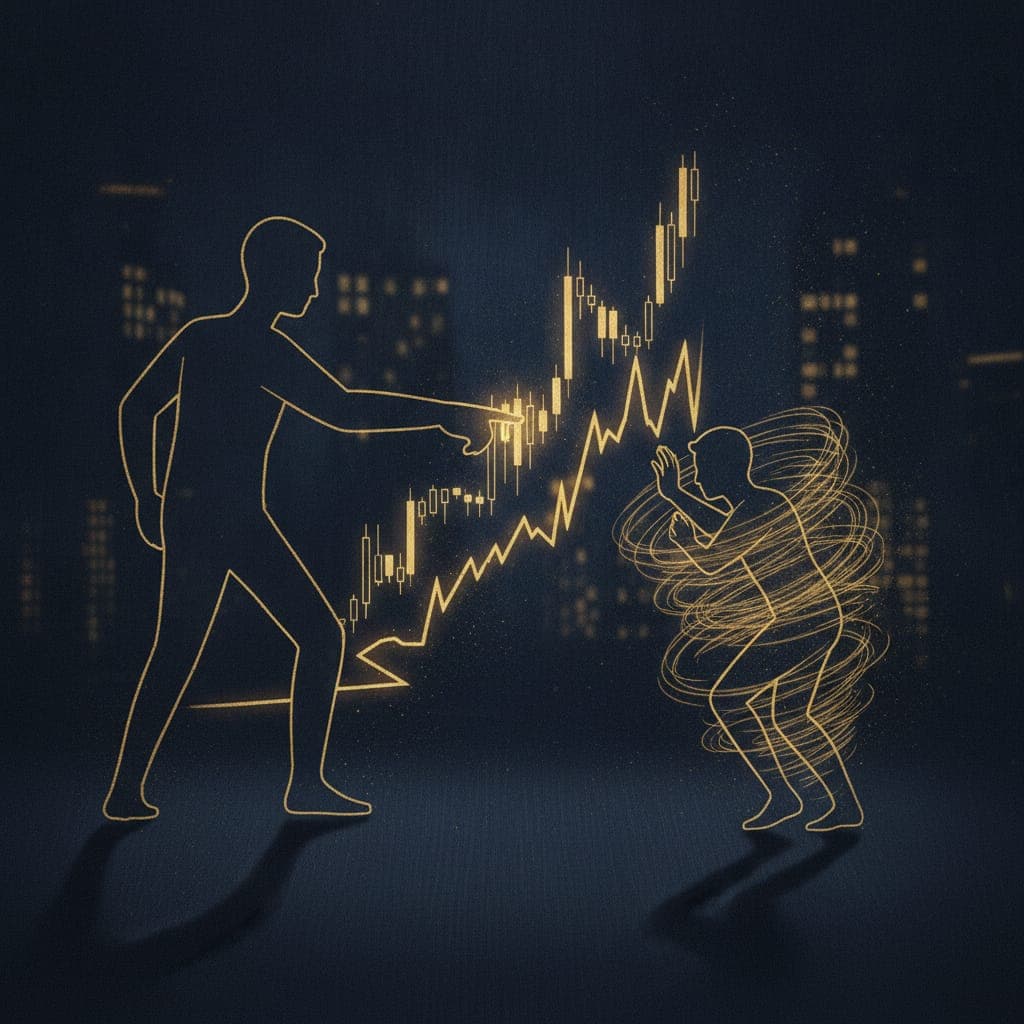
When a GDP print comes in significantly above or below expectations, your brain does something fascinating and dangerous. The amygdala, the brain's threat-detection system, fires before your rational mind processes the number. You feel urgency. Your chest tightens. You either freeze or lunge. In trading terms: you either miss the entire move watching it happen, or you chase a 3-pip slippage entry into a reversal.
Performance psychologists call this amygdala hijack. Athletes call it choking. Traders call it "I don't know what happened, I just clicked."
The solution isn't discipline in the moment. You can't out-discipline a physiological response mid-event. The solution is rehearsal before it starts.
The Trader Archetype I See Every Macro Season
There's a specific type of trader who gets absolutely shredded on GDP day, and it's not the careless one. It's the over-prepared one.
This trader has done everything right on paper. They checked the forecast versus prior. They marked the key liquidity levels on the HTF. They sized down to 0.25%. They have their levels drawn. And then the number drops, price gaps through their entire markup in 8 seconds, and they're sitting there paralyzed, thinking "this doesn't look like any of my scenarios", while price runs 80 pips without them.
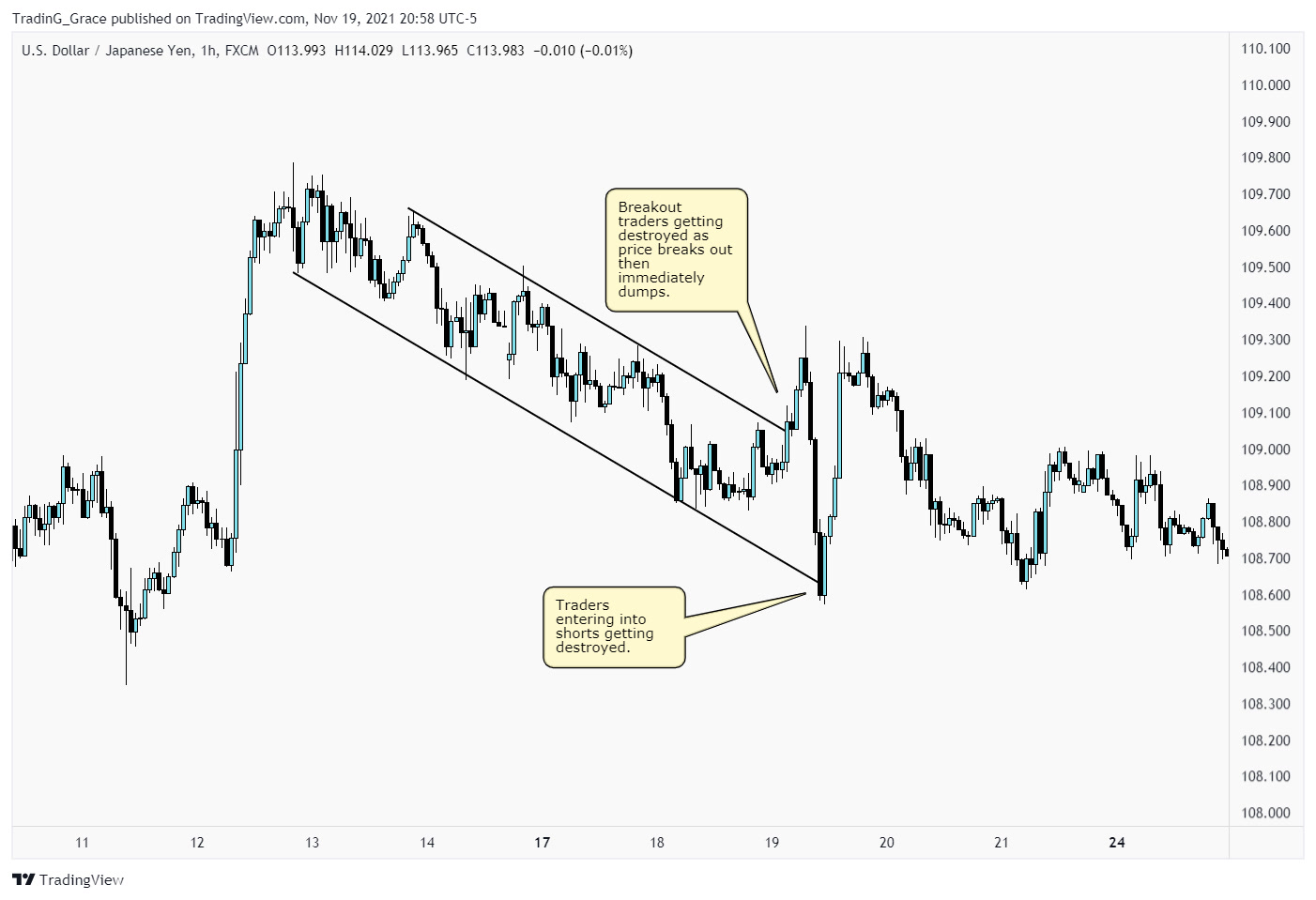
So they wait. And wait. And then price comes back 30 pips, and now they see what looks like a retracement into a fair value gap, and they enter. Except that FVG is printing in the middle of a macro displacement candle, the spread is still 4.5 pips wide, and they just bought premium in the middle of institutional distribution.
That's the archetype: the over-prepared trader who rehearsed the setup but never rehearsed the emotional sequence of what it feels like when price doesn't behave. They prepped for A, B, or C. Price delivered D. And D is where psychology collapses.
A Worked Example: GBPUSD Around a UK GDP Release
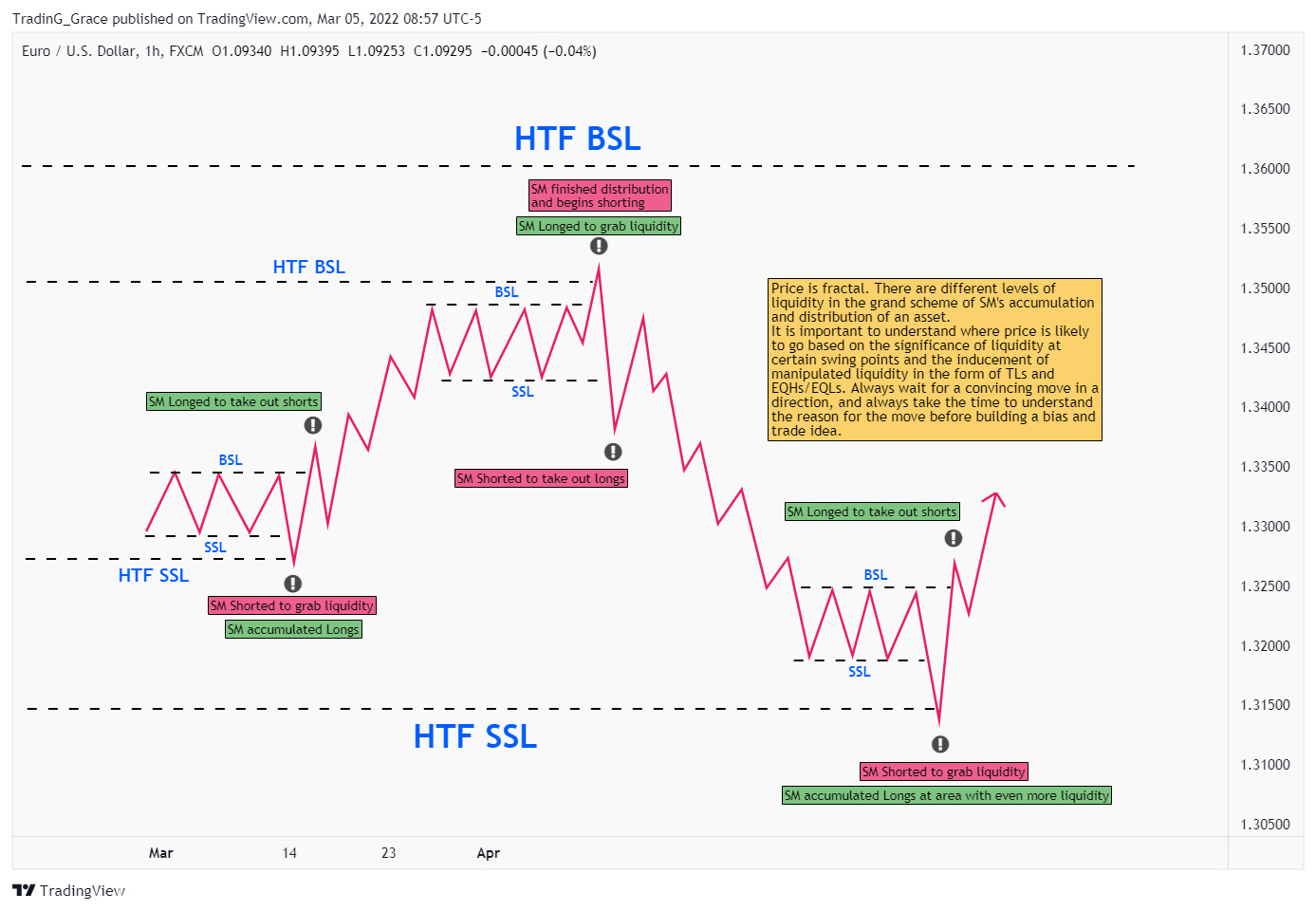
Here's the kind of plan I mean. Picture UK GDP coming in well above forecast. Cable reacts hard. On the 15-minute chart, price first drops through a sell-side liquidity pool sitting under the prior week's low, clearing the stops below, then violently reverses.
Before the release, the plan is written down. There's a 15M bullish order block just above that prior week's low, lining up with a daily FVG and sitting in discount relative to the weekly range. The rule is simple: if price sweeps below the prior week's low, wait for a 15M close back above it, and only enter on the retest of the OB, no earlier.
The sweep happens. The spread blows out. The spike back up is violent.
This is where most people enter on the first green candle. The rehearsed version of you sits on your hands. You wait for price to come back into the order block with a 15M close confirming the structure shift. The entry goes in at the OB. The stop goes below the sweep low, because if price takes that low again the whole "stop run then reverse" idea is wrong. The target is the 15M FVG overhead, the next obvious draw on liquidity.
Whether that particular trade wins isn't the point. The point is the plan survives the spike because you rehearsed what the spike would feel like.
For position sizing on setups like this, run the numbers through the risk calculator beforehand so there's zero mental math when adrenaline is elevated.
The Pre-GDP Mental Rehearsal Protocol
This is borrowed directly from sports performance psychology, specifically the work around mental simulation used with Olympic athletes and fighter pilots. The idea is simple: if you rehearse the emotional experience of a high-stress scenario in advance, your nervous system treats the real event as familiar, not threatening. Familiar = calm. Calm = plan execution.
Here's the exact protocol I run before any high-impact macro release:
Step 1, Write your scenario map (30 minutes before release)
Not just price levels. Scenario experiences. Write three versions:
- Scenario A: "Price spikes in my direction immediately. I feel the urge to chase. I do not enter until my specific confirmation fires."
- Scenario B: "Price spikes against me and sweeps my key level. I feel panic. My stop is pre-set. I do nothing."
- Scenario C: "Price whipsaws both ways and I have no clear read. I feel frustrated. I close the platform for 10 minutes."
The act of writing the emotional content, "I feel the urge," "I feel panic", is critical. You're not writing a trade plan. You're writing a psychological script.
Step 2, Visualize the 90-second window (15 minutes before release)
Close your eyes. Literally picture your charts, the candle forming, the spread widening. Feel your heartbeat increase in the visualization. Then picture yourself sitting still, hands off the mouse, watching. Run this for 60 to 90 seconds. It sounds soft. Visualization is a standard tool in sports psychology for a reason: the more familiar the scene feels, the less it rattles you when it happens for real.
Step 3, Set a hard entry delay (at release)
No entries for the first 90 seconds after the number drops. Hard rule. Set a timer on your phone if you need to. The first candle after a GDP shock is often stop-clearing, and it's rarely your entry. ICT concepts work beautifully after macro volatility settles, not during it. The displacement shows you the intent. The retracement gives you the entry. But you only get the retracement if you didn't blow your account on the displacement.
Step 4, Narrate your decision out loud
This one sounds strange, but it's the most powerful hack in the protocol. After the 90-second window, before touching anything, say out loud: "Price is currently at X. My plan says to enter only if Y happens. Y has / has not happened." Speaking gets you thinking in words again instead of just reacting. One sentence. Out loud. Every time.
Step 5, Post-event debrief within 2 hours
Not a full trade review. Just three questions in your journal: What did I feel when the number dropped? Did I follow the script? What was the gap between plan and action?
The gap tracking over time is where the compounding benefit lives. Over enough macro events, the goal is to watch that gap shrink. The scenario starts to feel scripted because it is scripted.
How I Think About News Spikes
Here's how I see it: the first burst after a big release is mostly stops getting cleared and spreads being wide. In my experience, the cleaner move, the one you can actually plan an ICT entry around, tends to develop after that first burst settles.
So the irony is that the traders trying hardest to catch the move in real-time are trading the noise. The traders who wait are trading the signal. Your trading psychology framework should be built around this reality, not around being first.
I wrote more about how Q2 2026 market structure is changing how these macro reactions develop in this breakdown of why traditional ICT setups are getting tested this quarter, worth reading alongside this piece.
One Thing I Used to Get Completely Wrong
For the first few years of trading macro events, I genuinely believed the problem was my rules. I kept adding conditions to my entry checklist. More confirmations. More filters. More structure.
None of it helped on GDP day.
Because the issue was never the rules. The rules were fine. The issue was that my body didn't know the rules existed when price spiked. Psychology and mechanics are separate systems, and most trading education only trains the mechanical side.
If you're getting stopped out repeatedly on funded account challenges and news events are part of the pattern, look hard at the 90-second window nobody talks about before you blame your setup selection.
Similarly, the deeper question of how your emotional framework interacts with prop firm rules is something I covered in the truth about funded trading, the psychological cost of prop firm pressure is a separate beast entirely.
Where to Take This Next
Run the rehearsal protocol on the next macro event, doesn't matter if it's GDP, CPI, or NFP. Write your three scenario scripts, visualize the 90 seconds, set the hard delay, narrate your decision out loud. Do it five times and track the gap in your journal.
If you want a structured framework around building this kind of trading psychology discipline alongside ICT execution, the coaching plans at R2F break this down across all experience levels, Lite at $150/week (one 1-on-1 session a week) is the lighter option if you want accountability without full immersion. Full Mentorship covers the complete psychological and technical methodology over four months.
Or if you're not sure where you are in your development, book a free discovery call and we'll figure it out together before you commit to anything.
GDP drops next week. Your plan is already written. Now rehearse the emotions, and your hands will finally do what your brain says.
Harvest Wright
ICT Trading Coach · 10+ Years Experience
Harvest specializes in ICT methodology and has helped traders pass prop firm challenges, develop consistent strategies, and build the psychology needed for long-term profitability.
Book a Free Discovery Call →Master Your Trading Psychology
Psychology is a huge part of trading. Our coaching includes dedicated psychology sessions.
See Coaching PlansFree ICT Funded-Trader Playbook
The setups, the pre-trade checklist, and the risk rules I use. Get it free.