
When Market Structure Shifts Break ICT Setups
Every so often the market changes character, and the ICT setups that worked cleanly for months start chopping you up. If that's happening to you right now, you're not crazy and you're not alone.
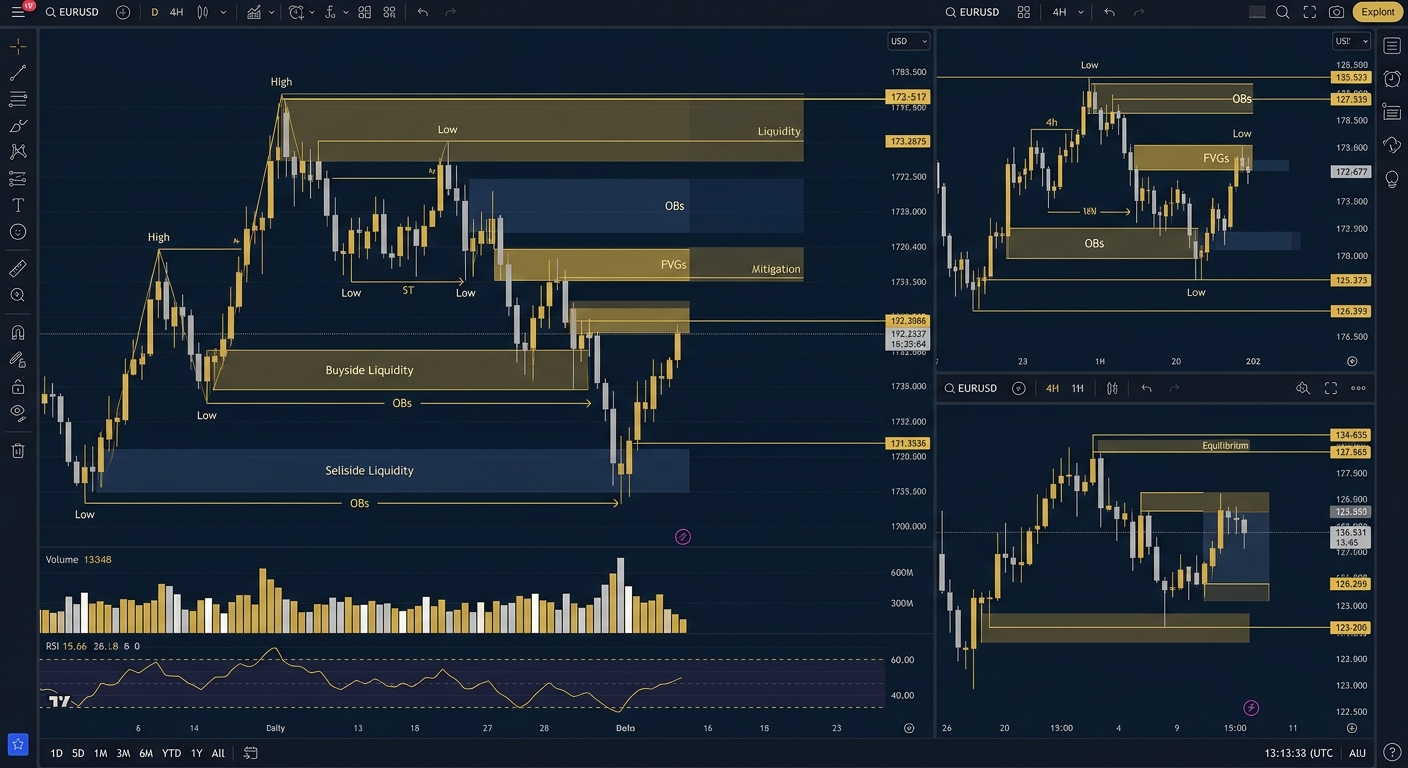
In 10+ years of trading, with ICT concepts for a good part of that, I've been through several of these phases. The order blocks, fair value gaps (FVGs), and liquidity sweeps are still there, but they behave differently. If you don't adjust, you keep bleeding capital while wondering why your once-reliable setups are failing.
Key Takeaway: When market conditions shift, classic ICT setups can stop behaving the way they used to, so audit how your order blocks, FVGs, and liquidity sweeps are actually playing out now instead of assuming last quarter's behavior still holds.
What a Market Structure Shift Looks Like
Conditions change for all sorts of reasons: a new macro theme, a change in volatility, positioning around a new quarter. Here are three signs I watch for that tell me my usual playbook needs adjusting:
1. Faster Reactions Price reaches your premium or discount zone and reacts almost immediately. The window you used to have to plan an entry shrinks, and if you wait for your usual confirmation you miss the move.
2. Fragmented Liquidity Sweeps The classic sweeps above previous highs and below previous lows still happen, but they're messy. Instead of one clean sweep on the 15-minute chart, you see partial grabs on the 5M, 15M, and 1H within a short time of each other.
3. Order Blocks Failing Sooner Order blocks that would normally hold for a while get run through quickly. Zones you'd expect to last days only last hours.
Why Traditional ICT Setups Start Failing
A Worked Example: The London Killzone in Choppy Conditions
Here's the kind of setup I mean. Picture a trader using a classic London session model: mark the overnight liquidity, wait for the sweep in the London killzone, then look for the retracement.
EURUSD has clean buy-side liquidity resting above the Asian high. Price sweeps it early in London, and the trader shorts, expecting the move back down into the discount side of the range.
In a normal environment that works often enough. In a shifted environment, price just chops around the sweep level for a couple of hours instead of delivering. The stop sits just above the sweep high, and eventually some random noise clips it.
The read on the sweep wasn't wrong. The market simply wasn't delivering follow-through the way it used to, and that's the signal to adjust.
Fair Value Gaps Getting Filled Too Quickly
In some conditions FVGs that would normally sit open for a while get filled almost straight away. If you're still waiting for that perfect FVG fill on your usual timeframes, you can miss the move entirely. Understanding which pre-trade confirmations actually separate profitable FVG entries from losers matters even more in this kind of environment.
Order Blocks Not Holding Like They Used To
When order blocks keep failing, a few things are usually going on:
- The higher timeframe bias has changed and you're still trading the old direction
- Volatility has changed, so zones get run through before they can react
- The market is ranging, so both sides get swept and neither holds cleanly
How to Adapt Your ICT Strategy When Conditions Shift
1. Compress Your Time Horizons
One adjustment I lean on, and something I work through in my coaching plans, is time compression. If you were analyzing 4H order blocks and holding for daily targets, try 1H analysis with 4H targets while conditions are choppy.
Adjusted Timeframe Framework:
- Analysis: Drop down one timeframe from your usual
- Entry: Use smaller position sizes while you adjust
- Targets: Aim for nearer, more obvious liquidity
- Stops: Keep them structural and expect more noise
2. Focus on Confluence Zones
In conditions like this, a single order block or FVG on its own is rarely enough. Look for multiple confluences lining up in the same area.
Confluence factors to look for:
- Order block + FVG within 10-15 pips of each other
- Multiple timeframe liquidity sweeps happening simultaneously
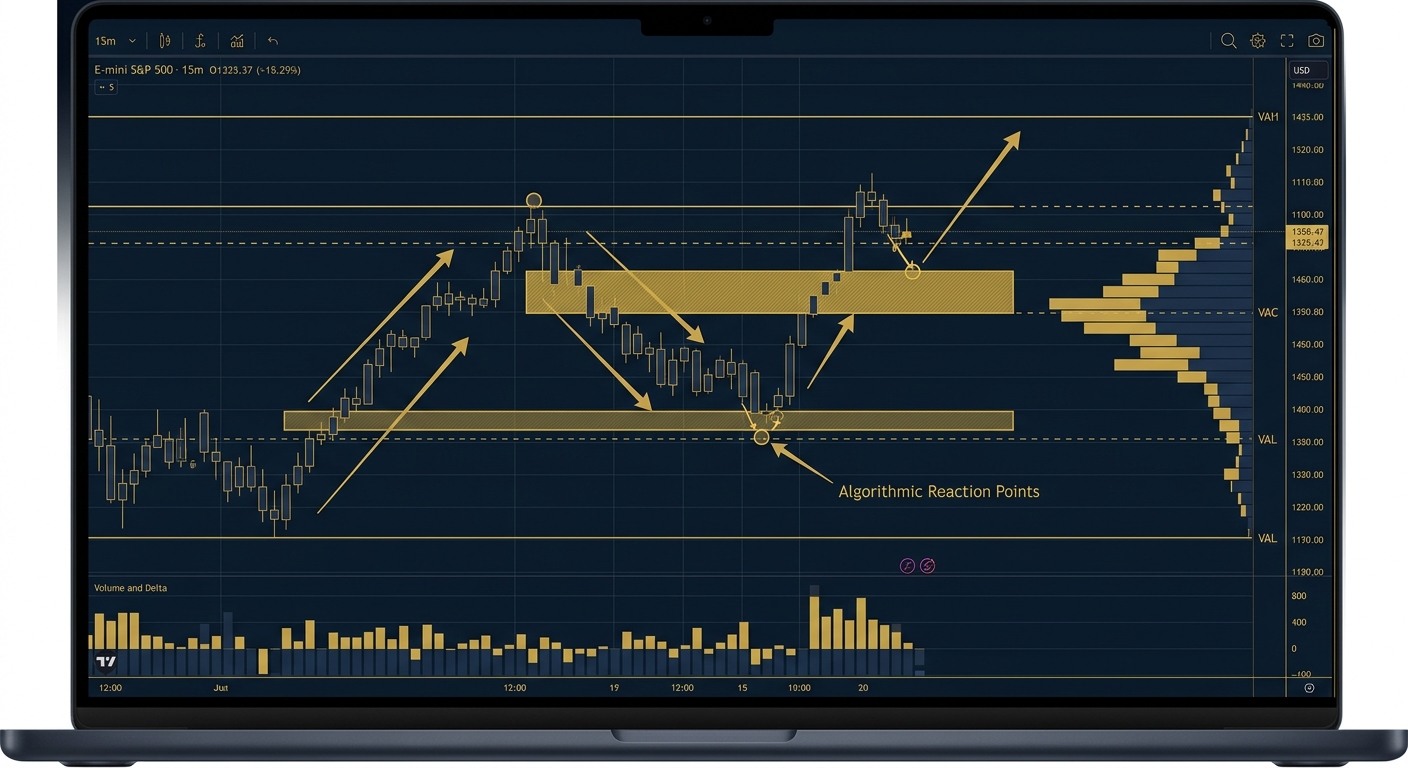
- Volume profile POC (Point of Control) aligning with your ICT levels
- Previous day's high/low confluence with institutional zones
3. Trade the Reaction, Not the Level
This is the hardest shift for traditional ICT traders to make. Instead of entering blindly at your order block or FVG, wait for price action confirmation that institutions are actually respecting that level.
New Entry Criteria:
- Price touches your ICT level
- Wait for a 5-10 pip reaction in your favor
- Look for volume confirmation on the reaction
- Then enter with conviction
You'll miss some trades this way, and that's fine. The point is to stop donating to levels the market isn't respecting.
Ideas Worth Testing When Structure Shifts
Micro Liquidity Sweeps
When the big sweeps above daily highs stop delivering, the smaller sweeps of recent swing points on lower timeframes can be worth studying. They're smaller moves, so your targets and expectations need to shrink with them.
Intraday Mean Reversion
In choppy, two-sided conditions, moves back toward VWAP (Volume Weighted Average Price) or the previous day's POC are worth backtesting alongside your ICT levels.
This isn't part of traditional ICT methodology, so treat it as something to test, and only use it if your own data supports it.
News Event Fade Setups
When follow-through after high-impact news is weak, fading the initial spike back into an ICT level can be worth testing. Wait for the spread to settle first.
Combined with ICT levels, this is one more tool for choppy conditions. If you want to see this in action on a specific catalyst, the ICT setups that thrive during Fed meeting uncertainty are a perfect example of how to apply this approach in real conditions.
Common Adaptation Mistakes to Avoid
Don't Abandon ICT Completely
A common pattern is traders getting frustrated with their usual setups and abandoning ICT concepts completely. This is a mistake. The core principles still work, they just need refinement.
Order blocks, FVGs, and liquidity concepts remain the foundation of institutional trading. We're just seeing them play out differently in terms of timing and magnitude.
Don't Over-Complicate Your Analysis
The temptation is to add more indicators, more timeframes, more complexity to deal with the changing market structure. This usually makes things worse.
Keep your ICT analysis clean and simple, but be more selective about which setups you take. Quality over quantity has never been more important.
Don't Ignore Risk Management Evolution
Position sizing and risk rules built for a clean trending market may not suit a choppy one. Traders who were doing fine can give a lot back simply because they didn't adjust their risk parameters.
Consider reducing your risk per trade by 25-30% while you adapt to the new market structure. Your win rate might improve, but your average winner will likely be smaller.
Why These Changes Are Actually Opportunities
Less Competition in Adapted Setups
A lot of traders keep forcing the old playbook onto new market conditions. This creates opportunities for those of us willing to adapt.
The traders who make these adjustments now will have a significant edge while others struggle with outdated playbooks.
More Frequent, Smaller Opportunities
When the big trending moves dry up, smaller intraday opportunities often show up more frequently. For traders willing to adjust their expectations and increase their trade frequency slightly, this can actually be more profitable.
Improved Risk-Reward Through Better Timing
The compressed timeframes and faster market reactions mean better entry timing is possible. Your average loss can be smaller even as your average win decreases, leading to improved overall risk-adjusted returns.
What This Means for Your Trading Moving Forward
If you've been struggling with your ICT setups lately, you're not alone. Shifts in market structure catch a lot of traders off-guard, including experienced ones.
But this isn't the time to panic or abandon the concepts that got you this far. It's time to evolve.
The traders who adapt quickly will thrive in this new environment. Those who stubbornly stick to outdated methods will continue to struggle, regardless of their past success.
As someone who's navigated multiple market regime changes over the past decade, I can tell you that periods like this, while challenging, often separate the consistently profitable traders from those who just got lucky during easier market conditions.
If you're serious about adapting your ICT approach for the current market structure and want personalized guidance through this transition, I'd encourage you to book a free discovery call where we can discuss your specific challenges and create a plan to get you back to consistent profitability.
The market structure has changed, but the opportunities are still there for those willing to evolve with them.
Want to dive deeper into advanced ICT concepts and market structure analysis? Check out our comprehensive trading insights section for more strategic guidance, or learn about the common mistakes that kill funded account challenges to ensure you're not sabotaging your progress during this transition period.
Harvest Wright
ICT Trading Coach · 10+ Years Experience
Harvest specializes in ICT methodology and has helped traders pass prop firm challenges, develop consistent strategies, and build the psychology needed for long-term profitability.
Book a Free Discovery Call →Take Your Trading to the Next Level
Get personalized 1-on-1 ICT coaching with Harvest Wright. Free discovery call, no commitment.
Book a Free Discovery CallFree ICT Funded-Trader Playbook
The setups, the pre-trade checklist, and the risk rules I use. Get it free.