
The GDP Trader's Curse: Why You Freeze Up
There's a specific kind of pain that only happens four times a year. GDP release day. And if you've been trading long enough, you already know exactly what I'm talking about before I finish this sentence, that stomach-drop feeling when the number drops, the chart explodes, and you're just... sitting there. Watching. Again. The ICT trading psychology around GDP is unlike anything else on the economic calendar, and after more than a decade of trading, I've come to believe the event itself matters less than people think. What hurts traders on GDP day usually starts building weeks before the number ever prints.
Key Takeaway: GDP releases create a unique psychological trap because quarterly scarcity, only four headline advance releases per year, inflates emotional stakes to the point where even prepared, technically-sound ICT traders freeze on execution or revenge-trade after missing the initial move. The volatility isn't the problem. The pressure you've been quietly building for 90 days is.
The Quarterly Trap Nobody Talks About
NFP hits every month. FOMC meetings happen eight times a year. Fed speakers are practically a weekly event at this point. But the headline advance GDP number? Four times a year. The revisions come in between, but they rarely feel like the main event.
And somewhere in the back of every retail trader's mind, that math does something sinister. Each release starts to feel weighted, loaded with disproportionate significance. You don't consciously think this is my only shot for three months, but that belief is running in the background, shaping every decision you make from the moment the previous quarter's data dropped.
I used to get this wrong in a particular way. I'd spend the week before GDP building out the most meticulous bias framework, HTF structure mapped on the daily and 4H for GBPUSD, liquidity pools identified above and below price, FVGs catalogued on the 1H, even a pre-drawn killzone around the expected release window. The preparation was genuinely good. What happened at 8:30 AM EST was not.
The number would print. Displacement candle. Obvious. And I'd watch it happen like I was behind glass.
Then the retrace would start and I'd tell myself: wait for confirmation. Which sounds disciplined. But here's what I've learned to distinguish over time, there's real confirmation-seeking, which is a legitimate part of an ICT framework, and then there's confirmation as a psychological exit ramp, a socially acceptable way to not pull the trigger when the pressure feels too big. A lot of traders on GDP day are doing the second thing and calling it the first.
What the Cognitive Loop Actually Looks Like
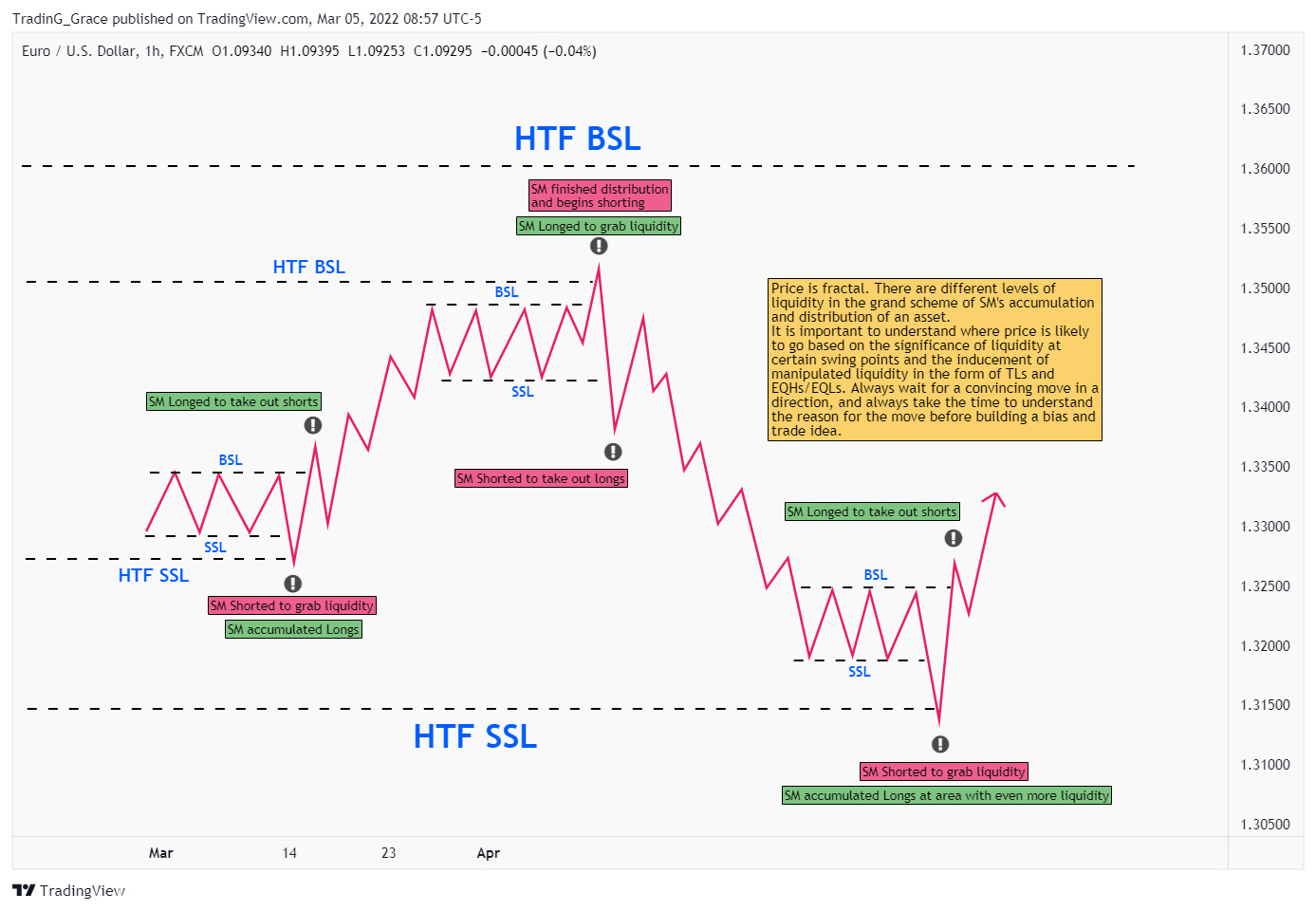
Here's a sequence I see a lot, and one I recognize from my own early trading:
Anticipation, You've prepared heavily. You know the setup. You feel ready, and that feeling of readiness is almost pleasant. You're calm going into the release.
Hesitation, The move happens. Something in your brain says not yet. Maybe it's too fast. Maybe you want to see a retest. The window is narrow and your body is physically hesitating, hands not moving, cursor sitting over the entry button and not clicking.
Rationalization, You tell yourself the hesitation was correct. "That was a stop hunt. I protected myself." This is the most dangerous moment in the loop, because it's partially true often enough to be believable.
The Miss, Price runs hard in the direction you called correctly. You watch it from the sideline.
Impulsive Entry, Twenty minutes later, with price extended, spread widened, and the setup technically dead, you enter anyway. Not because the structure supports it. Because you can't emotionally process having been right and still missing.
Shame, You get stopped out. And now you're carrying both the loss and the knowledge that you saw it coming. That combination is what makes GDP particularly corrosive to confidence over time.
This isn't a discipline problem. It's not a knowledge problem. The scarcity created by four releases a year is what pressurizes the whole sequence, every stage of that loop gets more intense when the emotional stakes are inflated by quarterly frequency.
The ICT Angle That Makes This Worse
Here's where it gets specifically painful for traders working within a smart money framework, and this is something I almost never see addressed in the ICT trading psychology conversation online.
We know, intellectually, that smart money is already positioned before the news prints. We understand that the initial spike on GDP is often a liquidity raid, designed to stop out retail positions before the real move develops. We've seen the pattern enough times to anticipate it. And that knowledge, which should be an edge, becomes a psychological torment.
Because now you're second-guessing every move. Is this displacement real or is it the fake-out spike? Is this retracement a discount FVG entry or is it the reversal? The framework creates a branching decision tree right at the moment you have the least cognitive bandwidth, when a volatile candle just printed, your P&L is zero but your anxiety is maxed, and you have about 30 seconds to decide.
Smart money's pre-positioning, which ICT traders intellectually understand, becomes a psychological hall of mirrors. You see everything as potentially fake. And "seeing through the manipulation" becomes an excuse to never commit.
If you've read my breakdown of why Q2 2026 market structure shifts are breaking traditional ICT setups, you'll recognize a similar theme, knowing more isn't always the same as executing better. Knowledge and action live in different parts of your brain, and high-pressure news events expose that gap brutally.
A Worked Example
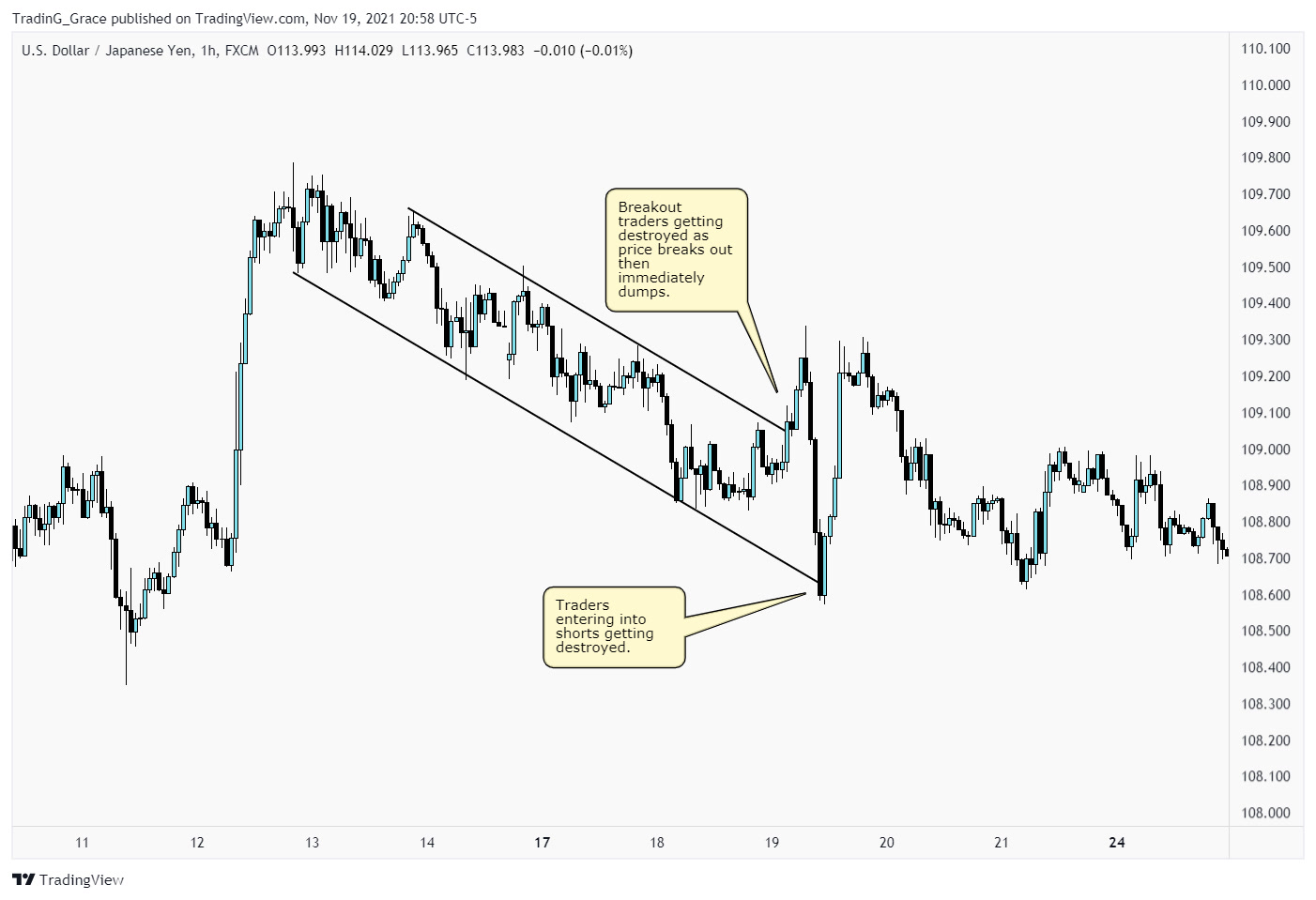
Here's the kind of setup I mean. Picture GBPUSD going into a GDP release. The daily shows a clear bearish CISD through a key swing low from the prior week, and there's a 4H FVG sitting above price, in premium relative to the prior swing range. Short bias, and the structure supports it.
The release drops. Cable spikes up fast, straight into that 4H FVG you already marked. Textbook. Price wicks into the imbalance, rejects, and starts rolling over.
The plan was a limit order in the middle of the FVG, with the stop above the high of the spike, because if price takes that high out again the bearish idea is wrong. The target is the sell-side liquidity below the recent swing low. As clean as it gets.
Now picture the trader cancelling that order seconds before price reaches it, because the spike looks "too aggressive" and they've convinced themselves it isn't done sweeping highs yet.
Price tags the entry, then sells off to the target without them.
The painful part isn't missing a setup. It's sabotaging a correct decision in real time. And what makes a trader fragile enough to do that is the weight they've put on one particular release. Four shots a year. Maybe they missed the last one. This one feels like it matters too much.
The Trader Who Prepares Everything and Does Nothing
There's a specific trader archetype I see around every high-impact release, but GDP brings it out most clearly. They have a marked-up chart that would make any serious ICT practitioner nod, HTF liquidity mapped, killzones shaded, multiple confluences identified. Their pre-trade checklist (if you want a template for what that should include, the ICT Fair Value Gap trading checklist is worth reading before your next major news event) is complete. They've done everything right in preparation.
And then they spend the entire event describing, in real time on Discord or Twitter, exactly what's happening, the displacement, the raid, the retrace into discount, without ever placing a trade. The analysis is flawless. The execution is zero.
This person has outsourced their accountability to the preparation ritual. The detailed chart work makes them feel like they've done the hard part, so not trading starts to feel like a consequence of the market rather than a choice they're making. They say "it didn't confirm" when what they mean is "I couldn't pull the trigger and I needed a reason that didn't make me the problem."
Over time this pattern compounds. Every clean setup they describe but don't take reinforces the habit of treating analysis as the goal and execution as optional.
A Framework That Actually Addresses the Psychology, Not Just the Setup
Here's what I've found actually moves the needle, not a mindset pep talk, but a structural approach:
1. Pre-commit to a scenario, not a level. Before GDP prints, define two scenarios: if price sweeps the high first, I look for a short from the FVG at X. If price drops immediately, I wait for the first retrace into the killzone. Scenario-based thinking reduces real-time decision load dramatically.
2. Use a time-box rule. Give yourself a defined window, say, the first 15 minutes post-release, to take one entry. If you haven't entered by the close of that 15th candle, you're done for the day on that pair. This forces a commitment decision and eliminates the revenge-entry problem that happens 30-60 minutes later.
3. Size down by 50% on GDP, deliberately. Not because the trade is worse, but because smaller size reduces the emotional weight of the outcome. In my experience, a 0.5% risk trade on a GDP release is much easier to execute cleanly than a 1% risk trade. Once you've built the execution habit, scale back up. You can use the risk calculator to pre-set your GDP position size before the release so there's no in-the-moment calculation happening.
4. Decouple the release from the opportunity. GDP day isn't a trading event, it's a liquidity event. The actual ICT setup often forms a while after the spike, once the stop hunt has cleared and institutional order flow reasserts. Treating 8:30 AM as the setup window (rather than the trigger window) reduces the pressure of that specific candle enormously.
If you're navigating a funded account challenge and GDP is part of your risk picture, the 7 fatal mistakes that kill your funded account challenge success piece directly addresses how high-impact news events interact with drawdown rules, worth reading before next quarter's release.
Four Times a Year Is Actually Enough
The GDP Trader's Curse isn't really about GDP. It's about what happens when we assign existential importance to scarce events. Four releases a year becomes "four chances to prove myself," and that framing is what turns a reasonably tradeable event into a psychological minefield.
Try treating each GDP release as one of roughly 250 trading sessions in a year instead of a redemption opportunity. The setups stay the same. What changes is that you stop showing up to 8:30 AM carrying 90 days of emotional freight.
You have more information about smart money behavior, market structure, and institutional flow than retail traders had access to even five years ago. The ICT trading psychology gap isn't about learning more, it's about learning to act on what you already know under conditions of discomfort. That's a different kind of work.
If you want to go deeper on the mental side of this alongside the technical framework, take a look at the coaching plans, the Full Mentorship option spends significant time on exactly this: execution psychology during high-impact events, not just setup identification. Or if you're earlier in the process and want to see what a structured approach actually looks like before committing, book a free discovery call and we can talk through where the specific gaps are in your current process.
The next GDP release is coming. You'll be prepared again. The only question is whether you'll be ready.
Harvest Wright
ICT Trading Coach · 10+ Years Experience
Harvest specializes in ICT methodology and has helped traders pass prop firm challenges, develop consistent strategies, and build the psychology needed for long-term profitability.
Book a Free Discovery Call →Master Your Trading Psychology
Psychology is a huge part of trading. Our coaching includes dedicated psychology sessions.
See Coaching PlansFree ICT Funded-Trader Playbook
The setups, the pre-trade checklist, and the risk rules I use. Get it free.