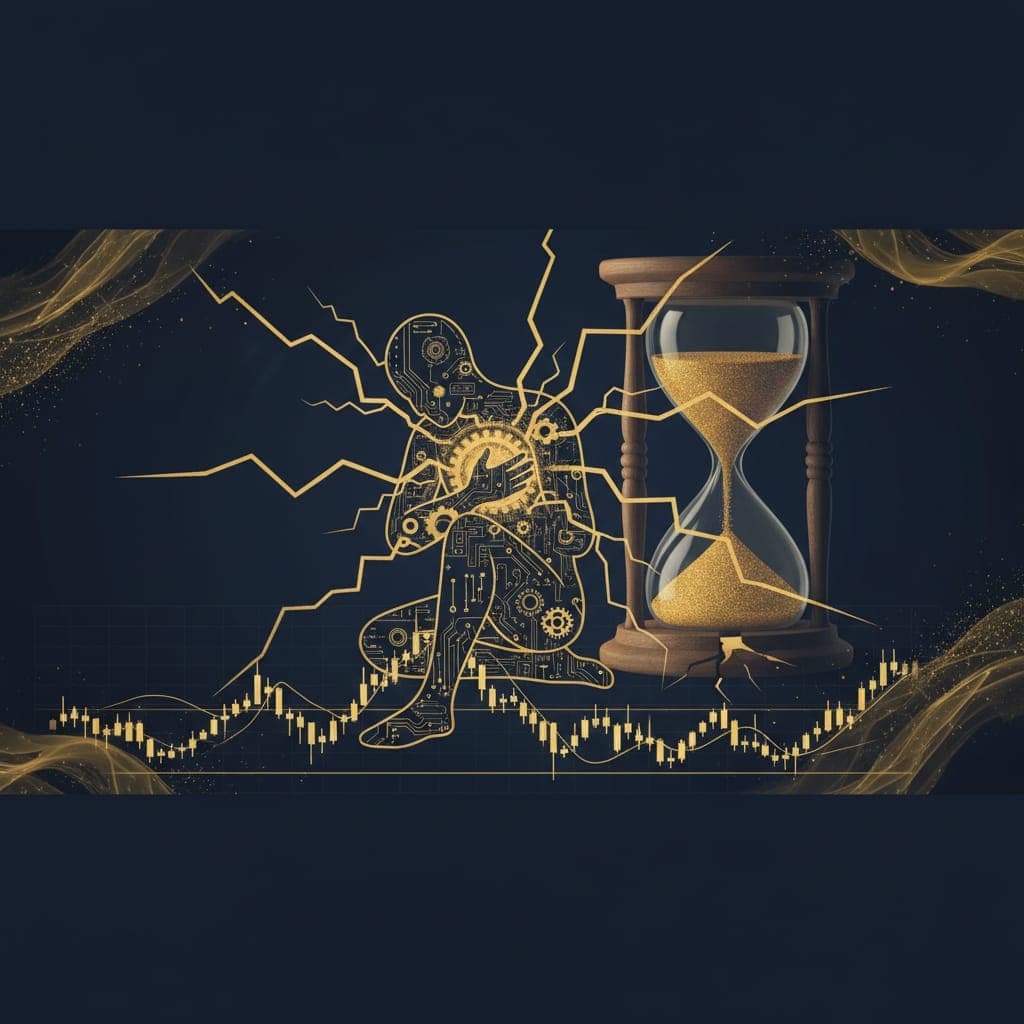
Why You Freeze When a Perfect Setup Appears
There's a specific kind of torture that only traders understand. You've done the analysis. The setup is textbook, displacement into a fair value gap, clean swing high swept, price sitting at a mitigation block in discount on the 15-minute. Every confirmation box is checked. Your cursor hovers over the buy button.
And then nothing. You just... sit there.
Key Takeaway: Freezing at the entry button isn't a confidence problem, it's a neurological conflict between what your ICT system is telling you and what your recent losing streak has conditioned your nervous system to protect you from. The fix isn't mental review. It's a physical pattern-interrupt performed in the 60 seconds before you click.
This is the part of trading psychology that almost nobody talks about with any real precision. Everyone says "trust your system" like it's a light switch you can just flip. But after more than a decade of watching this pattern, in my own trading and in the broader ICT community, I can tell you it doesn't work that way. Not even close.
The Freeze Doesn't Happen Where You Think It Does
Here's what makes this particular problem so frustrating: the freeze doesn't happen during analysis. It happens after confirmation.
That distinction matters enormously. If you froze during analysis, it would suggest confusion, maybe the setup isn't clear, maybe you need more screen time, maybe your framework has gaps. Those are fixable problems. Study more, screen time more, get better at reading structure.
But you're not confused. You've already done the work. The entry reason is solid. The freeze comes after you've seen everything you need to see, and that means the problem isn't in your analysis at all. It's downstream of it.
What's actually happening in that moment is a clash between two competing signals in your nervous system. Your trained eye says: this is the setup, enter now. Your recent P&L history says: the last three times you entered something that looked exactly like this, you got stopped out. And because your brain's threat-detection hardware runs faster than your conscious reasoning, the second signal wins, every time, before you even realize what happened.
Neuroscientists call this the somatic marker effect. Your body keeps score, and it uses past emotional outcomes to flag future decisions before your prefrontal cortex gets a vote. That's not weakness. That's actually a survival mechanism doing exactly what it was designed to do. The problem is that it has no idea it's inside a trading terminal.
What This Looks Like
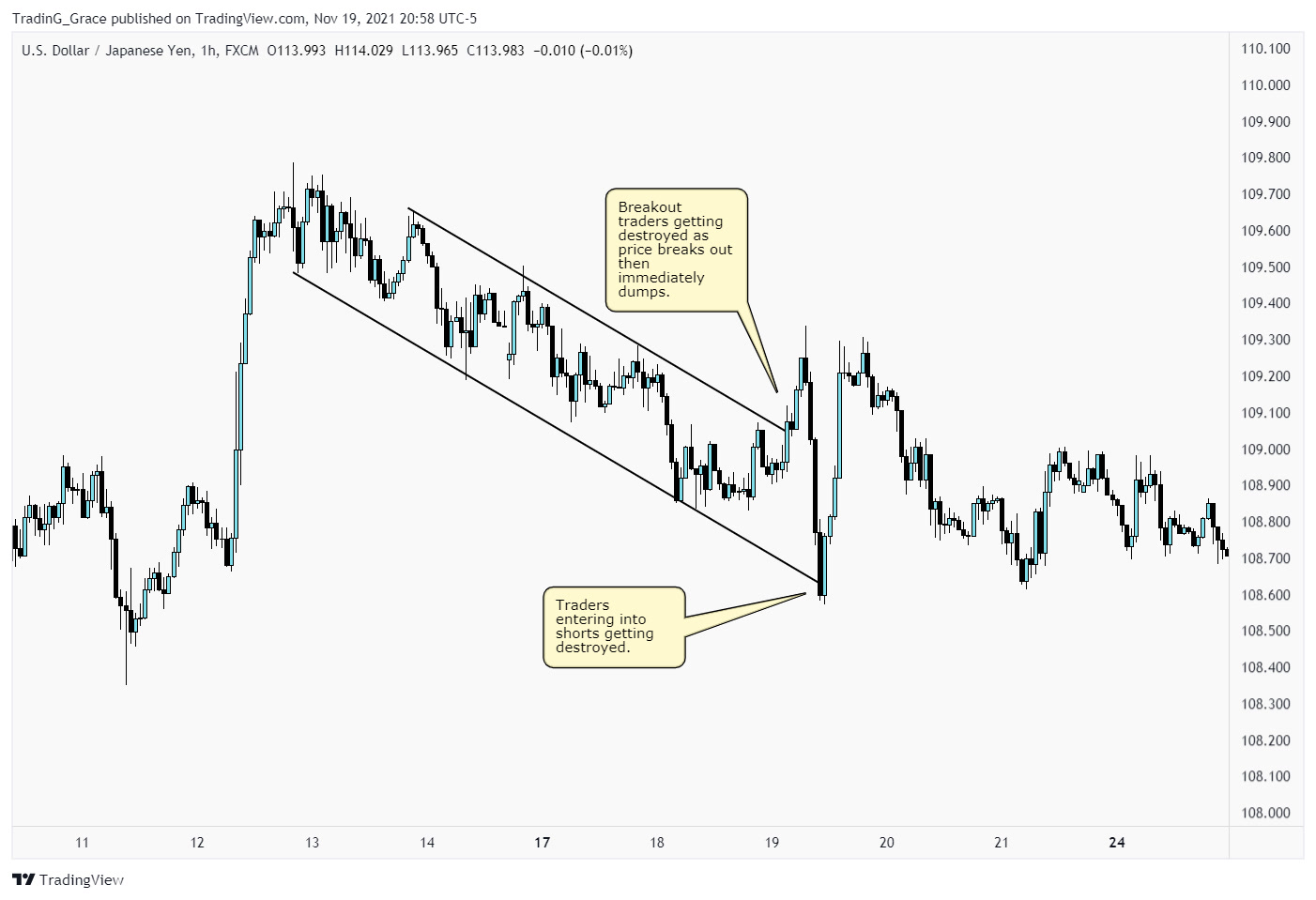
Here's the kind of moment I mean, because this is too abstract without a picture.
Picture a trader coming off a rough stretch with a few stopped-out trades in a row. Nothing catastrophic: position sizing is under control and risk is calculated the same way every time with a consistent risk calculation process. But a run of losses is still a run of losses, and the emotional weight of that compounds in ways the account balance doesn't fully show.
Now picture GBPUSD at the London open on the 15-minute chart. Price sweeps the overnight high, a clean buy-side liquidity raid, then breaks structure to the downside with a strong displacement candle. That move leaves a fair value gap. Price retraces back into the FVG, stalls around the 50% equilibrium of the gap, and prints a bearish engulfing on the 5-minute inside a 1-hour order block.
The entry sits inside the gap. The stop goes just above the swept high, because if price takes that level again the idea is wrong. The target is the previous day's low, the obvious sell-side liquidity below.
Every box is checked. Displacement confirmed. FVG formed and respected. OB in alignment. Session time correct. HTF bias bearish.
And the trader just sits there, cursor on the button, while price starts to move without them.
That isn't a strategy failure. That's a nervous system running a loss-prevention program nobody consented to.
What Consecutive Losses Actually Do to Your Brain
Here's the part most trading psychology content glosses over, and it's where I think the ICT community in particular leaves a lot on the table.
When you string together two, three, four stopped-out trades, even clean, well-executed ones that simply didn't work, your nervous system starts building what I'd call a subconscious veto mechanism. It's not a thought. You can't journal your way out of it. You can't review your rules and logic it away. It exists below the threshold of language, in the part of your brain that was tagging emotional significance to experiences before you were old enough to speak.
The veto gets triggered by pattern recognition. Not the good kind, the anxious kind. Your brain starts associating the visual appearance of a high-quality setup with the emotional memory of losing. The better the setup looks, the stronger the association fires, because all your losses also looked like good setups when you entered them. That's the cruel irony. Your training sharpens your eye for quality, and your loss history makes quality setups feel more threatening.
Reviewing your rules does nothing here. You already know the rules. Journaling helps with post-trade reflection, but it doesn't interrupt the pre-entry neurological loop in real time. And "just breathe and enter" is advice that sounds simple and is essentially useless when your heart rate is elevated and your threat-detection system is running the show.
What you need is a physical pattern interrupt, something that breaks the loop at the body level, not the mind level, before the moment of entry.
If you want to go deeper on how losing streaks interact with execution in a funded account context, this breakdown of mistakes that kill funded challenges covers some of the structural overlaps worth reading alongside this.
The 3-Step Pre-Entry Reset (60 Seconds, No Exceptions)
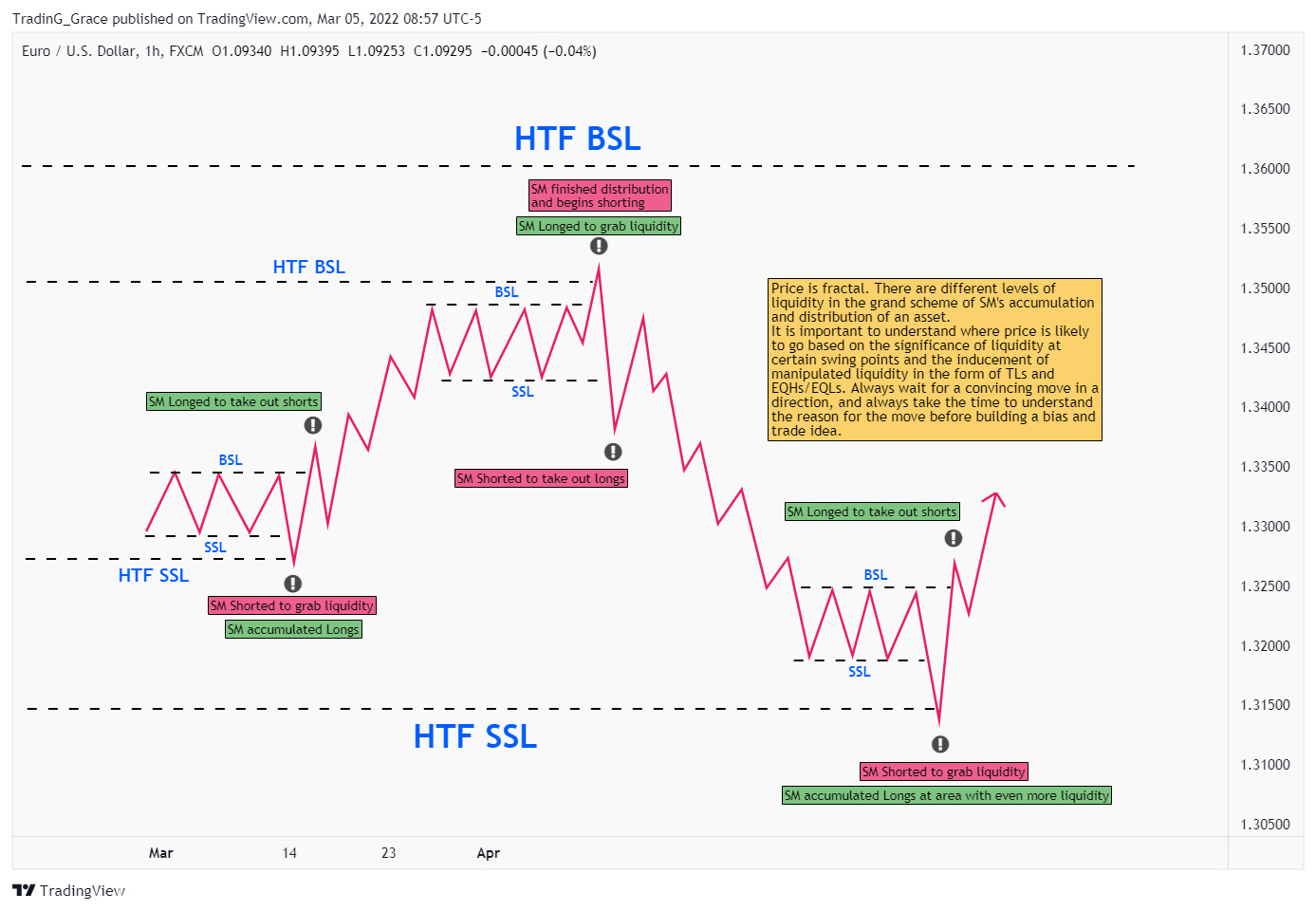
This isn't a breathing exercise wrapped in trading language. These are three specific actions that work because they interrupt the somatic marker loop at the physiological level before you reach the moment of entry.
Step 1: Bilateral stimulation, 20 seconds.
Close your eyes. Tap your left knee, then your right knee, alternating, at a steady slow rhythm. Do this for 20 seconds. The idea is borrowed from bilateral stimulation in therapy (EMDR uses a version of it). For me the point is simple: it gives your body something steady to do and takes you out of the threat loop for a moment. You're not processing the trade. You're changing what your attention is doing. It feels strange the first time. It gets easier with repetition.
Step 2: Verbal confirmation of one reason, out loud.
Not a checklist. Not a review of all confirmations. Pick the single strongest confirmation and say it out loud. One sentence. "Price swept buy-side liquidity, displaced through the FVG, and I'm entering in discount at the 50% of the gap." That's it. Saying it out loud forces you to state the decision explicitly, and in my experience that deliberate, spoken commitment helps override the somatic veto.
Step 3: Define what a loss here means, specifically.
Before you click, say (or write in two seconds): "If this stops me out, I lose 0.5%. That's [dollar amount]. I've absorbed that before." You're not catastrophizing. You're defusing the threat response by making the worst case concrete and survivable. The amygdala's veto power is strongest when the threat feels vague and unlimited. Naming the specific number shrinks it.
Total time: under 60 seconds. Do this before every entry, not just after losing streaks, so it becomes a conditioned routine rather than an emergency procedure you only reach for when things are already bad.
The Archetype That Gets Stuck Longest
Among traders who struggle specifically with freeze-at-entry, there's a consistent pattern worth naming. It's the trader who is technically excellent, genuinely. They read structure well. Their markup is clean. They can identify a high-probability FVG or an institutional order block with real precision. But their execution rate on A+ setups is paradoxically lower than their execution rate on B-grade setups.
Why? Because the B-grade setups don't carry the same emotional weight. There's less at stake with a setup they're only 60% confident in, and that lower stakes means the veto mechanism doesn't fully activate. So they enter the mediocre setup easily, get a mixed result, and then watch a textbook A+ play unfold without them.
If that archetype sounds familiar, I'd also point you toward why Q2 2026 market structure shifts are breaking traditional ICT setups, because part of what makes the freeze worse this year is that price has been more erratic around confirmation points, which amplifies the nervous system's uncertainty response right at the moment you need clarity.
What This Isn't
Let me be direct about what I'm not saying here, because the trading psychology space has a bad habit of turning insight into toxic positivity.
I'm not saying the solution is to always enter your A+ setups and trust that it works out. Setups fail. ICT setups fail. Markets are probabilistic and Q2 2026 has been particularly volatile around liquidity sweeps, as I wrote about in the April NFP week analysis here. A 70% win rate strategy still loses 30% of the time. The goal isn't fearlessness. The goal is making execution decisions from your trained analytical mind rather than from your threat-conditioned nervous system.
There's an important distinction, too, between the freeze described here and a legitimate hesitation that comes from genuine uncertainty in the setup. Not every pause is a neurological veto. Sometimes price action is ambiguous and caution is the right call. The way to tell the difference: if you can articulate one clear reason the setup is valid without searching for it, the hesitation is emotional. If you're genuinely scanning for confirmation that isn't obvious, the hesitation might be rational.
The ICT FVG trading checklist is useful here, run through it not as a reassurance ritual but as a diagnostic tool to determine whether your hesitation is analytical or somatic.
The Uncomfortable Truth About Experience
Here's what I know now that I genuinely didn't understand in my first few years: experience doesn't eliminate the freeze. It changes when it shows up.
Newer traders freeze because they're uncertain. More experienced traders freeze because they've lost enough times on good setups to build a loss-pattern library that their nervous system references automatically. In some ways, the freeze gets more sophisticated the better you get, because your pattern recognition gets sharper, your emotional memory gets more detailed, and the conflict between system-confirmation and P&L-conditioning runs at higher resolution.
I used to think the solution was more screen time. More backtesting. More confidence built from watching the setups play out in simulation. And those things matter, genuinely, but they don't resolve a somatic veto because simulated losses don't carry real emotional weight. Your nervous system isn't impressed by paper trades. It only updates through real skin in the game, which is exactly why the pre-entry reset ritual has to be practiced on live trades to become conditioned behavior.
If you're at the point where the psychological side of execution is a real bottleneck, take a look at the coaching options available here, the structure of ongoing live analysis and accountability addresses this specific problem in a way that solo practice struggles to replicate.
Otherwise, start with the 60-second reset. Commit to it on every single trade for 30 days. Not just the hard ones. Every one.
You'll be surprised how quickly your nervous system learns that confirmation is permission, not a threat.
Harvest Wright
ICT Trading Coach · 10+ Years Experience
Harvest specializes in ICT methodology and has helped traders pass prop firm challenges, develop consistent strategies, and build the psychology needed for long-term profitability.
Book a Free Discovery Call →Ready to Get Funded?
1-on-1 ICT coaching built around prop firm rules, from a trader who has passed an FTMO Challenge.
Book a Free Discovery CallFree ICT Funded-Trader Playbook
The setups, the pre-trade checklist, and the risk rules I use. Get it free.