
Why Patience Feels Physically Painful in Trading
There's a specific kind of discomfort that hits around 9:45 AM New York time. The setup almost looks right. Price is near your level. Volume is picking up. Your cursor is hovering over the buy button. And somewhere between your chest and your throat, something tightens, a low-grade physical urgency that has nothing to do with logic and everything to do with your nervous system screaming do something.
That feeling? It's not a discipline problem. Understanding that distinction is probably the most important shift in trading psychology I've ever made, and it took me longer than I'd like to admit to get there.
Key Takeaway: Impatience in trading is a neurological dopamine anticipation response, not a character flaw. ICT's killzone and displacement confirmation rules work as accidental circuit breakers for this exact biological loop, which means the solution isn't trying harder to be patient, it's structurally removing the conditions that trigger premature entries.
Myth: Impatience Is a Mindset Problem
Myth: Traders who jump entries lack discipline, and the solution is mental toughness, journaling more, or "trusting the process."
Reality: Dopamine doesn't release when you get a reward. It releases in anticipation of one. Neuroscience has been clear on this since Wolfram Schultz's landmark reward prediction research, your brain floods with dopamine the moment a potential reward becomes visible, not when it arrives. In trading terms, the second price approaches your level, your neurochemistry has already decided to enter. The click is almost a formality.
What I Actually See: The trader who burns through three or four premature entries in a single session isn't undisciplined, they're running a biological script their brain was built to run. The setup looks like it's coming. Dopamine surges. Rational analysis degrades. They enter. Price sweeps liquidity below their entry and reverses to exactly where they should have entered 20 minutes later. They don't learn from this by trying to be stronger next time. They just run the same script again, slightly earlier.
I used to get this wrong constantly in my first few years. Not because I didn't know what a valid ICT setup looked like, I did. But knowing what to do and being able to override a dopamine surge with pure willpower are two completely different skill sets. The first one is teachable in weeks. The second one may not be teachable at all.
The Specific Moment the Pain Peaks
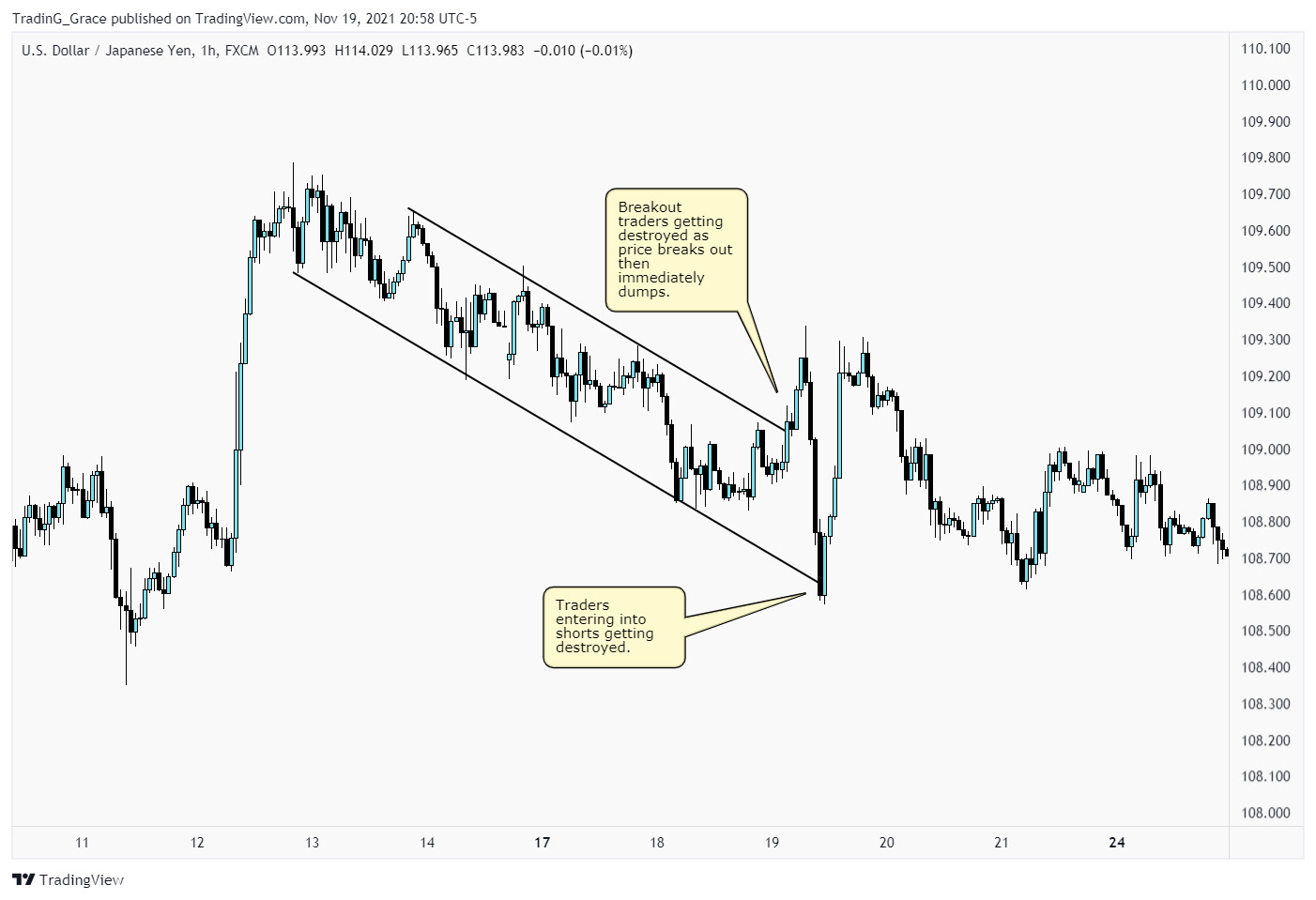
Here's what nobody talks about in trading psychology content: the discomfort doesn't build linearly. It spikes hardest in the 5-15 minutes before a killzone opens.
You're watching GBPUSD during pre-London, roughly 7:45-8:00 AM London time. Price is sitting just above a daily bullish order block. The narrative is clear, you're looking for a long. But London hasn't opened yet. There's no killzone active. There's no displacement confirmation. You're just... waiting.
That wait is neurologically brutal because your brain has already built the reward expectation. It's priced in the dopamine. Every candle that forms without the signal feels like a loss of something you never had. The longer you wait, the more the anticipation loop degrades into anxiety, and anxiety-state decision-making is where the worst entries in your trade journal live.
Premature entries almost always happen in this window. Not during the chaos of a news spike. Not during the Asian range. In the quiet, pre-session, "it looks like it's setting up" window where the only thing happening is your nervous system eating itself.
Why ICT's Time Rules Are Accidentally Genius
When ICT introduced killzone trading, restricting high-probability trade entries to specific time windows like the London open (2:00-5:00 AM ET), New York AM session (7:00-10:00 AM ET), and the London close (10:00 AM-12:00 PM ET), the framing was always about institutional order flow and liquidity delivery. Which is accurate.
But there's a second-order effect that almost nobody talks about: killzones structurally eliminate the conditions that cause dopamine-driven premature entries.
Think about what the rule actually does. If you commit, genuinely commit, to only entering during a defined killzone, then all that pre-session screen staring becomes observational by definition. The anticipation loop still fires. But it has nowhere to go. You literally cannot act on it within your own rules. And that forced gap between stimulus and response is exactly what behavioral neuroscience calls a "circuit breaker", a structural intervention that prevents automated behavior from completing.
This is why traders who implement killzone discipline with genuine rigidity often describe the same experience: the first few days feel worse, not better. The urgency is still there. It's just blocked. But by week two or three, something shifts. The pre-session anticipation starts to feel less like a cue to act and more like a cue to prepare. The neurological loop gets redirected.
Combine that with ICT's displacement confirmation requirement, waiting for a decisive move away from a level before considering entry, rather than entering speculatively into a static order block, and you've got a two-layer forcing function that addresses both the timing trigger and the entry quality trigger of premature decisions.
This isn't me theorizing. Here's what it looked like in practice recently.
A Real Trade, Not a Hypothetical
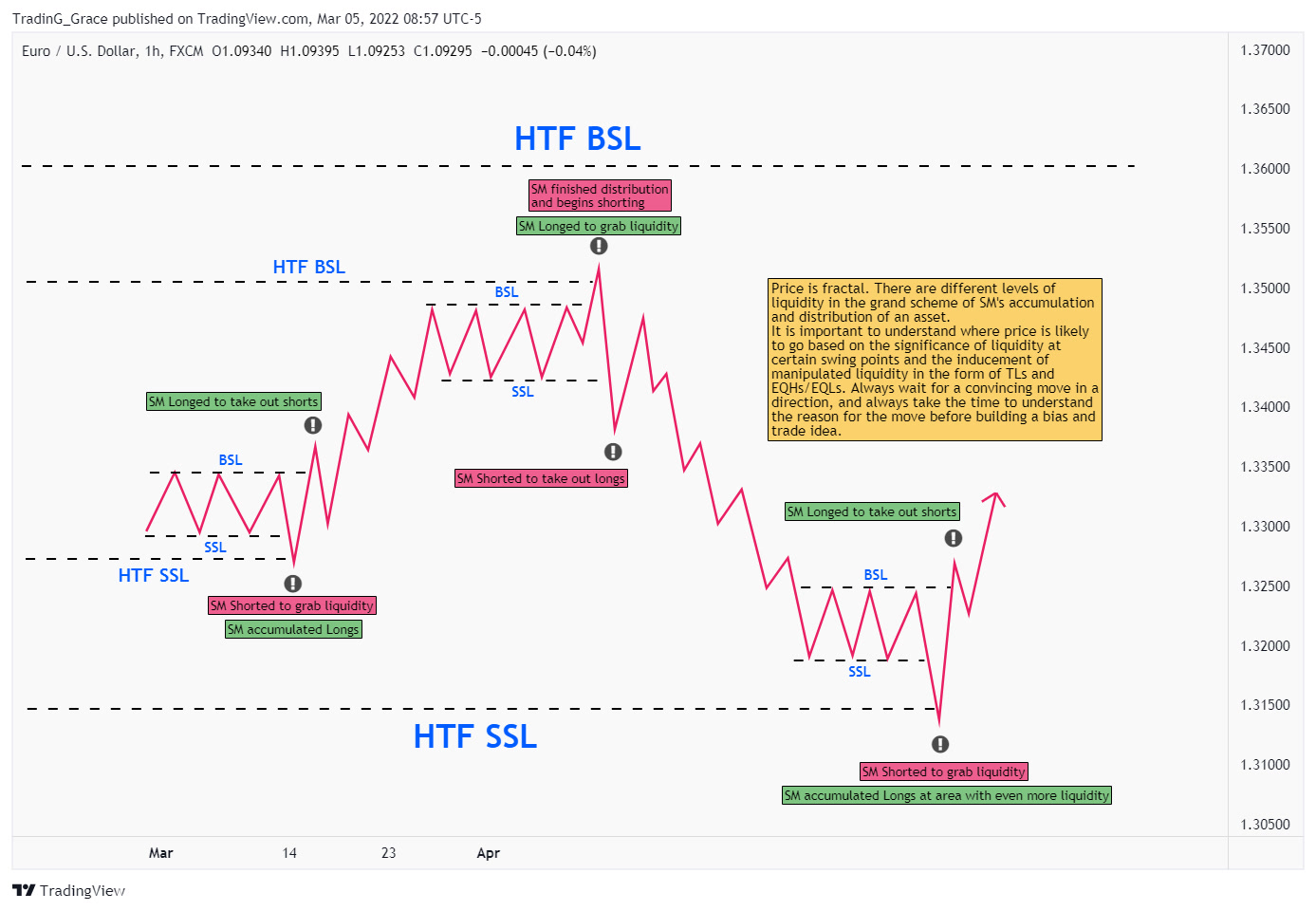
Monday, May 4th, 2026. EURUSD, 15-minute chart. I'd marked a bullish order block on the daily at 1.0812-1.0819 from the prior Thursday's displacement leg. The weekly narrative was bullish, price had swept equal lows at 1.0798 on Friday's close and I was expecting a continuation toward 1.0940 as the first draw.
Pre-London, price was sitting at 1.0831. Twenty pips above my entry zone. Every 15-minute candle that formed between 6:45-8:00 AM London time looked suspiciously like it wanted to drop. My cursor hovered. The tightening in the chest was real.
Killzone rule held. I didn't touch it.
8:07 AM London open: price dropped sharply, traded into 1.0814, created a fair value gap on the 5-minute from 1.0814 to 1.0821, and displaced bullishly back through 1.0830 within two candles. Displacement confirmed. FVG identified. I entered at 1.0823 on the pullback into the gap with a 15-pip stop to 1.0808, risking 0.8% of the account.
The trade ran to 1.0891 before I took partials at the -0.5 fibonacci extension. Final close at 1.0878. Roughly 3.7R.
The pre-London version of that entry, the one my dopamine was begging me to take at 1.0831, would have been swept on the dip to 1.0814 and stopped out before the real move began. I've taken that exact losing version of that trade more times than I can count from 2018 to about 2021.
The Trader Archetype That Gets Trapped Here
There's a specific pattern I see repeatedly in trading communities and forums: the trader who understands ICT concepts extremely well theoretically but posts consistent losses on what should be textbook setups. When you look at their entries, they're almost right. Entry 10-15 minutes too early. Stop placed at the right level but starting from the wrong price. The setup they drew in their analysis is correct, they just didn't wait for displacement to confirm it was actually activating.
This archetype has usually been trading for 6-18 months. They know the vocabulary. They can identify OBs, FVGs, and liquidity levels on a clean chart. But their entries cluster in the anticipation window, not the confirmation window. And because they're close to the right trade, they interpret every stop-out as "bad luck" or "manipulation" rather than recognizing they're being ejected by the same liquidity sweep that eventually provides the actual entry.
The fix isn't studying more ICT content. The fix is accepting that knowing the setup and having permission to enter the setup are two different rules, and the second rule exists specifically to protect you from your own neurology.
For more on how ICT setups behave differently depending on session timing, this breakdown of Q2 2026 market structure shifts is worth reading carefully.
A Practical Framework: The Three-Gate Entry Filter
Here's exactly how I structure entries to make the neurological circuit breaker automatic rather than willpower-dependent:
Gate 1, Time Gate: Is price currently within a defined killzone? If not, the chart is read-only. No orders placed. No "just in case" limits. Read-only.
Gate 2, Displacement Gate: Has there been a clear, decisive move through the level I'm trading, not just into it? A single large-bodied candle closing beyond the level qualifies. A slow grind into it doesn't. This gate specifically targets the dopamine trigger, displacement is dramatic and obvious, which means it also tends to feel less urgent because the move has already started. Paradoxically, the confirmed entry often feels less exciting than the premature one, which is exactly how you know it's the right one.
Gate 3, Return Gate: Has price returned into a fair value gap, order block, or discounted zone within the displacement range for the actual entry? This is where the entry price lives. Not at the extreme of displacement. In the pullback.
All three gates must be green. One or two out of three is a no-trade.
For anyone building out a checklist around FVG entries specifically, this pre-trade confirmation framework covers the mechanics in more detail than I'll get into here.
Position sizing once you do enter matters just as much, use the risk calculator to make sure Gate 3 entries are sized correctly relative to your stop distance, not based on gut feel about how "strong" the setup looks.
The Contrarian Take Nobody Wants to Hear
Most trading psychology content treats patience as something you build up over time, a muscle that strengthens with practice, journaling, and meditation. And there's some truth to that. But here's what ten-plus years of doing this actually looks like from the inside:
The traders I've seen go from inconsistent to consistently profitable didn't get more patient. They got better at removing the decision.
Patience implies you're sitting with the urge to act and choosing not to. That's exhausting and unsustainable. What actually works is building a system where the urge to act and the opportunity to act don't occur at the same time. That's what killzones do. That's what displacement confirmation does. It's not virtue. It's architecture.
If you're currently fighting yourself every session trying to "be more disciplined," the problem probably isn't your mindset. It's that your system still allows you to enter before your rules say you should. Close that gap structurally, and watch how quickly the internal battle quiets down.
For a broader look at how trading psychology and funded account rules interact, particularly the mistakes that derail challenges at the psychological level, this post on funded account fatal mistakes gets into patterns that will feel familiar.
If you want to work through this kind of framework with consistent structure and accountability, the coaching plans cover everything from foundational concepts to full mentorship. Or if you're still figuring out whether this approach fits where you are right now, book a free discovery call, no obligation, just a real conversation.
The next time you feel that tightening in your chest at 9:45 AM, know exactly what it is. And know that your rules, if you've built them right, are already handling it.
Harvest Wright
ICT Trading Coach · 10+ Years Experience
Harvest specializes in ICT methodology and has helped traders pass prop firm challenges, develop consistent strategies, and build the psychology needed for long-term profitability.
Book a Free Discovery Call →Ready to Get Funded?
Our students pass prop firm challenges in under 60 days with personalized ICT coaching.
Book a Free Discovery CallFree ICT Funded-Trader Playbook
The setups, the pre-trade checklist, and the risk rules I use. Get it free.