The Silence After a Win: Why Profits Break You
February 2024 was my best month in years. Six figures in realised P&L across my prop accounts. Clean setups, clean execution, the kind of month where smart money concepts actually feel like cheating. Every displacement respected. Every order block held. FVGs filled to the pip. I was in a state that traders spend years chasing.
By the second week of March, I'd given back 40% of it.
Key Takeaway: The real danger after a profitable streak isn't overconfidence, it's the neurological withdrawal that follows. Your brain has been conditioned to seek the dopamine of big wins, and when the market goes quiet, you'll manufacture setups that don't exist just to feel something again.
The Win Nobody Warns You About
Every piece of trading psychology content you'll find online focuses on losses. How to handle drawdown. How to bounce back from a blown account. How to manage your emotions after a string of red days. And sure, that's real, I've written about my own $47k prop firm loss here and it nearly ended my trading career.
But losses have a clear villain. You can point to them. You can analyse what went wrong, wrong entry, wrong session, too aggressive on sizing. Losses give you something to fix.
Winning streaks don't. They just end. And that ending is silent, invisible, and more destructive than any losing streak I've ever had.
Here's what actually happens inside your brain during a hot streak, and I'm not speaking loosely here, this is documented neuroscience. Dopamine isn't released when you receive a reward. It's released in anticipation of a reward. The spike happens when you're waiting for price to reach your target, not when it does. Which means every winning trade trains your nervous system to crave that specific cocktail of tension and resolution.
And once the market stops delivering it? Withdrawal.
Not metaphorical withdrawal. Literal, physiological dopamine drought. The same mechanism that makes slot machines addictive, variable reward schedules, is running silently in the background every time a 4R trade closes in your favour. The problem with smart money concepts trading is that when it works, it works beautifully. Clean displacement. Liquidity raid. FVG fill. Target hit. That sequence, when it fires perfectly, is one of the most satisfying experiences in trading. Your brain logs it, hard.
Then the market enters a low-volatility consolidation phase, which Q2 historically brings before summer, and suddenly nothing looks right. Nothing feels right. And that's where traders start manufacturing setups.
The Specific Trade That Exposed Me
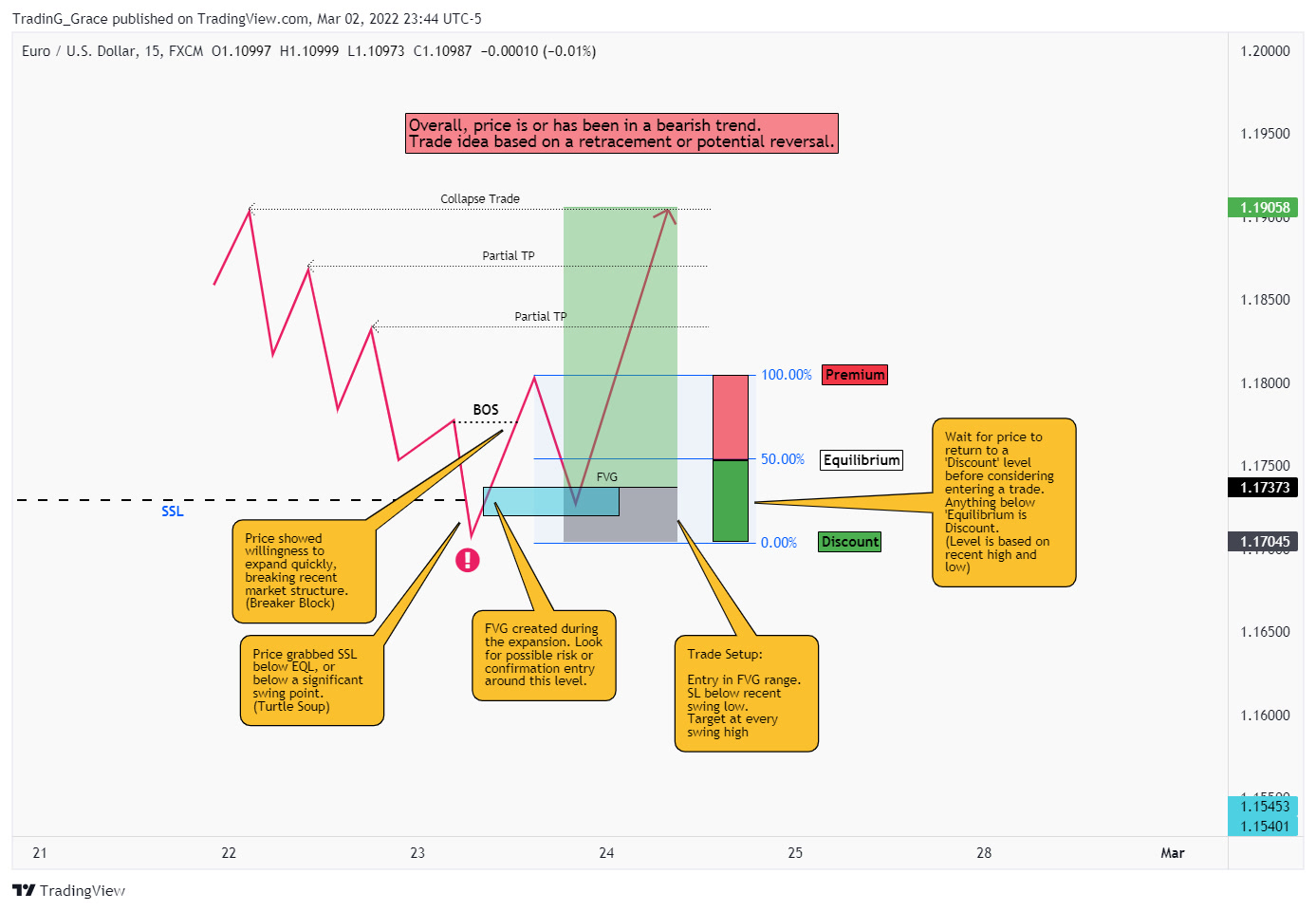
Let me give you the exact trade that cracked this open for me.
It was a Tuesday in mid-March. London session, GBPUSD, 15-minute chart. I'd been watching for a setup since Sunday prep and there was nothing clean, the weekly range was compressed, no obvious premium or discount separation, and the daily structure was ambiguous at best. Any objective read of the chart said: sit on your hands.
But I entered anyway.
I convinced myself I saw a fair value gap forming after a minor displacement around 1.2743. There was a candle gap, technically, but it was three pips wide on a pair that was ranging 40 pips on the day. I called it a FVG. I told myself price was trading at a discount relative to a weekly high I'd drawn, a level that, if I'm honest, I'd retrofitted to justify the trade. I risked 1% with a 22-pip stop targeting 1.2810.
Stopped out in 40 minutes. Price reversed immediately after taking me out, which made it worse, I then re-entered chasing the move, dropped another 0.75%, and finished the session down 1.75% for absolutely no structural reason.
There was no smart money concepts logic in that trade. There was just boredom wearing the costume of analysis.
What I didn't recognise at the time was that I wasn't trading a setup. I was trying to recreate a feeling. The same feeling February had given me every other day for four weeks. My brain had been conditioned, and when the stimulus stopped coming organically, I manufactured it.
The Archetype I Keep Seeing
There's a specific pattern I've noticed in traders who share their journals publicly, particularly in ICT-focused communities, that maps exactly onto what I experienced.
They have a strong run. Three, four, five weeks of above-average performance. Their commentary during this period is calm, methodical, precise. Good trade selection. Proper session filtering. Premium and discount respected. Then, without any obvious external catalyst, the quality of their setups collapses. They start posting trades where the "order block" is really just a random candle they've highlighted because price touched it once. Their FVGs are occurring in the middle of ranges. They're entering during dead hours, 9pm GMT on a Wednesday, for example, and calling it "off-session liquidity."
And when you look at the gap between their good run and their degraded execution, it's almost always 10-14 days. That's roughly how long it takes for the neurological baseline to reset downward after sustained reward.
This trader isn't being reckless. They're not greedy. They're in withdrawal, and they don't know it. The charts start to look different because they need them to look different. Their pattern recognition, which is the core skill in reading smart money concepts price delivery, gets hijacked by need.
A Framework for the Dead Zone
So what do you actually do about this? Because "be aware of it" is not an answer. Here's what I've built into my own process after years of getting this wrong.
Step one: Track your dopamine baseline, not just your P&L. After any week where you hit 3%+ account growth or close three or more trades at 2R or better, I now flag that week in my journal with a specific symbol. It's my signal that the following two weeks are high-risk, not because the market will be bad, but because I will be compromised. The journal entry for those weeks includes a mandatory line: "What am I feeling right now, and is that feeling driving my bias?"
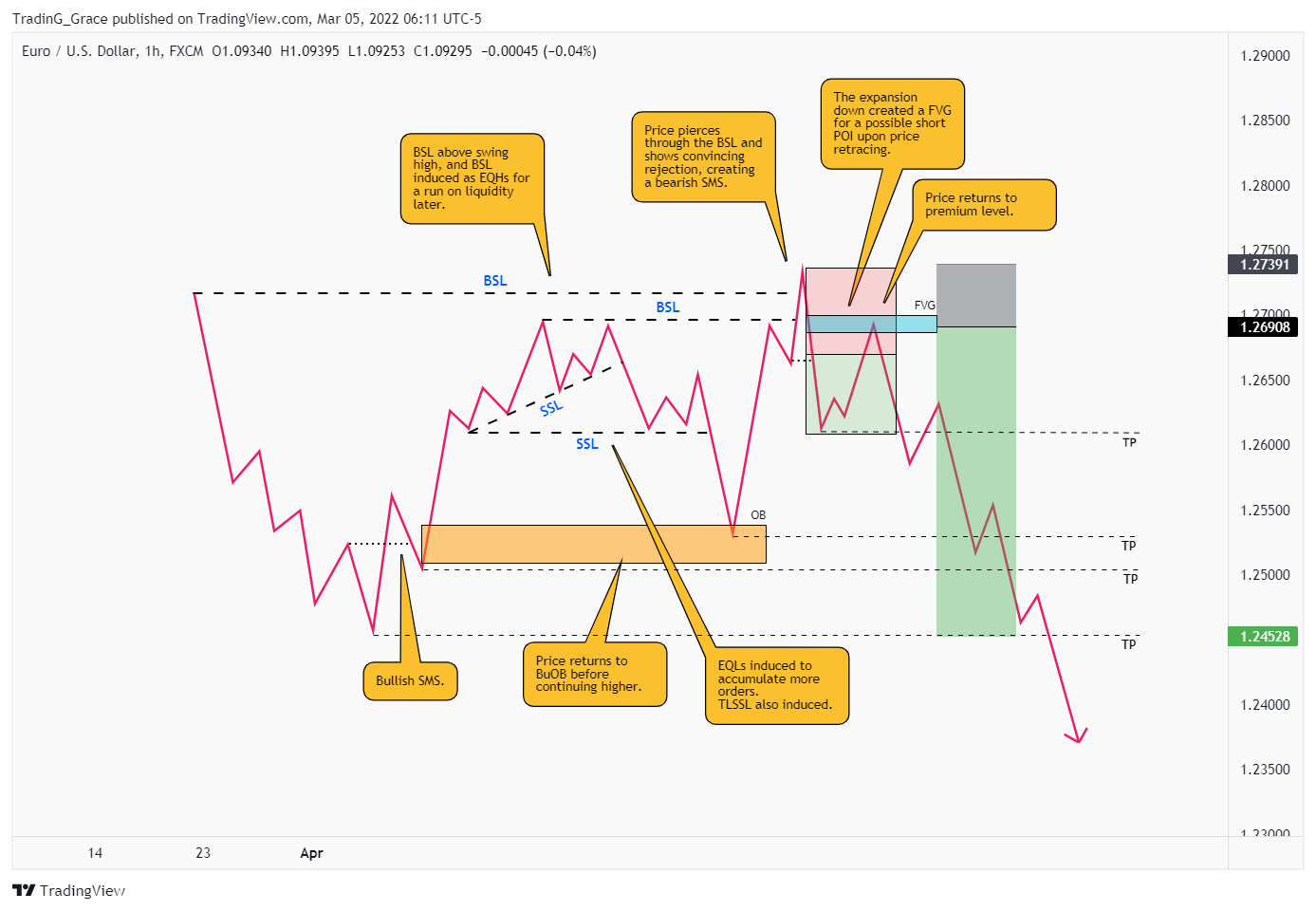
Step two: Raise your quality threshold, not lower your risk. Conventional wisdom says to reduce position size after a drawdown. Fine. But what nobody says is that you should tighten your entry criteria after a winning streak, not the size, the quality filter. I now require one additional confirmation during the 14 days following any strong run. If I'm trading EURUSD on the 15-minute during London, I normally need: HTF bias alignment, a displacement, a FVG, and price returning to that FVG from a discount. After a hot streak, I add a fifth: the FVG must have been formed by a candle that displaced at least 70% through the prior range. It's a tighter box. It means fewer trades. That's the point. Check out the ICT fair value gap trading checklist for the full pre-trade confirmation process I use.
Step three: Deliberately do nothing for 48 hours. This one is uncomfortable. After a notably good week, I now take the first two trading days of the following week as observation only. I chart. I mark levels. I watch price. I do not execute. This sounds simple and it feels impossible. The restlessness during those 48 hours is itself diagnostic, if you're climbing the walls after a winning week, that's the withdrawal signal. Learning to sit with it without acting on it is the actual skill. Research on variable reward schedules and their neurological impact, documented extensively in behavioural neuroscience literature, confirms that breaking the trigger-action loop is the only reliable pattern interrupt. Investopedia's overview of trading psychology touches on the emotional cycle, though it understates the post-win phase significantly.
Step four: Use your best month as a reference for what a real setup looks like, and nothing else. Go back through every trade from your best run. Screenshot the entries. What did they have in common? For me, every strong trade from February 2024 shared three things: they all occurred in the first 90 minutes of London or New York open, they all had a minimum 60-pip range established before my entry, and they all had clean displacement visible on the 5-minute that was also readable on the 15-minute. That's my benchmark now. When I'm in the dead zone, I hold every prospective trade up against that template. If it doesn't match, it doesn't happen. The Q2 2026 market structure piece also covers how current conditions require even tighter filtering, which compounds this point.
The Contrarian Take Most ICT Creators Won't Say
Here's what 10 years in this gives you that one year doesn't: the recognition that skill and results are not the same variable.
Your best trading months are not always your most skillful months. Sometimes February worked because DXY was trending cleanly, because volatility was in a sweet spot, because the setups were genuinely pristine. You didn't manufacture edge, the market handed it to you on a plate and you were competent enough not to mess it up. That's still a win. But it's a conditional win.
The dangerous belief, the one that sets the dopamine trap, is concluding that your best month proves your normal month should look like your best month. It doesn't. Smart money concepts price delivery is inherently seasonal, session-dependent, and macro-conditioned. There are weeks where a 0.5% gain is elite performance given what the market was offering. There are months where flat is the correct result.
Overconfidence is the cliché warning. The real trap is the expectation that gets quietly installed after a big run, that the market owes you that experience again, and soon.
It doesn't. And the moment you start believing it does, you'll see FVGs in blank air and order blocks in flat ranges, and you'll lose money that took real discipline to earn.
If any of this is landing, specifically the part about quality degrading after your best periods, it's worth exploring structured accountability before your next strong run sets the trap again. The coaching plans on this site are built around exactly this kind of pattern recognition, not just setup mechanics. If you're unsure where to start, a free discovery call is the lowest-friction next step.
And if you want to stress-test whether your current trade criteria would have held up through the last drawdown, the risk calculator is a good place to start pulling that thread.
The silence after a win is real. Now you know what it's doing to you.
Harvest Wright
ICT Trading Coach · 10+ Years Experience
Harvest specializes in ICT methodology and has helped traders pass prop firm challenges, develop consistent strategies, and build the psychology needed for long-term profitability.
Book a Free Discovery Call →Ready to Get Funded?
Our students pass prop firm challenges in under 60 days with personalized ICT coaching.
Book a Free Discovery CallFree ICT Funded-Trader Playbook
The setups, the pre-trade checklist, and the risk rules I use. Get it free.