The Silence Trap: Why Smart Traders Stop Journaling
There's a version of this story every serious trader knows but almost nobody says out loud. You're in a drawdown, real drawdown, not the paper kind, and you open your trading journal, and you just... close it again. Blank page. Nothing. You tell yourself you'll write it up later. You don't.
That silence? That's the trap. And in my experience, it's one of the clearest warning signs that a blown account is coming.
Key Takeaway: In my experience, experienced traders are more likely than beginners to quietly abandon their trading journal during drawdowns, and that abandonment is itself a warning sign that the account is in trouble. The fix isn't more discipline. It's reframing what the journal is actually for.
The Myth That Journaling Is a Beginner's Tool
Every 'how to start a trading journal' article online targets the same person: someone who just discovered ICT concepts, still watching three-hour YouTube breakdowns on order blocks, trying to figure out what a fair value gap actually means in live price action. The advice is always the same. Log your entries. Track your R. Screenshot your setups. Build the habit.
That's fine advice. It's not wrong. But it completely misses the real crisis, because beginners almost always journal. They're excited. Every trade feels like a lesson. The journal is part of the ritual.
The traders who secretly stop? They've been doing this for two, three, five years. They have a system that works. They've had funded accounts. They know exactly what ICT concepts look like in live markets, and they've got the track record to prove it. And then a rough stretch hits, maybe a prop firm drawdown, and the journal goes quiet. Not loudly. Quietly. Like a light someone forgot to turn off.
I used to get this wrong, by the way. Early in my trading, I thought journaling consistency was a beginner problem. That experienced traders just did it automatically. Then I started paying attention to the pattern across my own rough patches, and the truth was uncomfortable.
What's Actually Happening Psychologically
Here's the thing nobody frames correctly: journaling after a bad trade doesn't feel like data collection. It feels like confession.
When the trade worked, writing it down is satisfying. You're documenting your own intelligence. "Identified the 15m FVG after London open displacement, waited for confirmation, executed clean." That feels good to write. It reinforces the narrative that you know what you're doing.
But after a loss? After you entered a GBPUSD short from what looked like a textbook bearish order block on the 4H, only to watch price rip 80 pips through your stop because you missed the fact that you were still trading in a discount, not premium, and the OB was never going to hold?
Writing that down doesn't feel like learning. It feels like prosecution.
The journal becomes a record of your failures. And somewhere in the psychology of a trader who knows better, who has studied this methodology long enough to recognize their mistakes in real time, that record starts to feel less like a tool and more like evidence against them.
So they stop. Completely quietly. And that's the shame loop.
The Archetype I See Over and Over
There's a specific trader pattern that shows up again and again in the ICT space. This trader has done the work, understands PD arrays, trades during kill zones, respects the weekly range. For a period, they're profitable. Consistent. The kind of trader who posts their journal publicly because they're proud of it.
Then Q1 or Q2 hits with a volatility shift, the setups that were working get choppy, exactly the kind of market structure disruption we've been seeing this year, and the losses start stacking. And this trader, instead of documenting the losing trades with the same rigor as the winners, starts selectively journaling. They write up the three trades that worked. They skip the four that didn't.
The journal becomes curated. A highlight reel. And now it's completely useless, not just unhelpful, but actively dangerous, because it's feeding a distorted picture of their own performance back to them.
I've seen this pattern end accounts. Not dramatically. Quietly, over weeks, with the trader convincing themselves they're "figuring it out" because their journaled win rate looks fine.
A Worked Example
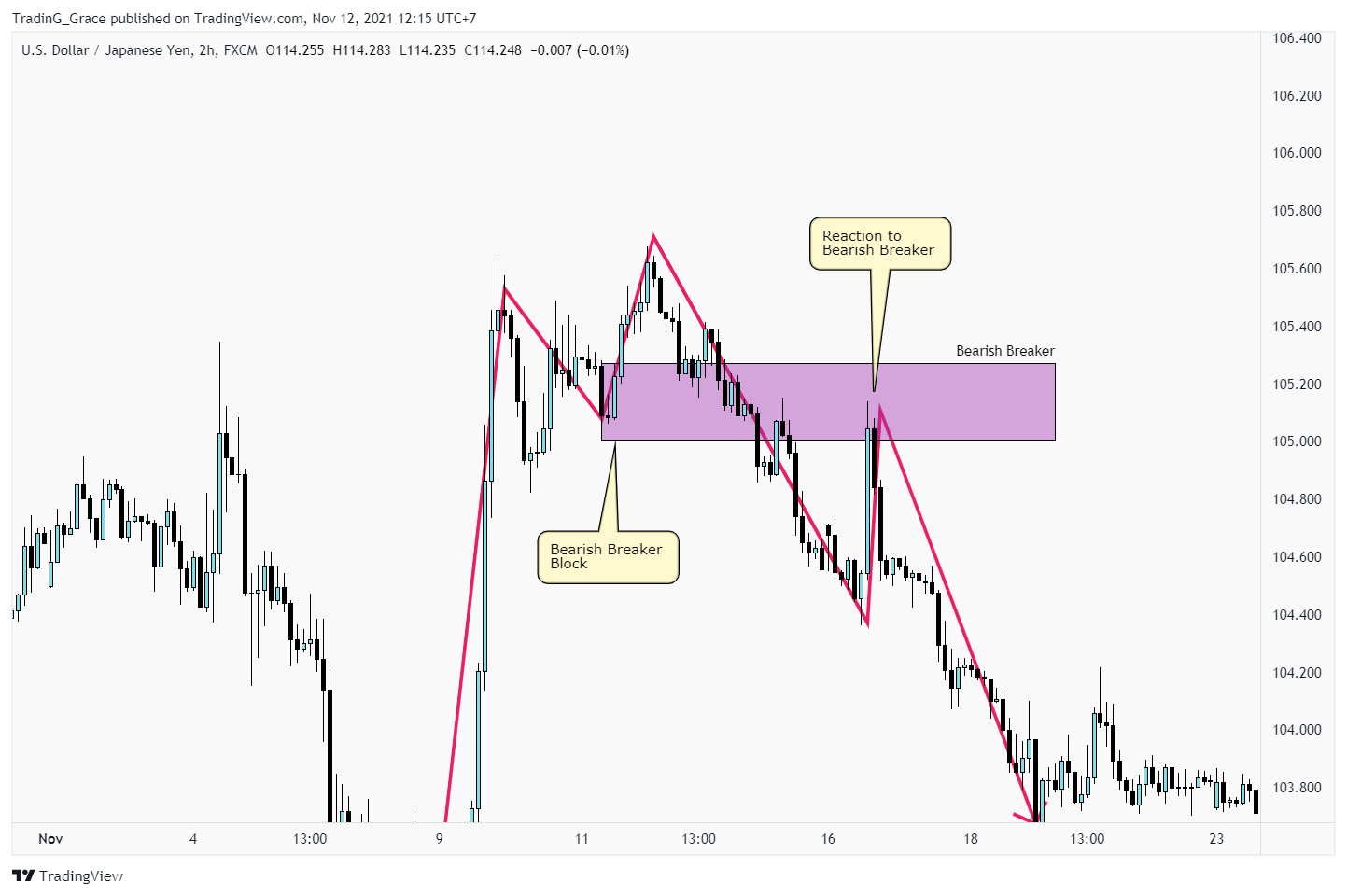
Let me give you a concrete trade to anchor this, because abstract psychology without market context is just noise.
Picture a trader's week with two trades in it.
The first is EURUSD on the 15-minute during London. Price displaces aggressively to the downside and leaves a clean FVG. They mark it, wait for a retracement into the gap during the early New York overlap, and go short with the stop just above the gap, because a move back through it means the displacement has failed. The target is the sell-side liquidity resting below a prior Asian session low. Whether it runs all the way or they manage it out with partials, it's a clean, rule-following trade.
The second is the opposite story: a GBPJPY entry from a 1H order block they know is borderline. Price structure isn't clean. They take it anyway because they've been sitting on their hands for two sessions and want to trade. Stopped out. Clean loss, entirely self-inflicted.
If they only journal the EURUSD trade, they look like a disciplined ICT trader. If they journal both, they see the actual truth: a patience problem that surfaces after quiet periods, and a steady leak of avoidable losses.
That GBPJPY loss, written up honestly, is worth more than ten winning trade reviews. That's what the shame loop robs you of.
The Counter-Intuitive Reframe That Actually Works
Here's what shifted things for me, and what I'd suggest as a practical framework, not a motivational idea, but an actual structural change to how you approach the journal.
Stop treating your trading journal as a performance record. Treat it as a pattern recognition database.
The distinction sounds small. It isn't. A performance record exists to judge you. A pattern database exists to inform you. Same words on the page. Completely different psychological relationship with the act of writing.
In practice, here's the framework I use after any trade, winner or loser:
Step 1, Log the setup objectively (no outcome language). Pair, timeframe, session, entry price, stop distance, risk %, the specific PD array or confluence that triggered the entry. Write this before you look at what happened next. If it's a trade you're reviewing after the fact, describe only the entry logic.
Step 2, Separate process from outcome. Did you follow the rules you had before entering? Yes or no. This is binary. A losing trade where you followed your process is a good trade. A winning trade where you deviated from your process is a bad trade. This single reframe changes the emotional relationship with losses entirely.
Step 3, Identify one pattern label. Not a paragraph of analysis. One tag. "Patience failure." "Premium entry." "Correct." "Session timing error." Over thirty trades, these tags start forming a frequency distribution that tells you exactly where your edge leaks. You can even track this in a simple spreadsheet alongside your risk calculator data.
Step 4, Write one sentence about the next trade. Not a rule. Not a promise. Just: "Next time I see this setup, I will _____." Present tense, specific action.
Four steps. Takes a few minutes. And critically, it reads like data, not confession.
Why the Silence Is a Blown Account Signal
I want to come back to the core warning here, because I think it deserves to be said plainly.
When a trader goes silent in their journal, it's rarely laziness. Lazy traders were never really journaling consistently to begin with. The silence comes from shame, from the specific discomfort of a trader who knows what they're doing wrong and doesn't want to formalize it on paper.
And here's the brutal irony: the more you know, the worse the shame feels. A beginner who blows through a stop because they didn't understand the concept doesn't carry that psychological weight. An experienced ICT trader who enters a perfectly identified setup at the wrong time in the premium array, like the order block failures we've been breaking down this month, knows exactly what they did wrong in real time. That self-awareness without documentation is corrosive.
It also means behavioral patterns compound silently. The patience failures, the session timing errors, the entries in premium, they keep happening because they're never formally named. The journal going dark is the moment those patterns go from recoverable mistakes to account-ending habits.
If you've gone more than a week without a journal entry and you're in a drawdown, that's not a productivity problem. It's a signal worth taking seriously. You can read more about the mental patterns that precede blown funded accounts in this breakdown of the most common funded challenge mistakes, silence shows up there too, just in a different form.
What to Do Right Now
Open your journal. Don't open last week's trades to review. Don't start a new template or a new system. Just open it.
Write one sentence about the last trade you took. Setup, pair, outcome. One sentence.
Then write one sentence about whether you followed your process.
That's it. You've broken the silence. The shame loop only has power in the gap between the trade and the page. Close the gap, even badly, even briefly, and you're already doing something a lot of experienced traders quietly stop doing exactly when they need it most.
If the psychological side of drawdown management is something you're navigating right now, or if the pattern recognition work in your journal keeps revealing the same gaps without a clear path to fixing them, the coaching plans on this site are built specifically for ICT traders who are past the beginner stage but hitting exactly these walls. You can also browse more trading insights if you want to keep reading before deciding anything.
But first, open the journal. One sentence. Right now.
Harvest Wright
ICT Trading Coach · 10+ Years Experience
Harvest specializes in ICT methodology and has helped traders pass prop firm challenges, develop consistent strategies, and build the psychology needed for long-term profitability.
Book a Free Discovery Call →Ready to Get Funded?
1-on-1 ICT coaching built around prop firm rules, from a trader who has passed an FTMO Challenge.
Book a Free Discovery CallFree ICT Funded-Trader Playbook
The setups, the pre-trade checklist, and the risk rules I use. Get it free.