
The Patience Trap: Why ICT Traders Overtrade
Everyone in the ICT trading world says the same thing: be patient, wait for the setup, don't force it. And on the surface, that's correct. But here's what nobody's saying, that advice plants a psychological time bomb inside every serious trader who follows it.
Key Takeaway: Overtrading in ICT isn't caused by impatience. It's caused by the guilt and restlessness that accumulates during legitimate slow periods, until a disciplined trader subconsciously lowers their criteria just to feel productive. Recognising this rebound effect is what separates consistently profitable traders from perpetually frustrated ones.
Why "Just Be Patient" Is Incomplete Advice
Patience in ICT trading is treated like a virtue with no ceiling. Wait for the displacement. Wait for the liquidity sweep. Wait for the fair value gap to form in the right premium or discount zone. All valid. All necessary.
But nobody talks about what happens to a trader's mind after two weeks of doing exactly that, watching, waiting, passing on setups, and still not executing. The internal narrative shifts. It goes from "I'm being disciplined" to "Am I even doing anything?" to "Have I lost my edge?" to "Maybe this one counts."
That last thought is where the damage happens.
This isn't impatience. Impatience looks like jumping into a trade after five minutes of watching a chart. What I'm describing is something far more insidious: a trader who has been genuinely disciplined for days or weeks suddenly forcing a marginal setup, not because they can't wait, but because the guilt of waiting has become unbearable.
I've lived this. Early in my career, I'd go through stretches of proper patience, pass on setup after setup that didn't meet criteria, and then eventually execute something I knew, even as my finger was on the button, wasn't clean. Not because I was impatient. Because I felt like I wasn't doing my job.
Myth, Reality, and What I Actually See
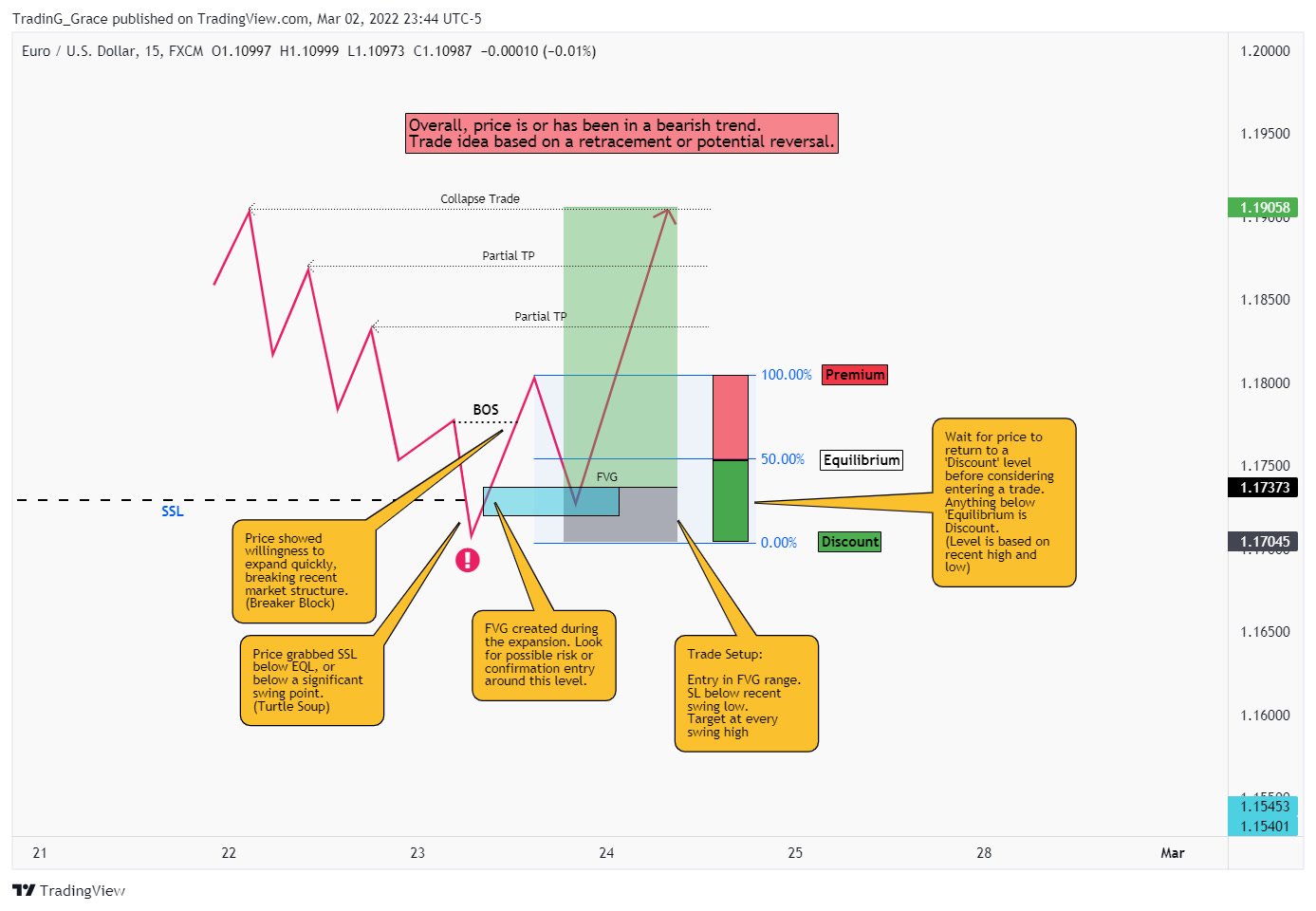
Myth: Overtrading is a discipline problem. Traders who overtrade simply lack the patience to wait for valid ICT setups.
Reality: The traders most vulnerable to overtrading are often the most disciplined ones, precisely because they've built up a psychological debt from weeks of restraint. That debt demands repayment, and it collects in the form of a forced entry.
What I Actually See: A very specific trader archetype. They're not the person frantically clicking into every candle. They're the trader who has diligently passed on setups Monday through Wednesday, watched the market move without them (painful), and by Thursday's London session they're sitting there looking at a 5-minute chart telling themselves an ambiguous consolidation is a breaker block with a clear displacement, when objectively, it's chop. They don't enter because they're impulsive. They enter because silence feels like failure.
This is the patience trap. The ICT framework demands restraint, and restraint, when practised long enough without execution, creates a rebound effect that corrupts your ability to objectively read what's in front of you.
For a deeper look at how this specific psychological distortion leads to blown funded accounts, it's worth reading 7 fatal mistakes that kill your funded account challenge success, the overlap with forced entries is significant.
A Worked Example
Here's the kind of trade I mean.
Picture GBPUSD on the 15-minute chart, early in an NFP week. Over the previous few sessions the trader has passed on three setups: a near-perfect order block that sat in premium when they wanted discount, a decent FVG against the daily bias, and one they simply got to late. All correct passes.
By the New York open they're feeling the weight of doing nothing. Cable has been trending, and they've missed it. Then price taps into what they mark as a 4-hour bearish order block. There's a small wick rejection on the 15m. They tell themselves the displacement is there and go short, stop just above the level.
The problem shows up when you go back through the 4-hour chart honestly. That level isn't a clean OB. It's a consolidation zone that looks like a mitigation point on the lower timeframe because they were searching for one. The HTF bias is still bullish. They flipped it in their head because they needed a trade.
A clean version of this short would need the opposite: a bearish HTF bias, a buy-side liquidity sweep into a real 4H order block, then displacement down leaving an FVG to enter from, with the stop above the sweep high and the target at the sell-side liquidity below. None of that is on the chart.
The stop placement and risk can be perfectly fine, and you can always keep sizing mechanical with a proper risk calculator. The problem is upstream: the setup identification is compromised before sizing ever comes into it.
The Pattern Recognition Problem Nobody Talks About
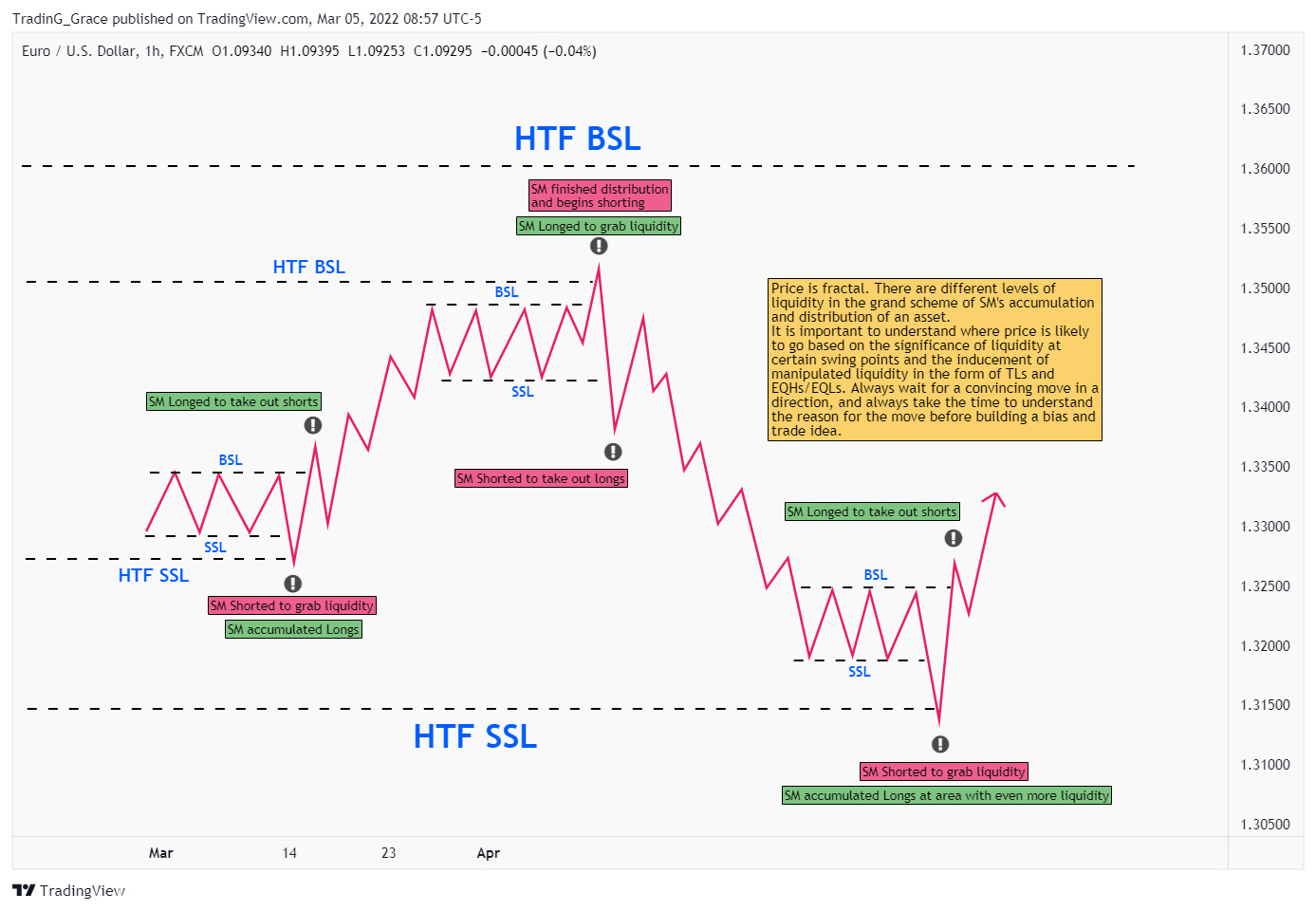
Here's the 10-year truth: your pattern recognition for ICT setups is not a fixed, objective process. It's contextual. It's influenced by how long you've been inactive, whether you've watched the market move without you, and how you feel about your performance relative to your expectations.
When you've been waiting patiently, your brain is actively looking for the signal it hasn't found yet. And a brain in search mode is significantly more likely to find what it's looking for, even if it's not actually there. This is essentially the ICT version of confirmation bias, but with an added guilt component that most trading psychology content ignores entirely.
Fair value gaps are particularly vulnerable to this. An FVG is defined by specific criteria, a three-candle formation with a gap between the high of candle one and the low of candle three, ideally with displacement. But when you're in rebound mode, you'll find yourself rationalising gaps that are ten percent too small, or in zones that are technically premium when you need discount. You're not lying to yourself consciously. The bias is doing the work below the surface.
This is also why the Q2 2026 environment has been particularly brutal for ICT traders, ranging markets reduce the frequency of clean setups, which extends waiting periods, which accelerates this rebound effect. If you haven't already, the breakdown in why Q2 2026 market structure shifts are breaking traditional ICT setups and how to adapt addresses exactly why this is happening right now.
A Practical Framework: The "Abstinence Ledger"
Here's what I now use, and it's simple enough to implement today.
Keep a log. Not of your trades. Of your passes. Every time you look at a potential ICT setup and decide not to take it, write down the pair, the timeframe, the reason you passed, and a honesty rating from 1 to 5 on how easy that pass felt emotionally.
When your pass count reaches five or more entries in a single week, treat yourself as high-risk for a forced entry. This is your internal yellow flag. At that point:
Step 1: Before any entry, write the setup description in one sentence without looking at the chart. If you can't articulate it cleanly from memory, you don't have a setup, you have a hope.
Step 2: Check your HTF bias explicitly. Open your 4-hour or daily chart first, confirm the bias hasn't shifted in your head due to recency bias on the lower timeframe. If your live trade direction doesn't match the HTF narrative, you need a specific, documented reason why.
Step 3: Run the "five days ago" test. Ask yourself: if I'd seen this exact configuration five days ago before I'd passed on anything, would I have entered? If the honest answer is no, the setup criteria haven't changed, your desperation threshold has.
Step 4: If you pass the first three steps, size normally and execute. If you fail any of them, mark the setup as a "paper review", watch what happens, add it to your journal, but don't risk capital.
This framework doesn't restrict trading. It creates a checkpoint that specifically targets the rebound mechanism, not the individual setups. The goal isn't fewer trades, it's trades where your analysis is still operating cleanly.
For a more granular checklist on confirming FVG entries specifically before you size in, the ICT fair value gap trading checklist covers nine pre-trade confirmations worth running through before any entry.
The Deeper Reframe
Professional trading in any methodology is uncomfortable. But ICT trading has a particular cultural emphasis on patience as the hallmark of a serious trader, which inadvertently creates shame around inactivity. Passing on five setups should feel like a win. In practice, it accumulates emotional pressure.
The traders I see consistently navigating this well aren't the ones who've somehow eliminated the urge to trade. They're the ones who've built external systems, the pass log, the HTF bias check, the sentence articulation test, that sit between the emotional state and the execution button. They've accepted that their own psychology, not the market, is the variable most likely to corrupt a perfectly good framework.
That's the real edge after a decade of doing this. Not better setups. Not more screen time. The ability to detect when your internal environment has shifted enough that you're no longer reading the market, you're negotiating with it.
If this is the layer of ICT trading you want to work on seriously, have a look at the coaching plans, the structure there is built around exactly this kind of framework development, not just strategy delivery. Or if you're still building your foundation, the crash course is the place to start before the psychological nuances even become relevant.
The market doesn't care how long you've been patient. It doesn't owe you a setup. And the moment you forget that, not because you're impulsive, but because you've been disciplined for too long, is precisely when it takes your money.
Start the pass log this week. See what it shows you after five trading days.
Harvest Wright
ICT Trading Coach · 10+ Years Experience
Harvest specializes in ICT methodology and has helped traders pass prop firm challenges, develop consistent strategies, and build the psychology needed for long-term profitability.
Book a Free Discovery Call →Master Your Trading Psychology
Psychology is a huge part of trading. Our coaching includes dedicated psychology sessions.
See Coaching PlansFree ICT Funded-Trader Playbook
The setups, the pre-trade checklist, and the risk rules I use. Get it free.