
The Silence Problem: Why ICT Traders Overtrade
There's a moment every serious ICT trader knows. The chart is open. London has opened flat. New York is grinding sideways. The higher timeframe bias says wait, but your eyes keep moving across the screen, hunting. You zoom into the 5-minute. You spot what looks like a rejection block. There's a small FVG just above. A recent swing low sitting there like bait. And before you've finished your second coffee, you've convinced yourself this is the setup.
It isn't. You know it isn't. But you take it anyway.
Key Takeaway: In my view, ICT traders often overtrade less from greed or lack of discipline and more because ICT's conceptual framework trains the brain to see valid structure everywhere, making inaction feel like incompetence on days when the market genuinely offers nothing worth trading.
Every overtrading article I've ever read reaches for the same explanations. Greed. Impatience. Lack of discipline. And sure, those forces exist. But after more than a decade of trading, I think greed is often not the real villain when an ICT trader's account bleeds out. The real culprit is quieter, more insidious, and it hides inside the very framework that makes ICT trading powerful in the first place.
Your Greatest Skill Is Working Against You
Here's the contrarian take that most ICT YouTube creators won't say out loud: the richer and more sophisticated your conceptual framework, the more dangerous you become to yourself on low-probability days.
Think about what ICT trading actually requires of you. You spend months, sometimes years, training your eye to identify order blocks, fair value gaps, liquidity pools, displacement candles, breaker blocks, optimal trade entries, market structure shifts. You study sessions, killzones, manipulation phases. You learn to read price not as random movement but as intentional engineering by institutional participants. That's an enormous amount of cognitive infrastructure. And all of it is pattern-recognition machinery.
Once that machinery is built, it doesn't have an off switch.
A trader using a simple moving average crossover system sits in front of a flat market and sees... nothing. The lines aren't crossing. There's no setup. The inaction is obvious. But an ICT trader sits in front of that same flat market and sees a potential inducement above the last high, a theoretical order block at the previous day's low, a fair value gap from yesterday's Asian session that price hasn't returned to fill. Every concept becomes a potential signal. The framework that was supposed to give you clarity becomes a pattern-generation engine running on overdrive.
Psychologists have a word for this: apophenia, the tendency to perceive meaningful connections between unrelated things. Gamblers see patterns in random numbers. Conspiracy theorists connect unrelated events. And ICT traders, on dead market days, manufacture setups from noise. It's not stupidity. It's what happens when a highly trained pattern-recognition brain encounters ambiguity and silence.
A Worked Example
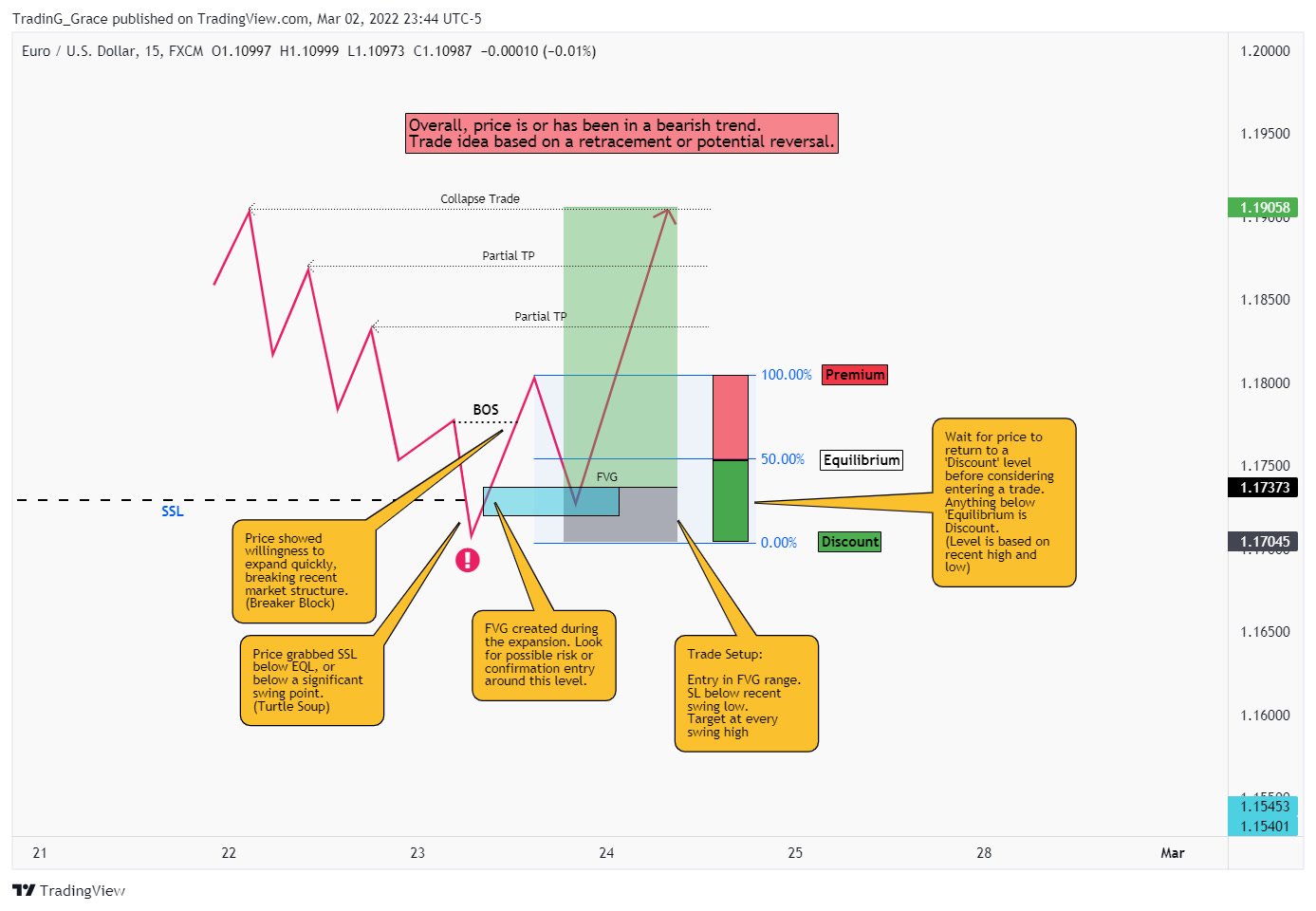
I've made versions of this mistake myself, so here's what it looks like.
Picture GBPUSD grinding in a tight range all week. No clean displacement out of London. New York open comes in flat. The weekly bias is bearish, and there's a 4-hour order block above price. Mid-morning New York time, price makes a weak rally into that zone.
On the 15-minute chart, there's a small-bodied candle that the trader decides is confirmation. They go short with the stop just above the order block, targeting a previous liquidity pool below. On paper, a big R multiple.
Price pokes up and takes the stop. Classic.
Then the part that really stings: a re-entry with the same bias and a tighter stop. Stopped again. Then a third. A handful of small losses in a few hours on a market that was going nowhere.
Here's the lesson: the 4-hour order block was valid. The weekly bias was reasonable. But that day had no fundamental catalyst, no session displacement, no clean liquidity sweep to anchor the trade. It was a theoretically correct ICT setup in a market that had no intention of moving. The setup existed in the framework. It didn't exist in the market.
For anyone who wants to understand how these kinds of days compound into funded account failures, this breakdown of 7 fatal mistakes that kill funded account challenges covers exactly that territory.
The Archetype I See Most Often
There's a specific trader pattern that shows up repeatedly in ICT communities. This person has done the work, genuinely. They understand the concepts deeply. They can mark up a chart beautifully. Their trade reviews are thorough. Their backtests look fine. But their live account bleeds slowly and consistently, and when you look at the trade log, the diagnosis is often immediate: they trade every single day.
Not because they're greedy. Because they feel obligated.
They've built an identity around being an ICT trader. Not trading on a given day feels like being a chef who didn't cook, a writer who didn't write. The methodology is so internalized that abstaining from it feels like abandonment. So on Mondays with no macro driver, on dead Wednesdays before a Fed meeting, on Fridays when London has already closed and New York is drifting, they find something. The FVG is technically there. The order block is technically valid. The liquidity is technically resting below. And they take the trade, because the alternative is sitting in silence with a fully loaded analytical brain and nothing to aim it at.
The uncomfortable truth? In my view, a simpler price action trader using support/resistance and candlestick patterns is less vulnerable to this trap. They aren't better traders. Their framework just generates fewer potential signals. Less ammunition for the pattern-recognition brain to fire.
A Framework That Actually Works: The Three-Gate Rule
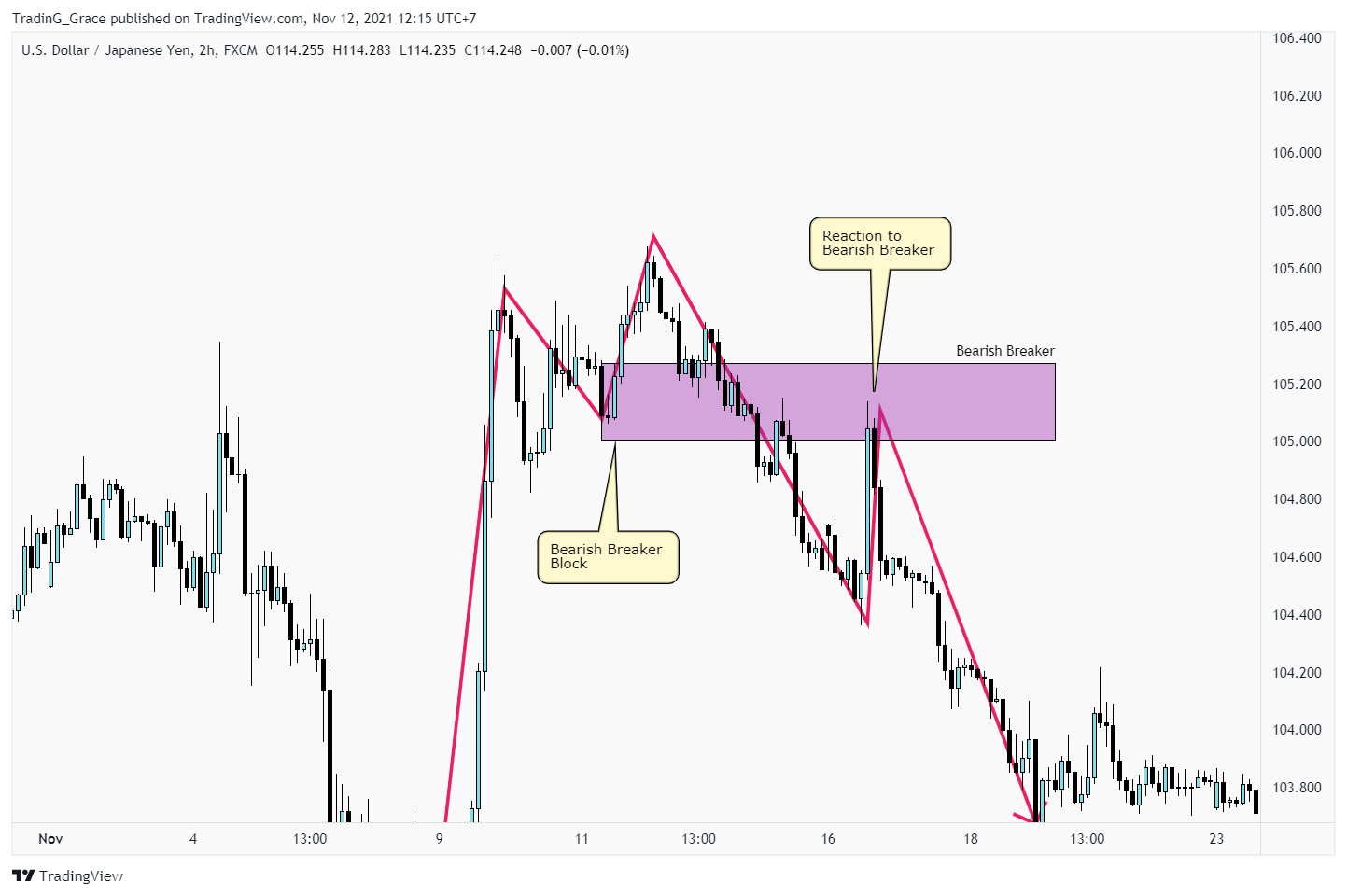
Here's the filter system I use. It sounds simple. It isn't easy.
Gate 1, The Macro Gate. Before I look at a single chart, I ask: does today have a real reason to move? This means checking the economic calendar for high-impact releases, noting whether we're in a killzone (London open, New York open, London close), and identifying whether there's been a clean weekly displacement establishing a directional bias. If none of those boxes are checked, the session is flagged as low-probability. Not impossible, low-probability.
Gate 2, The Liquidity Gate. On days that pass Gate 1, I identify the single most obvious liquidity pool on the daily or 4-hour chart. Not three. Not five. One. Where is the most significant resting liquidity that institutional participants would logically target? If I can't answer that in under 60 seconds without deliberating, the picture isn't clear enough to trade.
Gate 3, The Displacement Gate. I will not enter any trade, regardless of how clean the order block or FVG looks, without a legitimate displacement candle on the 15-minute or higher timeframe first. Not a doji. Not a three-candle creep. A single candle or short sequence of candles that closes beyond structure with obvious momentum, leaving an imbalance. That displacement is institutional footprint. Without it, I'm trading a drawing on a chart.
All three gates must open before I even consider an entry. On a genuine low-probability day, Gate 1 closes everything and I'm done. That's not failure. That's the job. You can dive deeper into how to apply this kind of structural thinking in volatile or ranging markets here.
For position sizing on the days that do qualify, I use a structured calculator rather than eyeballing it, the R2F risk calculator removes one more decision from an already cognitively loaded process.
The Reframe That Changes Everything
A lot of ICT traders are chasing a win rate or a daily target. Both of those incentive structures push you toward overtrading, because both measure activity rather than quality.
Reframe the metric entirely. Instead of tracking how many trades you took this week, track how many times you correctly identified a low-probability environment and did nothing. That's a skill. It might be the hardest skill in ICT trading. A blank trading journal on a dead Tuesday isn't evidence that you wasted the day, it's evidence that your pattern-recognition machinery is finally sophisticated enough to distinguish between real setups and the ones your brain manufactures to fill the silence.
The Q2 2026 market structure shifts post shows why this discipline matters. Ranging, choppy conditions punish ICT traders who can't sit on their hands, and reward the ones who've learned that the silence isn't emptiness. It's information.
If the overtrading problem is something you're actively fighting and want structured accountability around, the R2F coaching plans, from Lite at $150/week through to Full Mentorship, are built around exactly this kind of process work, not just concept delivery.
But start with the three gates. Apply them tomorrow. Not on your next funded challenge, not when you feel ready, tomorrow. Because the market will be open, your pattern-recognition brain will be running, and something will look like a setup.
Most of the time, it won't be.
Harvest Wright
ICT Trading Coach · 10+ Years Experience
Harvest specializes in ICT methodology and has helped traders pass prop firm challenges, develop consistent strategies, and build the psychology needed for long-term profitability.
Book a Free Discovery Call →Master Your Trading Psychology
Psychology is a huge part of trading. Our coaching includes dedicated psychology sessions.
See Coaching PlansFree ICT Funded-Trader Playbook
The setups, the pre-trade checklist, and the risk rules I use. Get it free.