The Boredom Trade: ICT's Silent Account Killer
Some of the most dangerous trades are small losses that felt completely certain going in.
Picture a Tuesday where the New York open passes with zero momentum. GBPUSD has been grinding sideways in a tight range for hours. The analysis is done, the bias is set, the levels are marked, and the trader just... sits there. Waiting. Watching. The kind of waiting that starts to feel like missing out on something.
That's when the brain, armed with years of ICT trading knowledge, starts building a case.
Key Takeaway: Boredom in ICT trading doesn't feel like boredom, it feels like a valid reason to enter. The more you understand smart money concepts, the better your brain gets at constructing convincing arguments for mediocre setups. Learning to treat that feeling as a trap instead of a signal is a big part of making an account last.
A Worked Example
Here's what that case-building looks like on a chart, because specifics matter more than vague warnings.
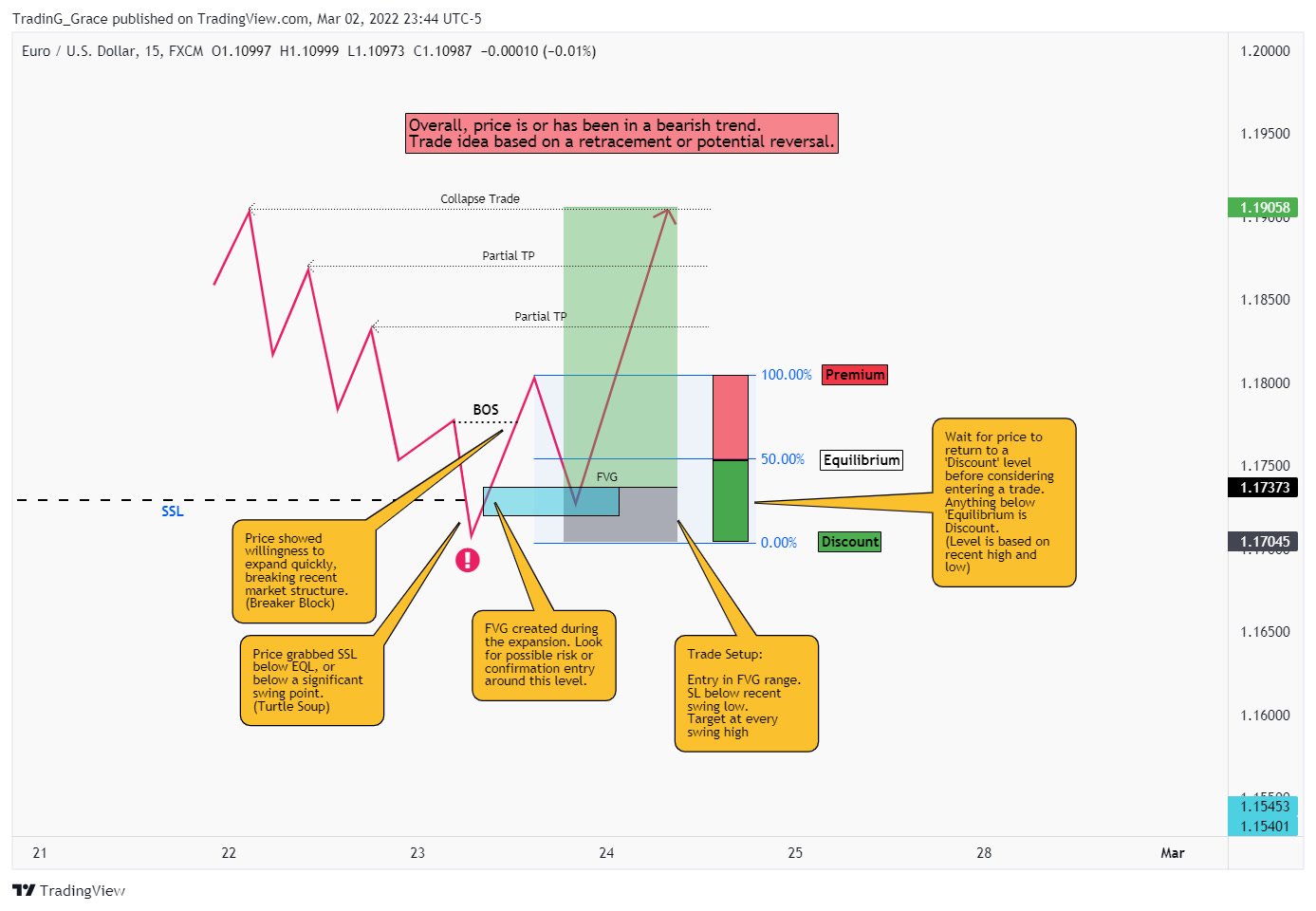
GBPUSD, 15-minute chart, late in the New York AM session. Price sweeps a minor low from the overnight session and bounces, but without the displacement candles you want to see. It's a choppy, overlapping sequence that barely qualifies. There's something that looks like a Fair Value Gap on the 5-minute, formed after a two-candle move up, with an Order Block just below it.
The trader tells themselves: the low was swept (liquidity raid ✓), there's a FVG to work with (imbalance ✓), we're in the discount of the larger range (premium/discount ✓). Three confirmations. They go long with the stop below the swept low and the target at the equal highs above, where the buy-side liquidity sits.
Price chops around, then slowly drifts lower and takes the stop.
The loss isn't the problem. The problem is reviewing that trade later and being unable to find a single box on the pre-trade checklist that wasn't ticked. That should worry you more than a big loss.
Because if the error isn't in the analysis, it's somewhere else entirely.
Boredom Doesn't Announce Itself
Here's what I've come to understand after years of watching how traders think through their setups: boredom is not the opposite of focus. It masquerades as focus.
Here's how I think about it. When you're bored, your brain goes looking for stimulation. For an ICT trader specifically, someone who has spent hundreds of hours studying liquidity sweeps, displacement candles, OBs, FVGs, breaker blocks, the brain has an enormous library of pattern language to draw from. It doesn't just want you to trade. It wants to justify the trade to you using everything you know.
This is the trap that generic psychology advice completely misses. Telling a disciplined ICT trader to "be patient" is almost useless, because they're not feeling impatient. They're feeling confident. The boredom has already been metabolized into a rationale. By the time you're placing the order, you genuinely believe you've done thorough analysis. You have the checklist open. You've gone through it.
But what you haven't checked is: why am I looking for a trade right now?
In that GBPUSD example, the real reason for the entry is that hours of nothing created a pressure the trader wasn't consciously registering. They weren't frustrated. They weren't anxious. They were bored, and the brain converted that boredom into the feeling of a trade being "ready."
The more sophisticated your understanding of ICT trading concepts, the more convincing that conversion becomes. A beginner's bored brain might just place a random trade. Your bored brain builds an airtight case using institutional concepts. That's actually more dangerous.
The Archetype I See Constantly
There's a pattern I've noticed across trading forums, Discord groups, and the results people share publicly, what I'd call the "Overqualified Overtrade" archetype.
This trader has done the work. They understand Market Structure Shifts. They know the difference between a real displacement and noise. Their charts aren't cluttered, they're actually quite clean. And their results during London open and New York killzone setups are genuinely solid.
But then look at their trades between 8 PM and midnight EST. Or Sunday open. Or the hour right before a major news event when price is compressing. Those trades tend to look much worse. And the position sizes often creep up slightly, as if unconsciously compensating for the lower quality.
What's happening? These aren't bad ICT traders making rookie mistakes. These are traders who understand the concepts well enough to see something in any price action if they look hard enough. During dead sessions, the patterns still technically appear. An OB is still an OB at 10 PM on a Tuesday. A FVG is still a FVG during a consolidation range. But the context that gives those tools meaning, institutional participation, directional delivery, time-of-day liquidity, is absent.
The tool works. The environment doesn't support it. And boredom is what closes that gap in the trader's mind.
For a deeper look at why ranging markets specifically destroy otherwise solid ICT setups, this breakdown of order block failures in April's choppy conditions is worth reading. The session timing issue connects directly to what I'm describing here.
The Framework I Actually Use Now
I don't rely on willpower to avoid boredom trades. It doesn't hold up well. Instead, I built a friction system, specific steps that add enough deliberate resistance to interrupt the boredom-to-conviction pipeline before it completes.
Step 1: The Time Audit Question Before I start building a trade case, I ask one question first: Is this a session or time window where I have a documented edge? Not just theoretically, I mean, do my records show positive expectancy during this exact window? I track trades by session: London killzone, NY AM killzone, NY PM, Asian, and "dead zone" (everything else). If the answer isn't clearly yes, I close the chart. Not minimize. Close.
Step 2: The Reverse Checklist Most traders run a checklist to confirm a trade. I added a reverse checklist to disqualify one. Before I touch the entry, I spend two minutes trying to argue the other side. If I'm looking long, I'm asking: where's the convincing short case? Where's the level that invalidates my bias entirely? What would need to be true for this setup to be garbage? If I can't construct a credible counter-argument within two minutes, I'm not in a neutral headspace, I'm in a convinced one. And convinced-before-you-start is almost always a boredom trade in disguise.
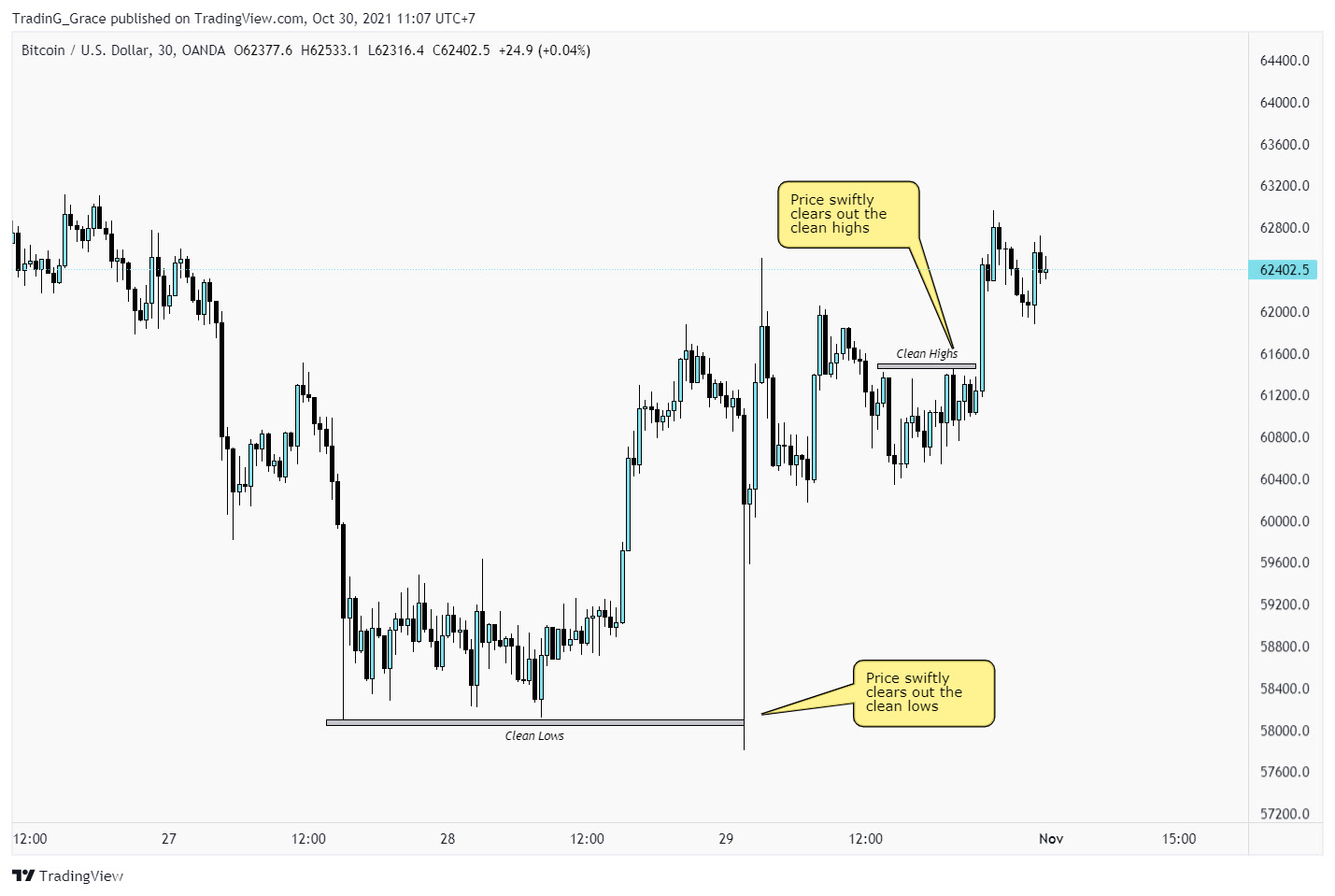
Step 3: The Displacement Demand This one is non-negotiable for me now. No entry without a genuine displacement candle, not just a move, but a three-candle minimum sequence where the middle candle's body exceeds both wicks of the surrounding candles on the entry timeframe. It sounds basic, but boredom trades very often involve a FVG or OB formed from overlapping, indecisive candles. Real displacement has a specific look. Requiring it filters out most of the setups I'd otherwise construct during dead sessions.
Step 4: The 15-Minute Walk Rule If I catch myself refreshing the chart more than twice in ten minutes without price moving toward my level, I physically leave the desk for fifteen minutes. This sounds trivial. It's not. The act of waiting at a chart actively builds the feeling that something should happen. Distance resets that feeling faster than any mental discipline technique I've tried.
If you're serious about cleaning up your entry quality, the ICT FVG pre-trade checklist pairs directly with this framework, particularly steps 2 and 3 above.
The Uncomfortable Truth About Mastery
Here's the contrarian take most ICT content skips over entirely: advanced knowledge creates advanced rationalization capacity. A trader one month into ICT trading will take a bad trade because they don't know better. A trader two years in will take the same bad trade wrapped in a perfectly coherent institutional narrative.
I used to think the solution was more knowledge, more confluences, tighter criteria, stricter rules. But rules don't stop boredom. They just give boredom more tools to work with. What actually works is developing the ability to recognize the feeling state that precedes a forced trade, and treating that state the way a surgeon treats sterile field violations: as a hard stop, not a soft caution.
The ICT methodology is precise enough that it genuinely works when applied in the right conditions. That precision is also why waiting periods feel so psychologically loud, you know what a good setup looks like, which makes the absence of one feel like something that should be fixed rather than accepted. In my experience, a lot of ICT traders who struggle can identify good setups just fine. What they can't do is sit still when there aren't any. The overlap between this and funded account psychology is significant, and boredom trades are a common cause of the drawdown spikes that end challenges.
For position sizing context on these moments, because boredom trades often creep up in size, the risk calculator is worth running against your last ten "between setup" trades to see what the actual damage looks like.
So What Now
If you've read this and recognized yourself somewhere, in that Tuesday afternoon chart-refreshing loop, or in a checklist that always seems to technically pass, that recognition is the actual work. Not the framework above, not the reverse checklist, not the displacement rule.
The framework only helps if you first accept that boredom doesn't feel like boredom when you're inside it. It feels like readiness. And the gap between those two feelings is where a lot of ICT trading accounts quietly bleed out.
If you want to work through this specifically, not generic psychology advice, but your actual trade log, your actual session data, your actual patterns, the coaching plans are built around exactly that kind of review. Or if you're not sure where to start, book a free discovery call and we'll look at what's actually going on before anything else.
The best ICT trade you'll ever take is the one you didn't force on a slow Tuesday afternoon.
Harvest Wright
ICT Trading Coach · 10+ Years Experience
Harvest specializes in ICT methodology and has helped traders pass prop firm challenges, develop consistent strategies, and build the psychology needed for long-term profitability.
Book a Free Discovery Call →Ready to Get Funded?
1-on-1 ICT coaching built around prop firm rules, from a trader who has passed an FTMO Challenge.
Book a Free Discovery CallFree ICT Funded-Trader Playbook
The setups, the pre-trade checklist, and the risk rules I use. Get it free.