
Why Discipline Fails When You're Winning
Everyone in this space treats trading discipline like it's a scar tissue problem, something you build by getting burned enough times. Lose a big trade, blow a rule, suffer the consequence, learn the lesson. That's the standard narrative. But after 10+ years in this, I can tell you the narrative is backwards. Losing doesn't destroy your discipline. Winning does.
Key Takeaway: Winning streaks create a psychological state where confidence becomes indistinguishable from competence, and that gap is where ICT traders silently abandon the exact rules that produced the streak in the first place. The solution isn't more motivation. It's a structural checklist that treats winning sessions with the same suspicion you'd treat your worst drawdown.
The Myth Nobody in ICT Trading Will Say Out Loud
Myth: Discipline problems come from emotional pain. Control your losses, control your emotions, control your trading.
Reality: The most dangerous emotional state in trading isn't fear or grief after a loss, it's the quiet, warm satisfaction of three consecutive green days. That feeling is neurologically indistinguishable from actual edge. Your brain doesn't know the difference between "I've earned this" and "I got lucky." Both feel identical from the inside.
What I Actually See: The trader who starts skipping PD array confirmation on day four of a winning streak isn't being reckless. They genuinely believe they've "figured something out." They've graduated, in their mind. The process that built the streak now feels beneath them, overly mechanical, unnecessarily cautious. So they start trading by feel. And the feel, for a while, keeps working. Which makes it worse.
This is the specific trap that nobody's YouTube channel is going to cover, because it requires admitting that skill and luck are genuinely hard to separate in short samples. And that's an uncomfortable truth.
What a Real Winning-Streak Breakdown Looks Like
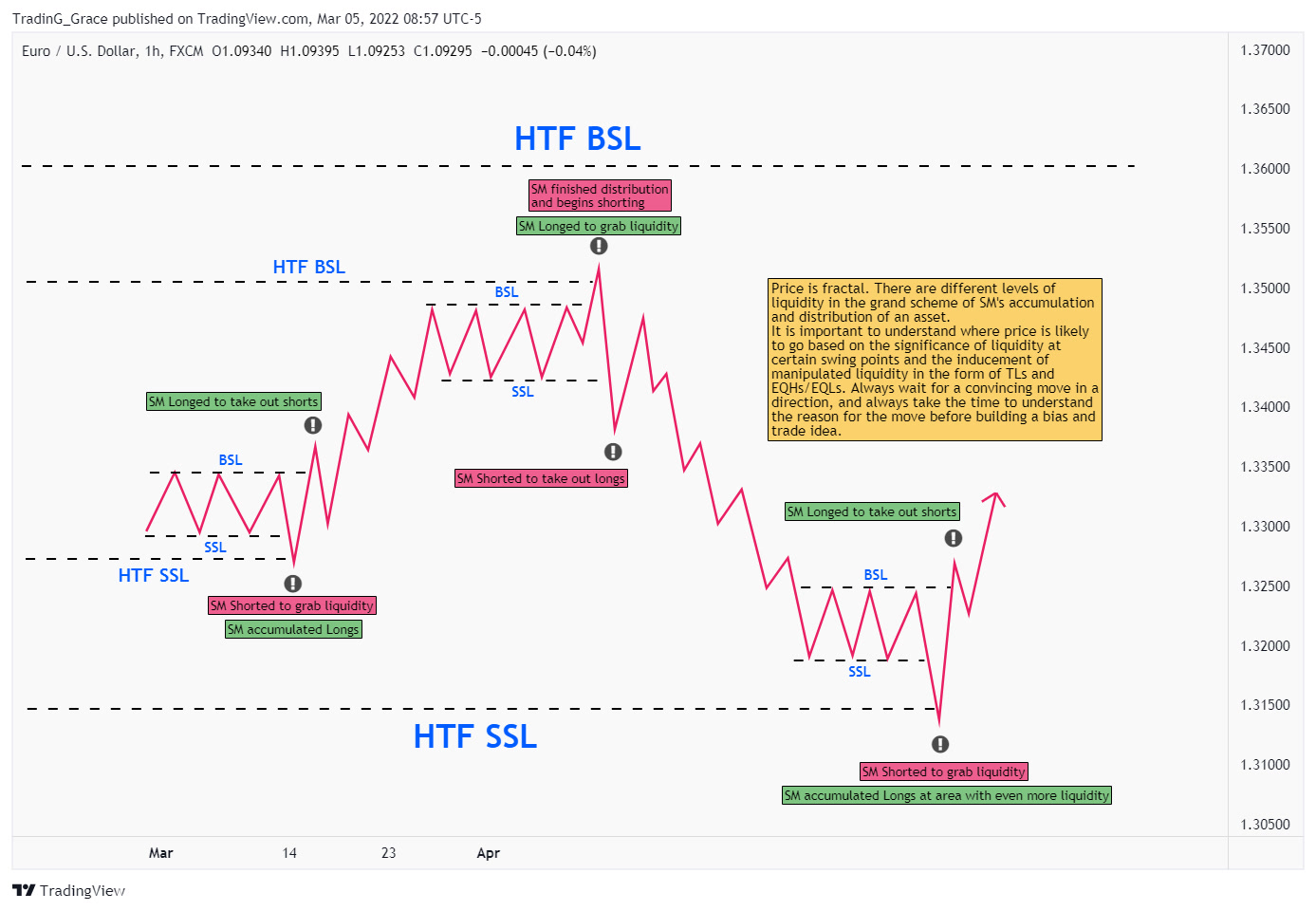
Here's a trade journal entry from late April 2026 that illustrates this perfectly.
GBPUSD, 15-minute chart. London open, roughly 3:10 AM EST. Price had swept the Asian session low, left a clean displacement candle, and I was watching for a Fair Value Gap to form before any entry. The FVG printed at 1.2634, 1.2641. Textbook. My plan called for a limit entry at the 50% equilibrium of that gap, roughly 1.2637, with a stop below the displacement low at 1.2618, giving me a 19-pip stop. At 0.5% risk on the account, that's clean, within model.
I was four green days deep at that point. Up about 6.2R across the week.
So what did I do? I entered at 1.2644. Above the FVG. Market had already started pushing before I got my fill at equilibrium, and instead of waiting, or skipping the trade entirely, I chased it three pips early because the momentum "felt right." I bumped my risk to 0.75% to compensate for the wider effective stop. The trade worked. Closed at 1.2689 for roughly 2.3R.
And that's the problem. It worked.
When a bad process produces a good outcome, you don't get punished, you get reinforced. The lesson my brain learned that morning wasn't "you broke the rules." It was "your instincts are sharp enough to bypass the rules." That's a poison that takes weeks to fully metabolize.
The Archetype: The Graduated Trader
There's a specific pattern I see constantly in ICT trading communities and on shared trading journals: what I call the Graduated Trader.
This person started with strict rules. They marked their PD arrays, waited for confirmation, sized conservatively, respected the kill zones. Their early results were inconsistent but improving. Then they put together a strong month, maybe 8, 12% on a prop account. And something shifted.
They didn't blow up dramatically. Nothing obvious happened. They just... started trusting the setup before the setup was complete. Started entering as price approached the order block instead of waiting for the wick and rejection. Started sizing up "just a little" because they felt they'd earned the right. Started taking trades outside London and New York sessions because they recognized the structure.
Six weeks later, they're flat or slightly down. They blame the market. They say ICT concepts "stopped working." They post about how Q2 2026 market structure is different, and to be fair, there have been real structural shifts this year, but the actual problem isn't the market. The problem is that the Graduated Trader quietly stopped trading their model three weeks ago and has been freestyling ever since.
The model didn't fail. The discipline around the model failed. During the winning streak.
Why Confidence and Competence Feel Identical (Until They Don't)
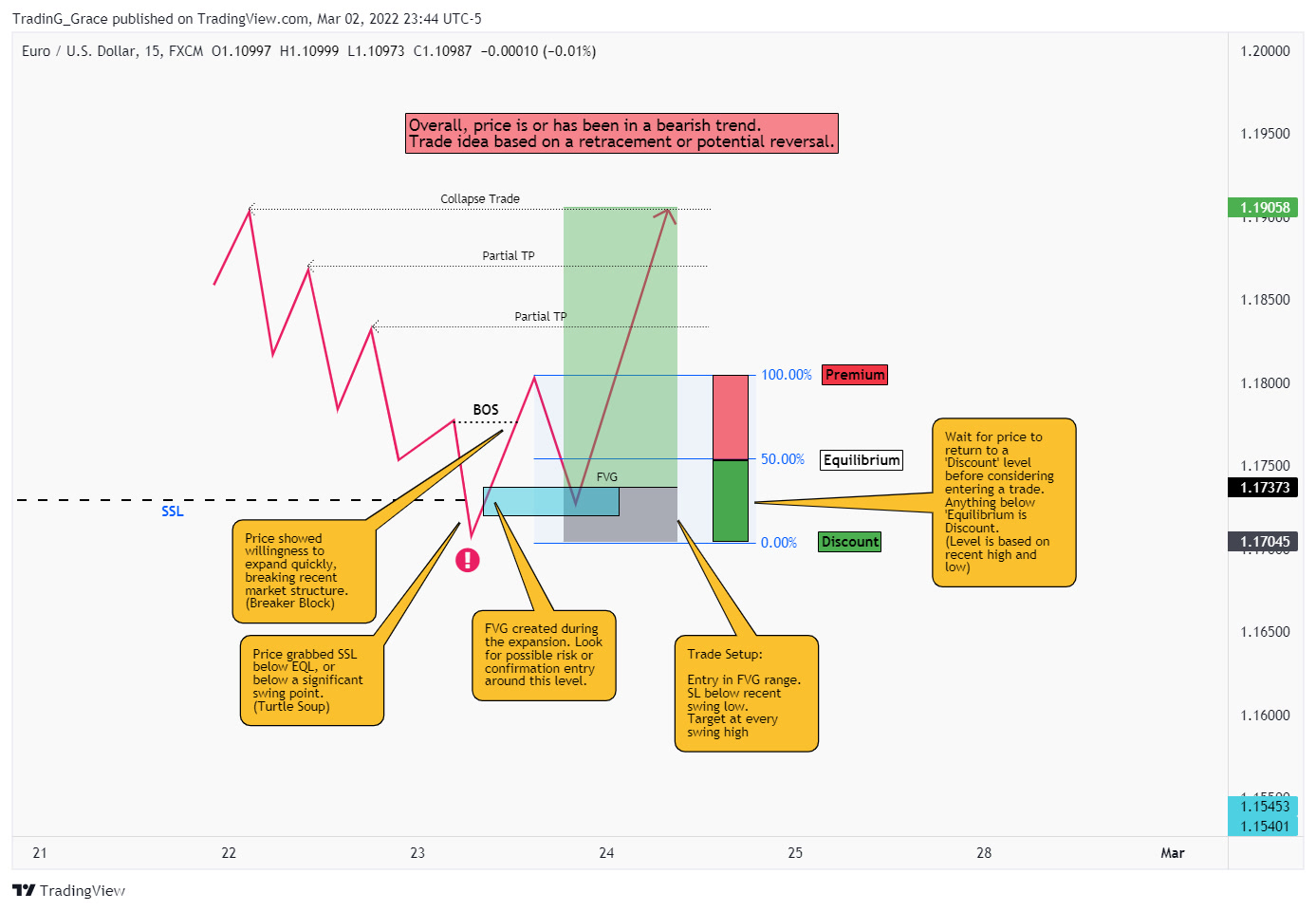
Here's the nuanced take that took me years to fully accept: in trading, confidence is a lagging indicator of nothing.
In most human skills, sport, music, surgery, confidence tracks reasonably well with actual capability over time. The feedback loops are tight and clear. But in trading, you can be wildly wrong and still win for weeks. You can be executing sloppily and get bailed out by a trending market. The feedback loop is genuinely broken, especially in the short term.
This means that when you feel most confident, mid-winning streak, everything flowing, setups looking obvious, you have less reliable data about your actual edge than you do after a small losing period where you scrutinized every entry. Losses force review. Wins bypass it.
I used to get this wrong constantly in my first few years. I'd come off a strong week and treat the following Monday like I'd been promoted. Bigger size, looser confirmation, more trades. It took a 47K drawdown on a prop account, a story I've written about in detail here, to understand that the wins were the setup for the fall, not proof I'd arrived.
The market doesn't care how your week has been going.
The Streak Audit: A Practical Framework for Winning Periods
After that drawdown, I built a protocol specifically for winning streaks. Not for losses, for wins. Here's exactly how it works:
Trigger: Activate this framework after any three consecutive green days, or after hitting 3R+ in a single week.
Step 1, Re-read your trading rules verbatim. Not a summary. The actual document. This sounds absurd when you're winning, which is exactly why it works. You'll catch the places where your recent trades deviated.
Step 2, Pull your last five trades and grade each entry on a 1, 3 scale:
- 3: Entry matched the model exactly (correct PD array, correct session, correct confirmation)
- 2: Entry had one deviation from the model
- 1: Entry was primarily feel-based or broke more than one rule
If your average is below 2.5 during a winning period, your risk of a sharp reversal in performance is high. You're trading well despite your process, not because of it.
Step 3, Cap position size for the next 5 trades. Hard cap at your baseline risk percentage, no exceptions. Use the risk calculator if you need to recalibrate what that looks like at your current account balance. After a winning streak, accounts grow, and "same percentage" often means meaningfully more nominal dollars. That alone changes the psychology.
Step 4, Add one extra confirmation requirement. If your standard model requires a 15-minute FVG entry with HTF bias, add a requirement that price must also have already respected a nearby PD array on the same timeframe before you'll pull the trigger. This counteracts the "feels right" shortcuts that winning streaks enable. Reference the ICT FVG pre-trade checklist for a solid confirmation framework.
Step 5, Log your confidence level (1, 10) before each trade. Over time, you'll find your own threshold where high confidence correlates with lower-quality entries. Mine is anything above 8. When I feel a 9 or 10 conviction, I now treat that as a yellow flag, not a green one. That might sound backwards. It's not, it's just honest about how my psychology works under conditions of recent success.
This entire audit takes about fifteen minutes. It's the most valuable fifteen minutes in a good trading week.
The Funded Account Dimension
All of this becomes higher stakes inside a prop firm challenge or funded account, where winning streaks carry a specific additional danger: they compress the psychological distance between your current equity and a milestone (daily target, phase completion, payout threshold). That compression creates urgency, a feeling that you're almost there that makes you want to push.
Pushing during prop firm funded periods is one of the most common fatal mistakes traders make. The institutional irony is brutal: the closer you get to winning, the more dangerous your own psychology becomes. The funded account environment essentially rewards the exact behavior, more confidence, looser rules, bigger size, that will eventually cost you the account.
External research consistently confirms this. Studies on decision-making under conditions of prior success (see Investopedia's overview of behavioral biases in trading) show that recent wins systematically increase risk appetite and decrease rule adherence, even among experienced traders who intellectually know better.
Knowing better isn't the same as doing better. This is the whole problem.
Discipline Isn't What You Think It Is
Trading discipline isn't a virtue you demonstrate when things are hard. That's the conventional wisdom, and it's incomplete. Real discipline is a system you maintain specifically because you can't trust your own judgment in real-time, whether the trades are going badly or going beautifully.
The goal isn't to become so mentally tough that emotion never influences your decisions. That's not realistic and it's not how high-performance actually works. The goal is to structure your process so that your best rules are followed regardless of your emotional state, including the emotional state of feeling like you've figured it out.
For more on how ICT traders specifically navigate the gap between conceptual knowledge and live execution, there's more in the trading insights archive that goes deeper on specific setup-by-setup frameworks.
If you want to work through your own process, specifically identifying where your execution breaks down during winning periods versus losing ones, the coaching plans at R2F cover this in detail across all tiers. The Lite and Pro plans ($150 and $200/week respectively) both include process review. The Full Mentorship ($1,000 over 4 months) goes into the granular rule-building that makes the Streak Audit automatic rather than effortful.
But start with the audit. Run it this week if you've had even two green days in a row. You might be surprised what you find when you grade your own entries honestly, not against how you felt in the moment, but against what your written model actually requires.
That gap between the two? That's where accounts quietly go to die.
Harvest Wright
ICT Trading Coach · 10+ Years Experience
Harvest specializes in ICT methodology and has helped traders pass prop firm challenges, develop consistent strategies, and build the psychology needed for long-term profitability.
Book a Free Discovery Call →Ready to Get Funded?
Our students pass prop firm challenges in under 60 days with personalized ICT coaching.
Book a Free Discovery CallFree ICT Funded-Trader Playbook
The setups, the pre-trade checklist, and the risk rules I use. Get it free.