
Are You Actually Ready for a Trading Coach?
Most people who find this page are already shopping for a coach. They want confirmation, not a reality check. So let me give you something more valuable: a straight answer on when to get a trading coach, and a short test that might save you hundreds of dollars you don't need to spend yet.
Key Takeaway: You are ready for a trading coach when you have a defined method you've already traded, a journal with at least 30 documented entries, and money set aside for coaching that does not come from your trading capital. If any of those three are missing, coaching will not fix what's actually broken.
The Problem Nobody in the Coaching Industry Will Tell You
Here's the uncomfortable truth. Coaching accelerates what's already there. It sharpens a dull edge into a sharp one. What it cannot do is build the edge from scratch while you watch.
I've been trading for over ten years, using ICT concepts for a good part of that. The point is simple: coaching only helps once you've put in enough screen time to have something to correct.
A coach looks at your trades and tells you what's wrong with your process. If your process is "I watch a YouTube video, then I trade whatever setup looks right," there is nothing to correct. There's nothing to refine. You're handing someone $150 or $250 a week to teach you a process you could have built yourself with three months of focused screen time.
That's not a sales pitch in reverse. That's just what I've seen play out repeatedly among traders at every skill level.
The Four-Question Readiness Test
Before you look at any coaching plans, run yourself through these four questions honestly. Not optimistically. Honestly.
Question 1: Do you have a specific, named method you've actually traded?
Not "ICT concepts." Not "smart money." A specific ruleset. For example: I trade the New York AM session, 15-minute timeframe, long only above the 4H equilibrium, entering on FVG fills after a confirmed displacement from a liquidity pool, stop below the FVG, target at the next HTF POI or -0.5 on the Fibonacci extension. That level of specificity. If your answer is closer to "I look for good setups," you are not ready. You need more screen time, not a coach.
Question 2: Do you have a journal with at least 30 live trades documented?
Not backtests. Not replay sessions. Live trades with screenshots, entry reason, emotional state at entry, outcome, and what you'd change. A coach without this data is flying blind. Thirty trades is not a large sample, but it's enough to start seeing patterns in your mistakes. Without it, every coaching session becomes a theory conversation rather than a performance review.
Question 3: Is the coaching fee coming from money outside your trading capital?
This one stops a lot of traders cold. If you're planning to "take some profits" to pay for coaching, that's a red flag in your own thinking. It means you're treating coaching as a trading expense, which puts pressure on your trading to fund the coaching, which distorts your decision-making. Coaching is a professional development expense. It should come from income, savings, or a dedicated learning budget. Paying for a coach from your trading account is one of the cleaner signals that you're not financially stable enough in this pursuit yet.
Question 4: Can you articulate what specific problem you need solved?
Vague answer: "I want to be more consistent."
Coachable answer: "I enter OB setups correctly roughly 70% of the time based on my journal, but my stop placement is killing me. I'm consistently getting stopped out within 3 pips of entry before the move happens. I think I'm sizing stops too tight but I don't know the correct framework for OB stop placement relative to the candle's displacement leg."
The second version gives a coach something to work with immediately. The first version requires weeks of diagnostics before any real coaching can happen, which means you're paying for the diagnostic phase you could have done yourself.
What a Useful Session Looks Like (And Why Vagueness Kills the Value)
Let me give you a worked example. Picture a 15-minute setup on GBPUSD. The London open displaces aggressively to the upside, creating a clean FVG. Price pulls back into that gap during the session. The entry is long inside the gap, with the stop below it, because a move back through the gap means the displacement has failed. The target is the buy-side liquidity resting above the session high.
Now, if someone were coaching you on that trade, the useful conversation is not about whether FVGs work. It's about specifics: Was the 4H trend aligned? Was the entry at the optimal point within the FVG (lower third, not midpoint)? Was the session time appropriate for this pair? Was the displacement correctly read as genuine, or was it a manipulation? Those are the micro-level questions that separate a 2R trade from a 4R trade, and that's where a coach earns their fee.
If you can't bring that level of detail to a coaching session, you're not ready for the session.
The Archetype That Keeps Wasting Money on Coaching
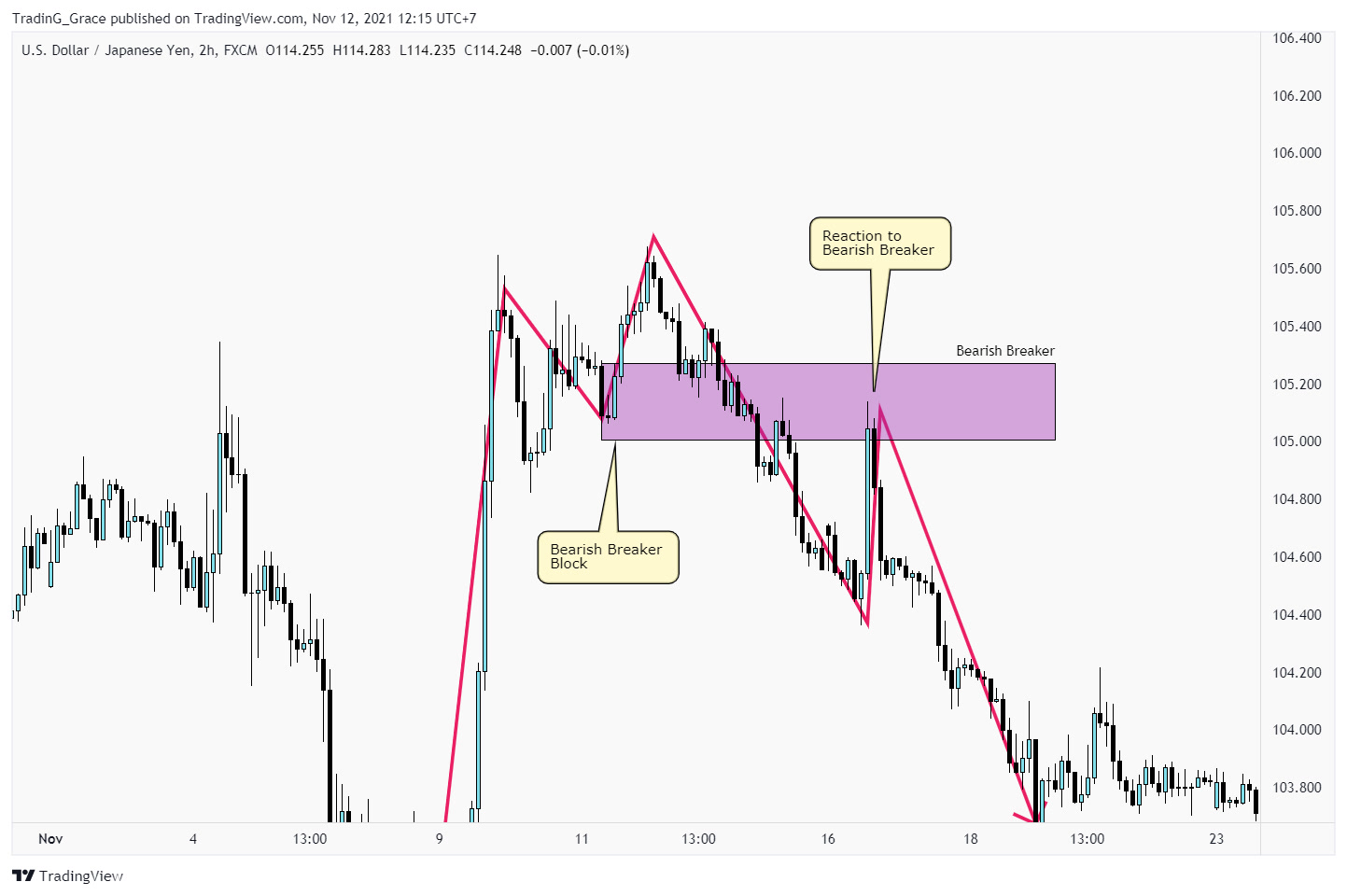
There's a pattern I see over and over in trading communities. A trader spends six months watching ICT content, opens a small live account, loses it in about two months, then immediately decides the solution is to pay for a coach. The logic goes: "I've done the free stuff and it's not working, so I need the paid version."
The problem with this logic is that the free material didn't fail. The trader's application of it failed. And application is a practice problem, not an information problem. Adding more information from a coach doesn't fix a practice deficit. It adds another layer of confusion on top of the existing confusion.
The traders who get the most from coaching are the ones who come in slightly over-practiced. They've drilled their setup so many times that their mistakes are now subtle rather than obvious. They're not getting stopped out because they entered a bullish OB in a bearish 4H trend. They're getting stopped out because their stop is two pips too tight and they can't figure out why. That's a coachable problem. The bigger, more foundational errors are self-correctable with screen time and honest journaling.
For a broader look at how this plays out in funded account attempts, the 7 fatal mistakes that kill funded account challenges piece is worth reading before you make any coaching decision.
A Simple Framework for Knowing When the Time Is Right
Rather than leaving this abstract, here's a concrete sequence you can follow:
Step 1: Pick one setup. One. Not three setups, not "whatever the market gives me." One setup with defined rules.
Step 2: Trade that setup live for 60 days minimum with a micro or small account. Document every trade with a screenshot and a written entry reason.
Step 3: After 60 days, calculate your win rate, average R:R, and your three most common mistakes by type. If you can't identify your three most common mistakes, your journal isn't detailed enough.
Step 4: If your win rate is above 40% and your R:R is above 1.5:1 but you're still not net profitable, or if you're profitable but not at the level you need for a funded account, that's when a coach adds compounding value. You have results. You have patterns. A coach helps you close the specific gap.
Step 5: Budget for coaching separately from trading capital. For context on what this looks like at different commitment levels, the coaching plans page breaks down the Lite, Pro, and Full Mentorship options at R2F. The Full Mentorship at $5,000 for four months is for traders who are already close and want to compress the timeline significantly. The Lite tier at $150 per week makes more sense for someone who just cleared Step 4 and needs directional feedback on specific setups.
Using a proper risk calculator during Step 2 is non-negotiable. If you're eyeballing position sizes, your journal data will be corrupted by inconsistent risk exposure and the coaching session analysis will reflect that noise.
The Contrarian Take on "Getting Coached Earlier Is Better"
You'll hear some coaches say that getting coached early prevents bad habits from forming. There's a surface-level logic to it. But here's what that argument gets wrong from a decade of seeing how traders actually develop.
Bad habits are not purely formed by practice. They're formed by practicing without feedback. The solution to that is not necessarily paid coaching. It's structured self-review. Watching your own trade replays, writing trade reviews the same day, posting setups in free communities for critique, using TradingView's replay function to test your entry logic before risking real money. These are all feedback mechanisms that cost nothing.
Paid coaching is most valuable when the feedback loop needs to be faster than self-review allows, or when the trader has a specific blind spot they genuinely cannot identify alone. Those are real reasons to pay for a coach. "I haven't started yet and I want to get it right" is not a coaching problem. That's what the crash course is for.
The ICT smart money concepts vs price action comparison piece also has relevant framing for traders in the early stage who are still figuring out which methodology even fits how they think. Resolve that question before spending on coaching.
Where to Go From Here
If you answered yes to all four readiness questions, you're genuinely in the right place to consider coaching. Take a look at the different tiers at coaching plans and think about which level of commitment matches the gap you identified in your journal.
If you failed one or more of the questions, that's not a bad thing. It's clarity. You now know exactly what to build before the next conversation. Thirty documented live trades from a clearly defined single setup, with coaching fees budgeted separately from your trading account. That's your next milestone, not a discovery call.
And if you're right on the edge and want a conversation before committing, the free discovery call exists specifically for that. Not to sell you a plan, but to give you an honest assessment of where you actually are and what the right next step looks like. Sometimes that step is coaching. Sometimes it isn't.
Harvest Wright
ICT Trading Coach · 10+ Years Experience
Harvest specializes in ICT methodology and has helped traders pass prop firm challenges, develop consistent strategies, and build the psychology needed for long-term profitability.
Book a Free Discovery Call →Ready to Get Funded?
Our students pass prop firm challenges in under 60 days with personalized ICT coaching.
Book a Free Discovery CallFree ICT Funded-Trader Playbook
The setups, the pre-trade checklist, and the risk rules I use. Get it free.