
Smart Money vs Price Action: Which Gets Funded?
After 10+ years of trading, passing an FTMO Challenge and now coaching traders, I get this question constantly: Should I learn ICT smart money concepts or stick with traditional price action trading?
If you're aiming at a prop firm like FTMO or The5ers, this isn't just an academic debate. The methodology you choose shapes how you handle their drawdown rules and profit targets.
Let me break down the ICT smart money concepts vs price action trading debate from someone who's traded both approaches.
Key Takeaway: Both ICT smart money concepts and traditional price action can get you funded, what actually determines your success with prop firms is execution consistency and risk management, not which methodology you follow.
ICT Smart Money Concepts vs Price Action Trading: The Core Differences
The fundamental difference isn't just about indicators versus naked charts. It's about market perspective.
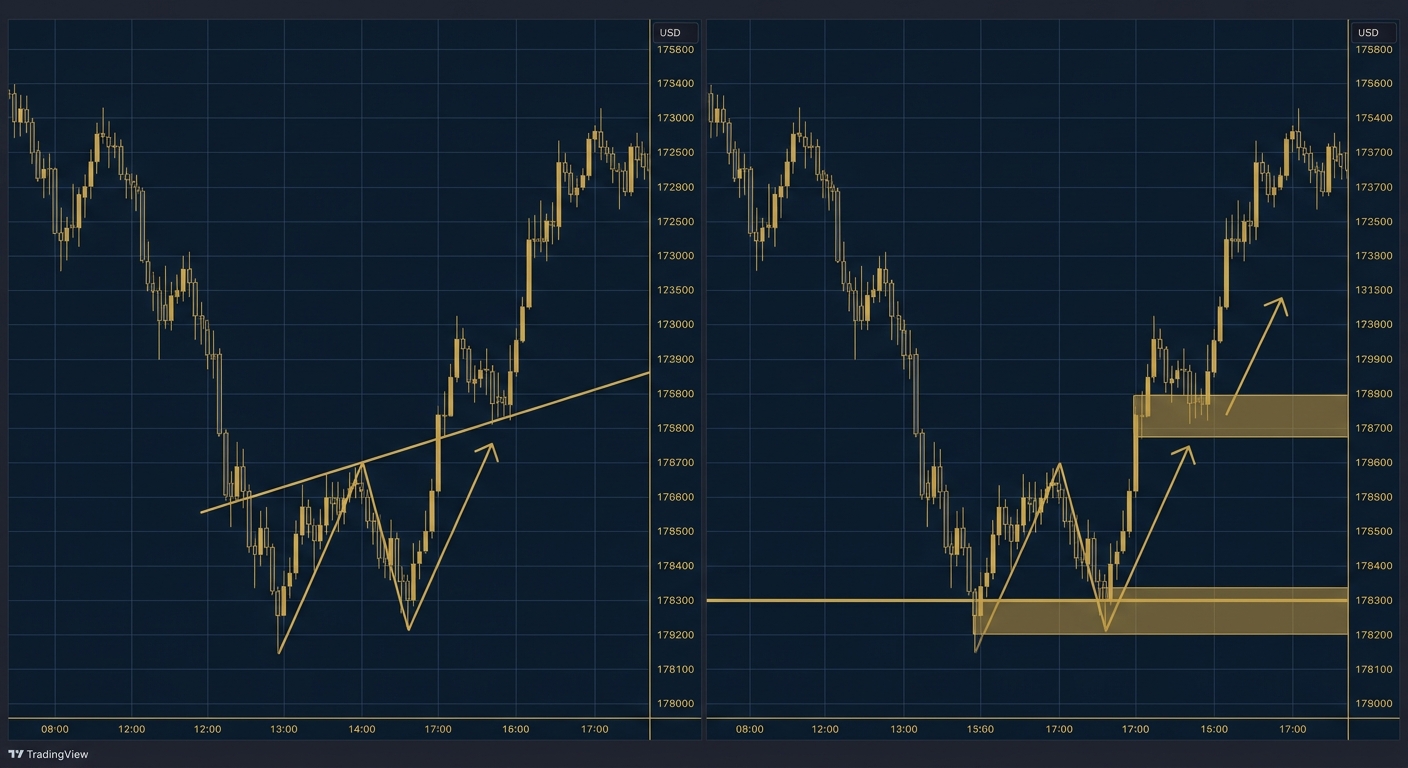
Traditional price action trading focuses on reading candlestick patterns, support/resistance levels, and chart formations. You're looking for breakouts, reversals, and continuation patterns based on what retail traders typically see.
ICT smart money concepts flip this entirely. You're thinking like institutional traders, banks, hedge funds, and market makers who actually move price. Instead of reacting to what happened, you're anticipating where smart money needs price to go.
What Makes ICT Smart Money Different?
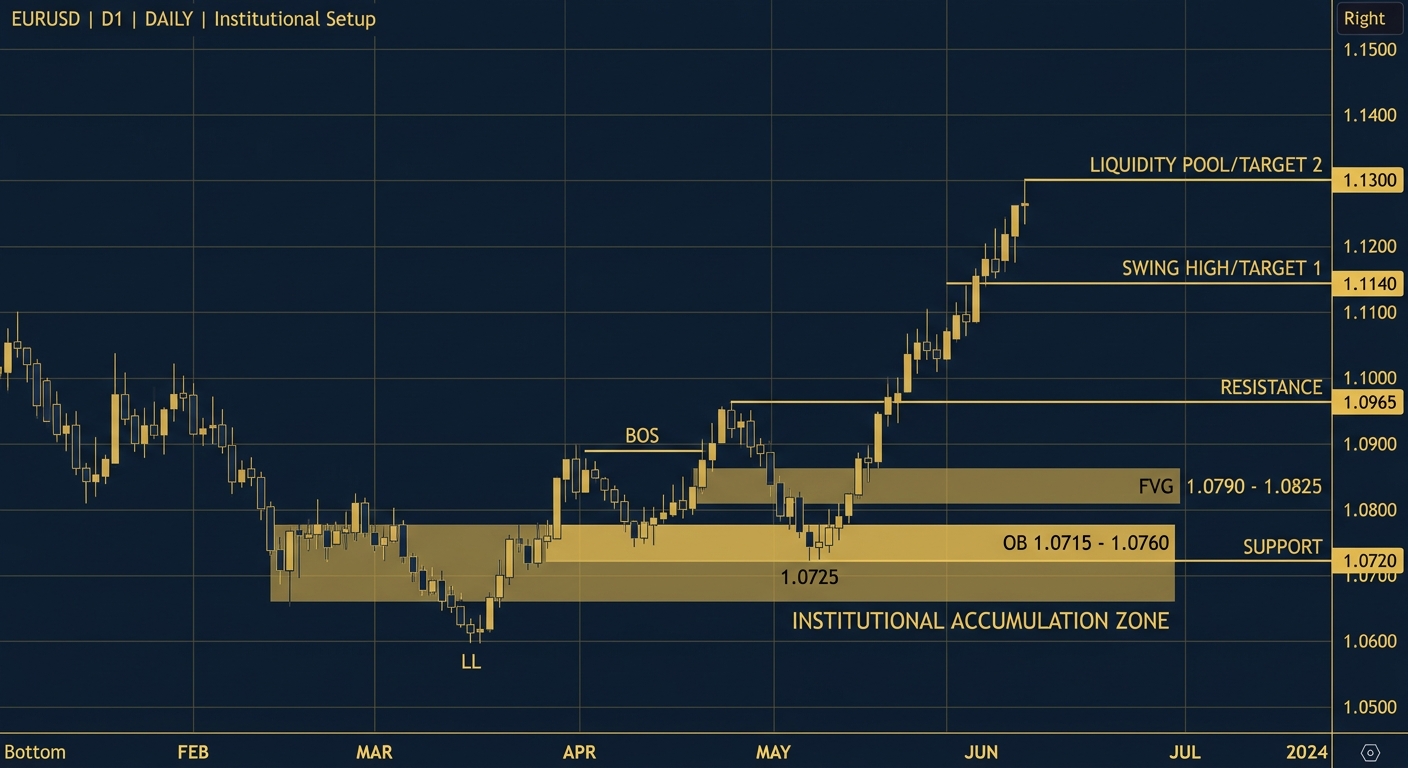
ICT (Inner Circle Trader) methodology centers on several key concepts:
- Order Blocks: Areas where institutional orders are placed, creating significant support/resistance
- Fair Value Gaps (FVGs): Price imbalances that smart money often returns to fill
- Liquidity Sweeps: When price moves to grab retail stops before reversing
- Market Structure: Understanding how institutions accumulate and distribute positions
- Kill Zones: Specific time periods when institutional activity peaks
Which Approach Gets You Funded Faster?
Here's the honest truth from my experience with both methodologies:
For passing prop firm challenges, I think ICT concepts have an edge.
Why? Prop firms evaluate you on consistency and risk management. ICT's structured approach to entries, stops, and targets makes it easier to maintain the disciplined risk parameters these firms require.
Traditional price action relies heavily on discretionary judgment. You might see a "perfect" pin bar setup, but without understanding the institutional flow behind it, you're essentially gambling on retail patterns that smart money loves to fade.
A Worked Example: GBPUSD
Here's the kind of setup I mean. Picture a trader who has used traditional price action for a while: decent reads, but inconsistent sizing and poor risk-reward.
Now look at GBPUSD through an ICT lens. Price sweeps liquidity above a daily high (taking the buy stops resting there), then displaces lower and leaves a bearish Fair Value Gap that lines up with a 4-hour bearish order block.
Using ICT methodology:
- Entry: Limit sell order in the FVG on the retrace
- Stop: Above the sweep high, because if price takes that out, the idea is wrong
- Target: The previous week's low, where the sell-side liquidity sits
Because the stop is tight to structure and the target is a real pool of liquidity, the risk-reward is often 3:1 or better. More importantly, every part of the trade is defined in advance, which takes a lot of the emotion out of it.
You can see similar setups in my breakdown of NFP week liquidity patterns and ICT entries.
The Pros and Cons: ICT Smart Money Concepts
Advantages for Prop Firm Trading:
- Systematic entries: Less guesswork, more rule-based decisions
- Better risk-reward ratios: ICT setups can offer 3:1 or better R:R
- Reduced FOMO: You're waiting for institutional setups, not chasing retail breakouts
- Clearer invalidation: Order blocks and FVGs have defined failure points
- Time-based precision: Kill zones help you trade during high-probability windows
Potential Drawbacks:
- Steeper learning curve: More concepts to master initially
- Overcomplication risk: Some traders get lost in analysis paralysis
- Requires patience: Waiting for perfect setups can mean fewer trades
The Pros and Cons: Traditional Price Action Trading
Advantages:
- Simplicity: Easier to understand basic support/resistance concepts
- Universal application: Works across all timeframes and instruments
- Quick to learn basics: Candlestick patterns are intuitive
- Flexible approach: Adaptable to different market conditions
Disadvantages for Prop Firms:
- Inconsistent risk-reward: Pin bars and engulfing patterns don't guarantee good R:R
- High subjectivity: What looks like a "perfect" setup varies between traders
- Retail mindset: You're often on the wrong side of institutional moves
- Emotional trading: More discretionary decisions lead to psychological mistakes
Why I Lean Toward ICT for Prop Firm Challenges
Here's my reasoning:
Stop hunts are part of the game: Obvious price action levels attract stops, and those stops are exactly the liquidity that gets swept. ICT teaches you to expect that instead of becoming it.
Prop firms reward consistency: Drawdown limits punish big swings in your equity. A rule-based approach to entries, stops, and targets makes steady risk easier to maintain.
Volatility creates the setups: News and central bank events tend to produce the liquidity sweeps and Fair Value Gaps that ICT traders look for.
Which Should You Choose?
Choose ICT Smart Money Concepts If:
- You're serious about prop firm funding challenges
- You struggle with emotional trading decisions
- You want systematic, rule-based entries
- You're willing to invest time learning institutional thinking
- You prefer fewer, higher-quality trades
Stick with Price Action If:
- You're already consistently profitable with it
- You prefer simplicity and flexibility
- You trade multiple timeframes simultaneously
- You have strong emotional control
- You're not focused on prop firm funding
Can You Combine Both Methodologies?
Absolutely, and this is often the most effective approach. A lot of traders use ICT concepts for macro analysis and trade selection, then apply price action principles for precise timing.
For example, you might identify an ICT Fair Value Gap as your area of interest, then wait for a specific candlestick pattern within that zone for your actual entry.
This hybrid approach gives you the systematic framework of ICT with the flexibility of traditional price action. However, it requires mastering both methodologies first.
My Recommendation for Prop Firm Success
If you're starting fresh or struggling to pass funding challenges, start with ICT smart money concepts. The structured approach aligns better with what prop firms evaluate.
Once you're consistently funded and profitable, you can begin incorporating price action refinements to improve your timing and add discretionary elements.
For traders already profitable with price action, don't abandon what works. Instead, study ICT concepts to understand the "why" behind your successful setups. This knowledge will help you avoid the traps that catch most retail traders.
Common Mistakes with Both Approaches
ICT Trading Mistakes:
- Overcomplicating analysis with too many concepts
- Forcing setups that aren't there
- Ignoring basic risk management for "perfect" setups
- Trading outside optimal kill zones
Price Action Mistakes:
- Subjective interpretation of patterns
- Poor risk-reward ratios on discretionary trades
- Emotional decision-making on pattern failures
- Ignoring institutional context behind retail patterns
I've written extensively about these pitfalls in my article on 7 fatal mistakes that kill your funded account challenge success.
The Bottom Line
Both ICT smart money concepts and traditional price action trading can lead to prop firm success. In my view, though, ICT methodology provides a more systematic framework that fits how prop firms evaluate traders.
The key isn't choosing one over the other, it's understanding which approach fits your personality, risk tolerance, and current skill level.
If you're still unsure which path to take, or want to accelerate your learning curve with either methodology, consider structured guidance. My coaching plans are designed to help traders master these concepts systematically, whether you're interested in the Lite Plan for weekly guidance or the Full Mentorship for complete transformation.
The most important factor isn't which methodology you choose, it's your commitment to mastering whichever approach you select. Both can get you funded, but only consistent application and proper risk management will keep you funded.
Ready to determine which approach is right for your trading goals? Book a free discovery call and let's create a personalized roadmap for your prop firm success. You can also explore more strategic insights in our trading insights section.
Remember: the market doesn't care which methodology you use. It only rewards traders who understand market structure, manage risk properly, and execute with discipline. Whether that's through ICT smart money concepts or traditional price action is up to you.
Harvest Wright
ICT Trading Coach · 10+ Years Experience
Harvest specializes in ICT methodology and has helped traders pass prop firm challenges, develop consistent strategies, and build the psychology needed for long-term profitability.
Book a Free Discovery Call →Ready to Get Funded?
Our students pass prop firm challenges in under 60 days with personalized ICT coaching.
Book a Free Discovery CallFree ICT Funded-Trader Playbook
The setups, the pre-trade checklist, and the risk rules I use. Get it free.