
The Silence After a Big Win Destroys Traders
There's a trade I took in late April of this year that I still think about, not because of how it went, but because of what happened after it.
GBPUSD, 15-minute chart. London open had just printed a clean displacement candle through the previous session's consolidation range, leaving a well-defined fair value gap between 1.2714 and 1.2728. Higher timeframe bias was bearish, we'd had a clear market structure shift on the 4H the day prior, price had retraced into a 4H order block sitting in premium, and the Monday open had already swept the weekly high. Classic smart money concepts alignment. I entered short at 1.2719, 14-pip stop above the FVG, risking 0.8% of account. The trade ran 4.1R before I took partials at the Tuesday low. Full exit at a 4H demand zone. It was, by any measure, a textbook week.
And that's exactly when the damage started.
Key Takeaway: The 48-72 hours following a high-R winning trade represent your peak vulnerability window, not because you become reckless, but because your brain generates a false sense of control that degrades pre-trade discipline invisibly, showing up not in your journal entries but in your position sizing data.
The Feeling Nobody Talks About
Every piece of trading psychology content you'll ever read focuses on the losing streak. Fear, revenge trading, account drawdown, these are the villains in every narrative. And yes, they're real. But here's what a decade of watching traders (including myself) operate through both extremes has taught me: the losing streak is visible. You feel the pain. You know something is wrong.
The post-win void is silent.
After that GBPUSD trade closed, I felt what I can only describe as a settled certainty. Not arrogance, that's the thing. It didn't feel like ego. It felt like clarity. Like I finally understood the market. My pre-trade checklist felt less necessary. My usual 15-minute review of session highs, previous week's liquidity pools, and HTF draw on liquidity got compressed into maybe four minutes of casual chart glancing. I wasn't skipping steps on purpose. I genuinely felt like I didn't need them.
That feeling? That's the trap.
Neuroscience has an explanation for this. After a significant reward, dopamine doesn't spike and stay elevated, it normalizes, and in doing so, it temporarily dulls risk perception. Your brain has logged "this environment is safe and profitable," and it stops flagging danger signals with the same urgency. On a biological level, you are less cautious after a big win than you were before it. Not more. The research on reward prediction error in decision-making under risk backs this up consistently. You feel calm. You are not calm. You are numbed.
What This Actually Looks Like in Trade Data
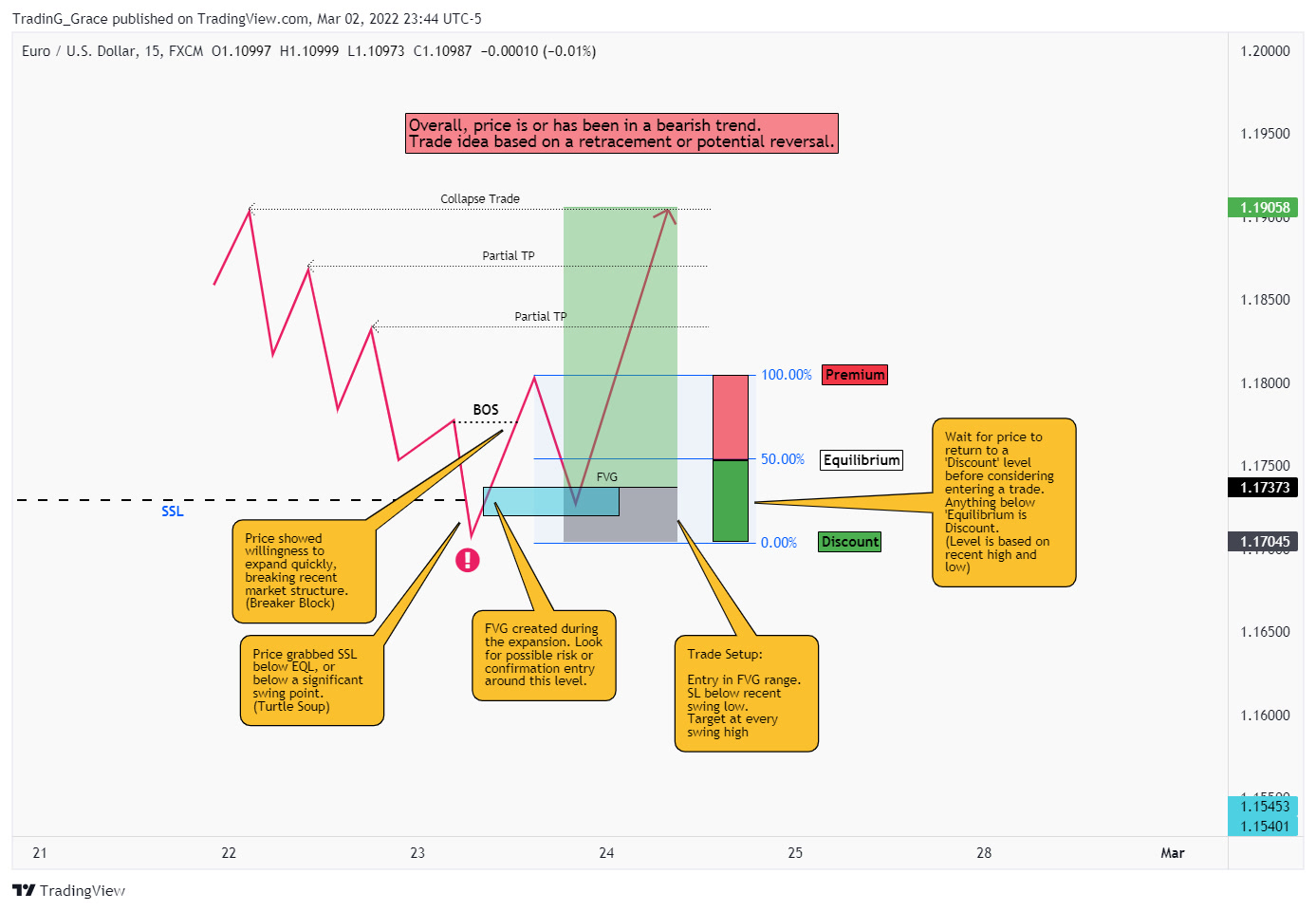
Here's the contrarian take most ICT YouTube creators will never give you, because they're too busy teaching concepts and not enough time studying behavioral patterns in their own execution:
The post-win degradation doesn't show up in your trade journal.
You'll write the same notes. "Waited for displacement. Confirmed FVG. Checked premium/discount. Entered with confirmation." It all looks clean on paper. What you won't write, because you won't consciously notice it, is that your position size crept from 0.8% to 1.4%. That you entered one setup without waiting for the 15-minute close to confirm the FVG was actually filled. That you classified a marginal order block as high-probability because it aligned with the direction your last winner went.
The journal captures your narrative. It doesn't capture your risk appetite data.
I started auditing my own trades by position size about three years ago, and the pattern was uncomfortable to see. In the 72 hours following any trade that returned 3R or more, my average position size increased by approximately 40-60% compared to my rolling 30-day average. Not on purpose. Not with any conscious decision to "go bigger." It just happened, driven by a background confidence I couldn't feel because it didn't feel like confidence, it felt like competence.
There's a trader archetype I see constantly in trading communities: the person who builds a solid 6-8% account gain over three weeks using disciplined smart money concepts setups, then gives 70% of it back in a single 48-hour window following a big winner. When you look at their trade history, the entries before the blowback are actually fine. The sizing is the tell. They didn't change their strategy, they changed their exposure, invisibly, while believing they were operating exactly as before. This is precisely why discipline fails when you're winning, the degradation is structural, not motivational.
Why Smart Money Concepts Makes This Worse Before It Makes It Better
This is something specific to the ICT methodology that I haven't seen anyone else name directly.
Smart money concepts provides extremely sophisticated reasoning frameworks. Order blocks, imbalances, liquidity engineering, premium and discount arrays, institutional order flow, the conceptual depth is real. And that depth creates a particular cognitive risk: when you've just had a perfect trade, every subsequent setup starts to look more perfect than it is, because your brain is pattern-matching against a recent success rather than against objective criteria.
After my 4.1R GBPUSD trade, I looked at the next three setups I analyzed and found myself retrofitting justification. "That FVG is close enough." "The OB is slightly in premium but the HTF bias is strong." "I'll move my stop tighter to manage the risk", which, of course, is not actually managing risk, it's increasing the probability of a stop-out on a valid setup by compressing your trade room. The more sophisticated your framework, the more sophisticated your self-deception can become.
If you're navigating Q2 2026's market structure shifts right now, which have been particularly prone to false displacement and manufactured liquidity grabs, this problem is amplified. The setups look like textbook ICT. Some of them are. Some of them are engineered to look like it. And your post-win brain will assign higher confidence scores to ambiguous setups than your pre-win brain would.
The 72-Hour Protocol, Here's What I Actually Do
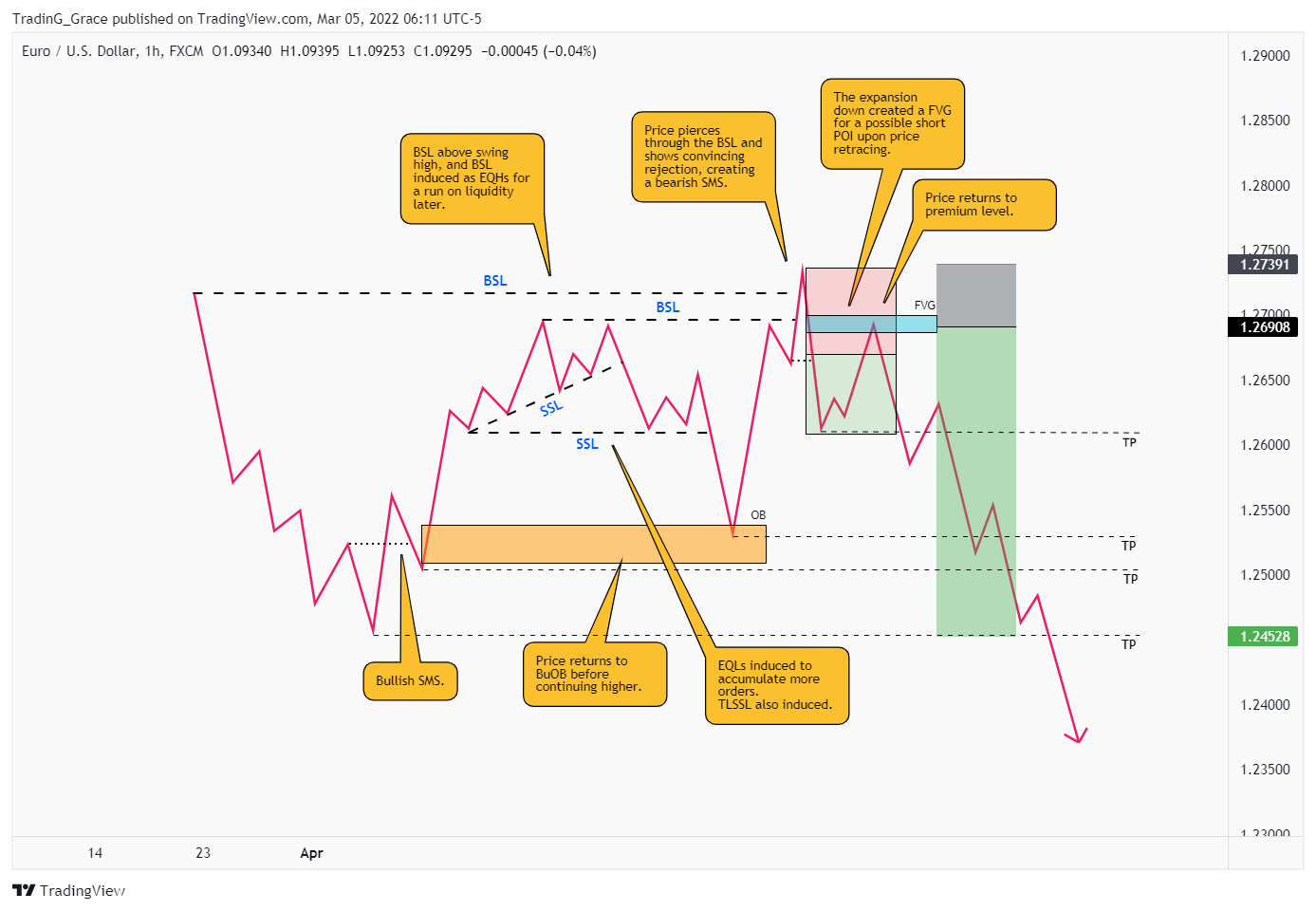
After years of getting this wrong (and one particularly painful period where I returned 65% of a strong funded account gain in three sessions following a 5R trade), I built what I call a 72-hour reset protocol. It's not complicated. It is non-negotiable.
Step 1: Hard cap position size at 50% of your normal maximum for 72 hours after any trade returning 3R or more. Not as a punishment. As a structural acknowledgment that your risk perception is currently degraded. If you normally size up to 1% per trade, the cap is 0.5% for three days. No exceptions. Use the risk calculator to pre-calculate this number before you open any chart.
Step 2: Add two mandatory confirmations to your pre-trade checklist, specific to premium/discount. This isn't about being more cautious in a vague sense, it's about the specific degradation pattern. Post-win brains are most likely to misclassify premium entries as acceptable. So the added checklist items are: (a) identify the exact 50% equilibrium of the relevant dealing range, and (b) confirm your entry is below that level for longs, above it for shorts. Write it on paper before you touch the order panel.
Step 3: Audit your last three trades by position size before placing your next one. This takes four minutes. Open your trade history, look at your actual lot sizes, compare them to your stated risk per trade. If there's a creep, and after a big win, there usually is, you name it explicitly in your journal. "Position size crept 30% above my stated risk limit over the last three trades." That act of naming it breaks the invisibility.
Step 4: Take the first session after a major win as observation-only if you're in profit for the month. This is the hardest one because it runs against every instinct you'll have. You just proved you can read the market. Why would you sit out? Because you're not sitting out, you're resetting. There's a difference between missing trades and protecting capital you worked three weeks to build. Funded account challenges have ended at this exact juncture more times than any other failure pattern I've tracked.
The Journaling Gap
One last thing, because this is where most traders think they're protected but aren't.
Your journal will lie to you after a big win. Not because you're being dishonest, because the metrics you're capturing don't surface the actual problem. Win/loss ratio looks fine. Average R looks great. Entry reasoning looks disciplined.
Start capturing these instead: position size as a percentage of account, time between setup identification and entry execution, and number of pre-trade checklist items completed vs. skipped. These three data points will show you the degradation before it becomes a drawdown. The timing metric is particularly revealing, post-win, execution speed increases meaningfully, and faster entries almost always mean less confirmation was gathered. You can see this pattern across ICT FVG entry data when you track it honestly.
Also worth reading: the liquidity grab vs. stop hunt breakdown goes into the specific misreads that happen when traders are operating with degraded attention, which is exactly the state a post-win 72-hour window produces.
Silence Isn't Discipline
The most dangerous emotional state in trading isn't panic. It isn't greed. It's the quiet certainty that you've figured it out, the feeling that arrives precisely when your execution is most at risk. If you've ever wondered why patience feels physically painful in trading, it's because this same neurological reward state makes stillness feel like waste, which is exactly why the protocol matters.
After 10+ years of working within smart money concepts frameworks, the thing I know that a first-year trader almost never believes is this: your best trade is the one you need to be most suspicious of. Not because the market will punish you for winning, it doesn't work that way. But because you will punish yourself by treating earned confidence as permanent capability, when it's actually a temporary cognitive state with a measurable expiration.
Protect the win. Run the protocol. Let the silence pass before you trade through it.
If you want structured accountability around exactly this kind of execution discipline, the stuff that doesn't live in YouTube tutorials, the coaching plans break down from Lite at $150/week through to Full Mentorship. Or if you want to understand where you currently stand before committing to anything, book a free discovery call and we'll look at it honestly.
Harvest Wright
ICT Trading Coach · 10+ Years Experience
Harvest specializes in ICT methodology and has helped traders pass prop firm challenges, develop consistent strategies, and build the psychology needed for long-term profitability.
Book a Free Discovery Call →Ready to Get Funded?
Our students pass prop firm challenges in under 60 days with personalized ICT coaching.
Book a Free Discovery CallFree ICT Funded-Trader Playbook
The setups, the pre-trade checklist, and the risk rules I use. Get it free.