
The Quiet Session Trap That Drains Accounts
Here's what nobody in the ICT space wants to say out loud: in my experience, the quiet hours before the New York open do more damage than volatile news events.
Over the past decade I've learned when I'm most dangerous. It's rarely right after FOMC or an NFP print. It's a quiet Tuesday morning when the market's in consolidation, my bias is correct, and I'm waiting for a New York killzone setup that keeps not quite materializing. That's when the real erosion starts, not with a single blowout, but with a sequence of lowered standards I barely notice happening.
This is the quiet session trap. And if you're trading smart money concepts, I think it's one of the likeliest things to end your funded account challenge.
Key Takeaway: The psychological danger zone for ICT traders isn't high-volatility events, it's the compounding cognitive drift that builds during quiet sessions between killzones, where false pattern recognition and impatience slowly dismantle your entry criteria until you're taking setups you'd have rejected two hours earlier.
Myth: Volatile Sessions Are Where Accounts Blow Up
Myth: Most account damage happens during high-impact news events, sudden reversals, and aggressive stop hunts on volatile sessions.
Reality: A lot of the preventable losses I've seen happen during low-volatility consolidation periods when nothing is technically wrong with the market. Structure is clean. A valid FVG printed earlier. The HTF bias is intact. Everything looks like it should produce a setup, and that's the trap.
What I Actually See: A trader who's been watching the chart for 90 minutes with a correct directional bias starts seeing confirmations that aren't there yet. The OB they're watching hasn't had a proper mitigation, but there was a single candle that tapped the upper third and bounced. They call it mitigated. They enter. The market continues to consolidate, sweeps their stop by four pips, then moves in their direction anyway. They add size on the next attempt. Same result. By the time the actual killzone delivers the setup they originally planned, they've already taken three sub-par entries and they're now emotionally compromised going into the one moment that required their best execution.
That sequence, patience erosion leading to standards erosion leading to capital erosion, is so gradual that most traders never identify it as a pattern. They just call it a bad day.
Why Smart Money Concepts Traders Are Especially Vulnerable
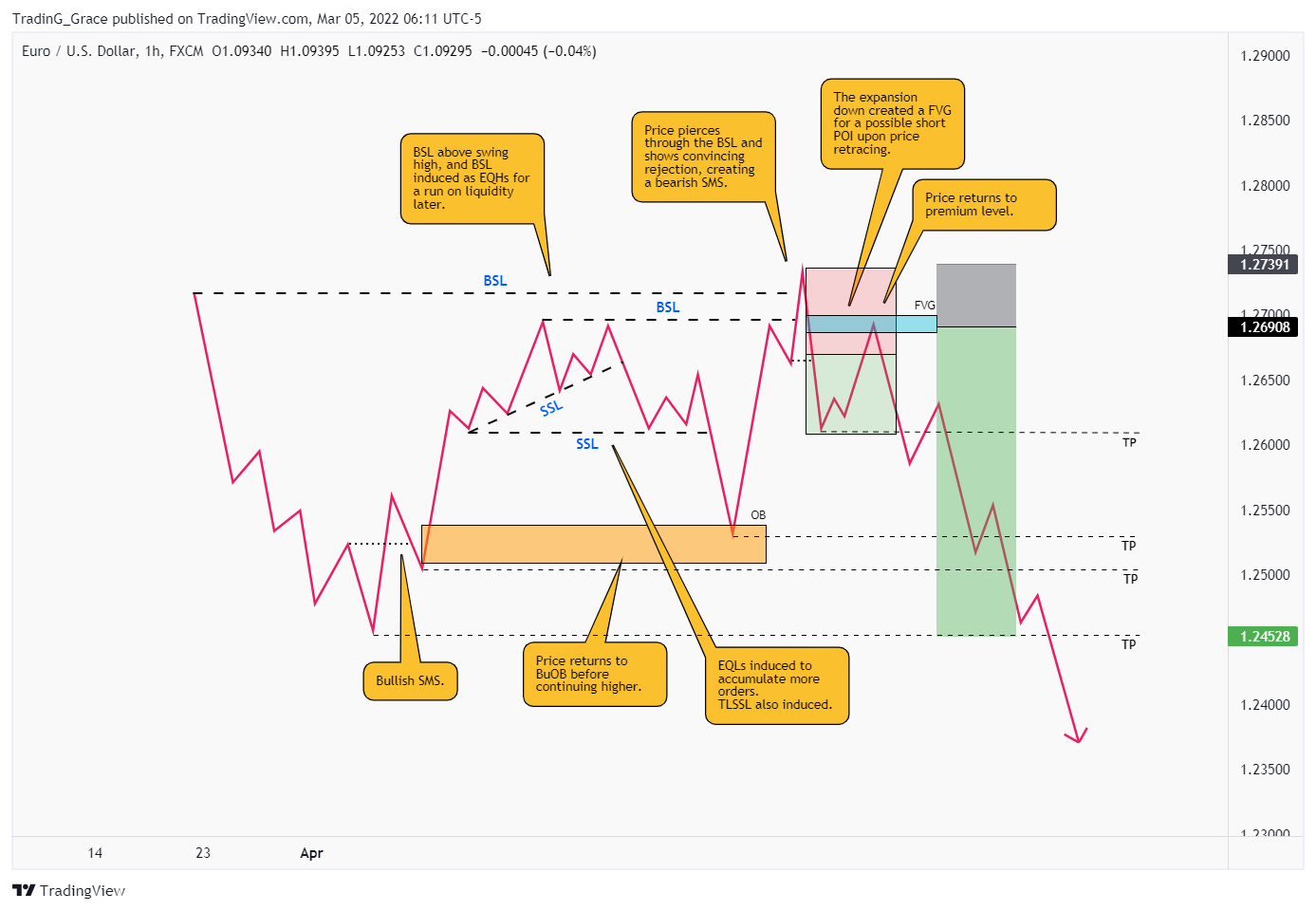
Here's the nuanced part that most ICT YouTube content completely misses: the better you understand smart money concepts, the more vulnerable you are to this trap. Not less.
When you've spent months studying institutional order flow, displacement, fair value gaps, and market structure shifts, your brain becomes extremely good at constructing narratives. You can look at any 10-minute chart during a quiet session and build a technically coherent case for an entry. The displacement is there, it's just a little small. The FVG is there, it's just partially filled. The OB is there, it just hasn't been tapped yet, but price is within 8 pips.
This is what I call narrative fluency becoming a liability. A trader who doesn't understand ICT concepts sees ranging price and thinks "I don't know what's happening, I'll wait." A trader who understands ICT concepts sees ranging price and immediately starts constructing a reason to be in the market, because the tools are there and the brain wants to use them.
I used to get this wrong early on when I started trading smart money concepts seriously. I thought expertise meant recognizing more valid setups. What I eventually learned is that expertise actually means recognizing the absence of a valid setup, and sitting with that discomfort without manufacturing one.
Read about how Q2 2026 market structure shifts are already exposing this problem at scale: why Q2 2026 market structure shifts are breaking traditional ICT setups and how to adapt.
What This Looks Like
Here's how this tends to play out, because abstractions don't teach much.
Picture GBPUSD on the 15-minute with a clear bearish bias coming off the weekly. London delivers a textbook displacement to the downside and leaves a clean FVG above price. The target is a daily sell-side liquidity pool well below. Premium to discount. Everything lines up.
But London closes without price coming back to the FVG. New York pre-market is dead. The trader sits there watching tiny candles for close to an hour.
Then price nudges up to the bottom edge of the gap. That isn't a mitigation, not even close. But after an hour of staring, the pull is strong. They tell themselves price "reacted" to the zone and short early, with bigger size than usual because they're emotionally committed to the idea. Worse, because the entry is below the gap, the stop above the gap is now much further away than the plan allowed for.
Price wicks up through the gap and takes the stop.
Then, as the New York killzone opens properly, price returns into the FVG, gives a valid bearish engulfing on the 15m, and starts moving toward the original target. That was the planned trade: short from inside the FVG after the killzone confirmation, stop above the gap's high, target the daily liquidity below. The plan was fine. The trader just isn't in it, because they burned their position and their composure in the quiet session beforehand.
There was no news event. The damage came from an hour of silence and not being able to tell the difference between waiting and missing out.
The Archetype I Keep Seeing
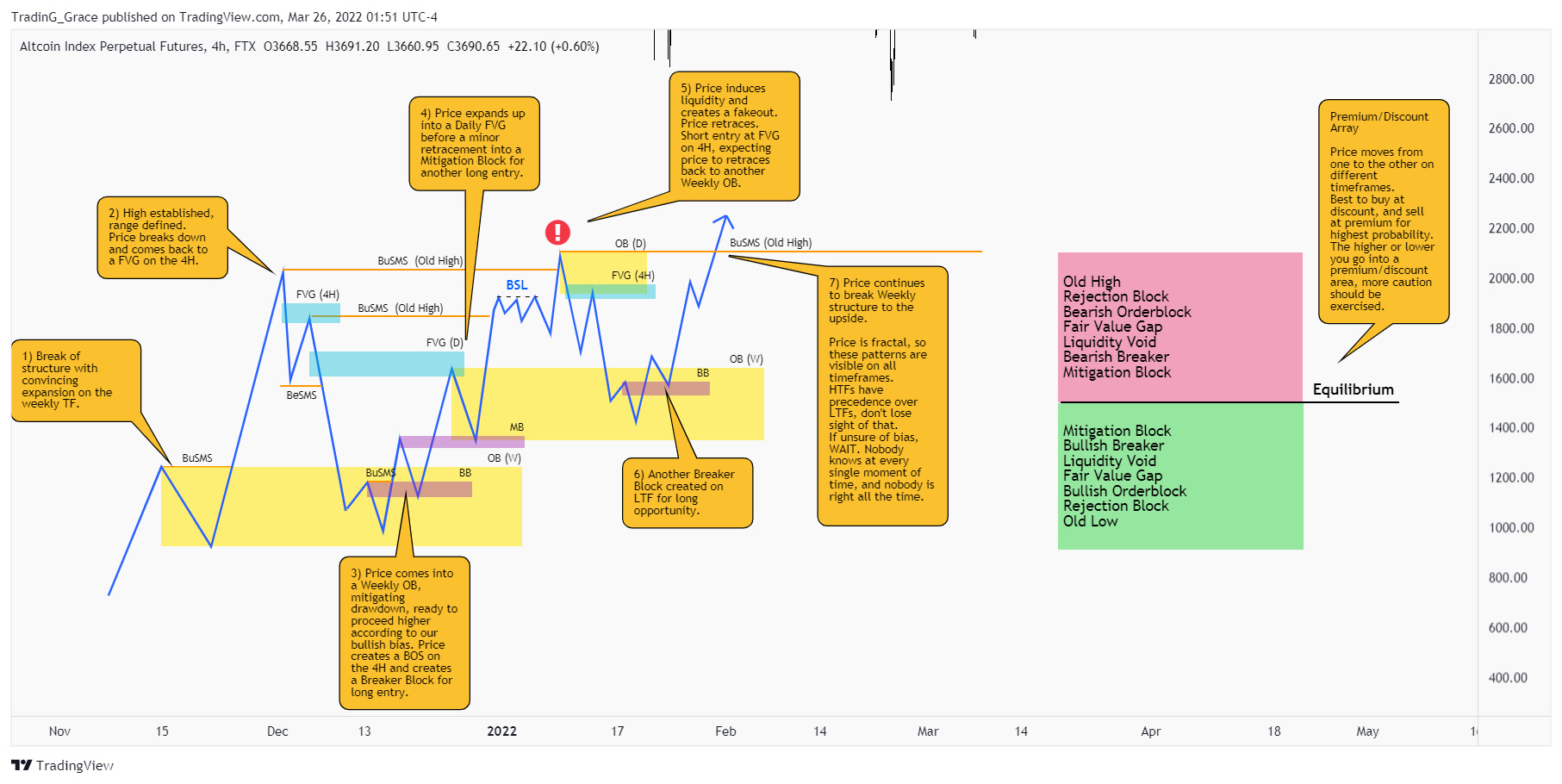
There's a specific trader pattern that shows up repeatedly in trading communities, forums, and public trade journals, and it's almost always the same profile: technically competent, genuinely understands smart money concepts, has a winning strategy on paper, but consistently underperforms their backtested results in live markets.
When you dig into their trade logs, the trades that break their rules tend to cluster in the quiet hours: the stretch before the New York open, the lunchtime dead zone, or the last part of the wait before a killzone opens.
This trader isn't reckless. They're not overconfident. They're bored. And boredom in a market context doesn't feel like boredom, it feels like readiness. It feels like "I've been watching for a while, I understand this chart, I'm ready to execute." That feeling is lying.
The 7 fatal mistakes that kill funded account challenges covers execution issues broadly, but this cognitive drift during quiet sessions is the one that's most underreported in that conversation.
The Quiet Session Protocol (What I Actually Do Now)
This isn't a vague "be patient" prescription. Here's the specific framework I use to survive the hours between killzones:
Step 1, Hard cutoff times, written down before the session opens. Before I look at a single chart, I write the specific killzone windows I'm willing to trade: London (2:00 to 5:00 AM EST) and New York (8:30 to 11:00 AM EST). Outside those windows, my rule is observation only. This sounds simple. It's not. Having it written keeps me accountable to my pre-session self rather than my mid-session, bored self.
Step 2, The Setup Pre-Commitment Rule. If I'm going to take a trade, I need to have documented the full setup, entry price, stop, target, R:R, the specific ICT reason for entry, before price reaches my zone. If I'm writing my trade plan after price has already started moving toward my level, I'm rationalizing, not trading. This forces planning during calm and execution during confirmation.
Step 3, Track quiet-session "almost trades" separately. I keep a column in my journal specifically for entries I considered but didn't take during off-killzone hours. Review these every so often and check how they would actually have played out. That gives you your own evidence on whether sitting out is costing you anything, and it takes a lot of the sting out of "sitting out."
Step 4, Use the risk calculator as a friction device. Whenever I feel pulled toward a non-killzone entry, I force myself to go through a full position sizing calculation before touching anything. The added friction, even just 90 seconds of deliberate calculation, breaks the impulsive momentum and lets the rational part of my brain catch up to what the emotional part was about to do.
For deeper context on how entry timing interacts with ICT premium and discount arrays, this piece is worth reading: how to trade ICT premium discount arrays during April's volatility squeeze.
And if you want to understand exactly what a valid FVG entry looks like so you can recognize when a quiet-session entry doesn't qualify, the ICT fair value gap trading checklist covers nine specific pre-trade confirmations in detail.
The Real Danger Isn't the Spike, It's the Drift
Every trading psychology resource focuses on reactive mistakes, revenge trading after a loss, doubling down after a bad entry, panic-closing profitable positions. Those are real. But they're visible. You can feel them happening.
Quiet session drift is invisible. It's the slow degradation of your entry criteria across 90 minutes of watching clean structure that hasn't triggered yet. It's the third time you've zoomed in to the 1-minute chart to find something that justifies the trade you've already emotionally decided to take. It's your stop moving from 15 pips to 22 pips because "this setup is really solid." None of these feel like mistakes in the moment. They feel like adaptations.
Think of it as decision fatigue. Every "should I trade this or not" costs you a little. By the time a killzone actually opens, a trader who's been battling the quiet session for two hours is making decisions tired.
The silence before the move is where a lot of accounts get hurt.
If you're consistently hitting your analysis but finding your live results don't match, this could well be part of why. The coaching plans break this down in a structured way with session accountability built in, because knowing this problem exists and actually solving it require very different interventions. Or if you want to map your specific patterns first, book a free discovery call and we'll look at where your quiet-session behavior is costing you.
The market will be quiet again tomorrow between the London and New York killzones. What you do in that window matters more than you think.
Harvest Wright
ICT Trading Coach · 10+ Years Experience
Harvest specializes in ICT methodology and has helped traders pass prop firm challenges, develop consistent strategies, and build the psychology needed for long-term profitability.
Book a Free Discovery Call →Ready to Get Funded?
1-on-1 ICT coaching built around prop firm rules, from a trader who has passed an FTMO Challenge.
Book a Free Discovery CallFree ICT Funded-Trader Playbook
The setups, the pre-trade checklist, and the risk rules I use. Get it free.