
You Know the Setup, So Why'd You Take the Bad Trade?
Here's something I've watched play out more times than I can count: a trader who can identify a textbook ICT setup on a replay sits frozen when it appears live. Same trader. Twenty minutes later, they're in a C-grade entry chasing a move that already happened. They didn't forget how to trade. They didn't forget their rules. Something else happened, and calling it a "discipline problem" is the single most counterproductive diagnosis in all of smart money concepts education.
Key Takeaway: The reason experienced ICT traders skip A-grade setups and pull the trigger on garbage entries isn't weak discipline, it's a dopamine-timing mismatch where the emotional reward peak fires at the wrong moment. The fix is a physical restructure of your chart routine, not a mindset mantra.
Myth: You're Undisciplined. Reality: Your Brain Rewarded the Wrong Moment.
Myth: You took the bad trade because you lack discipline, emotional control, or "trust in your system."
Reality: Your brain had already released its dopamine hit before you entered, during the anticipation of a volatile, chaotic-looking move, and by the time the valid fair value gap or order block setup appeared, your neurological reward cycle was in a trough. You weren't excited. You were flat. So you hesitated.
What I Actually See: The traders who struggle most with this aren't beginners who don't understand smart money concepts. They're intermediate-to-advanced traders who can identify the setup correctly, and still don't take it. They'll mark an FVG beautifully on the 15-minute chart, set an alert, watch price respect it perfectly, and then either freeze or second-guess it. Then five candles later, they enter a chase trade because the movement feels exciting again. The dopamine just rearmed.
This is not a character flaw. It's a predictable neurological pattern, and research on anticipatory dopamine release shows that the reward signal fires hardest during uncertainty and anticipation, not during the calm, structured moment of a valid entry. Which is exactly the problem when your methodology is built around waiting for specific, disciplined confluences.
ICT-based trading rewards patience by design. The framework exists to make you wait for displacement, for a clean sweep of liquidity, for price to return to a discount array before entry. Those moments, when they finally arrive, often feel anticlimactic compared to the chaotic price action that preceded them. Your brain already spent its excitement on the volatility. The valid setup shows up and you feel... nothing. So you don't click.
A Real Trade That Exposed This in Me
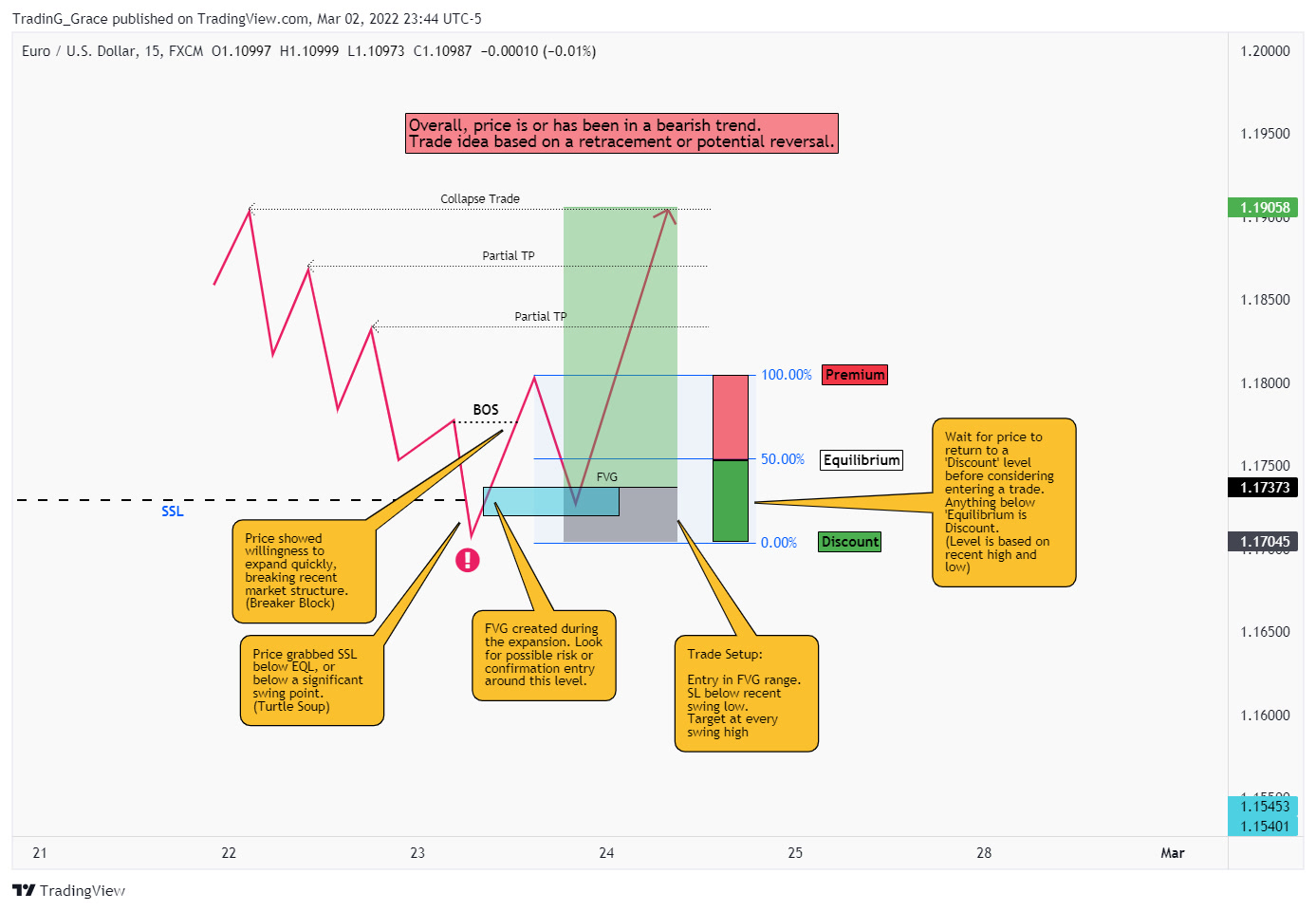
I used to get this wrong too, badly enough that I kept a separate log of trades I didn't take alongside ones I did. Here's one that still sits in that log.
June 3rd, 2026. GBPUSD, 15-minute chart. London session, roughly 7:40 AM GMT. There had been aggressive displacement to the downside after the 7:00 AM GMT open, a clean, three-candle bearish impulse that swept the Asia session lows and left a clearly defined fair value gap between 1.2714 and 1.2728. Higher timeframe bias was bearish. The FVG was sitting inside a premium zone. My alert fired when price retraced into the gap.
Entry would've been 1.2721. Stop above the FVG and the prior minor swing high at 1.2741, 20 pips. Risk: 0.75% of account. Target: the next buy-side liquidity pool sitting at 1.2658. That's a 3.15R trade on a textbook setup.
I didn't take it. I watched two 15-minute candles close inside that FVG and did nothing. Twenty-two minutes later, price had already moved 40 pips in my direction. I then entered a short on a completely unrelated candle because the momentum looked convincing, got caught in a pullback, and stopped out for -0.75%.
Same session. A 3.15R winner I passed on and a -0.75% loser I hunted. The setup knowledge was identical. The execution was backwards.
The Archetype I See Constantly in the Wild
There's a specific type of trader who has spent significant time studying smart money concepts, they know premium and discount, they can draw an FVG correctly, they understand why a breaker block matters, but their P&L is either flat or slowly bleeding. When you look at their trade log, the pattern is almost always the same: their losing trades cluster around high-volatility moments (news spikes, opening ranges, large momentum candles), and their winning trades, when they exist, often come from quieter, more structured setups they almost didn't enter.
They've been trained, accidentally, to associate excitement with validity. Volatile price action feels like a signal because it produces a physiological response. A clean, slow, methodical return into a discount order block after displacement? Crickets. Neurologically flat. Their system says "enter" but their body says "is this really it? Seems too quiet."
This trader keeps a journal, reads the right books, watches the right content. But nobody told them that the feeling of certainty before a bad trade is a feature of dopamine anticipation, not a sign the trade is actually good.
If you've read this breakdown of why ICT order blocks keep failing in ranging markets, you'll recognize a similar theme: the structural problem isn't in the concept, it's in how traders apply it under psychological pressure.
The Fix: Restructure When You Physically Interact with Your Charts
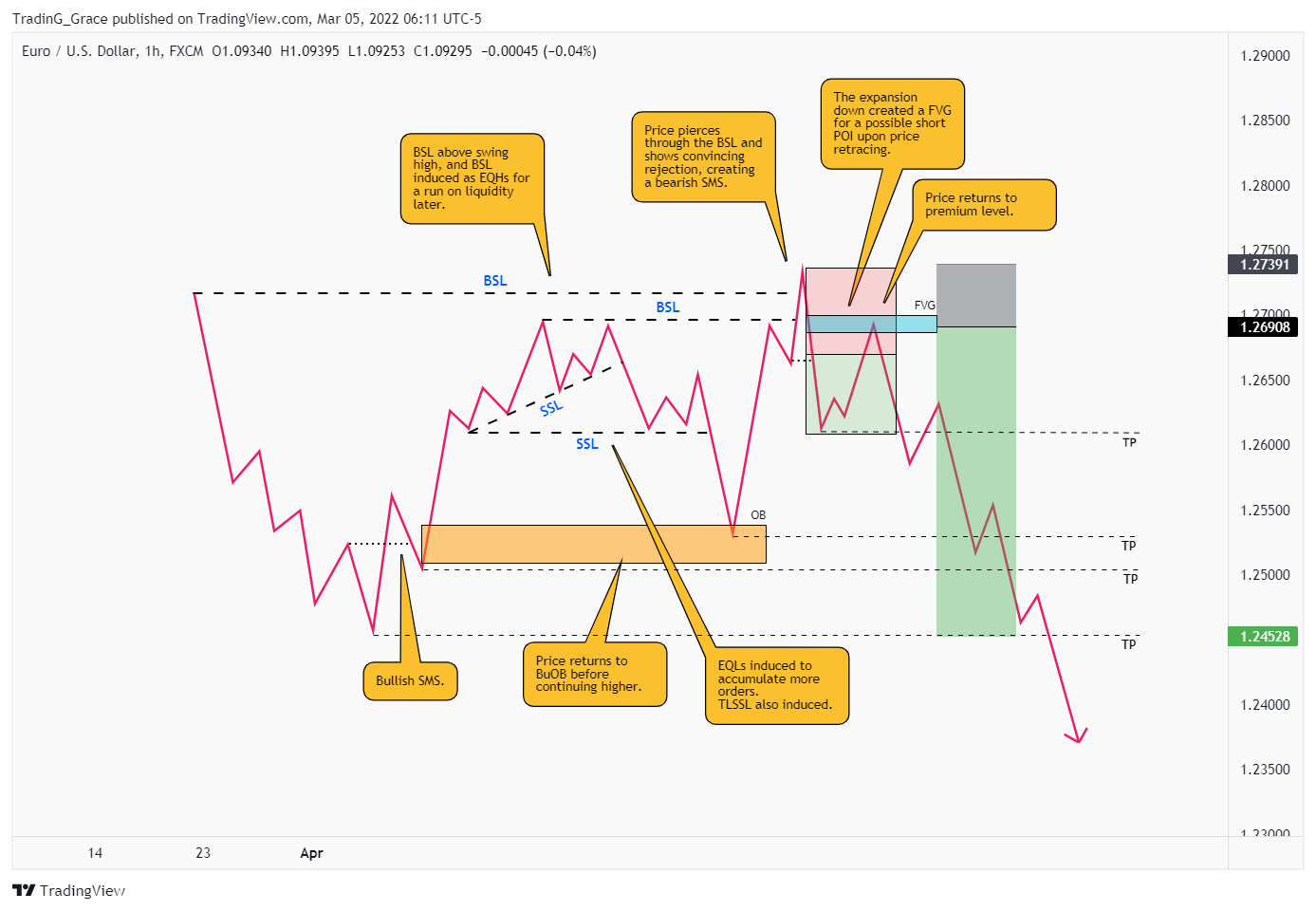
No amount of "trust your system" journaling fixes a timing mismatch. What actually works is restructuring your chart routine so your emotional engagement peaks during the valid setup, not before or after it.
Here's the exact routine I use and recommend:
Step 1, Pre-session bias work (no live charts). Do your higher timeframe analysis, daily, 4H, before the session opens. Mark your key levels, liquidity pools, and POIs. Close the live chart. This removes the dopamine bleed that happens when you watch price move aimlessly before your setup window.
Step 2, Set specific, conditional alerts. Not "price touches 1.2720." Instead: "price enters FVG between 1.2714, 1.2728 during the London kill zone (6, 9 AM GMT) on a bearish higher-timeframe day." The specificity matters because it forces your brain to pre-commit to the conditions, not the price alone. When the alert fires, it becomes an event, your brain treats it as significant.
Step 3, Walk away between the setup and the alert. Physically leave the screen. Do something low-stimulation, make coffee, go outside for five minutes. You're not avoiding the market; you're protecting your dopamine baseline. When you return to a fired alert, you'll approach the chart with a cleaner physiological state than if you'd been staring at candles for 40 minutes.
Step 4, Entry ritual (90 seconds, no longer). When the alert fires, you have one job: verify the three pre-agreed conditions (HTF bias confirmed, price in discount, clean displacement structure present). If all three are met, you execute. No additional deliberation. Use your risk calculator ahead of time so position size is already determined, hesitation during sizing kills as many good trades as hesitation on the entry itself.
Step 5, Close the chart after entry. Set your stop, set your target or partials level, and close the active chart window. Keep a price alert for your target. This prevents the second dopamine trap: micromanaging a valid trade out of a winner because the price action looks scary while it works toward your target.
This isn't mindset work. It's stimulus management. You're not trying to feel differently about the trade, you're restructuring when and how your nervous system engages with the information.
Why "Just Be More Disciplined" Is Bad Advice (Specifically for ICT Traders)
Discipline-based advice assumes the problem is willpower. It isn't. Willpower is a depletable resource, and ICT traders who spend their analytical energy doing multi-timeframe confluence checks, HTF to LTF, mapping liquidity, reading displacement, are often mentally taxed before the entry window even opens. Telling a cognitively loaded trader to "just be more disciplined" in the final moment is like telling a marathon runner at mile 25 to sprint harder because they didn't train well enough.
The smarter path is to build execution into the routine before cognitive load peaks. This is why the 90-second entry ritual works, not because it takes discipline, but because it eliminates the decision entirely. The decision was made earlier, at zero cognitive load, when you set the conditional alert.
This is also why I think the broader smart money concepts community underserves traders when it focuses almost exclusively on setup identification. Identifying the setup is, genuinely, the easier part. The harder and more important question is: why didn't you take it when it showed up? That's the edge that separates funded traders from perpetual challenge-failers, and it's almost never about knowing more setups. For more on this specific gap, the Q2 2026 market structure breakdown touches on why execution problems compound during structural transitions.
And if you've been losing funded accounts despite knowing your setups, it might also be worth reading the 7 fatal mistakes that kill funded account challenges, because the dopamine-timing issue shows up in a very specific way under challenge pressure.
One Honest Thing Before You Go
The 90-second ritual and the conditional alert system aren't magic. There's a two-to-three week adjustment period where your old habits will fight the new structure. You'll set an alert, walk away, and find yourself back at the screen anyway because sitting away from the chart when you know price is near your level feels unbearable.
That discomfort is the dopamine anticipation loop trying to reassert itself. It's not a sign you're doing it wrong. It's the signal that you're actually interrupting the pattern.
Stay with it for fifteen trading sessions before you evaluate whether it's working. Track not just your P&L but your skipped bad trades, because missing a -1R loss you would've previously taken is a real result, even if it doesn't show up as a green number.
If you want to work through this with more direct support, whether that's reviewing your chart routine, going through your trade log, or building a session structure that fits your specific pairs and kill zones, take a look at the coaching plans here. The Lite tier at $150/week is built specifically for traders who have the knowledge but need the execution structure. The Pro tier goes deeper into live review and personalized feedback. There's also a free discovery call if you want to talk through where you're at before committing to anything.
You already know the setup. That was never really the problem.
Harvest Wright
ICT Trading Coach · 10+ Years Experience
Harvest specializes in ICT methodology and has helped traders pass prop firm challenges, develop consistent strategies, and build the psychology needed for long-term profitability.
Book a Free Discovery Call →Ready to Get Funded?
Our students pass prop firm challenges in under 60 days with personalized ICT coaching.
Book a Free Discovery CallFree ICT Funded-Trader Playbook
The setups, the pre-trade checklist, and the risk rules I use. Get it free.