
Why Knowing ICT Concepts Still Isn't Enough
Here's something I see all the time: a trader opens a Discord, drops a flawlessly annotated chart, labels the FVG, identifies the breaker, calls the liquidity pool sitting above the equal highs, and then, when price actually approaches that level in live market conditions, they either freeze, revenge-trade the miss, or size up irrationally because they're "sure" about it. Their ICT trading knowledge is immaculate. Their account balance tells a different story.
Key Takeaway: Knowing ICT concepts is the entry requirement, not the edge. The real gap destroying most traders' accounts isn't intellectual, it's the unmapped distance between understanding a concept in hindsight and executing it in real-time under genuine financial pressure. Studying more concepts without addressing this gap doesn't fix the problem. It usually deepens it.
The ICT Trading Knowledge Trap Nobody Talks About
There's a simple reason why memorizing more ICT content can actively make you a worse trader, and almost nobody in the community is saying it out loud.
When you repeatedly backtest setups, watch replays, and consume educational content, you're building explicit memory, declarative, language-based knowledge you can consciously access and recite. You know what a fair value gap is. You can explain the 50% equilibrium of an order block. You understand the logic behind liquidity raids on buy stops.
But executing a live trade doesn't pull from explicit memory. It pulls from procedural memory and how well you handle stress, which is a different skill. Calm, rational thinking has to compete with your threat response the second real money is on the line. If you've only trained explicit memory through passive consumption and backtesting, you've essentially been practicing a sport in your head without ever getting on the field.
Here's the brutal part: the more concepts you memorize without fixing the execution layer, the more sophisticated your rationalizations become for bad trades. You're not underprepared, you're overcomplicated. You can now construct a beautiful narrative for every revenge trade you take.
Myth: You're still losing because you don't know enough ICT concepts.
Reality: You're still losing because you've never systematically trained real-time decision-making under pressure, and studying more ICT content feels productive enough to delay the uncomfortable truth.
What I Actually See: Traders who've consumed hundreds of hours of ICT content but have never done a single live session where they narrate their decisions out loud in real-time, recording both their reasoning and their emotional state at each decision point.
What This Looks Like
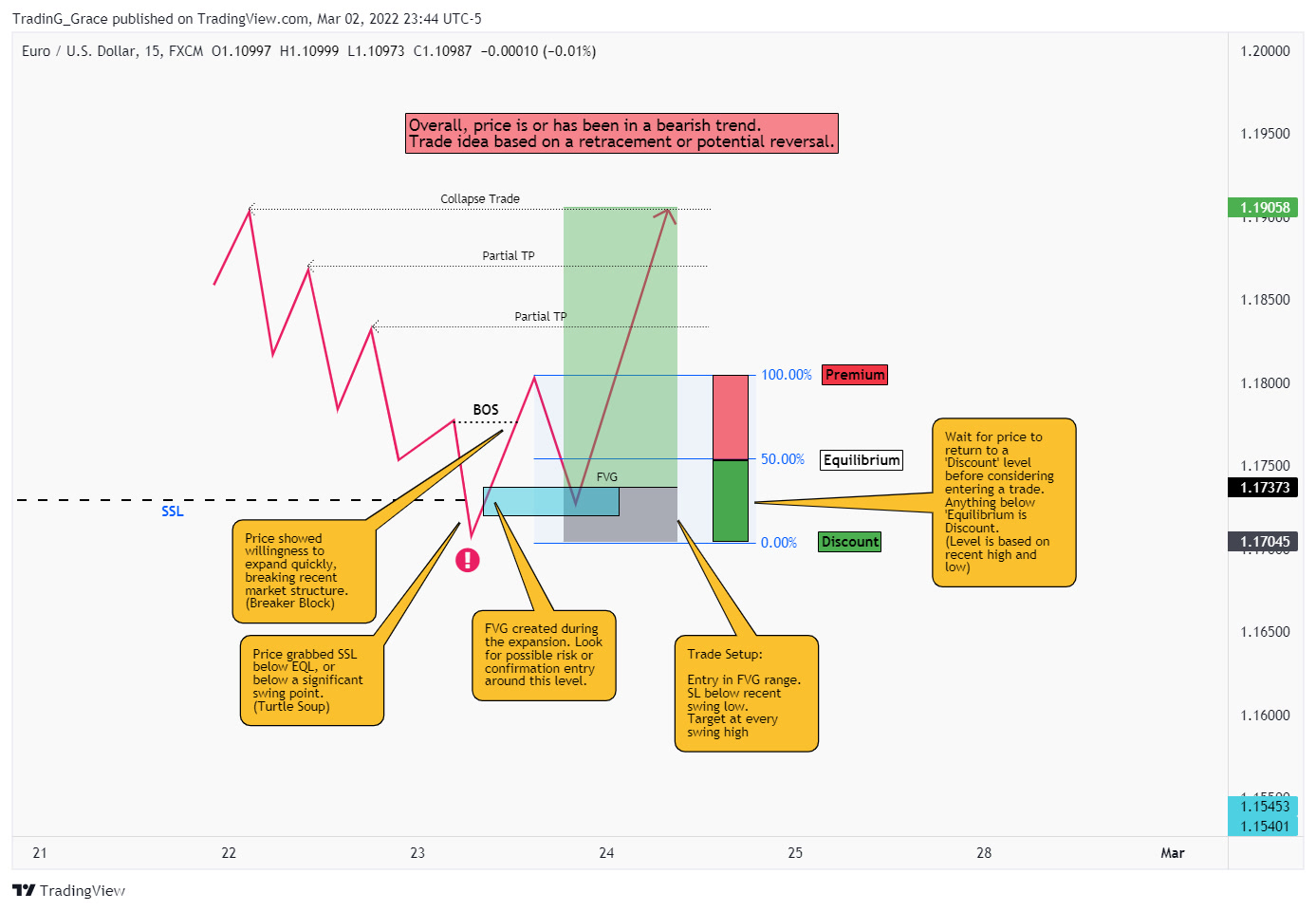
I used to get this wrong too. Here's the kind of moment I mean.
Picture GBPUSD on the 15-minute chart in the London kill zone. There's a clear displacement to the downside after a sweep of buy-side liquidity above a prior week high. A textbook fair value gap forms on the impulse leg, three clean candles, gap clearly visible, and price hasn't retraced into it yet. You have a limit order at the upper edge of the FVG, a stop above the high that made the sweep, and a target at the daily sell-side objective. The setup is clean. You've seen this pattern dozens of times in backtesting.
Price enters the FVG, and then you move your stop. There's no technical reason. A headline crosses the feed, price feels "choppy," and suddenly you "aren't sure." You widen the stop, which nearly doubles your planned risk. Say the trade runs to target anyway. You made money, but you didn't execute the trade you planned. You executed a fear response and got lucky.
That's the distinction. The concept is known perfectly. The execution is amateur. And because it paid, there's no lesson in it, which is exactly how bad habits calcify under the illusion of competence.
The Archetype I Keep Seeing: The Fluent Freezer
There's a specific type of trader I encounter constantly in trading communities. Call them the Fluent Freezer.
They're incredibly articulate about ICT trading. They post in threads correcting others' FVG placement. They know the difference between a breaker and a mitigation block. They've watched every relevant educational video multiple times. In a written conversation, they sound like they've been doing this profitably for years.
But watch them in a live session. Price sweeps liquidity, displaces, creates an FVG, starts to retrace, and they start adding conditions. "I'll wait for a lower timeframe confirmation." Then when the LTF confirmation comes: "The spread is a bit wide right now." Then when it narrows: "Actually I think this might be a draw on liquidity, not a reversal." Price moves without them. Then, and this is the critical moment, they chase.
The chase entry is where the account actually bleeds. They don't lose money on the setups they know. They lose money on the impulsive reaction to missing the setup they knew.
No amount of additional ICT content fixes that. The Fluent Freezer doesn't have a knowledge problem. They have an execution anxiety problem that's being masked by knowledge accumulation. Every new concept learned becomes another reason to hesitate, or another justification for the impulsive entry after the miss.
Why 'Learning More ICT' Is Often Avoidance in Disguise
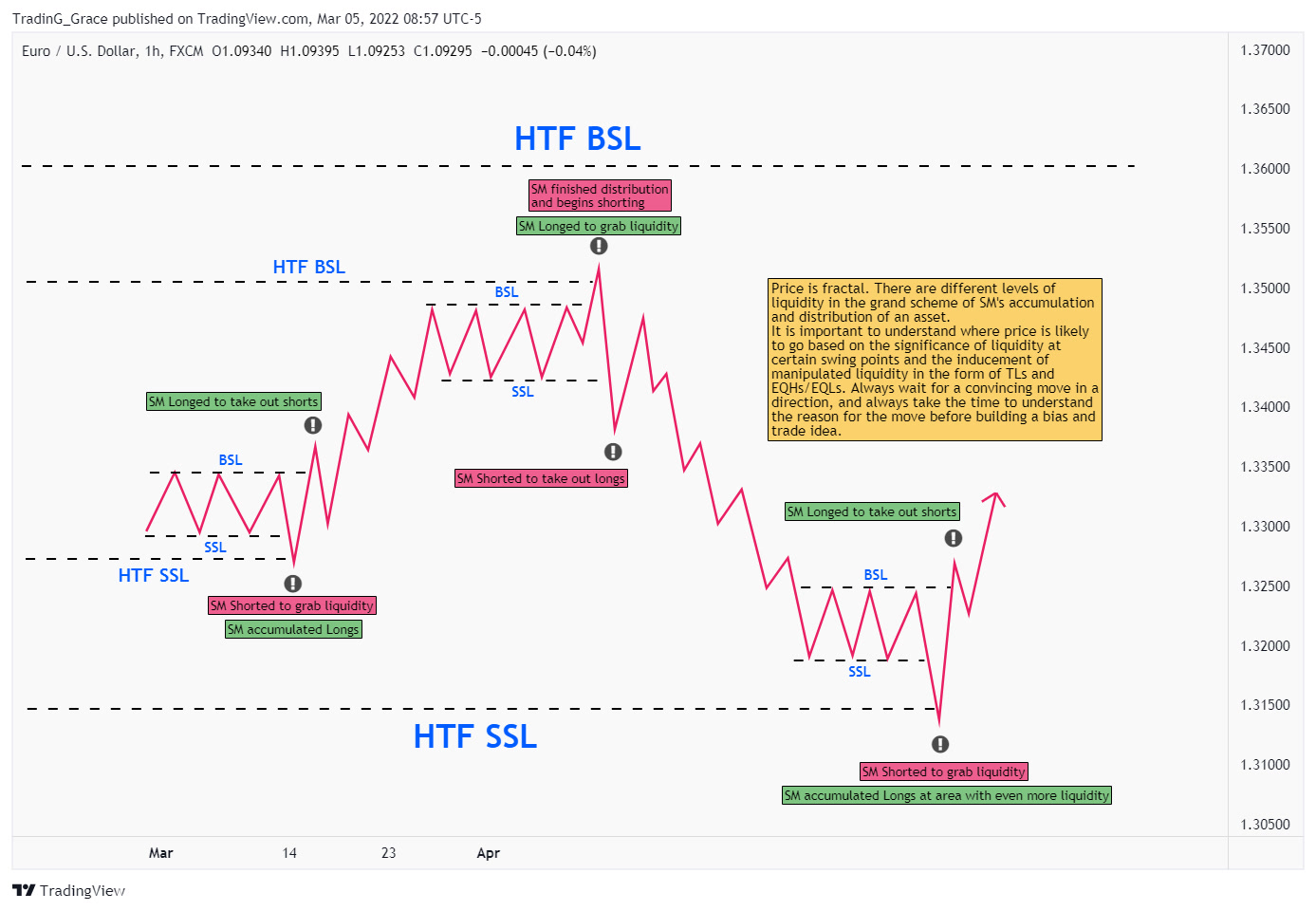
This is the uncomfortable part. Genuinely sit with this.
Learning feels productive. Opening a chart, marking up FVGs, watching a video breakdown of premium/discount arrays, all of this creates a sensation of forward momentum. Your brain rewards you for it. You feel like you're working on your trading.
But for a significant portion of struggling traders, learning more is functioning as avoidance of the specific work that would actually improve performance: sitting down with your trade history, identifying the exact emotional state during every losing trade, and mapping the precise moment your decision-making diverged from your plan.
That audit is deeply uncomfortable. It forces you to confront that the losses aren't random market noise, they're a consistent pattern of your behavior under pressure. Most traders would rather learn a new ICT concept than face that. The community structure around ICT trading actually enables this avoidance by making more content infinitely accessible.
Check out the ICT Fair Value Gap trading checklist, not because you need more concept review, but because a pre-trade checklist is one of the few tools that bridges the gap between knowing and doing by creating a procedural habit that bypasses the emotional freeze.
The Framework: Execution Training vs. Knowledge Training
Here's what I'd do. This is a four-phase structure you can start today.
Phase 1: The Emotional Trade Audit (Week 1) Go back through your last 30 trades. Not to analyze the setups, to categorize your emotional state. For each trade, answer three questions: Did I take this exactly as planned? If not, what changed and why? What was I feeling in the 5 minutes before entry? You'll find patterns that have nothing to do with ICT concepts and everything to do with three or four recurring emotional triggers.
Phase 2: Live Narration Practice (Weeks 2-3) Record yourself, voice memo, screen record, anything, narrating your reasoning in real-time as price approaches a setup. You must verbalize: what the setup is, why it qualifies, your exact entry, your exact stop, your exact target, and your risk percentage before you touch the execute button. This forces explicit and procedural memory to connect. It also makes rationalization visible, you can't silently justify a bad trade when you're speaking it aloud. Use the risk calculator during this step so position sizing is never a real-time calculation adding cognitive load.
Phase 3: The One-Setup Challenge (Weeks 3-6) Pick one ICT setup. One. For example: FVG fill after London displacement on EURUSD 15-minute, entry at FVG upper edge in discount of the range, stop below the swing low, target the opposing liquidity. Trade only this setup for six weeks. No exceptions. The goal isn't to find the best setup, it's to build procedural automaticity in a specific, repeatable sequence. Variety in concepts is the enemy of execution mastery at this stage.
Phase 4: Debrief With Timestamps (Ongoing) After every trading session, write three lines: the moment the setup appeared, the moment you made your decision, and whether those two moments were the same or different. If they weren't the same, if there was hesitation, addition of conditions, or a deviation, that gap is your actual training target. Not more ICT study.
This framework won't make you fluent in more concepts. That's the point. See also why Q2 2026 market structure shifts are challenging even experienced ICT traders, because execution quality matters even more when market behavior is less textbook-clean.
The Honest Distinction Between Knowledge and Edge
There's a trader archetype that actually makes money with ICT: they know a fraction of what the Fluent Freezer knows, but they execute that fraction with near-robotic consistency. They don't deviate from their planned entry. They don't move stops. They don't revenge-trade misses. And paradoxically, they're often less impressive to talk to in a Discord than the trader who's losing.
Edge in ICT trading isn't the number of concepts you understand. Edge is the reliability gap between your planned behavior and your actual behavior under live market conditions. In my experience, even experienced traders perform worse once real stakes are on the line unless they've trained for that pressure. ICT concepts are the map. Execution training is learning to read it while someone's shouting in your ear.
If you're sitting with a win rate under 45% and a positive expectancy on paper that never materializes in live trading, that's not a setup problem. That's a performance gap, and it has a different solution than watching more educational content. The 7 fatal mistakes that kill funded account challenges breaks down exactly how this gap shows up in the highest-stakes version of this problem.
What To Do If You Recognize Yourself Here
Stop learning new ICT concepts for 30 days. Seriously. Everything you need to execute profitably, you almost certainly already know. What you don't have is a trained nervous system that executes that knowledge under pressure without flinching.
Spend those 30 days on the four-phase framework above. Record your narrations. Do the emotional audit. Trade one setup. If you want structure and accountability around that process, someone who can look at your behavior patterns, not just your chart markups, explore the coaching plans and see what level of support fits where you actually are, not where you think you are.
Or if you're still not sure whether coaching is the right next step, book a free discovery call and have that conversation first.
But honestly? The next step most of you need isn't on this website. It's opening your trade history right now and asking yourself: in my last ten losses, how many of them were actually ICT concept failures, and how many were execution failures I already knew about while they were happening?
I'd bet the answer changes how you spend the next 30 days.
Harvest Wright
ICT Trading Coach · 10+ Years Experience
Harvest specializes in ICT methodology and has helped traders pass prop firm challenges, develop consistent strategies, and build the psychology needed for long-term profitability.
Book a Free Discovery Call →Master Your Trading Psychology
Psychology is a huge part of trading. Our coaching includes dedicated psychology sessions.
See Coaching PlansFree ICT Funded-Trader Playbook
The setups, the pre-trade checklist, and the risk rules I use. Get it free.