
How to Pass a Funded Challenge Without Blowing It
How to Pass a Funded Challenge Without Blowing It
Picture a trader with a strategy that works. Same setups, same ICT framework they've traded for years, and yet challenge after challenge, the equity curve curls south right before the finish line. The fix usually starts in the trade journal: compare challenge behavior to normal behavior and the problem becomes obvious. Learning how to pass a funded challenge has surprisingly little to do with learning to trade better. The real skill is learning to stop trading worse the moment real rules are attached to your positions.
Key Takeaway: A lot of traders fail funded challenges because the evaluation environment triggers behavioral changes that don't exist in their normal trading, tighter stops, oversized entries after losses, and sessions traded outside their proven edge. Fix the behavior first, and the strategy takes care of itself.
Why Your Strategy Isn't Actually the Problem
Here's the uncomfortable truth most prop firm content won't tell you: the strategy that got you confident enough to purchase a challenge is often good enough to pass. In my experience, the markets don't break most traders' systems. They come out of the gate trading like the challenge clock is already expiring.
The funded challenge environment creates a psychological cocktail that doesn't exist anywhere else. You have a profit target pulling you forward, a max drawdown threatening you from behind, and a daily loss limit sitting right above your head like a sword. That combination warps decision-making in ways traders genuinely don't anticipate.
A common version of this is very specific: widening profit targets during the challenge to hit the 10% objective faster. Same setups, same ICT framework, but instead of taking partials at 2R and letting runners go, the trader holds everything looking for 4R+. The result? Trades that would have been clean winners turn into breakeven or small losses when price pulls back after the first leg.
The Archetype That Destroys Accounts
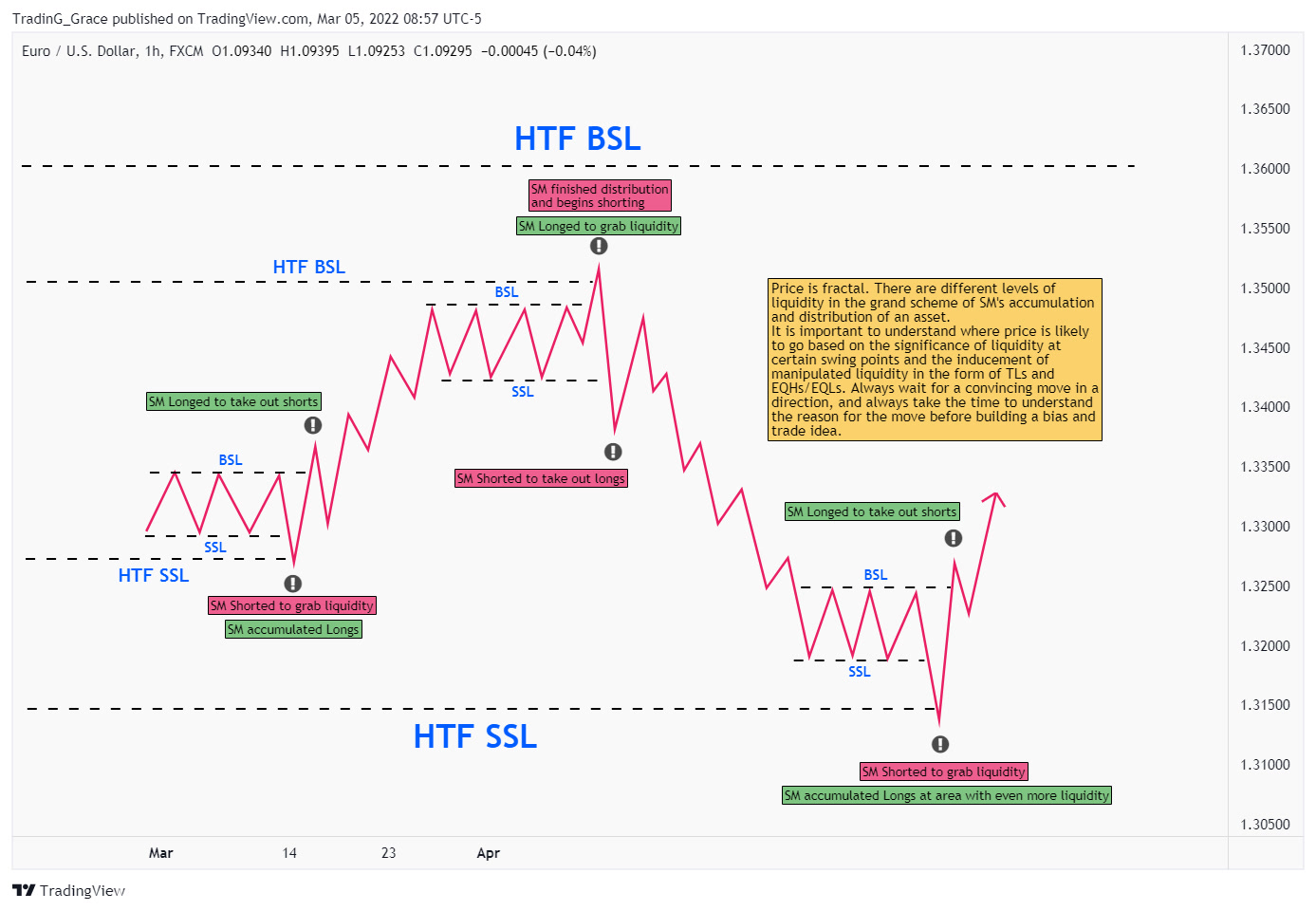
There's a trader pattern I see a lot, and it goes like this: the trader has a legitimate edge, usually something built around ICT displacement, FVGs, and session liquidity. They pass the first phase of a two-phase challenge with three days to spare. Phase two starts, and suddenly they go cold. Three consecutive losing days. They're now within $200 of the daily loss limit, panic-enter a revenge trade at the wrong time of day (usually mid-session New York, not the open), and blow the account on a setup they'd never take in their normal trading.
What happened? Phase two triggered a scarcity response. The finish line got close enough to see, which made every loss feel catastrophic. That emotional escalation is what causes the off-plan entries, not a strategy failure.
The fix is structural, not a pep talk you give yourself each morning. Build your challenge rules before you start, and make them non-negotiable regardless of where you are in the phase.
The Framework I'd Use
Here's the process:
Step 1, Define your three non-negotiables before day one. Mine are: (1) no trading outside London open or New York open kill zones, (2) maximum 0.5% risk per trade, and (3) no more than two trades per session. Write these down. Post them somewhere visible. They don't change because of where you are in the challenge.
Step 2, Set your own daily loss limit at 60% of the firm's limit. If the firm's daily loss limit is 5%, your personal cutoff is 3%. This creates a buffer that stops you from reaching the kill zone on a bad day. Once you hit your internal limit, charts close. Non-negotiable.
Step 3, Trade your session, not the challenge clock. This one is critical. If you're a London open trader, trade London open. Don't add an Asian session just because you're behind on the profit target. Adding sessions you haven't proven an edge in is how traders manufacture losses.
Step 4, Take the same partial profit levels you take normally. Not bigger targets. Not smaller ones. Whatever your normal 1:2 or 1:3 structure looks like, replicate it exactly. The challenge is not the time to experiment with new exit mechanics.
Step 5, Review your equity curve at the end of each week, not each day. Checking P&L daily during a challenge turns normal drawdown into an emotional event. Weekly reviews keep perspective without letting denial build up.
A Worked Example: A Challenge Trade
Picture a trader partway through phase one, well up but short of the 10% target. Close enough to feel it, far enough that one bad week could stall everything.
GBPUSD, 15-minute chart. The London open runs through the Asian range, taking out liquidity, then displaces hard to the upside. On the 5-minute, price pulls back into a well-defined FVG that sits in a discount array relative to the prior swing low. The entry is in the FVG, sized to the trader's normal risk. The stop goes below the swing low that the displacement launched from, because if price takes it out, the bullish move has failed.
The plan: take half off at the nearest internal liquidity level, move the stop to breakeven on the runner, and let it work toward the daily high, the obvious buy-side liquidity above.
Nothing spectacular. But here's what matters: that trade looks identical to a trade the trader would take on a demo or a live account. Same entry logic, same position size, same exit structure. That's the whole game. If your challenge trades look different from your normal trades, you have a bigger problem than strategy.
The Risk Math That Most Traders Ignore
Let's talk about something that gets glossed over in most funded challenge content: the geometric relationship between your risk per trade and your margin for error.
At 1% risk per trade with a 10% max drawdown, you have 10 losing trades before termination, assuming worst case with no winners. At 0.5% risk per trade, you have 20. At 0.25%, you have 40. For a trader with a genuine 50 to 55% win rate and a 1:2 average RR, the math strongly favors the lower risk. You can absorb variance without being in terminal danger, and you can still hit a 10% profit target in a reasonable number of trading days without needing any single trade to rescue the account.
Use a risk calculator to map this out before you start your challenge. Specifically, run the scenario where you lose your first 5 trades in a row. If that scenario puts you near the max drawdown boundary, your per-trade risk is too high. Adjust before the challenge starts, not during it.
For a deeper dive into the specific mistakes that end funded accounts prematurely, this breakdown of 7 fatal mistakes in funded challenges covers several I didn't have room to get into here.
The Contrarian Take Nobody Wants to Hear
Here's where I'll disagree with most of the challenge-passing content on the internet: consistency metrics matter more than hitting the profit target.
In my view, you should treat the evaluation as a test of your behavior as well as your P&L. A trader who hits 10% in two massive trades with erratic position sizing is a liability. A trader who builds to 10% over 20 sessions with consistent risk and no daily limit breaches is a funded trader they can trust with larger capital.
This matters even more when you consider what happens after the pass. It's common for traders to get funded and blow the account quickly because they never built the behavioral habits during the challenge, they got lucky with two big trades and now can't replicate the process under live conditions. Passing consistently and trading consistently are the same skill. You either build it during the evaluation or you pay for another reset.
For a more honest look at what funded trading actually involves beyond the challenge itself, this piece on the truth about funded trading is worth reading before you purchase your next evaluation.
What to Do Right Now
If you've reset more than twice, what you need is a behavioral audit. Pull your last two failed challenges and compare the trade log to your normal trading. Look for three things: did your position size change, did your session timing change, did your exit structure change? If yes to any of them, you've found your problem.
For traders who want structured accountability during a challenge, not just theory, our coaching plans can be built around your evaluation. The Lite tier at $150/week is one 1-on-1 session a week, which suits traders who have a functional strategy and need a framework layer. Pro at $250/week is two 1-on-1 sessions a week. Either way, the focus is keeping your challenge behavior aligned with your normal trading behavior, which is the actual problem a lot of traders need solved.
If you're not sure where you sit yet, book a free discovery call and we'll figure it out together before you spend another $200 on a reset.
The challenge isn't the hard part. Trading like yourself under pressure is. That's the skill worth building.
Harvest Wright
ICT Trading Coach · 10+ Years Experience
Harvest specializes in ICT methodology and has helped traders pass prop firm challenges, develop consistent strategies, and build the psychology needed for long-term profitability.
Book a Free Discovery Call →Ready to Get Funded?
Our students pass prop firm challenges in under 60 days with personalized ICT coaching.
Book a Free Discovery CallFree ICT Funded-Trader Playbook
The setups, the pre-trade checklist, and the risk rules I use. Get it free.