
The Silence After a Loss: ICT Traders' Hidden Battle
Nobody talks about the days after a loss. They talk about the loss itself, the revenge trade that follows, the blown account, the angry Discord message. That's the visible stuff. One of the things that really hurts ICT traders' performance is quieter, slower, and almost impossible to catch in real time. It's a specific cognitive pattern I've been watching in my own trading and across trading communities for over a decade, and it has nothing to do with revenge trading. It's called narrative attachment, and if you're serious about developing a durable ICT trading mindset, you need to understand exactly how it works before it takes your next funded account with it.
Key Takeaway: After a losing ICT trade, traders don't just feel bad, they unconsciously reinterpret the market structure they just lost on, creating a bias loop that corrupts the next few setups before they even execute. The fix isn't emotional control. It's a structured post-loss protocol that separates your read of the last trade from your read of the next one.
A Worked Example
Let me make it specific, because abstract psychology talk is useless without it.
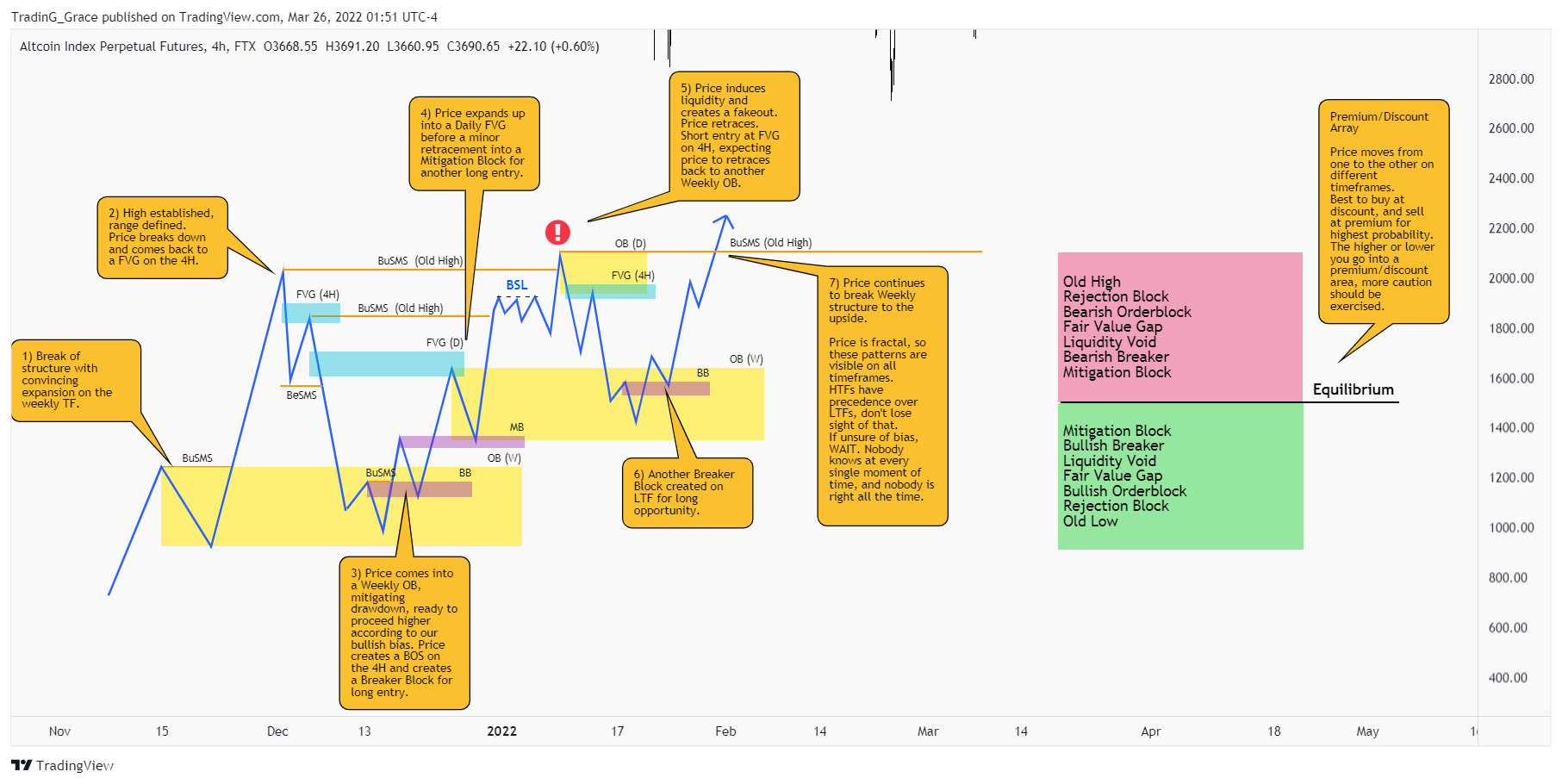
Picture GBPUSD on the 15-minute chart during the London session. Price sweeps buy-side liquidity above the Asian range high, displaces bearishly through a clean area of inefficiency, and leaves a well-defined bearish FVG. The 1-hour structure points lower. New York open is approaching. Everything aligns.
The trader shorts the midpoint of the FVG, stop above the structure high that did the sweep, because a break above it means the bearish idea is wrong. The target is the equal lows below, where the sell-side liquidity sits.
Price comes back to fill the gap and then... does nothing bearish. No rejection candle. No displacement. It just drifts, closes above the FVG, and tags the stop.
A normal-sized loss. Barely a blip on a properly managed account. But here's what can happen next, and this is the part that actually matters.
The Days Nobody Warns You About
For the next couple of days, the trader doesn't trust bearish setups on GBPUSD. They never decide not to trust them. It happens below conscious thought.
Next London session: a nearly identical setup forms. Bearish FVG, swept buy-side, 1H structure intact. They look at it, feel something uncomfortable that they call "caution," and pass. It runs to target without them.
The session after that: another bearish continuation opportunity, this time on the 5-minute after a clear market structure shift. They take it, but at a fraction of normal size for no real reason, and exit early because they're already building a mental story about why price might reverse.
Three setups. One loss, one missed, one undersized early exit. And the whole sequence traces back to a single losing trade and the mental static that followed it. I've lived versions of this myself.
This is what I mean when I say the damage isn't in the loss. It's in the silence after.
Why ICT Knowledge Makes This Worse, Not Better
Here's the contrarian take that most ICT YouTube content will never touch: the deeper your understanding of market structure, the more vulnerable you are to this specific bias loop.
When a newer trader loses, they don't have the analytical vocabulary to construct an elaborate post-loss narrative. They think "I got it wrong" and move on.
When an experienced ICT trader loses, they have an entire toolkit available to retroactively explain why they should have known. And the brain, which is desperate to protect ego and restore a sense of control, will use every tool available.
So you start looking at the FVG you traded and notice it was a "weak" FVG because the displacement candle had a small body. You reexamine the order block and decide it was actually in premium, not discount. You look at the higher timeframe and retroactively see that the 4-hour structure was still bullish, something you definitely saw before entry but mentally framed differently in the moment.
None of this reinterpretation is wrong, exactly. Some of it might even be accurate. But the function it's serving is psychological, not analytical. You're not learning from the trade. You're building a case for why the market was unknowable, and simultaneously embedding a new belief that this type of setup, in this direction, on this pair, is dangerous.
That embedded belief is what corrupts the next two or three setups. Not emotions. Not revenge trading. An invisible narrative that rewired how you read the chart.
If you've ever found yourself avoiding a perfectly valid setup because it "felt too similar" to one you recently lost on, you've already experienced this. The pattern shows up constantly in trading forums, someone posts a setup they passed on that would have worked, and when pressed, the explanation is usually some variation of "I just didn't trust it." They rarely connect that distrust to a specific prior loss. But it's often there.
This is also one of the core reasons I wrote about why your ICT order blocks keep failing in ranging markets, because what looks like a technical problem is often a psychological filter distorting which setups you're willing to see clearly.
The Archetype I Keep Seeing
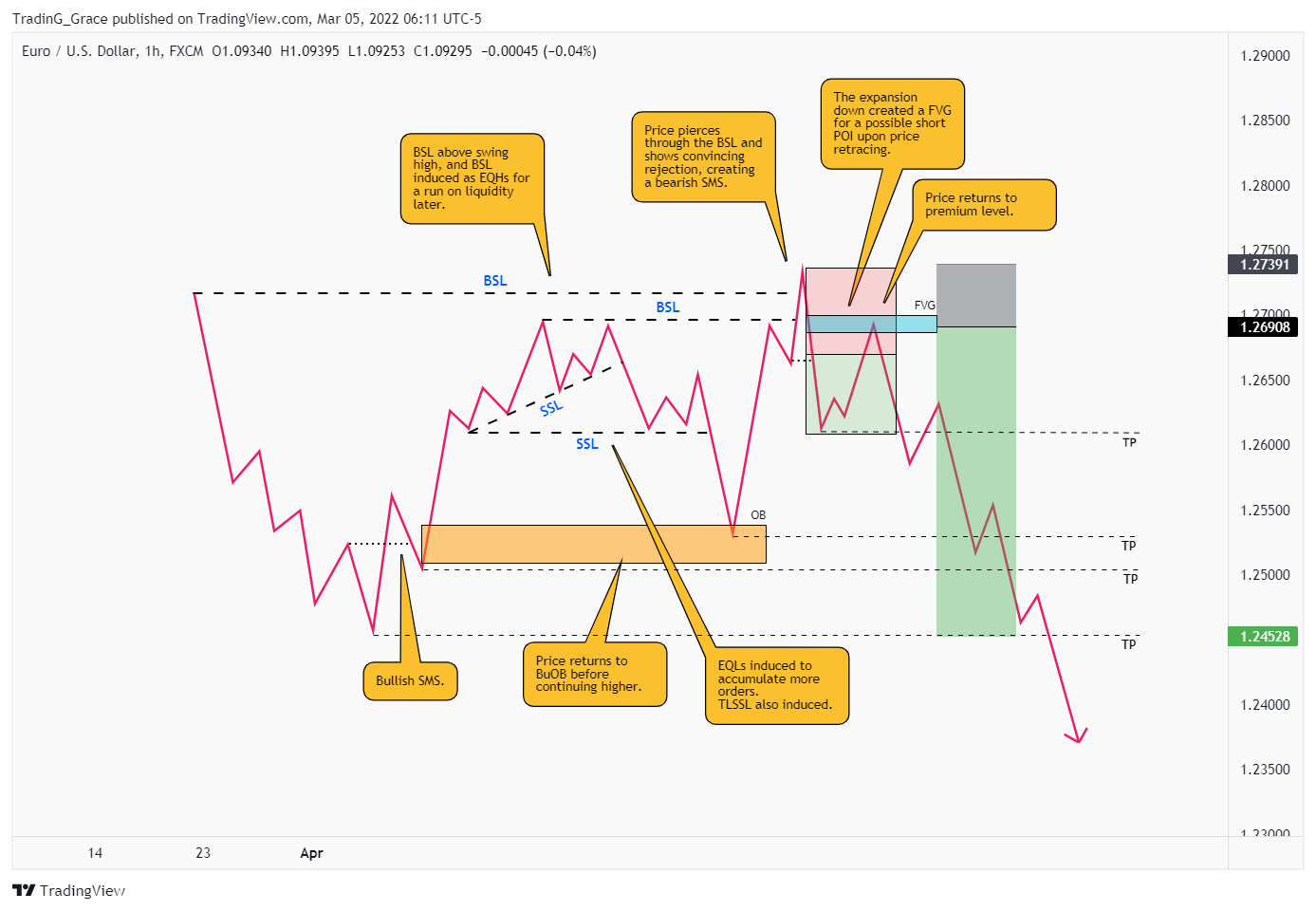
There's a trader profile that shows up consistently in ICT communities, usually 6 to 18 months into the methodology, sharp enough to identify solid setups, clear understanding of draw on liquidity and PD arrays. Their chart analysis is actually solid. But their equity curve has this strange pattern: clusters of good performance followed by a 3-5 day stretch where nothing connects.
When you dig into their trade journal during those cold stretches, the setups don't look worse. The entries are still technically valid. What's changed is the direction they're trading. After a losing long, they start finding more reasons to short, not because the structure has shifted, but because they've unconsciously inverted their directional bias to avoid repeating the "mistake." They've confused avoiding a loss with avoiding a direction.
This is narrative attachment in its most damaging form. It's not that they're chasing the market. They're actively running away from the direction that burned them, even when that direction is exactly where the next clean setup lives.
The distinction between this and standard confirmation bias matters: this isn't about seeing what you want to see. It's about systematically not seeing what you're afraid to see repeated. That's harder to catch. And it's harder to fix with generic advice about emotional discipline, because this isn't an emotional problem. It's a structural cognitive problem with a specific trigger.
For more on the patterns that quietly kill funded account performance, this breakdown of the 7 fatal mistakes in prop challenges covers several that interact directly with this bias loop.
A Post-Loss Protocol That Actually Works
I used to get this wrong, badly. My response to a loss was to journal about the trade, what I saw, what went wrong, what I'd do differently. Useful to a point, but it kept my attention locked on the losing setup. The cure was in the wrong direction.
Here's the protocol I actually use now, across the 48 hours after any losing trade:
Hour 0-4: Nothing. Close the chart. Do not review. Do not journal. The first analytical instinct after a loss is tainted by loss aversion, anything you write in this window is narrative reconstruction, not learning.
Hour 4-12: Log only facts, no interpretation. Write down the entry price, the stop, the target, the outcome, the risk percentage. Use the risk calculator to verify your sizing was correct. That's it. No sentences that begin with "I should have" or "I missed" or "the market."
Hour 12-24: Review the process, not the result. Ask one question only: "Did this trade meet every criterion on my checklist before entry?" If it did, the loss is statistically expected, move on. If it didn't, identify which criterion you skipped and why. The why is usually where the real learning is. Mine is often impatience: I entered before the FVG was fully formed, or before price had actually reacted at the OB rather than just approached it. You can cross-reference what rigorous pre-trade confirmation looks like with this ICT Fair Value Gap checklist.
Hour 24-48: Deliberately mark the next setup in the same direction as your loss. This is the critical step. Before you look for any other setups, you must mark at least one valid setup in the same directional bias as the trade you lost. You don't have to take it. But the act of identifying it forces your analytical brain to engage with that direction rather than avoid it. It breaks the avoidance pattern before it calcifies.
Before your next entry: run a bias audit. Ask yourself, "Am I avoiding or favoring any particular direction right now, and what's the specific structural reason for that, not the emotional one?" If you can't name a structural reason rooted in what price is currently doing, you have narrative attachment. Step back.
This process isn't glamorous. It doesn't fix losses or make you a better analyst overnight. What it does is prevent a single bad trade from corrupting three or four good ones, which, over a year of trading, can be the difference between a growing account and a flat one.
Building this kind of systematic self-awareness is also the foundation of what we focus on in the coaching plans at R2F, not just strategy refinement, but the mental architecture that lets you actually execute the strategy you've built.
The Real Battle
Most trading psychology content hands you coping mechanisms. Breathe deeply. Take a walk. Don't trade angry. That advice isn't wrong, it's just aimed at the visible symptoms while the actual problem runs underneath, quiet and systematic.
The ICT trading mindset that produces durable results isn't about emotional suppression. It's about understanding exactly how your own analytical framework can be weaponized against you by your own psychology, and having a structured response ready before it happens.
The 48 hours after a loss are not a rest period. They can be the most dangerous stretch in your trading week. Treat them that way.
Your next step: after your next losing trade, don't journal the loss. Instead, wait 12 hours, then open a clean chart and mark one valid setup in the same direction. Just mark it. See what your brain does when you force it to look at what it's been trying to avoid. That single exercise will tell you more about your current ICT trading mindset than a month of emotional journaling.
Harvest Wright
ICT Trading Coach · 10+ Years Experience
Harvest specializes in ICT methodology and has helped traders pass prop firm challenges, develop consistent strategies, and build the psychology needed for long-term profitability.
Book a Free Discovery Call →Master Your Trading Psychology
Psychology is a huge part of trading. Our coaching includes dedicated psychology sessions.
See Coaching PlansFree ICT Funded-Trader Playbook
The setups, the pre-trade checklist, and the risk rules I use. Get it free.