
Why Discipline Feels Harder After a Winning Streak
Everyone in this industry wants to talk about what happens to your discipline after a losing streak. The drawdown narrative is everywhere, forums, YouTube, coaching content. And sure, consecutive losses will test you. But after more than a decade applying smart money concepts to live markets, I can tell you the losses aren't what typically breaks serious traders. What breaks them is a clean, beautiful, confidence-building winning streak.
Key Takeaway: A winning streak neurologically trains your brain to attribute edge to you rather than your setup, causing ICT traders to loosen entry criteria, enter outside killzones, and overtrade premium arrays. The trade immediately following your best week carries statistically higher risk than any trade following a drawdown.
The Myth That's Costing You More Than You Think
Myth: Losing streaks are the primary threat to trading discipline.
Reality: Winning streaks create a far more dangerous psychological condition, one that feels like confidence but functions like confirmation bias.
What I Actually See: Traders who blow funded accounts aren't usually doing it on trade three of a five-loss run. They're doing it on trade two of their best week ever, because their brain has been silently rewiring itself with every clean winner.
Here's what nobody explains about this: dopamine doesn't distinguish between a disciplined win and a reckless win. When you nail a textbook FVG entry at London open, catch displacement, and ride 3R to a previous high, your brain releases the same neurochemical reward as it would if you'd entered randomly and gotten lucky. The brain doesn't file those wins under "good process." It files them under "I was right." And the cumulative effect of four or five consecutive wins is that your brain starts to believe the edge is you, not the confluence of the setup.
That's the confirmation bias fog. And inside it, everything looks like a valid entry.
A Trade Journal Entry That Still Embarrasses Me
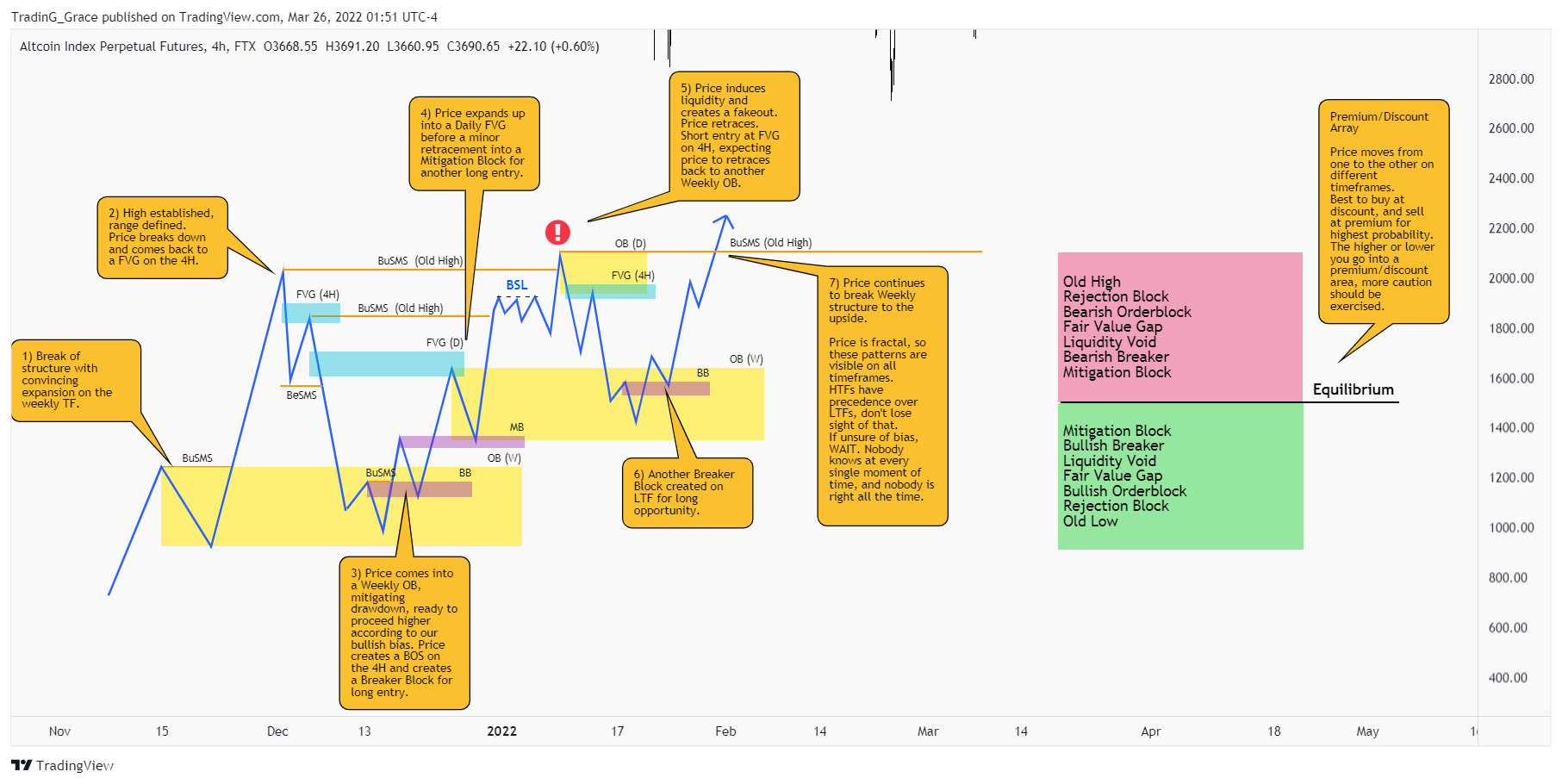
Let me be specific, because vague warnings about psychology are useless.
Last spring, after four clean weeks where I'd run something like 14 winners from 17 trades, I was sitting in front of GBPUSD on the 15-minute chart on a Tuesday morning. The weekly bias was bullish. I'd identified a fair value gap from Monday's New York session that hadn't been fully mitigated. Price was trading into that FVG around the 1.2634 level.
Here's the problem: it was 9:20 AM EST. Not killzone. Not London open, not New York open proper. Just... mid-morning drift. The displacement that created the FVG wasn't from an institutional move, it was from a news spike that had already faded. And the FVG sat squarely in a premium range relative to the week's equilibrium.
Did I wait? No. I entered at 1.2638 with a 14-pip stop, risking 1%, double what I'd been running all month. I told myself the FVG was the reason. The real reason was that four weeks of clean wins had made me feel bulletproof. The trade stopped out within 40 minutes for a full loss. Then I entered again on the next "FVG", which, looking back, wasn't even a real institutional FVG; it was a three-candle imbalance on low volume, and lost another 0.8%.
Two losses in 90 minutes. Both traceable not to bad setups, but to a brain that had stopped checking the rules because the rules had felt unnecessary for a month.
This is the cycle. And it plays out identically whether you're trading forex with smart money concepts or trying to pass a funded account challenge. Speaking of which, if you want to understand exactly how this psychology pattern shows up in prop firm environments, this breakdown on funded account mistakes is worth your time.
What's Actually Happening Neurologically
Research on decision-making under reward conditions (you can dig into the broader behavioral finance literature through sources like Investopedia's coverage of trading psychology) consistently shows that success reduces inhibitory control. In plain terms: wins make your brain's "stop and check" mechanism lazier.
For ICT traders specifically, this creates three predictable failure modes:
1. The Criteria Creep You start accepting weaker order blocks. An OB that would've been filtered out two weeks ago, wrong timeframe, no displacement above it, sitting in a premium, now "looks good enough." The bar slides. Not dramatically. Just one percent at a time, trade by trade, until you're entering setups your own rules would have rejected.
2. The Killzone Bypass This is probably the most common one. After a streak, traders start finding entries at 11 AM, 2 PM, random overnight sessions. The logic becomes "the setup is there", but the setup divorced from killzone timing is a completely different statistical animal. Market structure during Q2 2026 has made this even more punishing, because off-hours moves are increasingly being engineered as liquidity sweeps rather than genuine institutional delivery.
3. The Premium Array Overtrading Perhaps the most technically ironic failure: traders who've had success with smart money concepts start entering in premium because the FVG or OB is visible, ignoring that premium arrays are designed to be sold into by institutions, not bought. You start trading the label rather than the logic.
The Trader Archetype I See Constantly
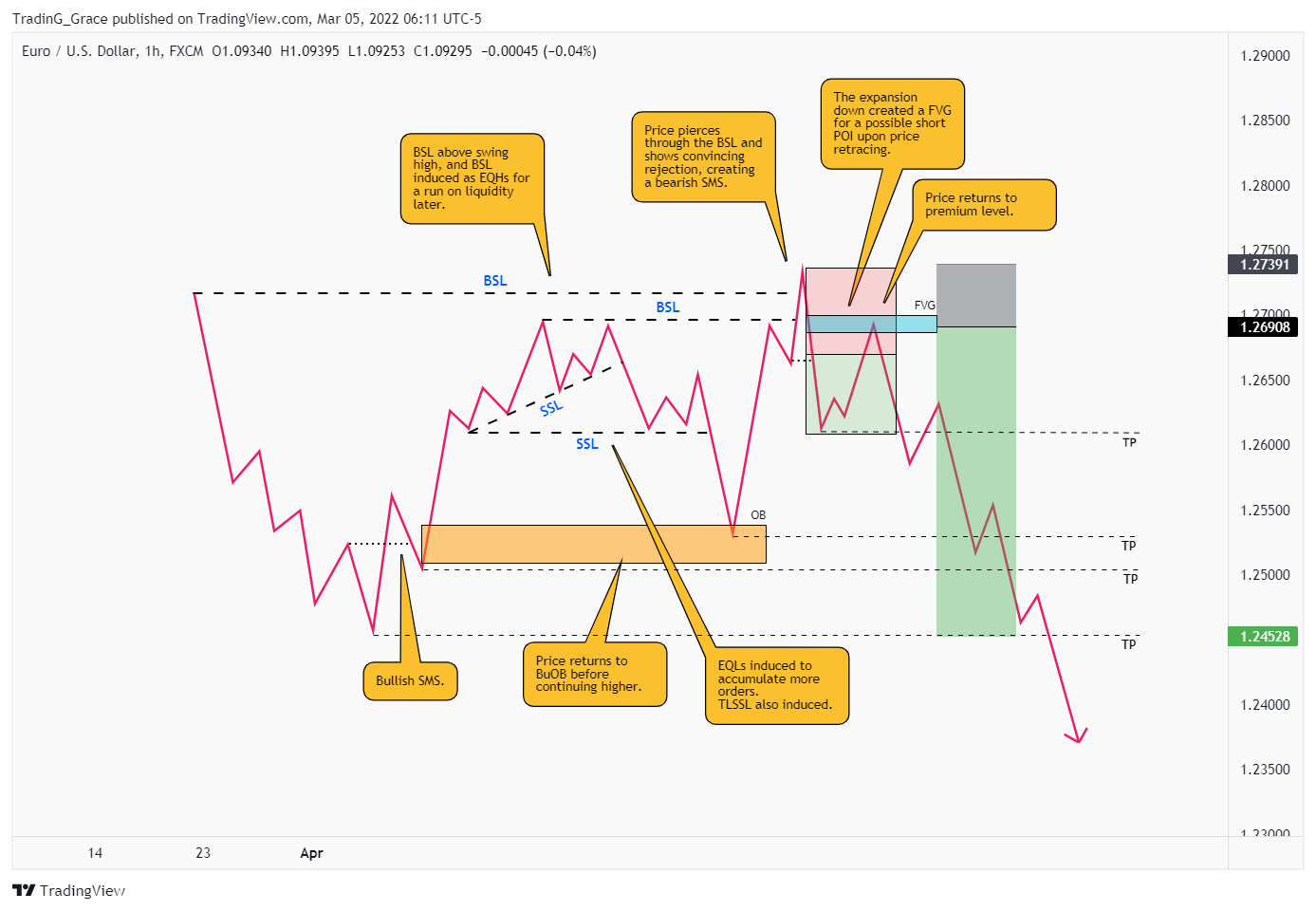
There's a specific type of trader who shows up in trading forums and communities every few weeks with a variation of the same post: "I had my best month ever, then gave back half of it in three days. What happened?"
When you dig into the trade history, the pattern is almost always this: the winning streak was built on tight, patient, confluent entries, proper timeframe alignment, killzone timing, genuine displacement before the FVG, correct premium/discount placement. Then, right at the peak of confidence, the entries start arriving with one confluence missing. Then two. By the time of the blow-up trade, they're basically entering on vibes with an ICT vocabulary attached.
What's fascinating, and slightly painful, is that these traders genuinely believe they're still applying the same methodology. The brain doesn't announce when it starts skipping steps. It just starts doing it, quietly, while you're busy feeling good about your equity curve.
A Framework for Protecting Discipline After Good Weeks
Here's what I actually use. Not theory. A specific protocol.
Step 1: The Post-Streak Audit (Sunday before the new week) After any week where I've hit 3R or more on multiple trades, I go back and grade every winning trade against my written entry criteria, not against outcome, but against process. The question isn't "did it work?" It's "would I have taken this trade at the start of the month?" Any winner that fails that test gets flagged. Three flagged winners in a week means I'm in confirmation bias fog and I reduce my risk by half the following week automatically.
Step 2: The Hard Killzone Rule After a winning streak, for the following two weeks, I trade only London open (2:00, 5:00 AM EST) and New York open (7:00, 10:00 AM EST) killzones. No exceptions. This is non-negotiable. If the setup appears outside those windows, it gets screenshotted for review and passed. The discipline isn't about missing trades, it's about proving to my own brain that I still follow structure rather than chasing.
Step 3: The Premium/Discount Hard Check Before every entry, I mark the weekly range equilibrium (50% of high to low) on the relevant HTF. If I'm looking to buy and price is above that equilibrium, full stop. I don't care how clean the FVG looks. Check the ICT FVG trading checklist, premium/discount position is one of the nine confirmations that separates profitable FVG entries from losing ones, and it's the first thing that gets skipped after a winning streak.
Step 4: Drop to 0.5% Risk for One Full Week This isn't punishment. It's recalibration. Cutting risk in half after a strong run takes the financial pressure off the next trade and forces patience. You stop needing every setup to perform. Use the risk calculator if you need to recalculate position sizes at the reduced percentage, it takes 30 seconds and removes the temptation to eyeball it.
Step 5: Restate Your Written Entry Criteria Before Market Open Physically read your rules out loud before you sit down to trade. Sounds almost too simple. But the act of verbalizing the criteria, "I need displacement, a confirmed FVG, killzone timing, and discount placement", reactivates the prefrontal decision-making process rather than letting the reward-conditioned autopilot run the session.
The Stat That Should Concern You
Look back at your own trade history. Find your three best weeks. Now look at the week immediately following each of those. I'd be willing to bet that in at least two of those three cases, the following week either gave back a significant portion of the gains or produced your worst trade of that month.
This isn't coincidence. It's the winning streak effect compressing into a single trade the moment the market stops cooperating with your inflated pattern recognition.
The trade after your best week is your highest-risk trade. Not the trade after your worst week. After losses, most serious traders tighten up, reduce size, get conservative. After wins, the brain says lean in. And that's precisely when the market environment doesn't care about your recent equity curve.
If you want to go deeper on how liquidity patterns interact with this kind of overconfidence, specifically how smart money concepts traders get caught on the wrong side of engineered moves, the liquidity grab vs. stop hunt breakdown covers exactly how institutions exploit traders who've become pattern-blind from success.
One Last Thing
I used to think discipline was something you built during hard times and maintained during good times. Ten years in, I understand it backwards: discipline is easiest during hard times, because hard times make the cost of rule-breaking obvious. During good times, the cost is invisible right up until it isn't.
The traders who compound consistently over years aren't the ones with the best entries. They're the ones who've learned that their own recent success is a threat that requires active management, the same way they'd manage a drawdown.
If you want to see how this framework integrates into a complete ICT trading approach, the coaching plans break down exactly how accountability structures are built into each level of support. Or if you're not sure where to start, book a free discovery call to figure out which approach fits your current stage.
Your edge isn't you. It's the setup. Keep that distinction alive, especially when everything is going right.
Harvest Wright
ICT Trading Coach · 10+ Years Experience
Harvest specializes in ICT methodology and has helped traders pass prop firm challenges, develop consistent strategies, and build the psychology needed for long-term profitability.
Book a Free Discovery Call →Master Your Trading Psychology
Psychology is 80% of trading. Our coaching includes dedicated psychological coaching sessions.
See Coaching PlansFree ICT Funded-Trader Playbook
The setups, the pre-trade checklist, and the risk rules I use. Get it free.