
How Boredom Destroys ICT Traders
Every piece of trading psychology content you've ever read, every YouTube video, every Twitter thread, every $47 PDF, warns you about fear and greed. And sure, those are real. But after more than a decade living inside ICT trading frameworks, I'd argue there's an emotion that does as much damage as either of those, and nobody talks about it.
Boredom.
Key Takeaway: Boredom during low-probability market hours is a physiological risk variable, not a character flaw, and without a structured pre-entry audit specifically designed to catch boredom-driven setups, ICT traders tend to manufacture order blocks, FVGs, and liquidity grabs that simply don't exist at the required confluence.
Not the dramatic, obvious boredom where you're staring at the ceiling. The dangerous kind is subtle. It creeps in around 10 AM New York time, after the London open momentum has dried up. The spread is tightening. Price is chopping inside a 15-pip range on GBPUSD. Your eyes are scanning for something, anything, that looks like a valid setup. And then you see it. A three-candle formation on the 5-minute chart that, if you squint just right, kind of looks like a mitigation block sitting right below a Fair Value Gap.
You enter. You already know how this ends.
The Neuroscience Nobody Frames as a Trading Risk
Here's the part the YouTube ICT summary channels will never tell you: boredom is a physical state as much as a mindset problem. Long stretches of screen-watching during low-volatility sessions leave your brain under-stimulated, and it starts seeking stimulation. In a trading context, that stimulation comes from clicking buttons. From doing something.
The cruel irony of ICT trading specifically is that the methodology demands enormous amounts of inactivity. You're waiting for specific Kill Zone windows. You're waiting for liquidity sweeps before considering entries. You're waiting for displacement, then a retracement into a premium or discount array. That's a lot of waiting. And if you've been at the screen for three hours watching price consolidate, your nervous system is already in a low-grade state of arousal-seeking before you've consciously registered anything.
I used to think traders who took bad setups during dead hours were just undisciplined. Now I understand they're often physiologically impaired, not morally weak. That reframe changed how I approach session management entirely.
In my experience, decision quality drops under low stimulation as well as under high stress. Traders are usually coached about managing stress. Almost no one coaches them about managing under-stimulation.
A Worked Example
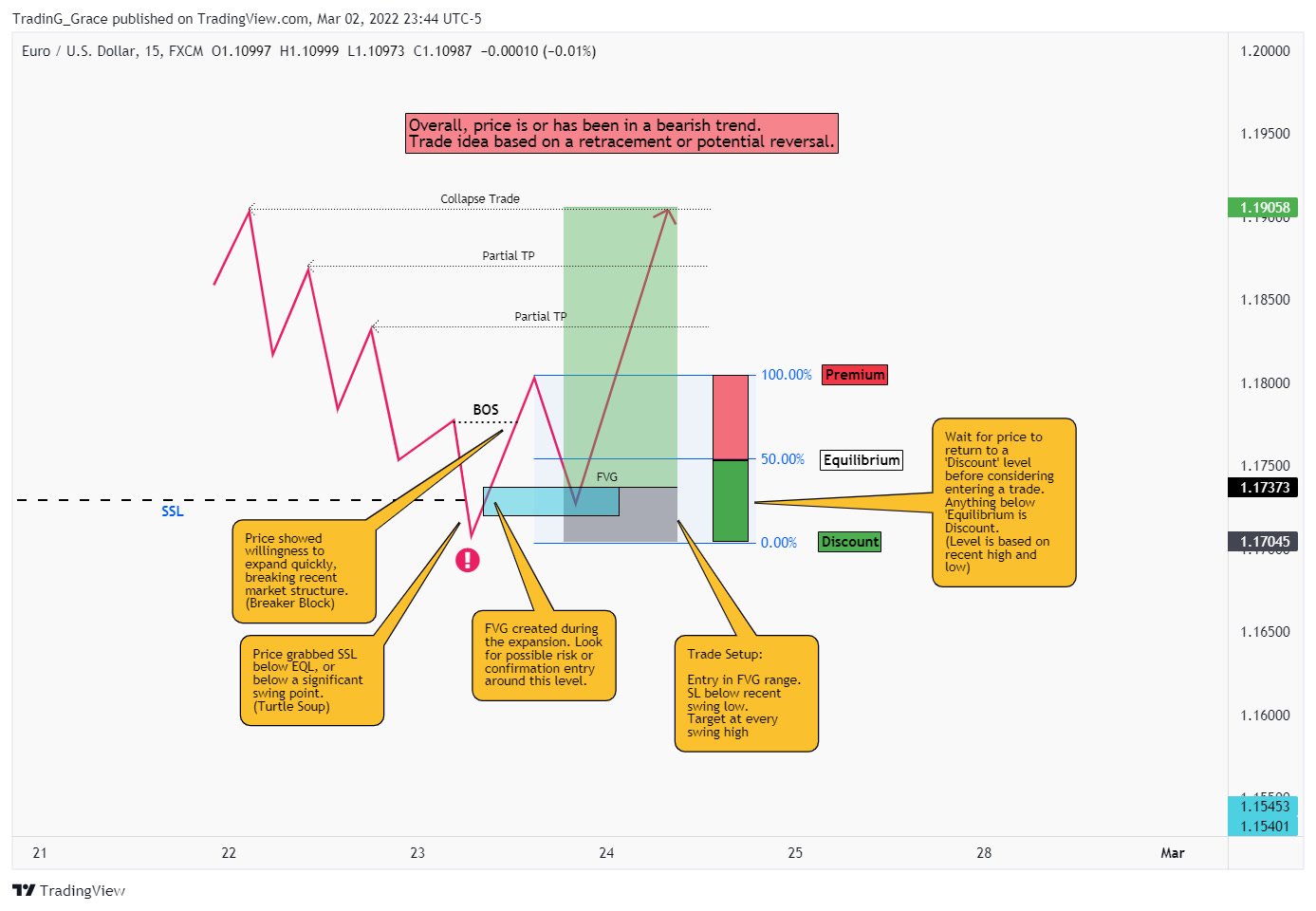
Picture a ranging week on GBPUSD, the kind where the 4-hour chart looks like it has flatlined. The trader is watching the 15-minute during the New York AM overlap. Price is sitting inside a weekly range, sandwiched between two liquidity pools, with no real displacement in either direction. Classic dead zone.
Late in the morning, price pulls back into what they call a bullish order block. There's a single candle closing a touch below the block's base, then a weak bounce. They tell themselves that was the sweep. They tell themselves the bounce shows intent. They go long with a tight stop under the block.
Go back through that reasoning honestly and it falls apart. There's no displacement. There's no real liquidity sweep, just price barely clipping the low before stuttering back. And the "order block" sits in the premium half of the weekly range, where sells have the structural advantage. A tight stop just under that low is sitting right where the obvious sell-side liquidity rests, so it's an easy target.
A valid long here would need a proper run below the range low into discount, a displacement candle back up that leaves an FVG, an entry in that gap, a stop below the sweep low, and a target at the buy-side liquidity at the top of the range. None of that is on the chart.
But they've been at the screen for three hours. And their brain needs to trade.
That's boredom doing what boredom does.
The Archetype I See Constantly in the Wild
There's a recognizable pattern among ICT traders who've been in the methodology long enough to have dangerous knowledge, often somewhere in their first year or two. They understand the vocabulary. They can identify FVGs, OBs, MSS, and liquidity raids fluently. They pass theory tests. But their accounts still bleed.
And a lot of the time, when you pull up their trade journal and look at the losing clusters, they don't come from Kill Zone entries on trending days. They come from trades placed in the late-morning New York lull on ranging days. The setups look legitimate on the surface because the trader knows how a valid setup is supposed to look, so they build one from whatever price action is available, like a chef making a meal from ingredients that expired two days ago.
The tell is always in the stop placement. On their good trades, the stop is below a structural low or above a structural high with clear logic. On the boredom trades, the stop is a round number chosen to make the risk/reward look acceptable. That's the fingerprint. They sized the stop to fit the trade they wanted, not the trade that existed.
This problem gets significantly worse during funded account challenges, where the pressure to perform creates an additional psychological layer that accelerates impulsive entries. If you're in that situation, it's worth reading through why your ICT order blocks keep failing in April's ranging markets, some of what I break down there connects directly to this boredom mechanism.
The Boredom Audit Protocol
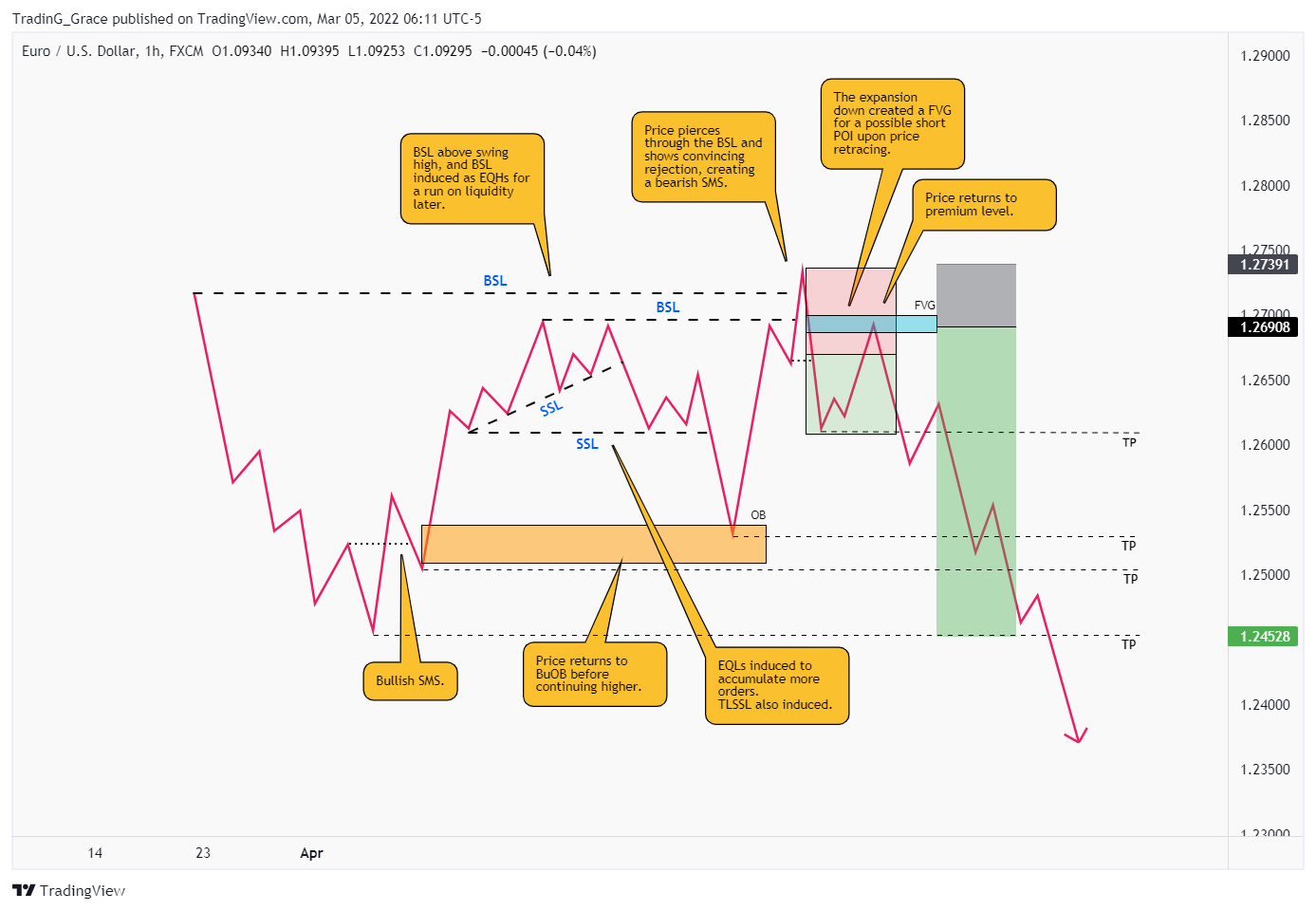
This is the practical piece. Not a mindset mantra. Not "just be patient." An actual pre-entry checklist built specifically to catch boredom-driven setups before they become executed trades.
I run this audit any time I'm considering an entry outside of the primary Kill Zone windows, or inside them, if price has been ranging for more than 90 minutes.
Step 1, The Time-at-Screen Check Before analyzing the setup at all: how long have you been watching this session? If the answer is more than a couple of hours with no valid trade taken, there's a good chance you're in a boredom-impaired state. That doesn't mean no trade exists. It means the burden of proof for the next setup goes way up. Note the time. Be honest.
Step 2, The Displacement Test Is there actual displacement on the timeframe you're trading? Not a slightly stronger candle. Not a wick that reached into the zone. A real, aggressive candle that clearly violated structure and left an imbalance. If you have to argue with yourself about whether displacement occurred, it didn't. Displacement that exists is obvious. On GBPUSD or EURUSD on the 5-minute, you should be able to point to a single candle body and say "there" with zero hesitation.
Step 3, The Premium/Discount Verification Using the current dealing range (swing high to swing low on the highest timeframe in play), confirm whether price is in a premium or discount. If your proposed long entry sits above the 50% equilibrium of the range, you're entering in premium, and that's almost never where high-probability ICT longs develop. Run this through your risk calculator with strict position sizing after passing this step, not before.
Step 4, The Reason Reversal Test Write down, in a single sentence, why you're taking this trade. Then argue the opposite case, why this trade should not be taken. If the counter-argument takes you longer than 15 seconds to come up with, the setup is weak. Strong setups are hard to argue against. Boredom setups collapse under five seconds of scrutiny.
Step 5, The 20-Minute Walk Rule If the setup passes Steps 1 to 4, step away from the screen for 20 minutes. Not to eat. Not to check your phone. A genuine break. Then return and re-evaluate. If the setup still looks valid and price hasn't already moved without you, enter. If you come back and feel relieved that you didn't take it, that's your answer about what kind of trade it was.
This protocol sounds simple. It is not easy. Because boredom, by definition, makes doing nothing feel physically uncomfortable. You'll feel genuine resistance to running this audit when you're in that state. That resistance is exactly why the protocol exists.
For more on how Q2 2026 market structure has amplified these ranging-session challenges, this breakdown of current ICT setup conditions gives useful context.
What 10 Years Actually Teaches You
A one-year ICT trader thinks the goal is to find setups. A ten-year trader knows the goal is to not find setups when they don't exist, and to be genuinely comfortable with that outcome.
The methodology is incredibly specific about when and where high-probability conditions align. Kill Zones exist for a reason. The bias framework exists for a reason. When price is ranging inside a compressed weekly range on a Wednesday with no macro catalyst, the ICT playbook is basically telling you to close the charts and go to the gym. But nobody clicks on content titled "How I Made Nothing Today and Why That Was the Right Call."
So the internet fills with clips of perfect entries, and traders spend eight hours a day at the screen trying to replicate those moments, in market conditions that look nothing like the examples they're studying. The boredom accumulates. The protocol gets skipped. The account bleeds.
If you're losing during ranging sessions specifically, read the 7 fatal mistakes that kill funded account challenge success piece, because I'd wager at least three of those seven are directly downstream of what I've described here.
The market rewards inactivity in a way that most human brains are not wired to accept. That's the actual edge. Not a better entry model, the willingness to do nothing while your nervous system screams at you to act.
Run the boredom audit. Track how many times it stops you from entering. After 30 days, look at the outcome. That data will be more persuasive than anything I've written here.
If you want a structured environment to build these habits with accountability built into the process, the coaching plans break down exactly how that works across different commitment levels, from the Lite plan at $150/week up through Full Mentorship. No pressure. But if you've read this far and recognized yourself in any of it, you already know what the next step is. Start there.
Harvest Wright
ICT Trading Coach · 10+ Years Experience
Harvest specializes in ICT methodology and has helped traders pass prop firm challenges, develop consistent strategies, and build the psychology needed for long-term profitability.
Book a Free Discovery Call →Master Your Trading Psychology
Psychology is a huge part of trading. Our coaching includes dedicated psychology sessions.
See Coaching PlansFree ICT Funded-Trader Playbook
The setups, the pre-trade checklist, and the risk rules I use. Get it free.