
Why Discipline Breaks Down After Winning Streaks
Everyone in this industry treats losing streaks like the main villain. Four red trades in a row and traders are booking therapy sessions, re-reading their playbooks, cutting position sizes in half. Meanwhile, the actual account-killer walks in wearing a disguise, it arrives after your best week ever, dressed as confidence, and it quietly dismantles everything you spent months building. If you're using smart money concepts and you've had 3-5 consecutive winners recently, this article is specifically for you.
Key Takeaway: Winning streaks can feel a lot like gambling euphoria and lead ICT traders to unconsciously lower their confirmation thresholds. In my experience, the days right after a trader's best performance are a common place for funded account breaches to happen.
The Myth That's Quietly Draining Funded Accounts
Myth: The psychological danger zone in trading is the losing streak. That's when emotions hijack decisions.
Reality: Losing streaks are painful and obvious, which means most experienced traders have protocols for them. Cut size. Step back. Review. A danger zone that ends a lot of funded accounts is the winning streak, because it's invisible. Your equity curve is going up. Your confidence feels earned. Nothing about the situation signals danger.
What I Actually See: In trader communities, the story comes up again and again: a trader posts their best week, then hits max drawdown shortly after. The damage often comes right after the peak.
Why? Because in the short term, the brain doesn't separate skill from luck very well. After a handful of wins in a row using smart money concepts, it can feel a lot like a gambler on a hot streak at the roulette table. Risk assessment gets sloppy. And here's the specific ICT-flavored version of this problem: traders start seeing confluence everywhere, because they want to trade, not because the confluence is actually there.
What Happens Inside the ICT Framework During a Hot Streak
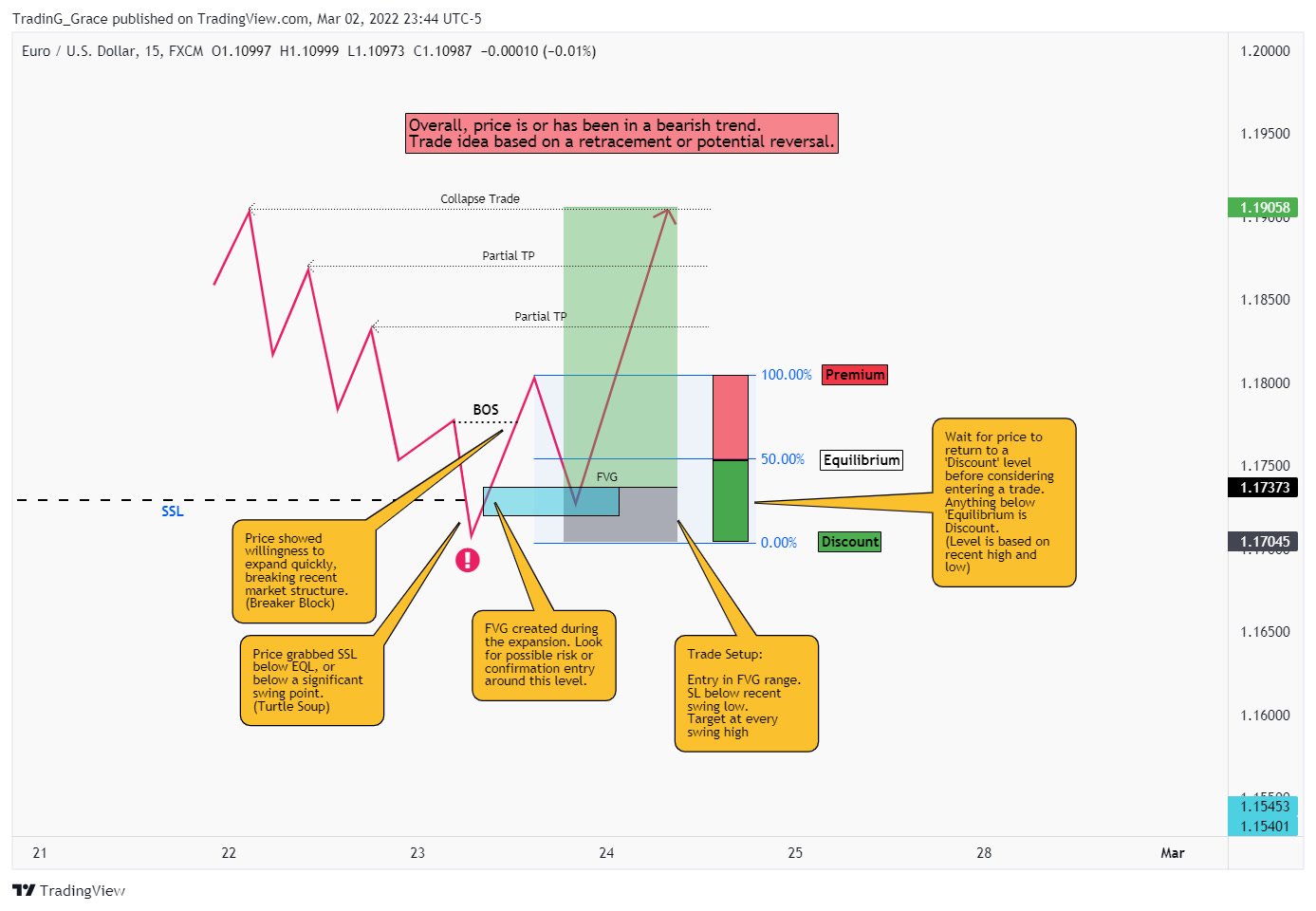
The ICT methodology is confirmation-rich by design. A proper setup might require: HTF bias alignment, a displacement candle, a Fair Value Gap inside a premium/discount zone, time-of-day confluence (London open, New York AM session), and an inducement sweep before entry. That's a lot of boxes to check. That filter system is exactly why smart money concepts generate high-probability setups when applied correctly.
But here's what nobody talks about: after a winning streak, traders start checking those boxes in their heads rather than on their charts.
"There's probably a FVG there." "That's basically an order block." "The bias is kind of bullish." The confirmation thresholds, which took months to calibrate, get quietly lowered. Not all at once. Incrementally, trade by trade, win by win.
I've seen this pattern play out a lot, and I've felt it myself. After a strong run, it's easy to catch yourself entering setups you would have passed on two weeks earlier. The rules haven't changed. You just feel like you have the market figured out. That feeling is specifically what you should fear.
For more on how the ICT framework can break down under real market conditions, the piece on why Q2 2026 market structure shifts are breaking traditional ICT setups covers some of the external pressures that amplify this internal problem.
A Worked Example
Let me give you something concrete, because abstract psychology only goes so far.
Picture a trader coming off a four-trade winning streak: a couple of longs from New York open FVGs, a short from a breaker block, a clean long that ran to target. Good trades. The kind that make you feel like you've cracked the code.
On the fifth trade, London has just opened on GBPUSD. There's what looks like a displacement move down on the 15-minute, leaving an FVG, and price retraces into it. The daily bias is technically bearish but softening, and price is sitting right at weekly equilibrium, which is a big caution flag. Normally this is a pass: wait for a cleaner daily close and re-evaluate the bias.
Instead they go short inside the FVG with the stop just above it, and at more than double their standard risk, because size has already crept up over the last two trades without them really noticing. The problem is what sits above: a weekly order block with buy-side liquidity resting near it. With the daily bias that ambiguous, a push up into that weekly level is a very real possibility, and that's exactly the kind of move that runs through a tight stop above a 15-minute FVG.
A clean version of this trade would need a clear daily bias, a sweep of the liquidity above first, then fresh displacement down, with the stop above the sweep high and the target at sell-side liquidity below. None of that is there. The trade only looks good because four wins in a row made the market feel predictable, and the oversized loss when it fails is more than double a normal one.
That's position sizing creep combined with confirmation threshold lowering, and it happened fast. Use the risk calculator to see what this looks like across a sequence of trades, the numbers get uncomfortable quickly.
The Archetype I Keep Seeing in 2026
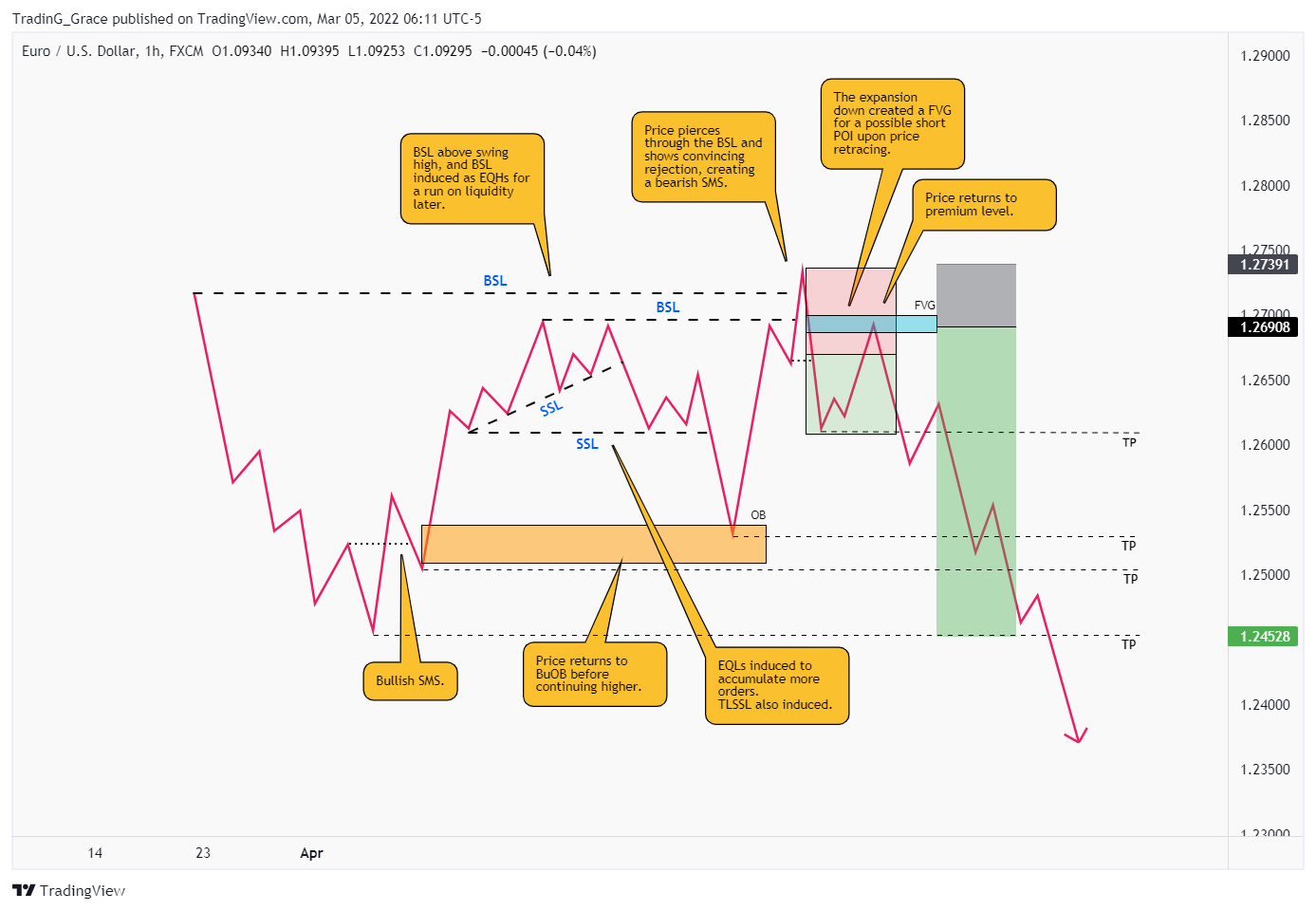
There's a specific trader pattern that shows up repeatedly in ICT communities right now. Call them the Post-Peak Rule-Bender.
This trader has genuinely put in the work. They understand smart money concepts at a real depth, not just the surface-level YouTube version. They can identify displacement, FVGs, order blocks, liquidity pools, and time-based entries with actual precision. Their journal from the previous three weeks is legitimately impressive.
Then they have their best week. And something subtle shifts.
They start entering during the overlap session instead of waiting for the defined New York AM window. They start calling 3-candle formations "order blocks" that wouldn't have qualified under their own ruleset. They move from 15-minute confirmation to 5-minute entries without adjusting their stop logic. None of these individually seem like major violations. Together, they constitute a completely different trading approach wearing the costume of their original strategy.
By the time the account takes a significant hit, this trader genuinely believes they were trading their system. They weren't. The 7 fatal mistakes that kill your funded account challenge success covers several of these behavioral drift patterns in more detail, worth reading alongside this.
The Post-Winning-Streak Protocol (Use This Immediately)
This isn't theory. Here's exactly what I implement after any streak of three or more wins:
Step 1, Hard size reduction on the next trade. After three consecutive wins, the next trade goes to 50% of standard risk. Not because I'm uncertain of the setup, but because I know my judgment is compromised in ways I can't fully feel. This isn't punishment, it's calibration.
Step 2, Written pre-trade checklist, no exceptions. I use a physical checklist (yes, paper) that requires me to write down, not just mentally confirm: HTF bias, session timing, displacement evidence, FVG or OB location relative to 50% of the range, and inducement sweep confirmation. If I can't write it down clearly, the trade doesn't happen.
Step 3, Add one extra confirmation requirement. After a hot streak, I temporarily raise my threshold. Where I'd normally enter on a 15m FVG with 4 confirmations, I require 5 during the post-streak period. This isn't forever, just for the next 3-5 trades until baseline judgment returns.
Step 4, Flag any position size that deviates from standard. If I catch myself entering at anything above standard risk, the trade gets cancelled and I take a mandatory 24-hour break. The urge to size up after wins is the clearest signal that the neurochemical hijack is already in progress.
Step 5, Review the streak itself critically. Specifically, look for setups in the winning streak that were borderline, ones that worked but wouldn't always. A clean 4-win streak where every setup was textbook is different from one where two of the wins were marginal setups that happened to work. The latter should trigger more caution, not less.
It's the kind of structured approach that separates traders who compound over years from those who plateau at funded account level without ever building real equity. For more on the psychological and structural side of long-term trading success, the trading insights section covers this in depth across multiple frameworks.
For context on how these mental lapses interact with actual prop firm rules and what the firms see from their end, the truth about funded trading is worth your time.
One Uncomfortable Truth
The traders who never blow funded accounts aren't the ones with the most sophisticated smart money concepts knowledge. They're usually not the sharpest technical readers either. They're the ones who treat their best weeks with the same structured caution they treat their worst weeks.
Confidence feels like an asset. In trading, past a certain threshold, it functions as a liability. The market doesn't reward you for your recent performance. Every setup is evaluated on its own merits by price, not on the basis of your last five trades.
In my experience, people in a good mood take on more risk and check things less carefully, even when they know they're prone to it. Knowing about it doesn't make you immune. Protocol does.
Where to Go From Here
If this describes a pattern you've lived through, or one you can see yourself heading toward, the next step is building external accountability into your process. Not accountability for your losses. Accountability for what happens after your wins.
The coaching plans at R2F cover exactly this kind of behavioral audit alongside technical development, from the Lite tier at $150/week through to the Full Mentorship at $5,000 for four months. If you're not sure which level fits where you are right now, a free discovery call is the right starting point, no pressure, just an honest conversation about what your trading actually needs.
The market is going to give you winning streaks. What you do in the 48 hours after your fourth consecutive win will tell you more about your long-term trajectory than almost anything else in your process.
Harvest Wright
ICT Trading Coach · 10+ Years Experience
Harvest specializes in ICT methodology and has helped traders pass prop firm challenges, develop consistent strategies, and build the psychology needed for long-term profitability.
Book a Free Discovery Call →Ready to Get Funded?
1-on-1 ICT coaching built around prop firm rules, from a trader who has passed an FTMO Challenge.
Book a Free Discovery CallFree ICT Funded-Trader Playbook
The setups, the pre-trade checklist, and the risk rules I use. Get it free.