
The Silence After a Big Win Is Dangerous
There's a specific kind of silence that happens after you close a trade for 4R.
Not the relief after surviving a near-stop, not the exhaustion after a grinding session. This is different. It's calm. Clean. Almost meditative. You sit back, look at the chart, and feel something dangerous: certainty.
That silence? That's where accounts go to die.
Key Takeaway: One of the most destructive psychological states in trading is the quiet overconfidence after a significant win, and it gets far less attention than the rage after a loss. When smart money concepts traders hit a big winner, they unconsciously lower their confirmation threshold, increase position size, and trade with a false sense of mastery. Recognizing this state before you open the next chart is the difference between compounding gains and erasing them in a single session.
A Worked Example
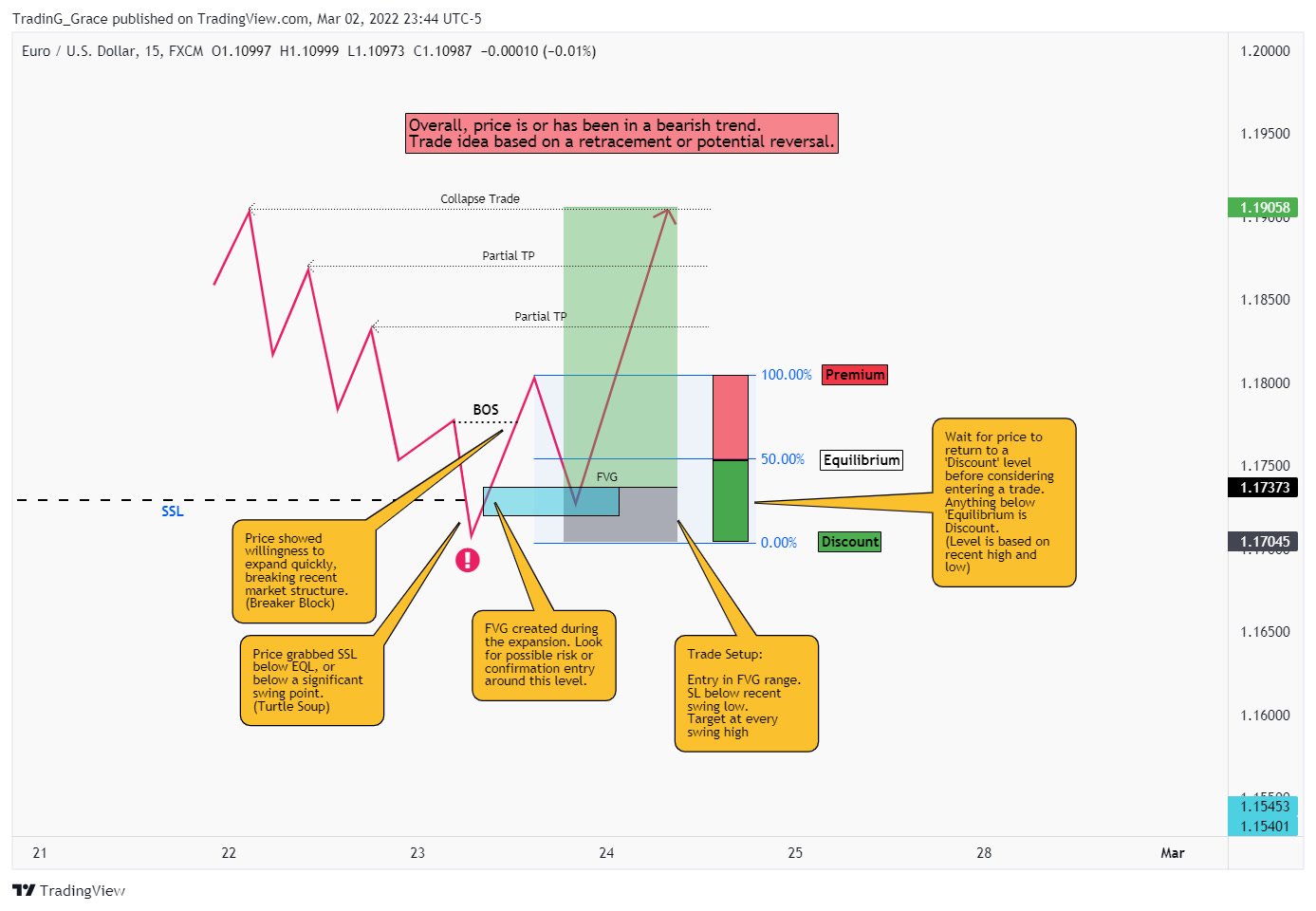
Here's the kind of sequence I mean. Picture GBPUSD on the 15-minute chart at the London open.
Price has built a clean consolidation overnight, with a clear liquidity pool above the Asian high. The London open displacement candle breaks structure to the upside and sweeps that liquidity, leaving a textbook Fair Value Gap behind it. The trader waits for price to come back into the FVG and goes long there. The stop sits below the displacement low, because if price trades back under it the move has failed. The target is the next obvious buy-side liquidity above. It works, and it's a big winner.
Clean. Textbook. Exactly what smart money concepts setups are supposed to look like when all the pieces align: displacement, liquidity sweep, FVG mitigation, higher timeframe alignment.
Then, a little later, they see what looks like another setup on EURUSD. A supposed Order Block on the 5-minute. No real displacement, no confirmed structure shift on the 15-minute, just price sitting near a level that resembles the trade they just won. They enter anyway, at double their usual size. It stops out quickly.
The GBPUSD trade was genuinely good. The EURUSD trade was a ghost of a trade: they were trading the feeling of the first setup instead of the actual second one.
That's the euphoria blindspot.
Why Nobody Talks About This
Every trading course, every YouTube video about psychology, every prop firm guide focuses on the same narrative: don't revenge trade after losses, don't let one bad day spiral, manage your drawdown mentally. That's all valid. But it addresses one half of the psychological ledger.
Here's my contrarian view after more than a decade of trading: the big win followed by the euphoric trade does at least as much damage as a losing streak.
Why? Because a losing streak is visible pain. You feel it. Your body flags it. Every normal human instinct says slow down, be careful, something is wrong. The feedback loop is immediate and obvious.
A big win produces the opposite signal. In my experience, feeling rewarded makes risk feel smaller. Your brain isn't just happy, it's quietly filtering out danger signals. You don't feel reckless. You feel sharp.
This is specifically brutal for ICT and smart money concepts traders, because our methodology has enough complexity that overconfidence can masquerade as expertise. After a perfect 4R trade, you don't think "I got lucky." You think "I read the market correctly." And you're not entirely wrong, which is exactly what makes the next hour so dangerous.
The Archetype I See Destroy Accounts
There's a specific type of trader who passes the challenge cleanly, gets funded, and then gets into trouble on the funded account early on. Not because they don't know smart money concepts. They clearly do. The issue is when they trade best.
This trader performs exceptionally well during their challenge because the psychological pressure of the evaluation keeps them disciplined. They wait for the FVG with proper displacement. They confirm structure on two timeframes. They don't deviate from their risk percentage. They pass. They feel validated.
Then they hit a big winner early in the funded account. And something shifts.
The next setup doesn't have the displacement they'd normally require. The Order Block is technically valid but it's mid-range, not at a discount, the kind of entry they'd have skipped during the challenge. But they take it. At bigger than normal size, because "the account needs to grow." A couple of trades later they've given back a big chunk of the week's gains.
It's not a knowledge gap. It's a state management problem. And checking your funded account trading behaviors here might confirm whether you've seen this pattern in yourself.
The Euphoria Blindspot in ICT Specifically
Here's the nuance that I rarely see discussed even in advanced smart money concepts communities:
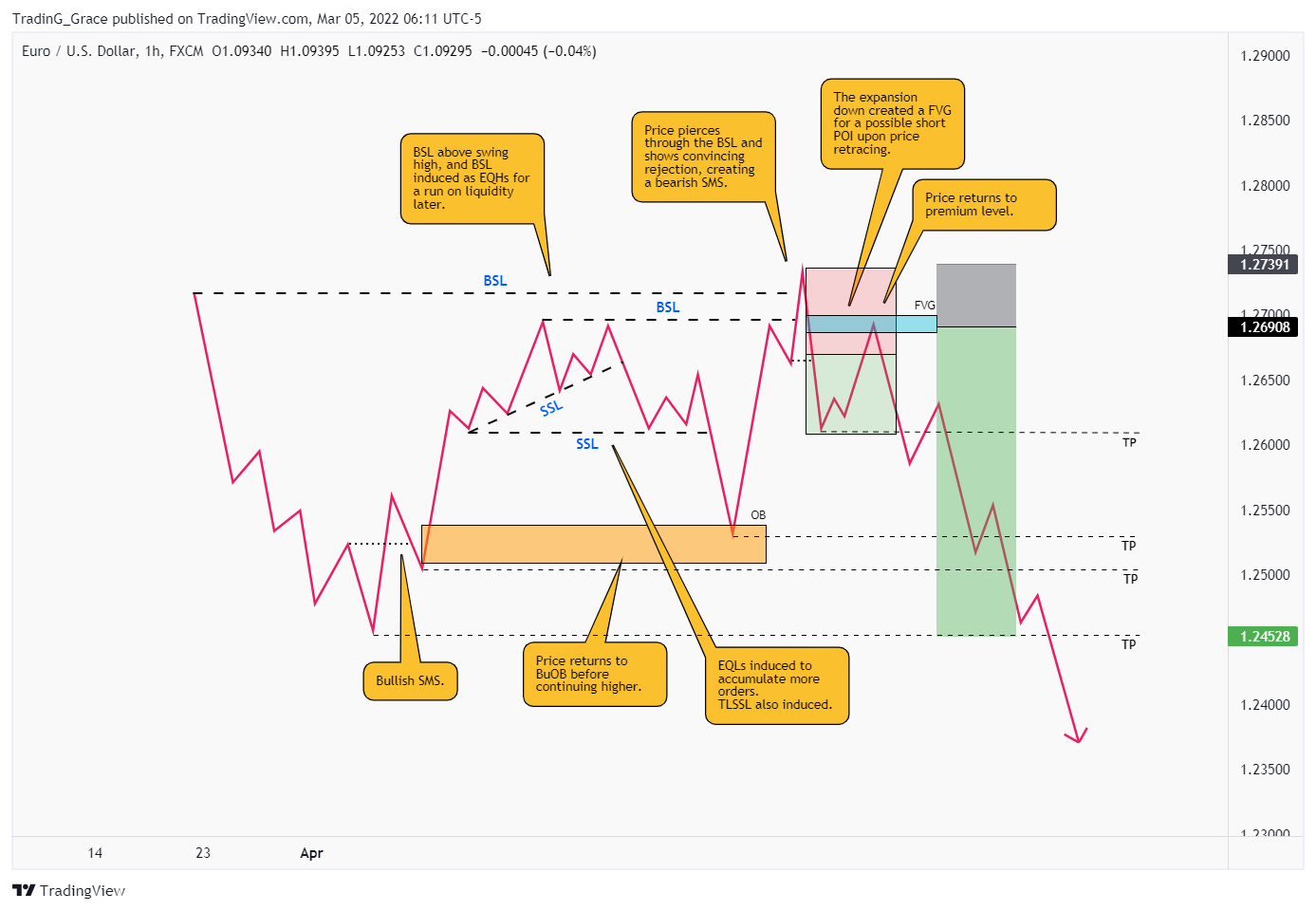
ICT methodology gives traders a rich enough vocabulary that they can always justify an entry after a big win. You can always find an FVG somewhere. You can always frame a candle as an Order Block if you squint at the right timeframe. The model is sophisticated enough to fit almost any price level after the fact.
This is both its strength and its psychological trap.
During a normal mental state, a disciplined smart money concepts trader uses the model to filter out bad setups. After a significant winner, the same trader uses the exact same model vocabulary to justify setups that wouldn't have passed their own checklist an hour earlier. The words are the same. The process feels the same. But the standard has silently dropped.
A 1-year trader doesn't know enough to do this convincingly to themselves. A 3-year trader knows just enough to be dangerous here. Someone with a decade in this methodology knows how to rationalize an FVG entry at a premium level as "actually valid" because price did create that imbalance, technically speaking.
Knowledge without state-awareness becomes justification machinery.
If you want to see how this plays out specifically around high-impact events where confirmation pressure is highest, the April NFP week liquidity patterns piece covers the exact context where this blindspot gets most expensive.
A Practical Framework: The Post-Win Protocol
This is what I actually do, and what I'd hand to any serious trader right now:
Step 1: Mandatory 45-minute break after any trade exceeding 2.5R. Not optional. Not "if I feel like it." Closed. Chart off. 45 minutes minimum. You need the high to wear off before you assess another setup honestly. I set a literal timer.
Step 2: Re-run your pre-trade checklist from scratch, as if you haven't traded today. When I return to the chart, I don't ask "does this look like a good trade?" I run through my actual confirmation sequence: What's the HTF (4H/Daily) bias? Is there a confirmed displacement on the execution timeframe? Is the FVG inside the discount of the dealing range? Is there a clear liquidity pool being targeted? Every box, every time. The FVG checklist breakdown here is essentially a written version of what this looks like.
Step 3: Cut your position size by 50% on the first trade after a significant winner. Half size. Always. This isn't about fear, it's about acknowledging that your risk assessment is temporarily compromised. If the trade is genuinely good, you'll still make money. If your judgment was slightly off, you've capped the damage. Use a risk calculator and hard-code it before you even look at the setup.
Step 4: Write three sentences in your trade journal before entry, not after. Force yourself to articulate why this trade is valid before you execute. "Price displaced above the Asian high, created a 4-pip FVG on the 15m, I'm entering at the upper boundary targeting the -OB at 1.2910, stop below the displacement low." If you can't write three honest sentences without reaching for vague language like "looks bullish" or "feels like it wants to go," you don't have a setup. You have an impulse.
Step 5: Hard stop at two trades maximum after a significant winner, regardless of perceived opportunity. Two trades. Done. Log off. The market will exist tomorrow. What won't exist is your funded account if you spend the afternoon chasing the high from a morning winner.
The Uncomfortable Truth
This one is subtle. It rarely looks like a dramatic blowup. More often it's a great week followed by a Friday afternoon of trades that, reviewed that evening, can't honestly be defended. The entries are technically justifiable but the quality isn't there.
The hard part is connecting those later sessions to the big winners earlier in the week. Win big on Tuesday, loosen confirmation standards by Thursday. The gap between the two events hides the cause.
The fix is to track it explicitly: log a mental state rating alongside every trade. Then you can check whether your next-session execution slips after a big win day. The strategy doesn't stop working. You stop applying it correctly.
This is also why the conversation about fatal funded account mistakes can miss this pattern. It's invisible until you're tracking the right variables.
Silence Isn't Mastery
The eerie calm after a big winner isn't clarity. It's anesthesia.
Smart money concepts gives you a precise, structured way to read markets, but no methodology protects you from a compromised mental state. The model works when you apply it rigorously. The euphoria blindspot is specifically what makes you feel like you're applying it rigorously when you're actually running a lower-quality version of it.
If you close a trade for 3R, 4R, 5R, celebrate it. Genuinely. It means the read was right and the execution held. Then close the platform. Let it sit. Come back when you're a trader again, not a winner.
If you want to go deeper on the psychological and strategic side of trading with smart money concepts at a higher level, the coaching plans here outline exactly how I work through these patterns with traders at every stage. Or if you want to start with a conversation first, book a free discovery call and we'll look at where your edge is actually leaking.
The market isn't going anywhere. Your edge, after a euphoric session, just might be.
Harvest Wright
ICT Trading Coach · 10+ Years Experience
Harvest specializes in ICT methodology and has helped traders pass prop firm challenges, develop consistent strategies, and build the psychology needed for long-term profitability.
Book a Free Discovery Call →Ready to Get Funded?
1-on-1 ICT coaching built around prop firm rules, from a trader who has passed an FTMO Challenge.
Book a Free Discovery CallFree ICT Funded-Trader Playbook
The setups, the pre-trade checklist, and the risk rules I use. Get it free.