
Liquidity Grab vs Stop Hunt: 8 Key Questions
After 10+ years of trading, with ICT concepts for a good part of that, I think the ICT liquidity grab vs stop hunt confusion is one of the most expensive misunderstandings in this whole methodology.
Especially in choppy, ranging conditions, a common pattern I see is traders labelling every sharp move a "liquidity grab" when plenty of them are plain stop hunts. The result? Wrong entries, blown accounts, and frustrated traders ready to quit.
Let me set the record straight with the 8 questions I get asked most about this topic.
Key Takeaway: Misidentifying stop hunts as liquidity grabs, or vice versa, leads directly to wrong entries and blown accounts, so mastering the precise distinction between these two institutional moves is the foundational skill every ICT trader must develop before sizing up positions.
What's the Real Difference Between ICT Liquidity Grab vs Stop Hunt?
Here's where most traders get confused. They think these terms are interchangeable. They're not.
A stop hunt is the old-school concept where market makers push price to obvious stop loss levels, trigger them, then reverse. Think breaking a support level by 10-20 pips, grabbing stops, then bouncing back up.
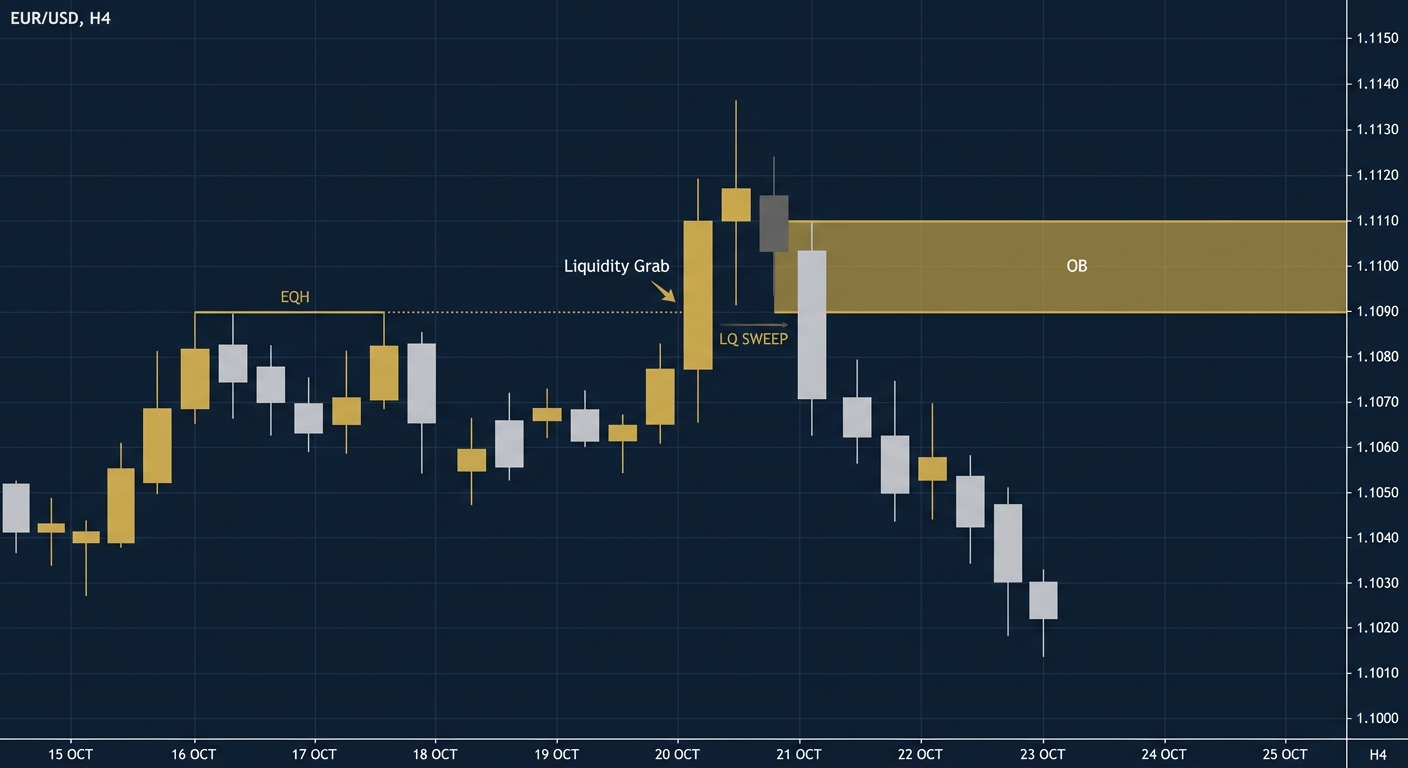
An ICT liquidity grab is more sophisticated. Smart money targets liquidity pools above/below key levels, beyond just random stop losses. They're looking for:
- Equal highs/lows where retail places stops
- Order blocks with resting liquidity
- Trendline breaks where stops cluster
The liquidity grab often extends further and holds longer before the reversal. It's a calculated move to accumulate positions, with more to it than a quick spike.
How Do I Know Which One I'm Looking At?
This is the million-dollar question. Here's my framework:
Traditional Stop Hunt Signals:
- Quick spike beyond obvious level
- Immediate rejection (within 1-3 candles)
- Lower volume on the spike
- Happens at round numbers or obvious technical levels
ICT Liquidity Grab Signals:
- Deliberate push beyond equal highs/lows
- May hold above/below the level for several candles
- Often creates a Fair Value Gap (FVG) during the move
- Targets liquidity pools, not just stops
- Usually accompanied by order block formation
I've found that liquidity grabs often happen during specific killzones when institutions are most active: London Open, New York Open, and around the Asian session highs/lows.
Why Do My ICT Liquidity Grab Entries Keep Failing?
This comes up a lot in my coaching sessions. Traders identify the grab correctly but still lose money. Here's why:
You're entering too early. Just because you see liquidity get grabbed doesn't mean the reversal starts immediately. Smart money might grab liquidity, then continue in that direction to grab even more.
You're ignoring market structure. A liquidity grab against the higher timeframe trend is different from one with the trend. I always check the daily and 4-hour structure before taking any liquidity grab trade.
You're not waiting for confirmation. The grab is just the setup. You need confirmation:
- Return to the order block that caused the grab
- Fair Value Gap formation and mitigation
- Change in character (CHoCH) or break of structure (BOS)
As I discussed in my article about NFP week liquidity patterns, choppy, news-driven conditions make confirmation even more critical.
Can a Liquidity Grab Turn Into a Breakout?
Absolutely, and this catches traders off guard constantly.
What looks like a liquidity grab can become a genuine breakout if:
- The move continues beyond the next significant liquidity pool
- Volume increases rather than decreases
- No immediate order block forms for a reversal entry
- Higher timeframe structure supports continued movement
This is why I never risk more than 1% on initial liquidity grab trades. If I'm wrong and it's actually a breakout, the damage is limited.
Pro Tip: If a "liquidity grab" extends more than 20-30 pips beyond the target level and doesn't show immediate signs of reversal, consider it might be a breakout instead.
How Do Ranging Markets Affect These Setups?
When the market is ranging more than trending, liquidity grabs behave differently.
In ranging markets:
- Liquidity grabs happen more frequently at both ends of the range
- The moves are often smaller and less decisive
- False breakouts disguised as liquidity grabs increase
- Order blocks form but get violated quickly
In these conditions I get more selective. Instead of taking every liquidity grab signal, I focus on the ones that line up with weekly levels and monthly opening ranges.
When market structure shifts like this, classic ICT concepts need some adaptation.
What's the Best Timeframe to Trade Liquidity Grabs?
This depends on your trading style, but here's what works:
For swing traders: Identify liquidity grabs on daily/4-hour, enter on 1-hour For day traders: Identify on 1-hour/15-minute, enter on 5-minute/1-minute For scalpers: Identify on 15-minute, enter on 1-minute
Never trade liquidity grabs on timeframes lower than 15-minute for identification. The noise is too high, and you'll be chasing every minor liquidity sweep.
I prefer the 1-hour chart for identification because it filters out most of the noise while still providing good entry opportunities on the 5-minute chart.
How Do I Set Stop Losses on Liquidity Grab Trades?
For long entries after an upside liquidity grab:
- Stop loss below the order block that caused the grab
- Or below the Fair Value Gap if that's your entry trigger
- Never below the actual liquidity grab low (too wide)
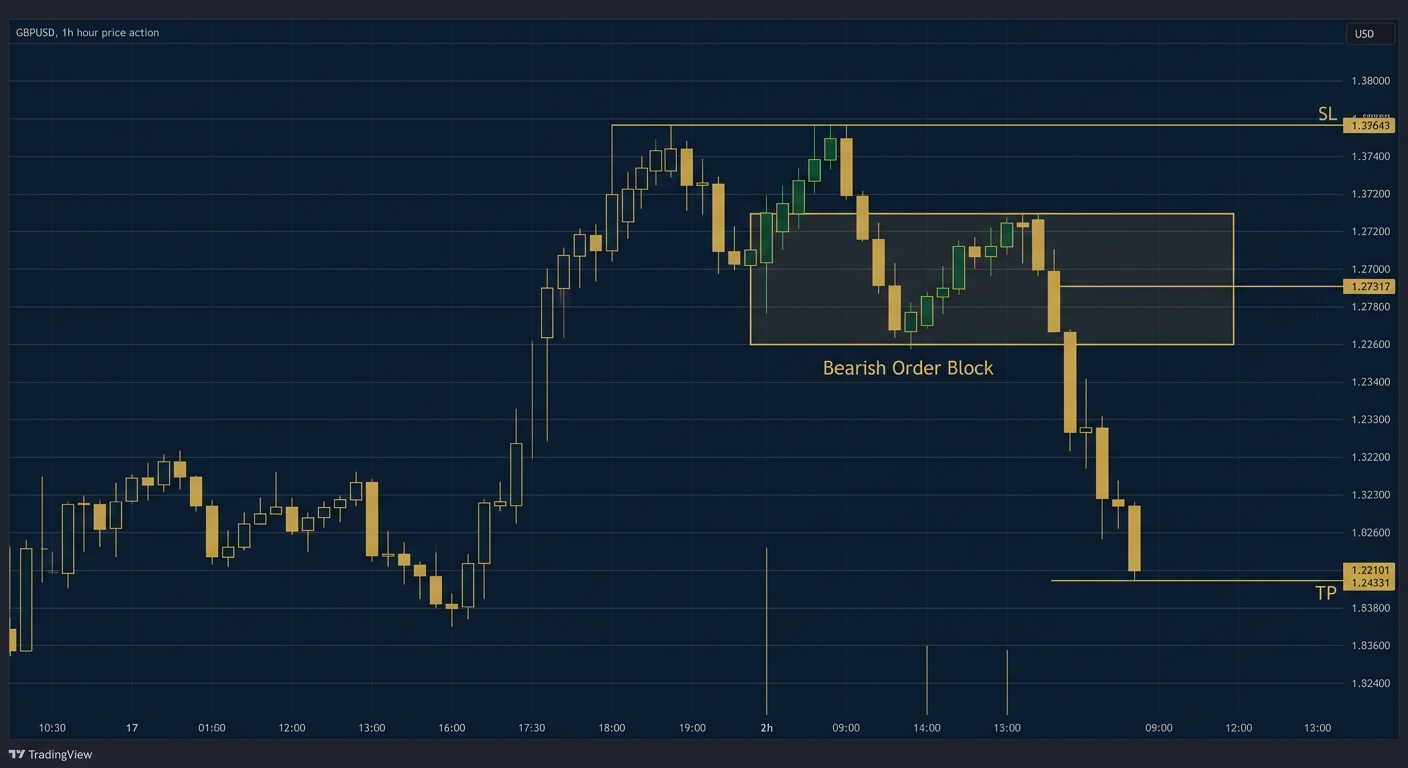
For short entries after a downside liquidity grab:
- Stop loss above the order block
- Or above the Fair Value Gap
- Never above the actual liquidity grab high
Risk management is crucial. Even with perfect identification, plenty of these trades fail. That's normal. Your winners need to be bigger than your losers.
Should I Trade Both Directions or Focus on One?
When I started trading ICT concepts, I tried to catch every liquidity grab in both directions. Big mistake.
Now I focus on the direction aligned with:
- Higher timeframe market structure
- Weekly opening gap direction
- Monthly narrative (DXY, interest rates, economic calendar)
Trading against the higher timeframe trend means you're fighting institutional flow. Even if you identify liquidity grabs correctly, the moves will be smaller and less reliable.
During ranging periods, I'm more selective about direction. I wait for clear weekly bias before taking any significant positions.
My Honest Assessment: Is This Worth Learning?
Here's my brutally honest take:
Yes, but only if you're committed to proper education. Free videos can get you started, but the nuances between liquidity grabs and stop hunts take structured learning and real-time practice.
Liquidity concepts sit at the core of how I teach ICT, and it's worth spending real time on them before anything fancier.
The traders who succeed with this:
- Have solid basic market structure knowledge
- Practice on demo for at least 3 months before going live
- Keep detailed journals of their liquidity grab trades
- Focus on one or two pairs initially
The ones who fail typically try to shortcut the learning process or expect immediate results.
Ready to Master These Concepts?
Understanding ICT liquidity grab vs stop hunt is about reading institutional intentions correctly, and that's what leads to better trades.
If you're serious about mastering these concepts, check out my coaching plans. The Lite Plan ($150/week) gives you one 1-on-1 session a week, and the Pro Plan ($250/week) gives you two, so we can work through these setups on your own charts.
For personalized guidance on your specific trading challenges, book a free discovery call. I'll assess your current understanding and recommend the best path forward.
The market doesn't care about your opinion, but it rewards those who understand its language. Let's make sure you're fluent in it.
For more insights on trading ICT concepts effectively, explore our comprehensive trading insights section.
Harvest Wright
ICT Trading Coach · 10+ Years Experience
Harvest specializes in ICT methodology and has helped traders pass prop firm challenges, develop consistent strategies, and build the psychology needed for long-term profitability.
Book a Free Discovery Call →Take Your Trading to the Next Level
Get personalized 1-on-1 ICT coaching with Harvest Wright. Free discovery call, no commitment.
Book a Free Discovery CallFree ICT Funded-Trader Playbook
The setups, the pre-trade checklist, and the risk rules I use. Get it free.