Smart Money vs Retail: 5 Mind Games You Fall For
Smart Money vs Retail: 5 Mind Games You Fall For
Published April 9, 2026 | By Harvest Wright
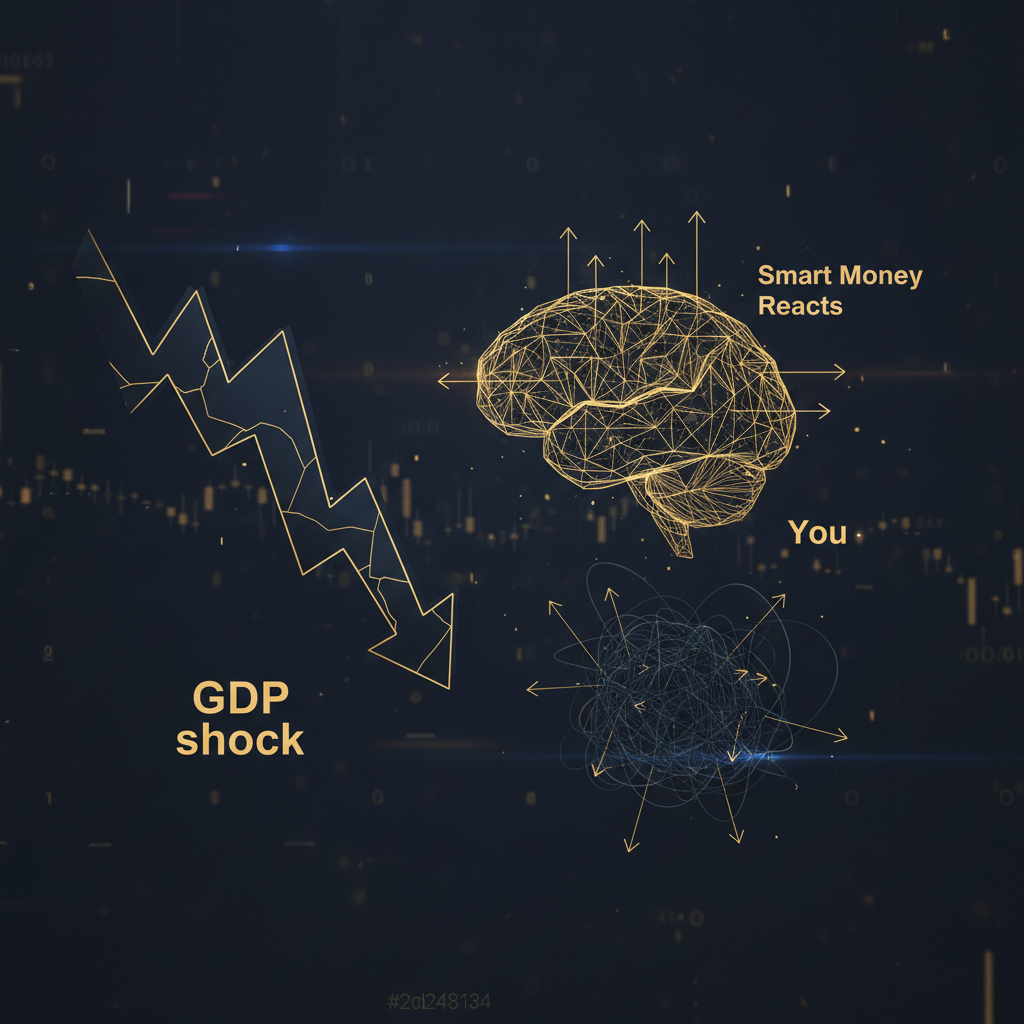
After over a decade in the markets, passing an FTMO Challenge, and getting a TradingView Editors' Pick, I've learned something crucial: the biggest battle in trading isn't against the market, it's against your own mind. Smart money concepts aren't just about order blocks and liquidity, they're about understanding the psychological warfare that institutions wage against retail traders every single day.
Today, I'm pulling back the curtain on five mind games that smart money uses to separate you from your capital. More importantly, I'll show you how recognizing these psychological traps transforms your trading psychology and gets you thinking like the institutions instead of being their prey.
Key Takeaway: Institutional traders win not by being smarter, but by systematically exploiting predictable retail behaviors, so your edge comes from recognizing the emotional traps (fear of missing out, stop-loss hunting, false breakouts) before you fall into them.
1. The FOMO Entry Trap: When Smart Money Concepts Turn Against You
This is the granddaddy of all psychological manipulation. You've probably experienced it: price breaks above a key level, maybe through an old high, and suddenly every fiber of your being screams "BUY NOW OR MISS OUT!"
Here's what's really happening: smart money has already positioned themselves during the accumulation phase below that level. They're now distributing their positions to retail traders who are chasing the move. The very moment you feel that overwhelming urge to enter is precisely when institutions are taking profits.
This comes up a lot in my coaching plans. The psychological pull is so strong because it taps into our deepest fear, missing opportunity. But here's the brutal truth: the opportunity was there 20, 50, even 100 pips ago when nobody was paying attention.
The psychological rewiring: Instead of asking "What if I miss this move?" start asking "Why am I only noticing this now?" When everyone's talking about a trade, it's usually too late.
2. False Breakout Mind Games: The Mirage That Costs Millions
False breakouts aren't accidents, they're carefully orchestrated psychological operations. Smart money pushes price just far enough above resistance or below support to trigger retail stop losses and FOMO entries, then immediately reverses.
I learned this lesson the hard way early in my career. I'd see a "clean" breakout of a major level, enter with confidence, only to watch price slam back through that level like it was made of paper. What I didn't understand then was that I was seeing exactly what institutions wanted me to see.
The psychological component here is confirmation bias. We want to believe the breakout is real because it confirms our directional bias. Smart money exploits this by creating just enough conviction to get us to act, then pulling the rug out.
As I detailed in my piece on how market structure shifts can break traditional ICT setups, the modern market requires us to think beyond surface-level price action.
The psychological rewiring: Treat every breakout as guilty until proven innocent. Wait for the retest, watch for institutional confirmation, and remember, if it looks too obvious, it probably is.
3. Liquidity Grab Warfare: When Your Stops Become Their Fuel
This is where smart money concepts get really sinister. Institutions don't just ignore your stop losses, they actively hunt them. Every cluster of stops represents a pool of liquidity that smart money needs to fill their massive positions.
The psychological warfare here operates on multiple levels. First, there's the obvious frustration of being stopped out just before price moves in your original direction. But deeper than that, it creates a crisis of confidence. You start questioning your analysis, your levels, even your ability to trade.
I've covered this extensively in my piece on ICT liquidity grab vs stop hunt, but here's the key insight: your stops aren't just risk management, they're beacons broadcasting your position to institutional algorithms.
In my experience, a lot of big moves start with a liquidity grab in the opposite direction. I don't think that's a coincidence.
The psychological rewiring: Start thinking of your stops as public information. Place them where you can afford to be wrong, not where you hope to be right. Better yet, learn to manage risk through position sizing rather than tight stops.
4. The Stop Hunt Symphony: Orchestrated Chaos
While liquidity grabs target obvious stop clusters, stop hunting is more sophisticated. It's the systematic targeting of retail psychology patterns. Smart money knows exactly where retail traders place their stops because retail traders are predictable.
Below the recent low? That's where retail stops are. Above the obvious high? More retail stops. Smart money doesn't need to guess, they can see the order flow data that retail traders don't have access to.
The psychological damage goes beyond the immediate loss. Each stop hunt reinforces the feeling that the market is "out to get you." This paranoia actually makes you a worse trader because you start making decisions based on fear rather than analysis.
A run of stop hunts can leave you second-guessing every level, every setup, every decision.
The psychological rewiring: Understand that stop hunting is a necessary part of market mechanics. Institutions need liquidity to operate. Instead of taking it personally, learn to identify the signs and position yourself accordingly.
5. News Manipulation: The Ultimate Perception Game
This is the most insidious mind game because it feels so legitimate. A news event drops, price moves violently in one direction, then completely reverses. Retail traders get whipsawed while smart money profits from both moves.
The psychological manipulation here is built on our need to rationalize market movements. We want to believe that news drives price because it makes the market feel logical and predictable. Smart money exploits this by using news as cover for their positioning.
CPI releases are a classic example, which I cover in my CPI trading psychology breakdown. The initial reaction to the data can be violent and seemingly logical, and then a reversal a little later tells the real story.
Here's what actually happens: smart money positions before the news, uses the initial reaction to trigger retail entries, then moves price in the direction they were positioned all along. The news was just the catalyst, not the cause.
The psychological rewiring: Stop trying to trade the news and start trading the reaction to the news. Better yet, learn to read institutional positioning before major announcements and align yourself accordingly.
Breaking Free: The Mental Transformation
Recognizing these mind games is just the first step. The real transformation happens when you shift from reactive retail thinking to proactive institutional thinking. This isn't about becoming emotionless, it's about channeling your emotions in the right direction.
Instead of fighting these psychological forces, learn to work with them. When you feel FOMO, that's your signal that smart money is distributing. When a breakout looks "too clean," that's your cue to look for the reversal setup. When news creates chaos, that's your opportunity to read the underlying institutional flow.
This mental shift is what I work on with traders in my coaching programs. Whether it's Lite at $150/week (one 1-on-1 session a week), Pro at $250/week (two sessions a week), or Full Mentorship at $5,000 for four months, the goal is the same: rewiring your brain to think like an institution.
If you want to hear from people I've worked with, you can read what past clients say.
Your Next Move
Understanding smart money concepts isn't just about learning new technical analysis, it's about fundamentally changing how you perceive market movement and your role within it. The five mind games I've outlined today represent just the tip of the iceberg.
If you're ready to stop being smart money's prey and start thinking like an institution, I invite you to book a free discovery call where we can assess your current psychological patterns and create a plan for transformation.
Remember: every time you fall for one of these mind games, you're not just losing money, you're reinforcing the very psychological patterns that will keep you trapped in the retail mindset. The choice is yours: continue being the target, or learn to think like the hunter.
The market will always be a psychological battlefield. The question is: which side are you fighting on?
Harvest Wright
ICT Trading Coach · 10+ Years Experience
Harvest specializes in ICT methodology and has helped traders pass prop firm challenges, develop consistent strategies, and build the psychology needed for long-term profitability.
Book a Free Discovery Call →Master Your Trading Psychology
Psychology is a huge part of trading. Our coaching includes dedicated psychology sessions.
See Coaching PlansFree ICT Funded-Trader Playbook
The setups, the pre-trade checklist, and the risk rules I use. Get it free.