
Why Getting a Mentor Won't Save You Either
Here's something nobody in the ICT space wants to say out loud: finding an ICT trading mentor will not save you if you're not ready to be saved. It's a pattern I see often enough that it no longer surprises me.
Key Takeaway: In my view, mentorship often fails because traders sign up before they've exhausted their 'I just need more information' phase. Coachability is a prerequisite, not a byproduct, of good coaching.
The ICT Trading Mentor Isn't the Missing Piece You Think
Traders cycle through phases. Phase one is indicators. MACD, RSI, moving average crossovers, a Bollinger Band squeeze strategy from a 2019 YouTube video. When those fail, phase two begins: "I need a better system." That's when most people discover ICT concepts. Order blocks, fair value gaps, liquidity sweeps, optimal trade entry. The framework is genuinely powerful. So they go deep. Free YouTube content, paid courses, community discords. Months pass.
Phase three is where it gets expensive. "I understand the concepts but I'm still losing. I must need a mentor."
The logic feels airtight. A real ICT trading mentor will watch my trades, identify my blind spots, hold me accountable. What could go wrong?
Everything, if you haven't diagnosed the actual problem first.
After more than a decade of trading, my view is that the strongest predictor of whether mentorship will work is whether the person sitting across from them has genuinely exhausted their belief that more information is what they're missing. Most haven't. Most show up to a mentorship still secretly hoping the mentor will reveal the one concept they haven't seen yet, the one that finally makes it all click.
That's not mentorship. That's a more expensive course.
Myth, Reality, and What I Actually See
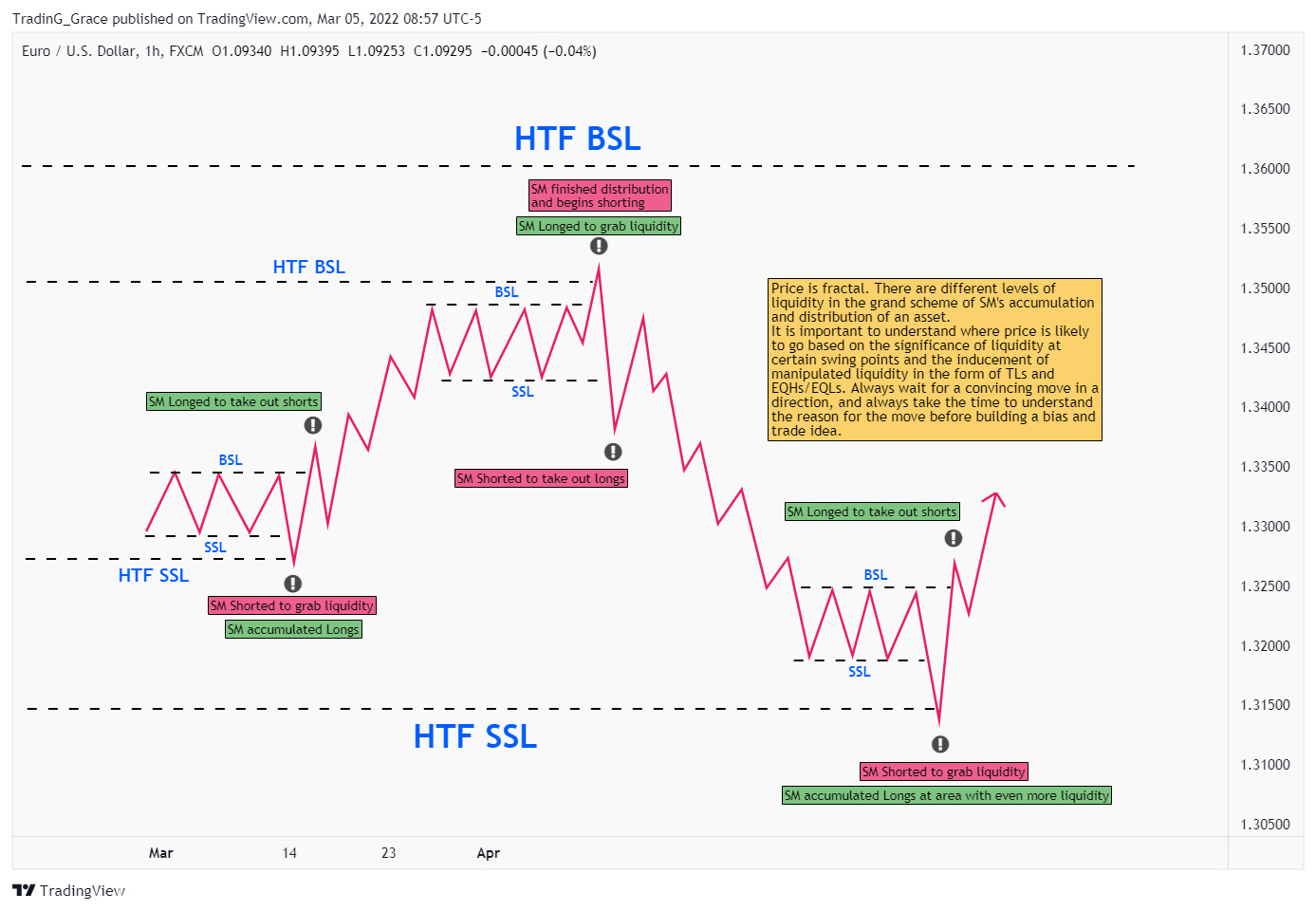
Myth: A good mentor will fix my consistency problems.
Reality: Consistency problems are execution problems. Execution problems live in how you react to a live P&L. No mentor on earth can reach into that space during a 15-minute London open candle and stop you from moving your stop loss.
What I Actually See: The trader who cannot follow their own rules in isolation will find creative new ways to break them under observation. The mentor becomes a temporary governor, not a permanent fix. And the moment the session ends, or the week wraps up, the old behavior returns. Sometimes within hours. It's common for a trader to execute perfectly while someone is watching, then revenge trade the same afternoon. The structure of coaching didn't change what happens in the moment of impulse.
This isn't a knock on mentorship. It's a knock on expecting mentorship to do work that only you can do.
The Archetype I See Most Often (And It Costs Them Every Time)
There's a specific type of trader who cycles through coaches like they cycle through prop firm challenges. Articulate, clearly intelligent, can explain ICT concepts fluently in a voice note or a Discord message. They understand the 2022 high, the balanced price range, the weekly profile, the relationship between the Asian range and London's initial sweep.
Ask them to show you their last ten trades and you find something strange. Every trade has a written reason. Every trade looks correct on paper, in hindsight. But the actual entries are scattered. Some in premium when the bias was bearish. Some at the wrong session. Some with stops sized so tight that a 3-pip spread on GBPUSD at 7am London open guaranteed the loss before price moved a single tick against them.
When you ask about the discrepancy, the answer is often some version of: "I saw a signal and I didn't want to miss it."
That sentence is the entire problem. And a mentor cannot fix that sentence. Only repeated, painful, documented failure fixes it, if the trader is honest enough to let that pain land instead of deflecting it toward the next coaching program.
Check out the 7 fatal mistakes that kill your funded account challenge success for a deeper look at what this pattern costs people in prop firm environments specifically.
What This Looks Like
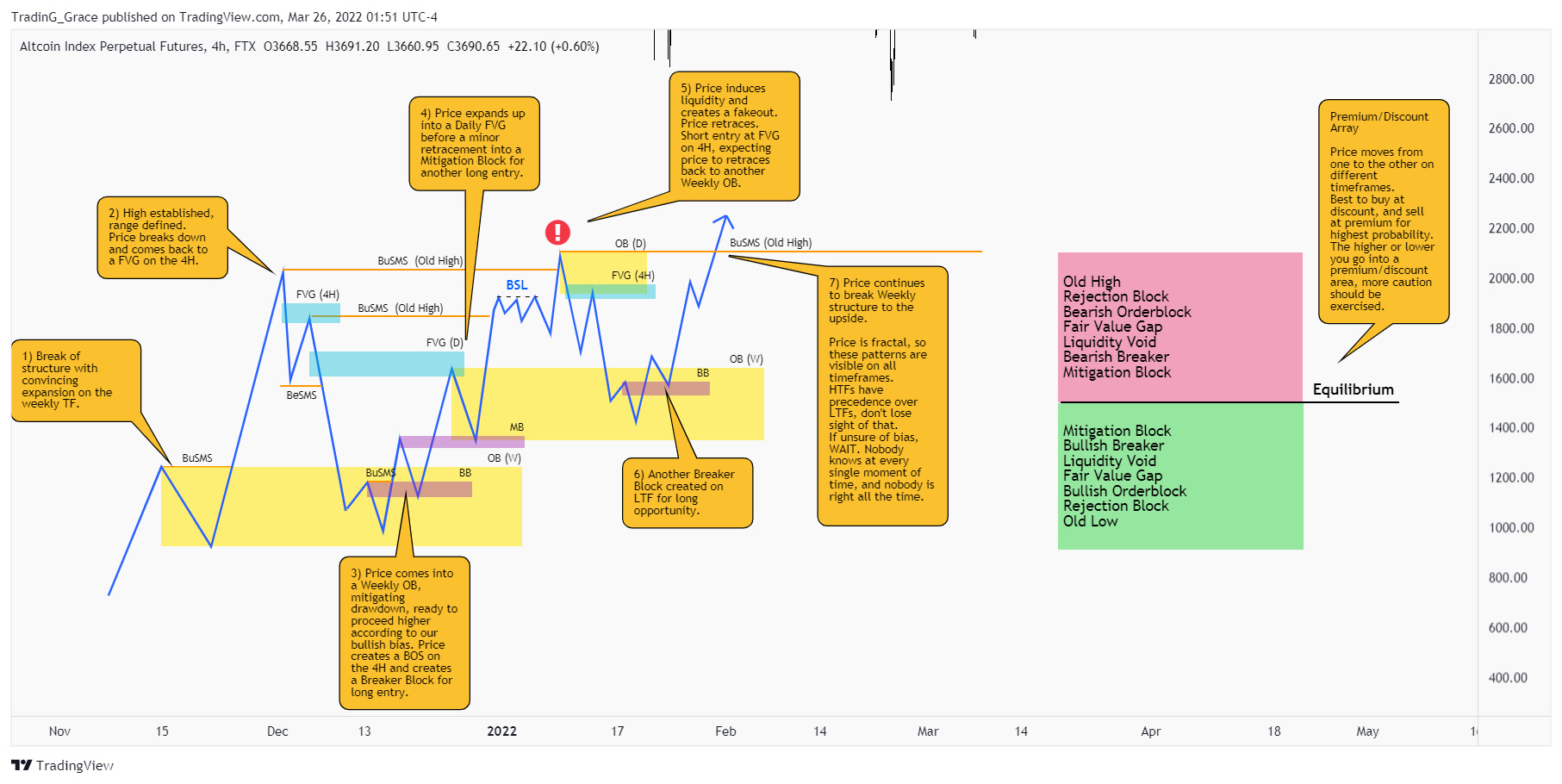
I used to get this wrong too. Not the coaching side, the execution side.
Here's the kind of setup I mean. Picture GBPUSD on the 15-minute chart. The London open prints a clean displacement to the downside and leaves a fair value gap. Higher timeframe bias is bearish, and the weekly PD array has been respected. By the rules, this is a short on the return into the FVG during killzone hours.
The entry is inside the FVG. The stop goes above the displacement candle, because if price climbs back above it, the bearish move has failed. The target is the previous week's low, the obvious sell-side liquidity.
Now add some context. The trader has taken two bad trades earlier that week, both impulsive, both outside session, both ignoring premium/discount entirely. They're frustrated. In that state, the pull is to size this trade up to "make back" the week. One spread spike hits the stop, and instead of a clean trade, it becomes another chapter in the revenge spiral.
What stops that? A mentor usually can't, on their own. Process documentation can, repeated enough times that the correct behavior becomes the path of least resistance. Use a risk calculator until the right size feels obvious, not optional.
The Four Questions That Actually Determine If You're Ready
Before anyone seriously considers paying for an ICT trading mentor, here's the framework I'd run first. Answer these honestly, because vague answers are their own answer:
1. Can you write down your trading rules in under five minutes, without referencing any content? Not ICT concepts generally. Your rules. Session times. Bias conditions. Entry criteria. If you need to look something up to answer this, the problem is still information-level, not execution-level.
2. Over your last 20 trades, what percentage followed your stated rules, win or lose? Not whether the trade won. Whether you followed the process. If you can't answer this because you haven't tracked it, stop here. Documentation is pre-mentorship work.
3. When you deviate from your rules, what happens in the 90 seconds before the deviation? This is the most important question. Traders who can answer this specifically are trainable. "I see price moving without me and I get a tight feeling in my chest and then I click" is an answer. "I don't know, I just trade" is not.
4. Are you looking for someone to teach you something new, or to help you do what you already know? If the answer is the former, you're not ready for mentorship. You're ready for more education. There's no shame in that. The crash course exists for exactly that phase. But calling it mentorship when it's really education is how people waste four months and five thousand dollars.
For more on what the ICT framework actually demands at an execution level before coaching adds value, the piece on why Q2 2026 market structure shifts are breaking traditional ICT setups gets into the practical weeds.
What Good Mentorship Actually Does (When the Conditions Are Right)
None of this means mentorship is useless. When the conditions are right, an experienced ICT trading mentor compresses years into months. Not by giving new information, but by providing a calibrated external perspective on your specific errors, in real time, before those errors become ingrained habits.
The keyword is calibrated. A mentor who just validates your setups isn't coaching. A mentor who tells you what to trade isn't coaching either. Real mentorship sounds like: "You entered on the OB but look at where price was in the range at the time of entry. You were at 68% of the dealing range. Why would smart money need to push from premium when the discount liquidity below still hasn't been swept?" That question, asked at the right moment, rewires something.
But that rewiring only sticks if you already had the framework to understand the question. Otherwise it's just another concept in a pile of concepts.
If you want to understand what the different tiers of structured support actually look like in practice, the coaching plans page lays out each level and its price. The four-question framework above is honestly the best pre-filter for figuring out which tier makes sense, if any. For the cost side of that decision, read my take on whether ICT mentorship is worth it.
If you want to read what past clients say before making any decision, that's on the results page.
The Real Question
So the question isn't really "do I need an ICT trading mentor." That's the wrong frame entirely. The question is: have I been honest enough with myself about my execution gap versus my knowledge gap, and am I willing to do the unglamorous documentation work before I pay someone to watch me repeat my existing mistakes in a more expensive setting?
If the answer is yes to the first part and yes to the second, then a good mentor at the right time is one of the highest-leverage investments a trader can make. In my experience, feedback only helps when you're self-aware enough to use it. Without that, it's noise.
When you're ready, take the free discovery call and come in with your last 20 trade logs and your answers to those four questions. That conversation will tell both of us something real. Without those, it won't.
Harvest Wright
ICT Trading Coach · 10+ Years Experience
Harvest specializes in ICT methodology and has helped traders pass prop firm challenges, develop consistent strategies, and build the psychology needed for long-term profitability.
Book a Free Discovery Call →Ready to Get Funded?
1-on-1 ICT coaching built around prop firm rules, from a trader who has passed an FTMO Challenge.
Book a Free Discovery CallFree ICT Funded-Trader Playbook
The setups, the pre-trade checklist, and the risk rules I use. Get it free.