
Group vs One-on-One Trading Coaching: Which Fits Your Stage?
Group Trading Coaching vs One on One: Which Format Actually Fits Where You Are?
Every few weeks someone asks me the same question: should I join a group coaching program or invest in one-on-one mentorship? It's a fair question, and a lot of articles on this topic are written by people who sell one format and need to justify it. So in fairness, I'll say up front that my own coaching is 1-on-1, and you can weigh my view with that in mind. After 10+ years of trading, working with ICT concepts and passing an FTMO Challenge, my view is that the format itself matters less than the fit between where a trader actually is and what they signed up for.
So here's the real breakdown of group trading coaching vs one on one, mapped to the stage each format genuinely serves.
Key Takeaway: Group coaching is the better choice at the foundational and intermediate stages because structure, peer accountability, and cost efficiency compound over time. One-on-one mentorship earns its premium only when you've already built a real system and need specific error correction at the execution level, not concept delivery.
Why Most Comparisons Get This Wrong
The standard take frames this as a quality comparison. Group coaching is cheaper but diluted. One-on-one is expensive but elite. That framing misses the actual variable, which is stage appropriateness.
Here's what I've come to believe: most traders who buy one-on-one mentorship early don't need personalized feedback yet. They need repetition. They need to hear the same concept explained six different ways across six different market contexts until it sticks. That's exactly what a structured group program delivers better than a single mentor can, because in group sessions you absorb not just the coach's explanation but the questions other traders ask, the mistakes they name out loud, and the chart examples that come from twenty different perspectives.
Contrarian take: paying more for one-on-one coaching in your first twelve months is often a waste of money, not an investment. If you haven't yet built consistent rules for entries, exits, and risk sizing, personalized feedback has nothing solid to attach to. You'll get corrections on top of an unstable foundation, and next week you'll have different errors anyway.
The exception matters though. I'll get to it.
The Trader Who Buys One-on-One Too Early
There's a recognizable pattern in trading communities. A trader spends three or four months watching free ICT content, feels like they understand the concepts, then decides they're ready for serious mentorship and drops significant money on one-on-one sessions. Two months later, they're frustrated. Their coach keeps pointing out execution problems, but the trader can't implement the corrections because their underlying framework keeps shifting.
This happens because understanding ICT concepts conceptually and being able to execute them consistently are two completely different cognitive states. Fair value gaps, order blocks, liquidity sweeps: a trader can describe all three accurately and still take random entries because they haven't drilled the decision rules into muscle memory yet. A one-on-one coach can identify that problem in session one, but they can't fix it in weekly calls if the trader isn't doing structured repetitions between sessions.
Group programs force that repetition. The accountability loop, the weekly review structure, the shared chart analysis, these compress the drilling phase. They're not a consolation prize. They're actually the right tool for the job.
A Worked Example of the Group Advantage
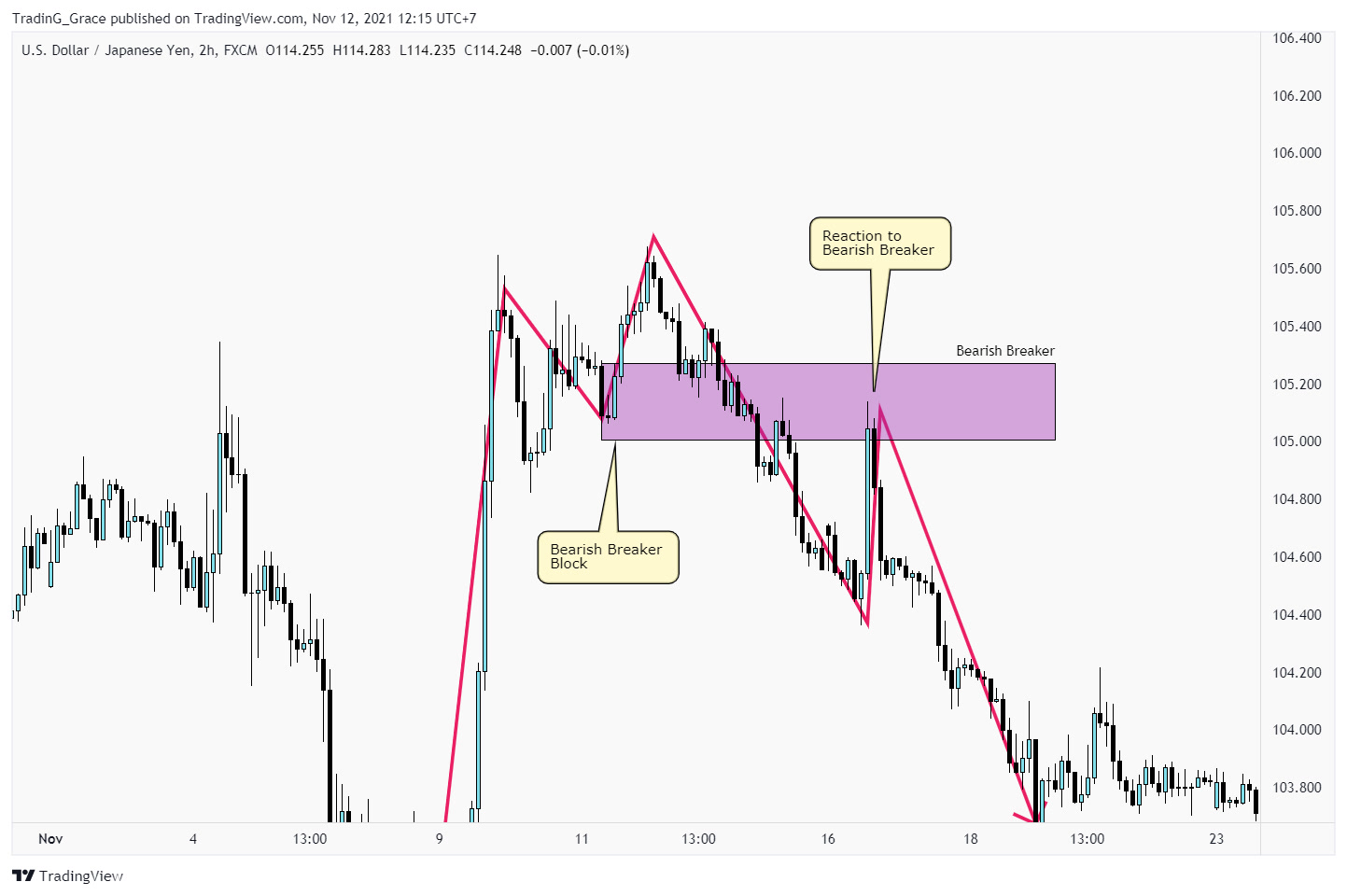
Picture GBPUSD on the 15-minute chart with a clean displacement move during the London open. Price breaks above the Asian session high, sweeps liquidity above a prior swing, then retraces into the imbalance it created on the way up. The entry is a limit order in that fair value gap. The stop goes below the low of the displacement candle, because if price takes that out, the move has failed. The target is the next draw on liquidity, such as a recent New York session high.
Now here's why this connects to the group vs one-on-one question. Picture that setup reviewed in a group. It's easy to imagine four traders making four different mistakes on it. One enters the FVG but places the stop inside the imbalance instead of below the displacement low, and gets tagged before the move. One has the right entry but sizes too large because they didn't use a structured risk calculator before entering. One misses the trade entirely because they didn't recognize where the draw on liquidity was. One takes the trade but exits at 1R because they never pre-defined a target.
Four different errors from the same setup. A one-on-one coach works on your errors. A group environment surfaces all four simultaneously, and every person in that session learns from all four at once. That's the compounding effect group coaching creates.
When One-on-One Actually Earns Its Cost
Here's where I'll give one-on-one its due, and I mean it genuinely.
Once a trader has a documented system with at least two to three months of consistent execution, a real edge starts to become visible in the data. Win rate stabilizes. Average R-multiple shows a pattern. But there's a ceiling. Progress stalls. The trader can feel that something specific in their execution is costing them, but they can't isolate it from inside their own perspective.
That's the moment one-on-one mentorship pays for itself.
At this stage, what you need isn't more concept exposure. You need someone experienced to watch you execute, review your journal, and tell you exactly which single habit is cutting your expectancy. That level of specificity is genuinely impossible in a group format. It requires a coach's undivided attention on your specific chart decisions, your specific biases, and your specific psychological patterns under pressure.
For ICT-based trading specifically, the errors that show up at the intermediate stage tend to be subtle. Entering order blocks in premium when the PD array is sitting in the middle of a range, taking FVG entries that have already been partially mitigated, misidentifying the true draw on liquidity because the higher timeframe bias hasn't been confirmed. These aren't concept gaps. They're execution habits that need surgical correction.
This is where the Full Mentorship at R2F makes sense: four months of direct work, $5,000, designed for traders who already have a foundation and need the errors caught before those errors cost them a funded account or a significant drawdown.
If you're earlier in the process, a structured group program is often the better value, because you're still in the phase where repetition and accountability matter more than personalization. If you'd still rather work 1-on-1, the Lite plan at $150/week is one session a week, and it works best when you do structured repetitions between sessions.
A Simple Decision Framework: Map Your Stage in 4 Questions
Before signing up for anything, run through these four questions honestly:
1. Can you define your entry rules without referencing a YouTube video? If no, you need structure and repetition. Group coaching is your format.
2. Do you have at least 60 documented trades in a journal with exit reasoning? If no, you don't yet have the data a one-on-one coach needs to give you targeted feedback.
3. Has your R-multiple averaged above 1.5 for at least two consecutive months? If yes, you have a real edge. Now the question is what's capping it. That's a one-on-one conversation.
4. Is your biggest problem concepts or execution? Concepts: group. Execution: either, depending on complexity. Execution of a specific subtle flaw that repeats: one-on-one.
Most traders who go through this honestly discover they're in the group phase, not the one-on-one phase. There's no ego in that. Being in the group phase means you have more to gain from the format that forces repetition and external accountability than from the format that personalizes feedback you're not yet ready to implement.
For a deeper look at how these execution errors compound into funded account failures, the article on 7 fatal mistakes that kill your funded account challenge success maps several of these patterns in detail.
The Accountability Variable Nobody Talks About
I used to get this wrong. I assumed the main value of group programs was the lower cost point. It isn't. It's the accountability structure that emerges naturally when peers are watching each other's progress.
When you're accountable to a group of traders at a similar stage, you show up differently to your chart sessions. You review your journal more honestly because you know someone else will ask about that loss you'd rather forget. You post your plan before the session because skipping it means explaining why you didn't. That social layer doesn't exist in one-on-one sessions, and it turns out to be one of the strongest behavioral change mechanisms available.
In my experience, practice with peer feedback can speed up learning in a way expert correction alone often doesn't, and trading is no different. You can borrow some of this in 1-on-1 coaching too, for example by sending your plan to your coach before each session so you have someone to answer to.
For context on how shifting market structure affects execution, the breakdown of why Q2 2026 market structure shifts are breaking traditional ICT setups is relevant reading regardless of which coaching format you choose.
The Bottom Line
Group trading coaching vs one on one isn't a debate about quality. It's a question of fit. Group wins at the foundational and intermediate stages because it delivers structure, repetition, peer accountability, and cost efficiency simultaneously. One-on-one earns its premium specifically when you have a working system, documented data, and a specific execution ceiling that needs targeted correction.
Get the stage right and either format will accelerate your development. Get it wrong and the expensive option will feel like it failed you, when actually it was just the wrong tool at the wrong time.
If you're unsure where you sit, the free discovery call is a short conversation designed to map exactly that, no sales pressure, just an honest assessment of what format makes sense for where you actually are.
And if you're earlier in the process and want to understand the foundational concepts before committing to any coaching format, the crash course is the right starting point.
Harvest Wright
ICT Trading Coach · 10+ Years Experience
Harvest specializes in ICT methodology and has helped traders pass prop firm challenges, develop consistent strategies, and build the psychology needed for long-term profitability.
Book a Free Discovery Call →Ready to Get Funded?
Our students pass prop firm challenges in under 60 days with personalized ICT coaching.
Book a Free Discovery CallFree ICT Funded-Trader Playbook
The setups, the pre-trade checklist, and the risk rules I use. Get it free.