
Why Your Coaching Isn't Sticking
You can repeat the exact words your ICT trading coach used. You know what a fair value gap is, where premium and discount sit, why you wait for a liquidity sweep before entering. You passed a quiz on it. You could teach it. And then you blew the funded account anyway.
That pattern is more common than anyone in the coaching space wants to admit.
Key Takeaway: Coaching fails when traders consume it as a knowledge transaction rather than a behavioural intervention. You can understand every concept perfectly and still change nothing about how you actually trade, because understanding and integration are two completely different cognitive processes.
Why Your ICT Trading Coach Probably Isn't the Problem
The default assumption, when a coaching programme doesn't produce results, is that the coach was wrong, the strategy doesn't fit your personality, or you just need a different mentor with a slightly different take on ICT. So you cancel, you buy the next programme, and the cycle restarts.
Here's what I've come to believe after 10+ years working with these concepts: the methodology is rarely the variable. ICT's core framework, premium and discount pricing, liquidity engineering, institutional order flow, is internally consistent. A properly identified order block on the 15-minute chart of EURUSD behaves the same way whether your coach has 3 years of experience or 15. The geometry doesn't change based on who explains it.
What changes is what you do with the explanation.
There are two modes in which traders consume coaching. The first is acquisition mode: you're collecting the concept, storing it, categorising it alongside everything else you know. The session ends, you feel informed, maybe even motivated. Nothing in your trading process actually shifts. The second is integration mode: you're actively interrogating how this concept changes a specific decision you make on a specific day. Not in the abstract. In the concrete.
The traders who transform are almost always in the second mode. The ones who don't, regardless of how many programmes they've done or how expensive the coach was, are almost always in the first.
I used to get this wrong too, early on. I consumed ICT content voraciously and could explain every concept with confidence. My trading didn't reflect any of it for a long time, because I was treating it like a subject to study rather than a behaviour to rehearse.
Myth: Coaching isn't working because the content isn't right for me.
Reality: Coaching isn't working because you're treating sessions as information downloads, not as behavioural correction loops.
What I Actually See: A trader who can correctly identify a breaker block on a higher timeframe chart during a review session, articulate precisely why price rejected there, and then, in live conditions three days later, enter early because it "looked close enough" and price was moving fast. The knowledge was there. The integration wasn't.
The Archetype That Shows Up Constantly
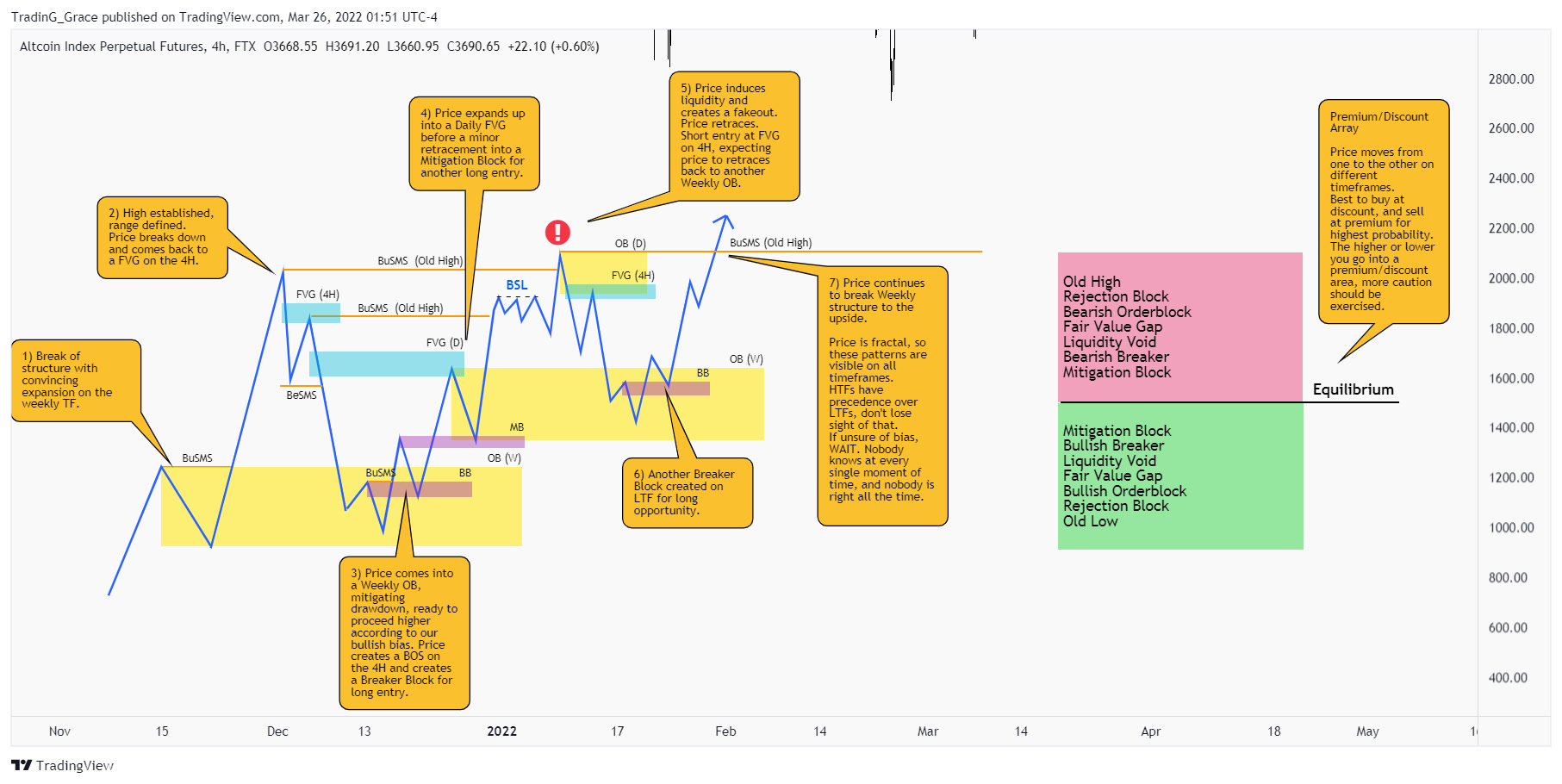
There's a specific type of trader I see repeatedly in trading communities and discussions. Sharp, articulate, clearly has done the work in terms of screen time and study. They can run a flawless post-trade analysis. Every loss gets a thorough explanation. They know exactly what went wrong.
But their pre-trade checklist, if they have one, is a formality. They complete it after they've already decided to enter. The analysis is reverse-engineered to justify the impulse.
This trader isn't lacking knowledge. They're lacking the moment between stimulus and response where a coached behaviour actually fires. They've collected the framework but never built the reflex. When price sweeps a session high at the London open and starts to retrace, the intellectual understanding of what should happen next is present. The embodied habit of waiting for specific confirmation before touching the mouse is absent.
No amount of additional content fixes this. More sessions in acquisition mode just means more sophisticated post-trade rationalisations.
Here's What Integration Actually Looks Like in Practice
Let me make this concrete, because abstract coaching advice about "changing your behaviour" is itself a form of acquisition-mode content. You read it, nod, feel like you've grasped something, and then nothing changes.
Picture EURUSD at the London open. Price has been in a clear short-term uptrend overnight, printing higher highs. Just before the 7am GMT candle, price spikes above the previous session's high, sweeping the buy-side liquidity resting above those equal highs. Within two or three candles, it starts to print a displacement lower, leaving a visible fair value gap on the 5-minute chart. The 15-minute chart shows you're trading into a premium relative to the overnight range.
Here's the kind of setup I mean. The short entry model would look for price to retrace back up into that 5-minute fair value gap, specifically the midpoint or above, before committing. The stop goes above the swing high that was swept, because that's the point where the thesis is invalidated. If price goes back above there, the sell-side narrative is wrong. The target is the nearest significant buy-side imbalance or the prior day's low, whichever offers a clean risk-to-reward picture from your entry.
Now here's where acquisition mode versus integration mode diverges sharply. A trader in acquisition mode watches price sweep the high, notes it, waits a beat, sees the first red candle and enters immediately because they "see the setup." They haven't waited for the FVG retracement. They've identified the pattern and treated that as sufficient.
A trader in integration mode has a written condition: no entry until price returns to the identified fair value gap and shows at least one closed lower-timeframe candle within the gap. That condition exists as a rule, not a suggestion. It fires as a behaviour because they've rehearsed it, been corrected on it specifically, and tracked how many times they've violated it and what happened.
The difference between those two traders has nothing to do with how much they know about ICT. It has everything to do with whether the coaching they received changed a specific decision point or just added to their conceptual library. For more on building that kind of process before even seeking coaching, why coaching won't fix a process problem is worth reading first.
The Contrarian Take: More Coaching Sessions Can Make This Worse
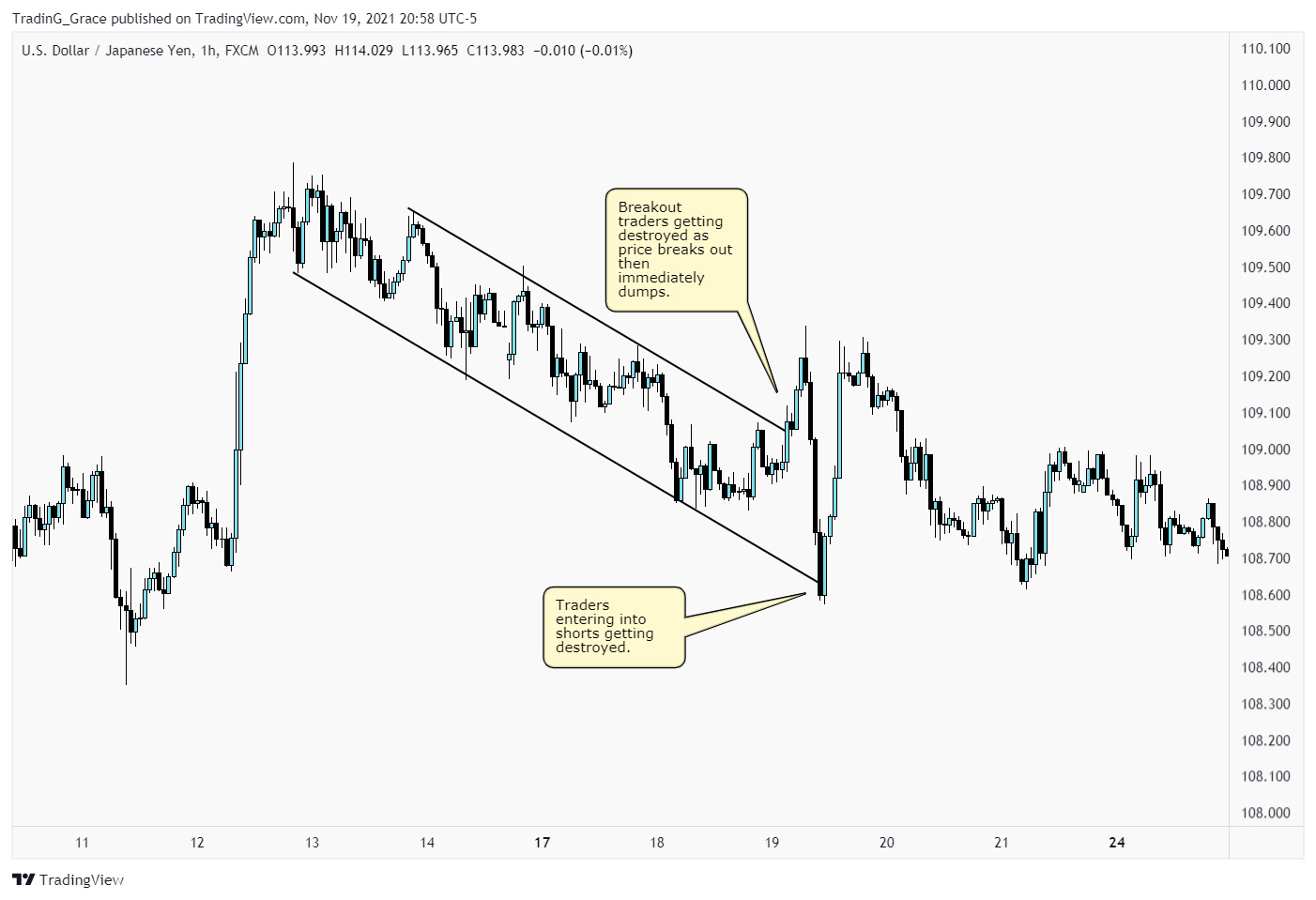
Here's what most ICT YouTube creators miss, possibly because it's not flattering to the coaching industry. Frequency of sessions, without a structured integration protocol between them, can actually reinforce acquisition mode.
Every week there's a new concept, a new nuance, a refinement on something you thought you understood. It feels like progress. Your knowledge base is genuinely expanding. But if each session begins with "here's what I learned this week" rather than "here's how I traded this concept this week and where the decision broke down," you're just adding floors to a building with no foundation.
I'd argue that a trader who has 12 sessions with a serious ICT trading coach and applies one concept between each session will outperform a trader who has 12 sessions and applies nothing, regardless of how genuinely excellent the coaching content is. The mechanism of change in trading is not comprehension. It's repetition of a correct decision under pressure until it becomes the default. You cannot shortcut that with more information. You can only shortcut it by making the integration step explicit and measurable. Why good mentorship feels uncomfortable goes deeper on exactly why this process resists the comfortable parts of learning.
A useful external reference here is how this maps to the broader science of behaviour change, which BabyPips covers well in their trading psychology material if you want to understand the cognitive framing behind why knowing and doing are so often disconnected.
A Practical Framework for Integration Mode
If you're working with a coach right now, or planning to, here's a specific protocol to shift modes:
Step 1: Identify one decision point from the previous week's trading where your behaviour and your knowledge diverged. Not a bad trade. A specific moment where you knew the rule and broke it anyway. Write it in one sentence.
Step 2: Before your next session, bring that sentence. Not a chart review. Not a win or loss. That specific sentence. "I entered before the FVG was filled because price was moving and I didn't want to miss it."
Step 3: Ask your coach to address that decision point specifically. Not the concept in general. That moment. What condition would have prevented it? What needs to be on your checklist that wasn't?
Step 4: Write the condition as a rule. Specific, binary, testable. "I will not enter a short trade unless price has returned to at least the 50% midpoint of the identified FVG on the entry timeframe."
Step 5: Track violations of that one rule for two weeks. Not your P&L. Just whether you honoured the rule or broke it and why. That tracking data is your actual coaching material for the next session.
This is the loop. It's not exciting. It doesn't feel like learning. It feels like being held accountable to something uncomfortable, which is exactly why most traders avoid it and why what past clients say about the process usually involves some version of "it was harder than I expected."
For context on what different levels of support look like if you're ready to build this kind of accountability into your trading, the coaching plans page lays out the options clearly, from the Lite tier at $150 per week through to Full Mentorship at $5,000 for four months. The tier you need depends on how much of that integration protocol you can hold yourself accountable to independently.
The Uncomfortable Conclusion
Your coaching might be genuinely excellent. The strategy might be completely sound. The ICT framework, when properly applied, has a coherent internal logic that holds up under scrutiny. If you've passed a module, reviewed a session recording, and still blown a funded account trading the same setups, the question worth sitting with is not whether your coach was right.
It's whether you've ever actually integrated a single lesson, in the sense of changing a specific behaviour at a specific decision point, or whether you've just become very articulate about what you should do.
Those are not the same thing. And no amount of new coaching will close that gap until you change the mode you're operating in.
If you're unsure whether you're even at the right stage for mentorship yet, are you actually ready for a trading coach is the honest place to start. And if you want to talk through what the right structure looks like for where you are right now, book a free discovery call and we'll work it out from there.
Harvest Wright
ICT Trading Coach · 10+ Years Experience
Harvest specializes in ICT methodology and has helped traders pass prop firm challenges, develop consistent strategies, and build the psychology needed for long-term profitability.
Book a Free Discovery Call →Ready to Get Funded?
1-on-1 ICT coaching built around prop firm rules, from a trader who has passed an FTMO Challenge.
Book a Free Discovery CallFree ICT Funded-Trader Playbook
The setups, the pre-trade checklist, and the risk rules I use. Get it free.