
Why Mentorship Won't Save a Broken Process
Most traders asking about an ICT trading mentor are asking the wrong question. The question isn't whether the mentor is legit. The question isn't whether their curriculum is solid, their track record is verified, or their community is active. Those things matter, but they're secondary. The real question, the one almost nobody asks before spending $150 a week or $5,000 for four months, is this: am I actually coachable right now?
Key Takeaway: Mentorship amplifies whatever trading process you already have. If that process has three specific structural gaps, reactive entries, inconsistent risk application, and no honest edge definition, hiring an ICT trading mentor before fixing them is statistically the same as buying another funded account challenge you'll blow. Fix the process first. Then get coached.
The Amplification Problem Nobody Talks About
Here's the brutal version of what I've observed after 10+ years inside ICT concepts and methodology: mentorship is a multiplier, not a corrective. It takes what you already have and makes it bigger. Bring a solid foundation, and a good mentor accelerates your development dramatically. Bring a broken process, and the mentor gives you more sophisticated language to describe why you keep losing.
This isn't a critique of mentors. It's a structural reality. A coach can show you the right order block on EURUSD at the London open. They can walk you through why the displacement matters, where the fair value gap sits, and where price is likely to draw next. But if you exit that conversation and still size your trades based on feel, still enter before confirmation because you're afraid to miss the move, and still can't articulate what your actual edge is in plain language, the knowledge doesn't land. It becomes decoration.
I used to think more information was the solution to inconsistency. It isn't. More information without a functioning execution process is just more noise.
Myth, Reality, What I Actually See
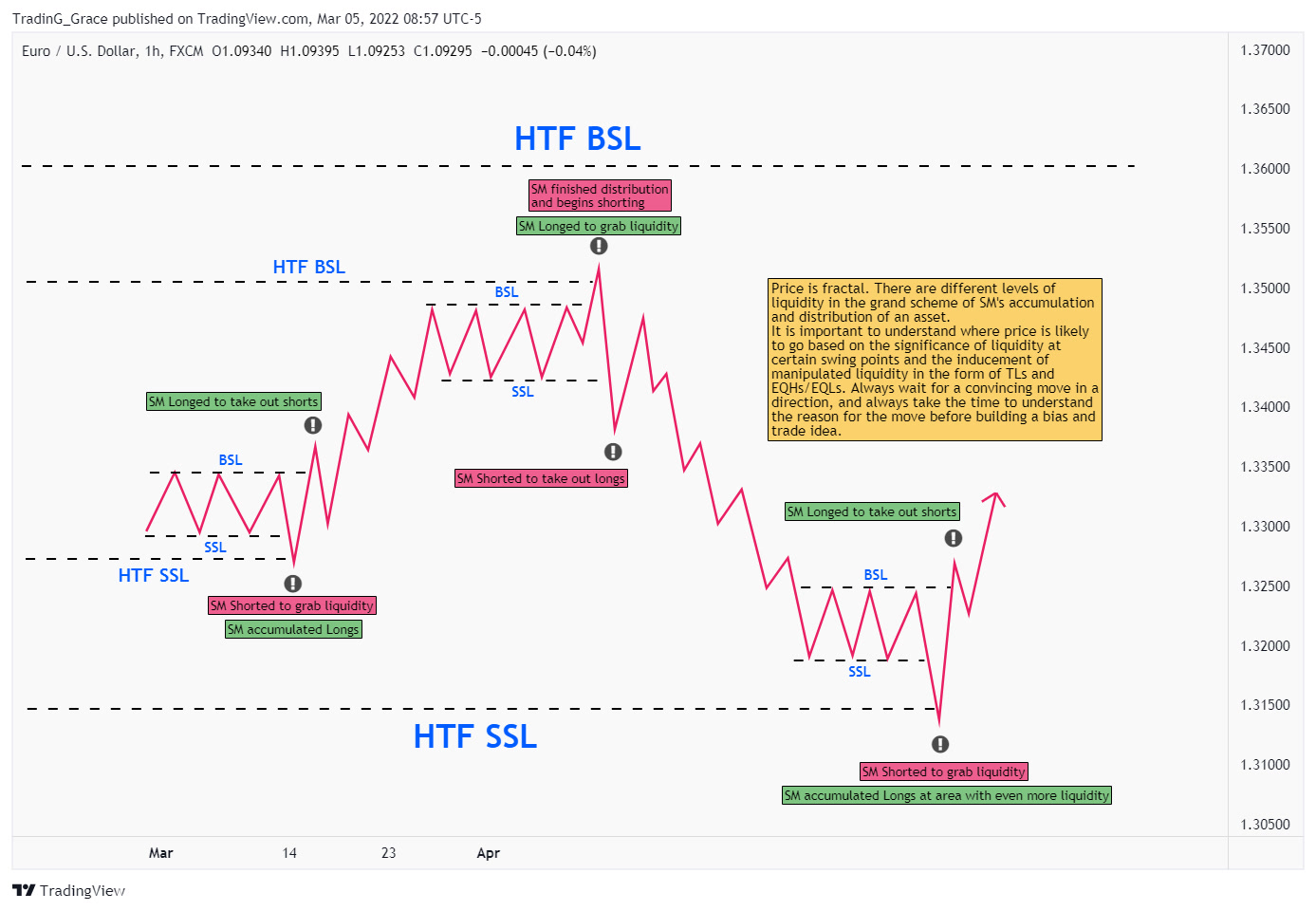
Myth: An ICT trading mentor will teach me what I'm missing, and once I have that knowledge, the results will follow.
Reality: Knowledge transfer is maybe 20% of what makes mentorship work. The other 80% is a trader who already has enough process discipline to receive feedback, apply it consistently, test it systematically, and return to the next session with real data instead of vague feelings about how the week went.
What I Actually See: Traders arrive at the mentorship conversation having consumed hundreds of hours of ICT content on YouTube. They can define displacement. They can identify a breaker block. They can talk about premium and discount arrays with confidence. But put them in front of a live chart at 7 AM London open, and the execution falls apart completely. They enter before the sweep completes. They put the stop inside the order block instead of below the last significant low. They take profit at the first fib level because they're scared of giving back gains. None of that is a knowledge problem. It's a process problem, and a mentor watching it happen can point it out clearly, but they cannot want the discipline more than the trader does.
The Three Gaps That Kill Mentorship ROI
Before you look at coaching plans or anything else, run yourself through these three honestly.
Gap 1: You can't describe your entry criteria in one sentence without using the word "confluence".
"Confluence" has become the ICT trader's way of saying "I'll know it when I see it." That's not an edge. An actual entry criterion sounds like this: price takes out the Asian session low during London open, displaces into a marked four-hour fair value gap, and I'm entering on the 15-minute confirmation candle closing above the 50% level of the gap. That's specific enough to back-test, specific enough to follow, and specific enough to journal honestly. If you can't articulate your entry at that level of precision, a mentor is going to give you their criteria layered on top of your confusion. Now you have two overlapping systems and twice the paralysis.
Gap 2: Your risk changes based on how confident you feel about the setup.
This one is quiet and damaging. Traders who do this usually don't realize they're doing it. They think they're being responsive to market conditions. What's actually happening is that conviction bias is running their position sizing. When they feel certain, they size up. When the setup looks "textbook," they add to the position. And the setups where they feel most certain are often the ones where price has already run significantly, the entry is deep in premium, and the stop has to go far away to be valid. Using a consistent risk calculator breaks this pattern mechanically, but only if the trader actually uses it on every trade, not just the ones where they're uncertain.
Gap 3: You've never seriously defined what market conditions your approach does NOT work in.
Every ICT-based approach has conditions where it performs and conditions where it destroys accounts. Order blocks in a trending market on a clean session are very different animals from order blocks during a compressed, low-volatility grind. If you can't name the specific conditions where you should be flat or in reduced-size mode, you don't have an edge definition. You have a collection of patterns you apply indiscriminately and then blame the market when they fail. An ICT trading mentor can help you refine this, but only if you've already tried to define it yourself and can show them where you're uncertain.
The Archetype That Keeps Showing Up
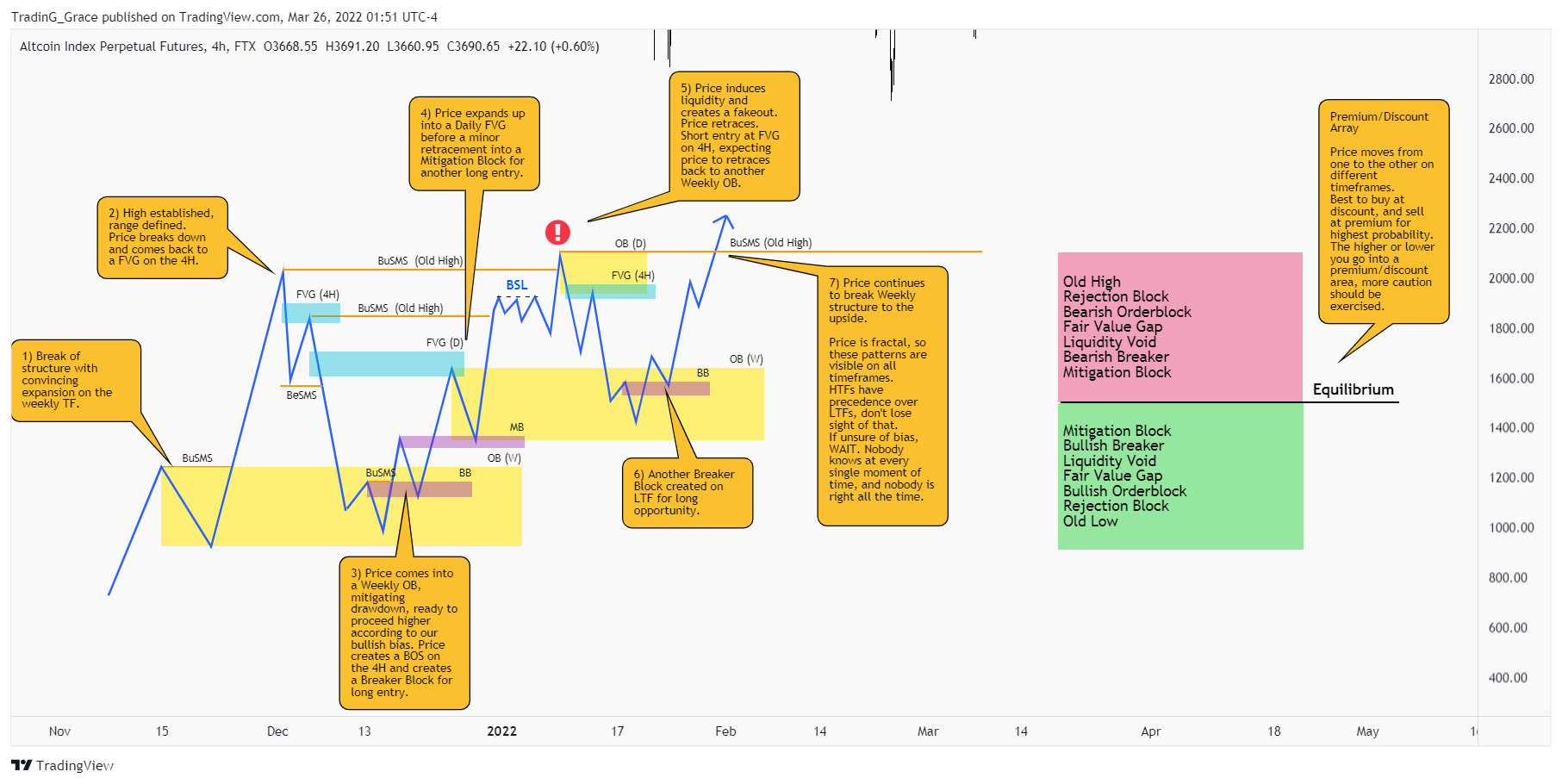
There's a specific trader pattern I see repeatedly in trading communities. They've been at this for 12 to 18 months. They know ICT concepts well enough to discuss them intelligently. They've probably passed one demo challenge or performed reasonably well in a paper account. The moment they go live, or the moment they enter an evaluation with real rules and daily drawdown limits, everything unravels.
They start chasing entries they missed. They widen stops because "the idea is still valid." They close winners early because a funded account rule creates pressure that didn't exist on demo. And then they start looking for a mentor, convinced that someone watching over their shoulder will solve the psychology.
Here's the uncomfortable reality: the psychology problem is downstream of the process problem. Anxiety around live trading is almost always rooted in ambiguity. When you don't fully know your entry criteria, when you're not certain where your stop goes, when you're improvising targets because you haven't defined them in advance, your nervous system fills that ambiguity with panic. A mentor doesn't remove the ambiguity. A mentor helps you refine a process you've already built. If you haven't built one yet, you need reps, not coaching.
Related reading: 7 fatal mistakes that kill your funded account challenge success goes deep on exactly how this pattern plays out inside evaluations.
A Worked Example: What a Coachable Process Looks Like
Picture EURUSD at the London open. Price has been ranging in a defined Asian session box, accumulating liquidity below the lows. At approximately 7:10 AM London time, a swift displacement to the downside sweeps those Asian lows cleanly, takes out the stops resting below, then reverses with a strong bullish displacement candle that leaves a visible fair value gap on the 15-minute chart between roughly the midpoint of the sweep candle and the opening of the next candle.
Here's the kind of setup I mean when I talk about a coachable process:
Entry: the 15-minute chart shows price returning into that fair value gap. You're watching for a candle to close at or above the 50% level of the gap, confirming the market isn't filling it aggressively. You enter at market on that close, or you have a limit order sitting at the 50% level of the gap already.
Stop: below the low of the displacement move. Not below the order block. Not "a few pips below support." Below the actual structural low that was created when price swept the Asian session liquidity. If price goes back there, the premise is invalid.
Target: the next significant draw on liquidity above, which in this scenario would be the Asian session high that's sitting untouched. Price swept the lows to build energy for the move higher. The logical draw is the opposing liquidity.
Now here's what makes this coachable versus uncoachable. A trader who can walk into a mentorship session and say "here's my entry, here's my stop location and the structural reason for it, here's my target and why it's the logical draw" can actually be coached. The mentor can refine the entry timing, challenge whether the fair value gap is in discount relative to the broader range, or question whether the higher timeframe bias supports the long. That's productive coaching.
A trader who entered because it "looked like" a good setup, put the stop where they could afford to lose, and is targeting "resistance" they saw on the daily, has nothing a mentor can usefully refine. The foundation isn't there yet.
For more on this specific type of setup and how to validate entries within it, the ICT fair value gap trading checklist covers nine pre-trade confirmations worth working through.
The Contrarian Take: Most ICT Traders Need Reps, Not Coaches
Every "how to choose a mentor" article online assumes you need a mentor. Almost none of them ask whether you're ready for one. The ICT community specifically has a content consumption problem where traders mistake understanding a concept with being able to execute it. They are completely different skills trained by completely different activities.
Understanding a fair value gap entry is trained by watching videos and reading explanations. Executing a fair value gap entry calmly, consistently, and according to pre-defined rules under live market conditions is trained by repetition: hundreds of times in backtesting, dozens of times in forward testing on a demo, and then carefully in small live positions before evaluation capital enters the picture.
Signing up for an ICT trading mentor before you've completed that repetition cycle is like hiring a tennis coach before you can reliably get the ball over the net. The coach can demonstrate a perfect serve. But if your body hasn't yet built the basic motor pattern, you'll watch the demonstration, nod enthusiastically, and then double fault the next twelve times you try it.
For traders who are genuinely early in the process, the crash course gives you the mechanical foundation worth building before coaching conversations make sense. And if you want more context on how the methodology behaves in current conditions, the piece on why Q2 2026 market structure shifts are breaking traditional ICT setups is worth your time before you decide what level of support you actually need.
External resources like BabyPips' School of Pipsology and TradingView's educational library exist precisely for the repetition phase. Use them.
So When Are You Actually Ready?
You're ready for an ICT trading mentor when you can answer yes to all three of these:
One: you have a written entry criteria that a stranger could follow without asking you clarifying questions.
Two: your last 20 trades in a forward test or demo used identical position sizing methodology regardless of how confident you felt.
Three: you can name at least two specific market conditions where your current approach gets you killed, and you have a rule for what you do instead.
If all three are yes, book a free discovery call and let's look at whether the Lite, Pro, or Full Mentorship structure fits where you actually are. The four-month Full Mentorship at $5,000 is built for traders who have a process and need it pressure-tested and refined at speed. The Lite and Pro weekly options work well for traders who have a functioning foundation and need structured accountability and feedback to close the gap between what they know and what they execute.
If you answered no to one or more, the honest advice is to spend the next four to six weeks on deliberate repetition before any coaching conversation. Come back with 20 forward-tested trades and real data. That changes everything about what a mentor can actually do for you.
Harvest Wright
ICT Trading Coach · 10+ Years Experience
Harvest specializes in ICT methodology and has helped traders pass prop firm challenges, develop consistent strategies, and build the psychology needed for long-term profitability.
Book a Free Discovery Call →Ready to Get Funded?
Our students pass prop firm challenges in under 60 days with personalized ICT coaching.
Book a Free Discovery CallFree ICT Funded-Trader Playbook
The setups, the pre-trade checklist, and the risk rules I use. Get it free.