The Quiet Session Ritual That Trains Your Brain
There's an earlier version of me who would have laughed at what I'm about to tell you. He was grinding long chart sessions, convinced that more screen time meant more edge, more opportunity, more everything. He had the ICT concepts down, understood PD arrays, could identify liquidity sweeps, spotted fair value gaps before they filled. The strategy wasn't broken. The nervous system running it was.
This is a piece about ICT trading psychology, but not the kind that tells you to breathe deeply or journal your feelings. It's about a simple method that turns boredom into a conditioning tool you can use for free, this week.
Key Takeaway: Deliberately watching the Asian session weekly without placing a single trade helps break the impulsivity that makes London and New York feel compulsive rather than strategic. It works at the level of habit and nervous system, which is why it can stick when mindset advice doesn't.
What Watching Without Trading Teaches You
Picture a trader who, for a few weeks, can watch the charts but can't trade. At first it's agony. The London open arrives, there's a textbook displacement into an FVG on GBPUSD, and they just... sit there. Watch it run. Their hand moves toward the mouse without them deciding to. That involuntary reach says a lot about how they've been trading.
Give it some time, though, and something shifts. The setups that looked "textbook" in the first ten minutes start revealing themselves as traps if you wait. Liquidity sweeps you would have faded early show you where they were actually targeting. You start seeing the session in full instead of reacting to its opening scene. The excitement and the action come apart.
You don't need a forced break to get that. You can build it in on purpose. Once a week, watch the Asian session as a non-participant. No trades. No orders in the market. Just observation.
Why the Asian Session Specifically, And Why This Isn't About the Setup
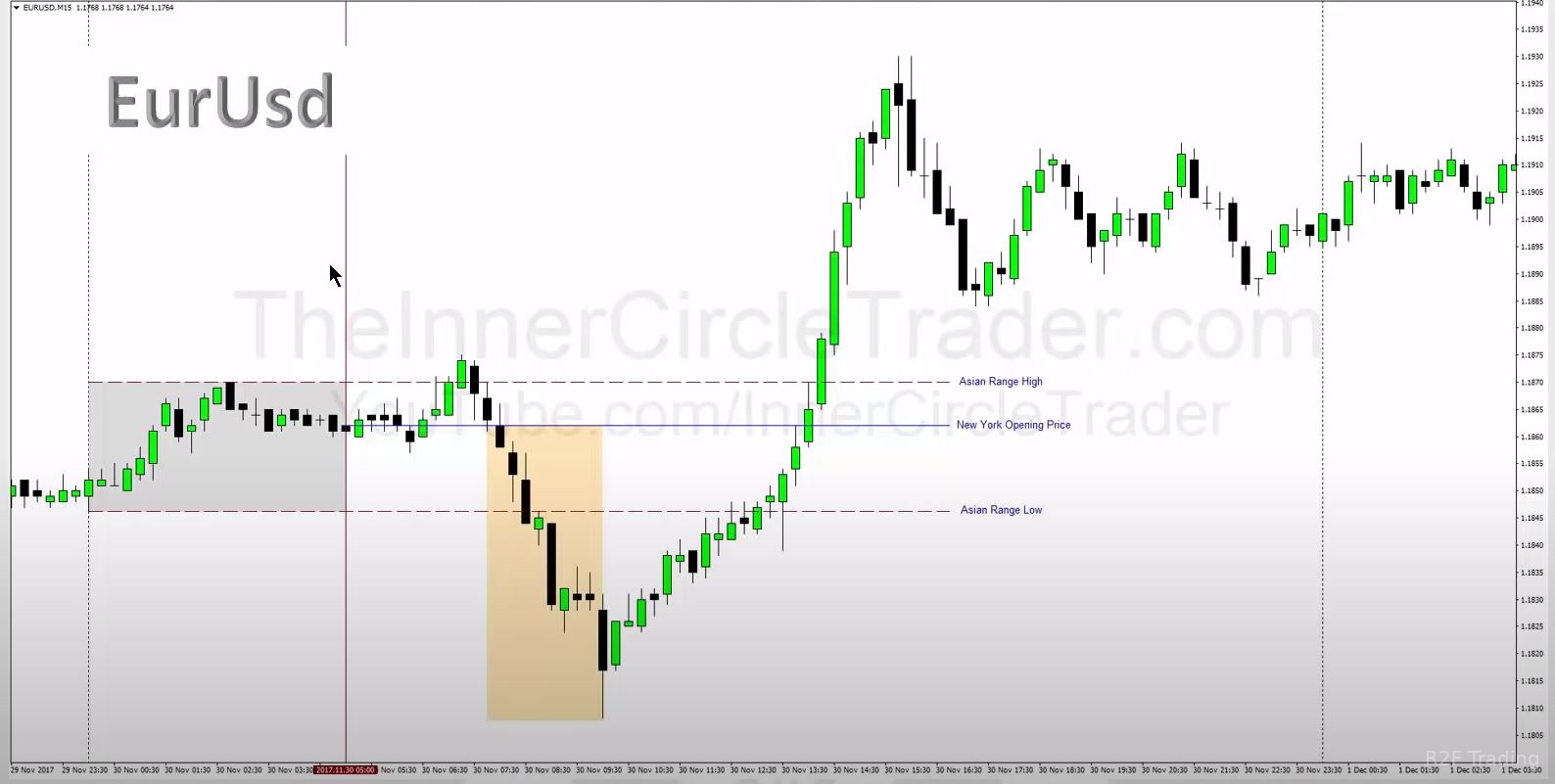
The usual framing around the Asian session in ICT circles is technical: it's where liquidity rests, where dealing ranges form, where the algorithm sets the high or low it'll raid in London. All of that is accurate. But that's not why I use it for psychological conditioning.
The Asian session is perfect for this practice because it's designed to feel unrewarding. Low volatility, compressed ranges, fake-outs that resolve into nothing. If you sit through it without trading, you experience the full texture of boredom that markets produce, and boredom is a psychological state that does a lot of damage to ICT traders.
Here's what actually happens inside a trader's brain during a slow session: dopamine doesn't just drop, it creates a hunger. That hunger makes the next marginal setup look like a premium one. It makes a B-grade FVG look like an A+ entry. It turns a ranging market into something that feels like it's about to break out, because your brain desperately needs stimulation after 90 minutes of watching price chop between two levels.
I think this is behind a lot of revenge trades, impulsive London entries, and "I don't know why I took that" moments. The boredom of a slow session makes you overvalue the next movement you see. And a chart works a bit like a slot machine: the rewards arrive unpredictably, which makes the urge to act hard to switch off.
When you sit through the Asian session weekly without acting, you train yourself to tolerate that hunger without feeding it. Over time, boredom stops being a trigger. It becomes neutral. And once boredom is neutral, your London and New York sessions stop feeling compulsive.
What You'll See During These Sessions
Here's the kind of sequence I mean, so this doesn't stay abstract.
Picture GBPUSD on an observation day. The Asian session builds a tight range over several hours. There's a small FVG inside the range from a minor displacement overnight. On a normal day, a lot of traders would be watching that FVG like a hawk, maybe with a buy limit inside it, targeting the next round number above.
Instead, you watch. London opens. Price sweeps below the Asian low, a clean raid on the sell-side stops resting under the range. Then a displacement candle drives back up through the entire Asian range, leaves a fresh FVG, and keeps going.
The anticipation entry inside the pre-London FVG gets stopped out on the sweep. The real setup comes after the raid: a long in the new FVG left by the displacement, with the stop below the sweep low (if price takes that low again, the raid-and-reverse idea is wrong), and the target at the buy-side liquidity above the Asian high or the previous day's high.
You don't take that trade either, because it's an observation session. But here's what matters: you see it fully. The entire sequence, in order. The next time you're trading live, that sequence is easier to recognise because you watched it without anticipation distorting your view.
That's the compounding return of observation sessions. It isn't one session's insight. It's what those sessions do to your baseline state across every session that follows.
The Archetype I Keep Seeing in the Forums
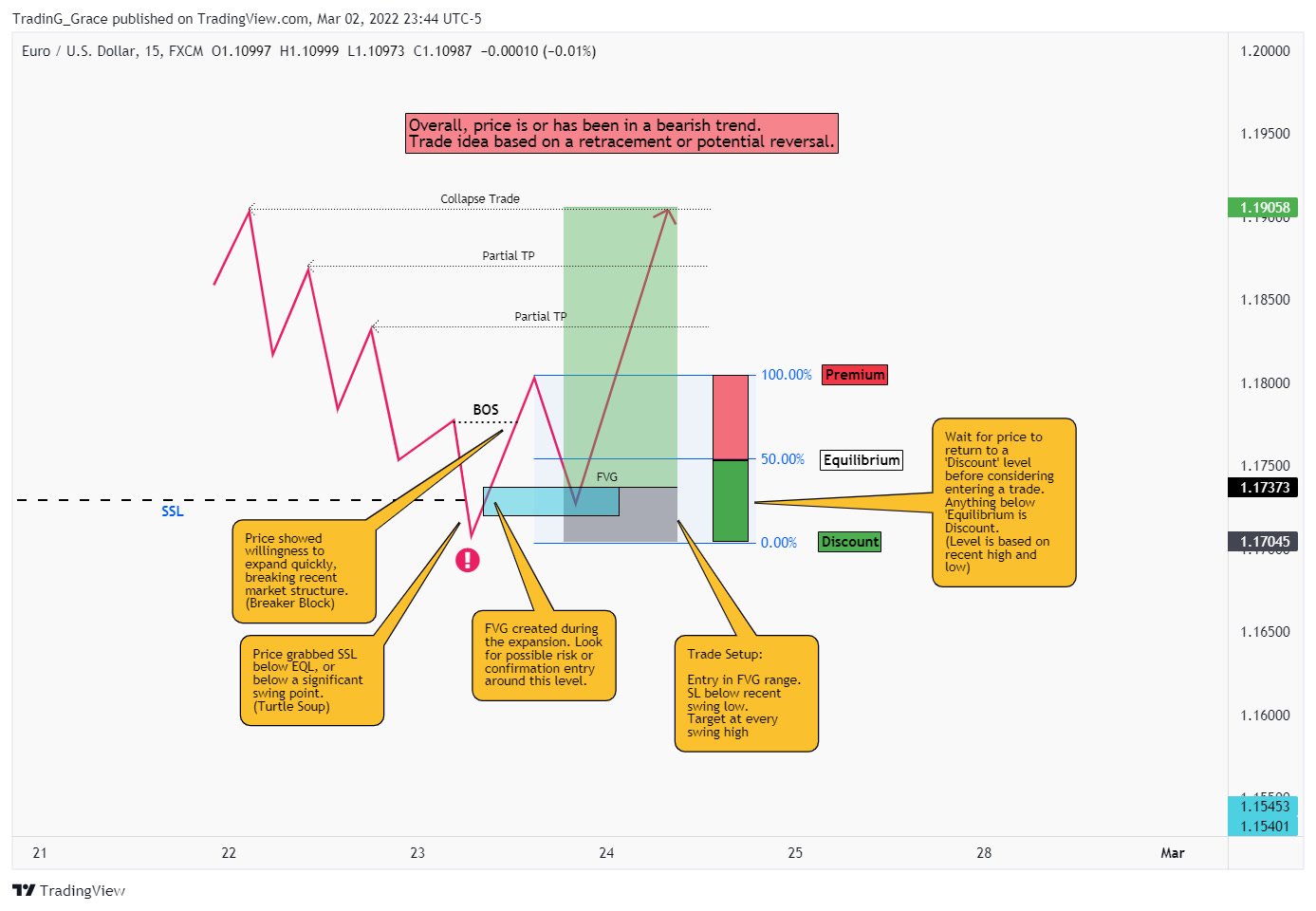
There's a specific trader pattern I've noticed repeatedly in ICT communities, the trader who executes flawlessly in backtests, knows exactly where the setups should be, understands the theory, but keeps taking entries well before the proper confirmation arrives. They enter on anticipation, not confirmation. Their FVG entries happen before displacement has occurred. Their order block longs trigger before the liquidity sweep is complete.
When you ask them why, they usually say something like "I knew it was coming so I got in early to improve my entry." But that's not what's happening. What's happening is that boredom and anticipation have fused together into something that feels like conviction. The pre-confirmation entry isn't a strategic decision, it's a dopamine response disguised as edge.
This is exactly the pattern that scheduled Asian session observation addresses. Because every week, you sit through the Asian range, you feel the certainty that price is about to move, and then you don't act. You practice tolerating that feeling. You prove to your nervous system that anticipated certainty doesn't require immediate action. Over weeks and months, that separation between feeling and action becomes automatic.
If you're seeing this pattern in your own trading, there's also a structural side worth examining. Why your ICT order blocks keep failing in April's ranging markets covers the technical piece of that problem directly.
The Exact Protocol, Here's How to Actually Do This
This works because it's structured, not casual. Watching the Asian session half-awake while scrolling your phone doesn't condition anything. Here's the protocol I use:
Step 1, Pick one fixed day per week. Tuesday works well because Monday sometimes has residual weekend gap dynamics that add noise. The consistency matters more than the day. Same day, every week, non-negotiable.
Step 2, Set your chart before the session opens. GBPUSD or EURUSD on the 15-minute chart, with the prior day's high and low marked, the weekly open price marked, and any HTF FVGs from the H4 visible. Have your context ready before 8 PM GMT, don't be setting up while the session is live.
Step 3, No pending orders. No demo trades. The entire point is that your nervous system must experience the session with no skin in the game and no simulated skin in the game. Demo trades produce almost the same dopamine loop as live trades. For this exercise, you're an anthropologist watching market behavior, not a trader watching for entries.
Step 4, Write one paragraph after the session closes. Not a full journal entry, just one paragraph answering: what did the Asian range create, how did London use it, and what would a trader who entered on anticipation have experienced? This paragraph is your record of the full sequence without your interpretation being contaminated by a live P&L.
Step 5, Do this for six consecutive weeks before evaluating. The effect is cumulative. Early on it feels pointless. Stick with it and watch for whether your active sessions start to feel slower in a good way, and whether you're waiting longer on live entries without consciously trying to.
For the position sizing discipline side of this, once your psychology stabilizes and you're ready to size up appropriately, the risk calculator here on the site is worth running your setups through before you trade them.
One More Uncomfortable Truth About "Mindset Content"
Most ICT trading psychology content, including a lot of what I've written over the years, operates at the wrong layer. Telling a trader to "be more patient" or "only take A+ setups" is like telling someone with insomnia to just sleep. The instruction is accurate. The mechanism for implementing it is completely missing.
Journaling is useful. Meditation is useful. Understanding your emotional triggers is useful. But none of those interventions happen during the dopamine event. They happen before or after. The Asian session practice works because it puts you inside the dopamine cycle, with the tick-by-tick price movement, the same charts, the same pairs, and conditions a different response in real time.
That's a different category of training entirely.
If you want to go deeper on the funded account side of this, because a lot of blown prop firm challenges come down to psychological issues that technical study alone can't fix, 7 fatal mistakes that kill your funded account challenge success lays out exactly where those discipline failures tend to surface under evaluation pressure. And if you're newer to the ICT framework and want to understand the technical foundation before working on the psychological layer, the crash course is the place to start.
For anyone who wants to work through this more directly, the coaching plans cover everything from Lite support at $150/week through to Full Mentorship over four months, the psychological conditioning framework is embedded throughout, not treated as a separate module.
What This Actually Costs You
One session per week. About three to four hours. No trades, no risk, no platform fees.
The return on that investment, in my experience, is worth more than any indicator, any new confluence technique, any session-specific strategy. In my view, a calm nervous system running a good strategy beats an impulsive nervous system running a perfect one.
Start this Tuesday. Mark your calendar now. Set the charts up tonight. When London opens that morning, just watch, and let the discomfort of not acting be exactly the training you needed.
Harvest Wright
ICT Trading Coach · 10+ Years Experience
Harvest specializes in ICT methodology and has helped traders pass prop firm challenges, develop consistent strategies, and build the psychology needed for long-term profitability.
Book a Free Discovery Call →Ready to Get Funded?
1-on-1 ICT coaching built around prop firm rules, from a trader who has passed an FTMO Challenge.
Book a Free Discovery CallFree ICT Funded-Trader Playbook
The setups, the pre-trade checklist, and the risk rules I use. Get it free.