The Quiet Hours That Destroy Disciplined Traders
There's a specific kind of suffering that nobody in the trading education space wants to talk about, not because it's too painful, but because it sounds embarrassingly mundane. It's not blowing up on a news spike. It's not revenge trading after a stop-out. It's sitting at your desk at 11:30 AM EST on a Tuesday, watching GBPUSD chop back and forth across a 15-pip range, telling yourself you're being patient while you're actually hunting for any reason, any reason, to click the buy or sell button.
After 10+ years of trading, much of it with smart money concepts, I'm convinced boredom is one of the most underrated killers of funded accounts, and almost nobody measures it.
Key Takeaway: The highest-risk period for ICT-based traders isn't high-volatility news events, it's the low-liquidity dead zone between London close (around 10, 11 AM EST) and New York lunch (12, 1 PM EST), where boredom disguises itself as opportunity and disciplined traders quietly abandon the killzone rules that made their strategy profitable in the first place.
Why the Dead Zone Is So Psychologically Dangerous
Most trading psychology content is written backwards. It focuses almost entirely on emotional reactions to losses, the revenge trade, the doubled position, the spiral. That's real, but it's also the obvious villain. Traders know to watch for it. They've been warned a hundred times.
What doesn't get examined is the quiet unravelling that happens when nothing is happening.
Between roughly 10 AM and 1 PM EST, after London has closed and before New York volume picks back up, the market enters what I call the Dead Zone. Spreads widen slightly. Volume thins out. Price action becomes a slow, sideways grind that looks deceptively structured on a 5-minute chart. Smart money concepts like order blocks and fair value gaps appear to be forming, but in this session, they're mostly noise. Institutional participants aren't deploying significant capital. The setups that would print cleanly during London open or the New York AM session become traps.
Here's the psychological trap: waiting through the Dead Zone feels identical to missing out.
Your brain cannot distinguish between disciplined patience and passive fear. Both feel like inaction. And at around the 90-minute mark of watching a choppy range, inaction starts to feel unacceptable. That's when the rationalisation begins. "That looks like a breaker block on the 5m." "Price reacted there twice, that's probably an OB." "The HTF is bullish so any pullback is a valid entry."
Each of those statements contains a grain of ICT logic. That's what makes it so convincing. You're not making an emotional, irrational trade, you're making a seemingly intelligent one with half the confluence and twice the risk you'd normally accept.
A Worked Example
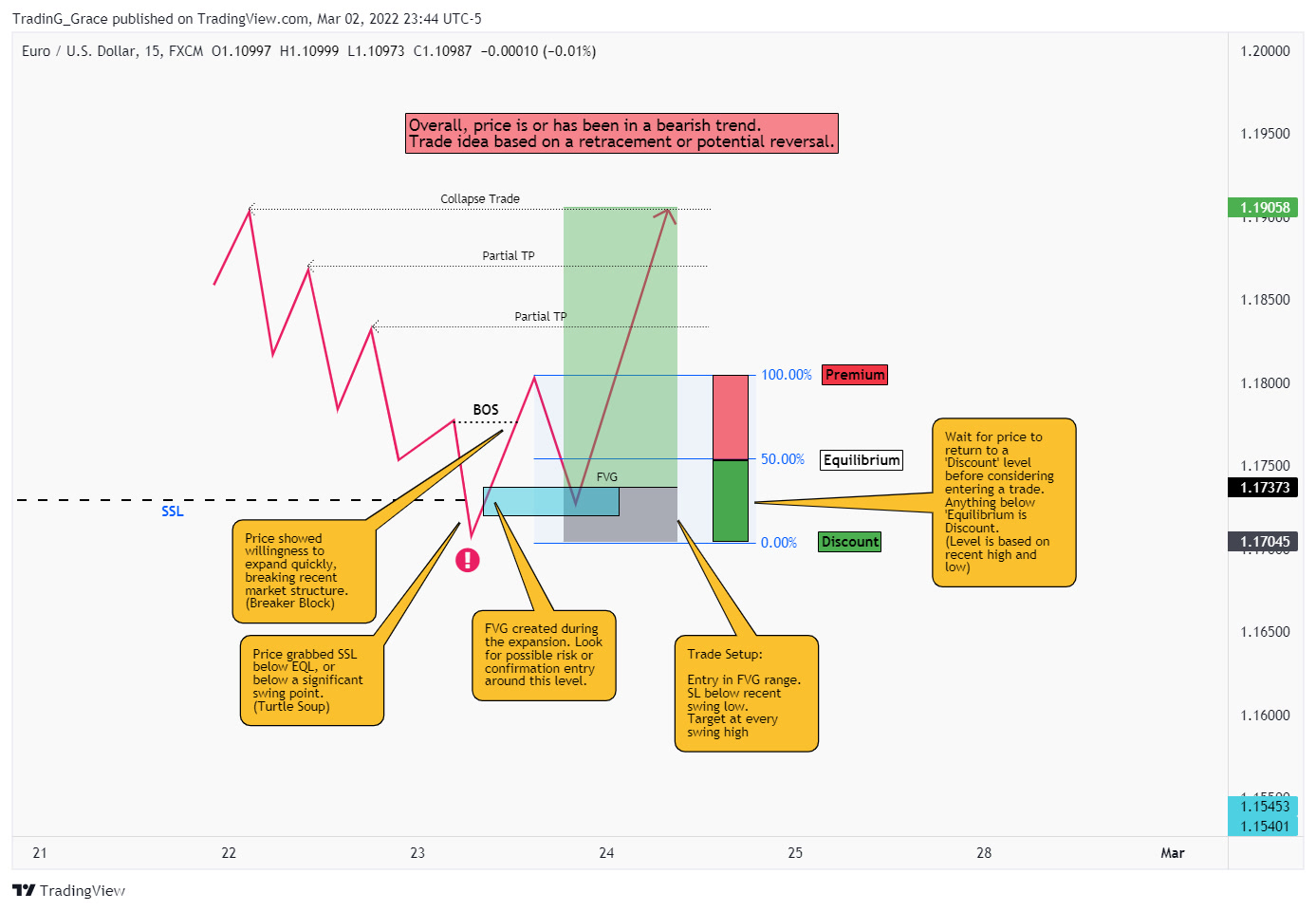
Picture a trader partway through a funded evaluation, with a decent profit cushion but still short of the target. The morning has been clean: a displacement on EURUSD during the 7 AM EST killzone, a textbook FVG fill, stop below the swing low that was swept, partials taken at the first liquidity pool. By 10:30 AM they're up on the day. The right move is to close the platform.
Instead, they sit there. Watching.
By late morning, they've convinced themselves that a small consolidation on the EURUSD 5-minute chart is a valid accumulation range. They spot what they call a bearish order block after price sweeps a minor high, and they short it with more than their usual risk because "the setup is clear."
Price grinds back up through low-volume chop and takes out the stop almost mechanically, then drifts sideways again. The "order block" was never institutional supply. It was random noise in a market with no participants.
One trade like that eats into the buffer they need to pass. That's the real cost of the dead zone: it turns a good morning into a shaky account.
If you want to see the broader pattern of how these accumulated errors compound across a funded challenge, the breakdown I wrote on 7 fatal mistakes that kill your funded account challenge success goes deeper on the structural side.
The Archetype I See Constantly: The Confluent Rationaliser
There's a specific trader pattern I've observed repeatedly in trading communities, Discord servers, and the public review threads on prop firm forums. Let's call the archetype the Confluent Rationaliser.
This isn't a beginner. This is someone who has studied smart money concepts seriously, they know their HTF bias, they understand premium and discount, they can identify a FVG and an order block and distinguish a displacement from a fake-out. Their analysis in a clean killzone environment is often genuinely good.
But put them in the Dead Zone, and watch the checklist expand. Suddenly they're adding confluences after deciding to take the trade. They're finding the MSS that "sort of" happened. They're pointing at a FVG that's technically valid but only 3 pips wide on a pair with a 4-pip spread. They're noting that price is "respecting" a level it's already crossed three times. Every additional confluence point they add isn't actually increasing the quality of the trade, it's just increasing their emotional commitment to a decision they'd already emotionally made.
This is session creep in action. In my opinion, it's one of the most underreported causes of funded account failures in ICT-based strategies. In the failed challenge recaps people share publicly, the damage often doesn't happen during news events or London open. It happens at 11:53 AM on a Wednesday when the trader was up slightly and got bored.
A Practical Framework for Dead Zone Survival
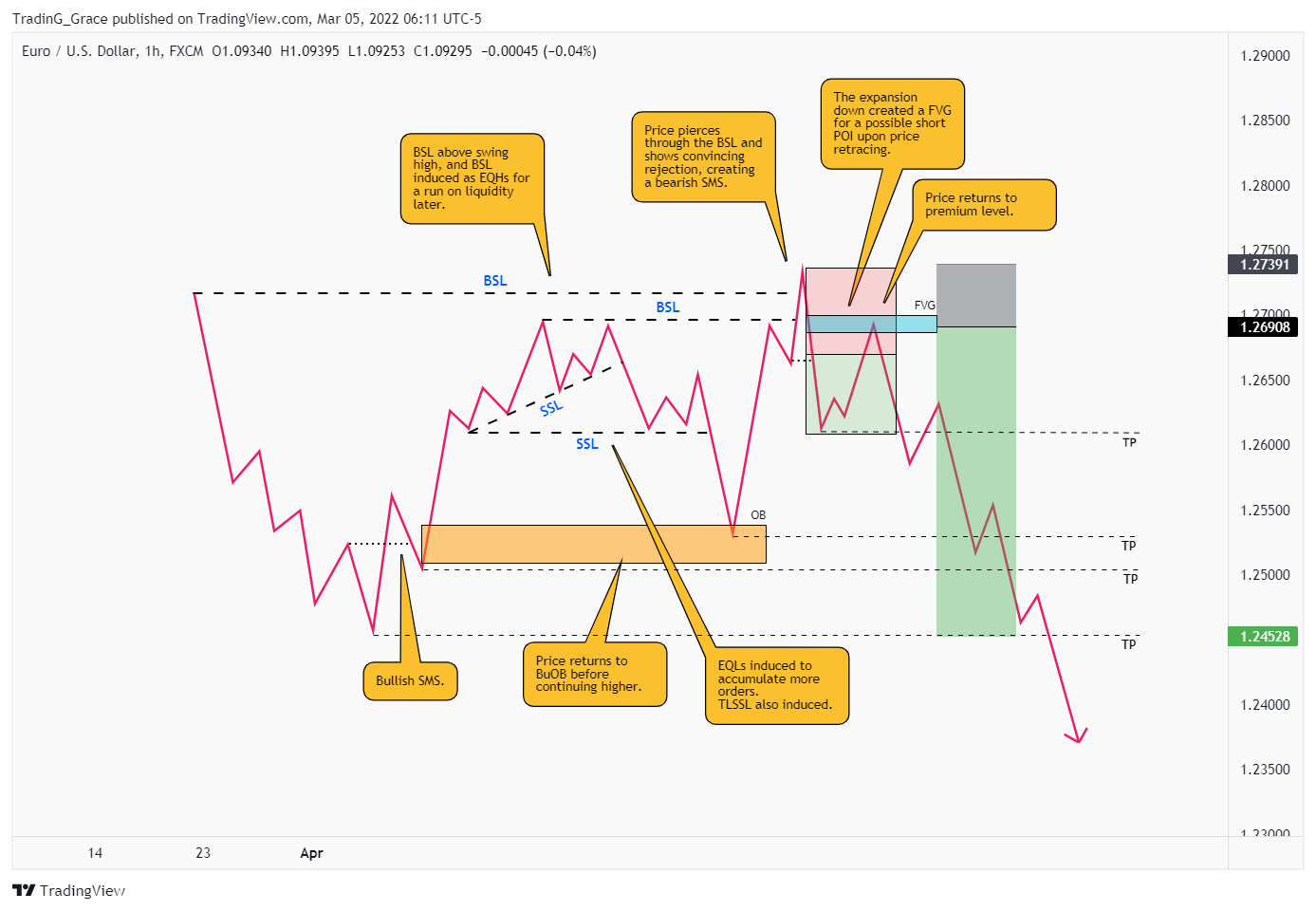
This is the system I actually use. Not theory, this is the literal process.
Step 1, Define your killzones in writing, with hard timestamps, before the week starts. For major pairs, I trade the London open killzone (2, 5 AM EST) and the New York AM killzone (7, 10 AM EST). Those are the only windows where I'm actively looking for entries. I write these down on Sunday night. This matters because a rule written in advance has more authority than one you're inventing in the moment.
Step 2, After London close (10 AM EST), close your active trading charts. Not minimise. Close them. Keep a DOM or a single daily chart open if you're monitoring an existing position. But the 5-minute and 15-minute charts that tempt you into seeing setups? Close them. If your platform allows session overlays, use them, TradingView's session management lets you visually block out non-killzone hours.
Step 3, Have a defined Dead Zone activity. This sounds almost insultingly simple, but it works. During the 10 AM, 12 PM window, I review my trade journal from the morning session, mark up HTF structure for the next day, or read. The act of having something defined to do removes the pull toward the charts. Idle hands and an open trading platform is a dangerous combination.
Step 4, If you feel the urge to enter during Dead Zone hours, write down the setup fully before touching the order panel. Pair. Timeframe. HTF bias. Why this is a valid killzone entry. What the specific confirmation is. Stop placement and why. Target and why. Risk percentage using your pre-set sizing (use a calculator if you don't have this automatic). If you can't fill out every field clearly and quickly, the setup doesn't exist. This process slows down the decision enough that your rational brain catches up to your impatient one.
Step 5, Track Dead Zone trades separately in your journal. Label them. At the end of each month, calculate your win rate and expectancy only for Dead Zone entries versus killzone entries. In my experience, a couple of months of this data is usually enough to change how you trade.
For a deeper look at how session timing intersects with ICT premium/discount arrays specifically, the piece on trading ICT premium discount arrays during April's volatility squeeze is worth reading alongside this one, particularly the section on how discount entries during dead-market hours often look valid on lower timeframes but fail to respect structure because there's no institutional participation to follow.
What 10 Years Actually Teaches You About Boredom
A one-year trader believes their biggest problem is finding the right entry. A three-year trader thinks it's risk management. After a decade of trading, I can tell you the real problem is almost always temporal discipline, knowing when not to trade with the same precision that you know when to trade.
The ICT methodology is built around the idea that institutional order flow is time-specific. Smart money concepts aren't just spatial (price levels, arrays, discount/premium), they're temporal. The killzone framework exists precisely because institutional participants operate on predictable time-based schedules. Trading outside those windows isn't just suboptimal. It's structurally incoherent. You're trying to apply a model designed to follow institutional behaviour during periods when institutions aren't behaving.
I used to think I was disciplined because I had rules. What I eventually understood is that discipline isn't the rules, it's the ability to hold to them when sitting still feels like losing.
If you're dealing with funded challenge failures and you're not sure whether session creep is part of your pattern, the honest breakdown in the truth about funded trading what they don't tell you will give you a clearer picture of how funded trading really works.
The Honest Ask
Pull up your last 30 trades. Filter by time, specifically, flag any entry that happened between 10 AM and 12 PM EST, or between the Asian session close and London open in your timezone. Calculate that subset's win rate separately.
If it's meaningfully lower than your killzone win rate, and I'd bet it is, you've just identified the single highest-leverage change you can make to your trading right now. You don't need a new indicator, a different pair or more screen time. You need less screen time, in precisely the hours you've been rationalising as productive.
If you want a structured framework to work through this systematically, the coaching plans break down how I approach session discipline as part of a broader ICT strategy build. Or if you'd rather start by mapping where your own edge actually lives, book a free discovery call and we can look at your specific situation.
The market will always look like it's doing something. That's not a reason to trade it.
Harvest Wright
ICT Trading Coach · 10+ Years Experience
Harvest specializes in ICT methodology and has helped traders pass prop firm challenges, develop consistent strategies, and build the psychology needed for long-term profitability.
Book a Free Discovery Call →Ready to Get Funded?
Our students pass prop firm challenges in under 60 days with personalized ICT coaching.
Book a Free Discovery CallFree ICT Funded-Trader Playbook
The setups, the pre-trade checklist, and the risk rules I use. Get it free.