
GDP Week: How Smart Money Traps Traders Early
Every GDP week, the same thing happens across trading forums, Discord servers, and social media threads. Traders start posting their 'pre-positioned' setups. Confident bias labels. Clean charts with arrows pointing in one direction. The conviction is almost contagious. And a lot of the time, those traders get stopped out before the number even drops, because their need to be early is the entire point. That psychological urgency? That's the product. That's what smart money concepts, properly understood, reveal to you when you stop trying to be clever and start watching what actually happens.
Key Takeaway: The day or two before a GDP release often behaves like a liquidity trap: price runs into premium or discount arrays, triggers early entries from retail traders, then reverses around the actual announcement. The highest-probability trade during GDP week is often no trade at all.
Myth: GDP Surprises Create Tradeable Momentum
Myth: A stronger-than-expected GDP print = bullish dollar momentum. Weaker print = sell everything. Get positioned early, ride the wave.
Reality: By the time the number hits, the move you were expecting has already happened, or it's a head-fake that runs out stops before reversing. The actual GDP release is often the end of a manufactured narrative, not the beginning of a real one.
What I Actually See: Retail traders spending the 48 hours before GDP building a directional story, finding confirmation in every candle, and entering positions with real money, all while smart money is quietly engineering the exact price levels that will trigger those stops and harvest that liquidity before the candle even closes on the announcement.
That's my read after years of watching these weeks. What retail traders read as 'pre-move momentum' is often positioning and hedging ahead of the event, and it doesn't tell you much about the real direction.
The Pre-Release Window Nobody Talks About
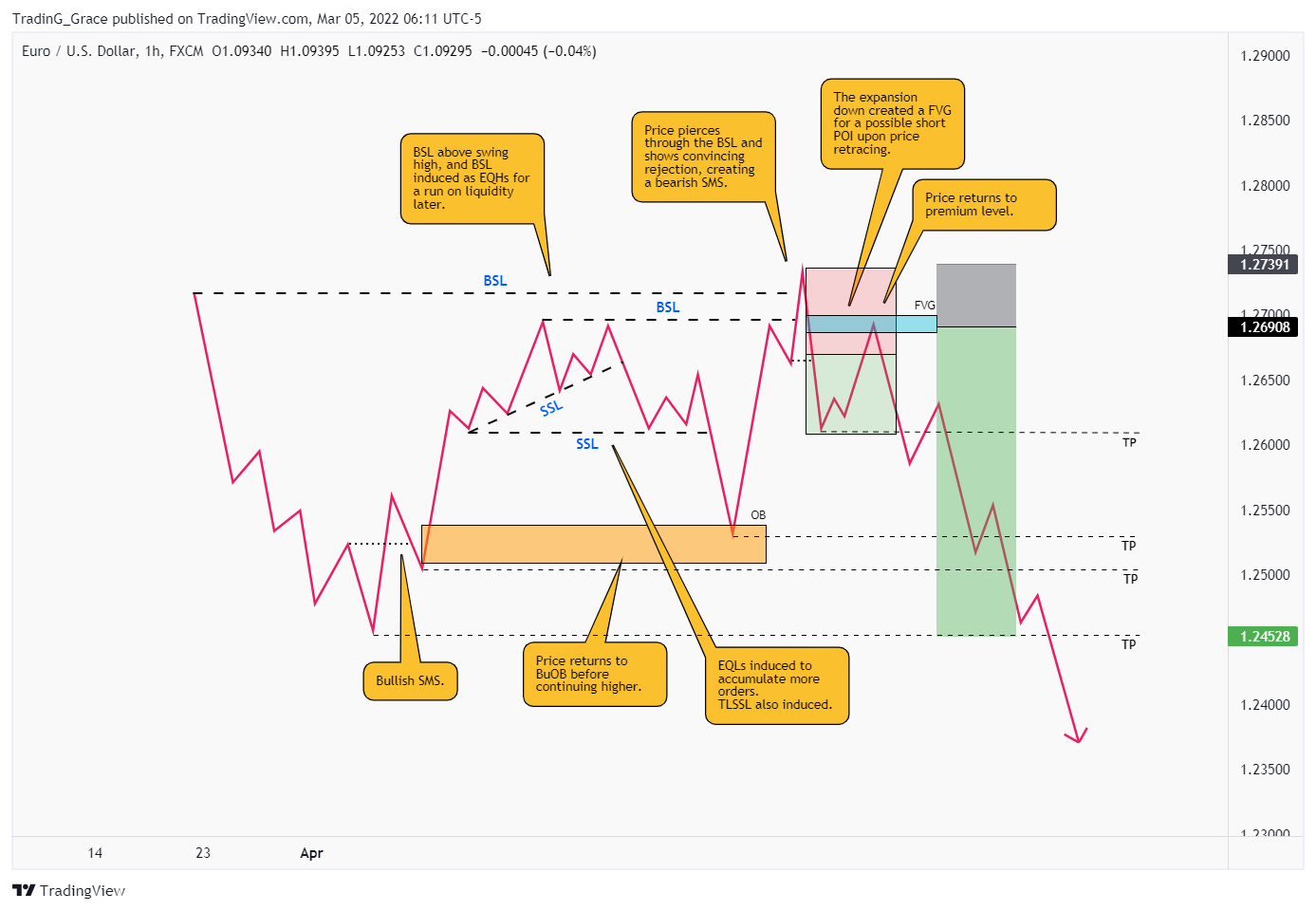
Here's what took me years to fully internalize: the candles before GDP don't exist to tell you where price is going. They exist to tell you where retail traders think price is going, so those traders place their money there, and that money becomes available to harvest.
Think about what happens psychologically in the 48 hours before a major GDP release. Economic forecasts start circulating. Bloomberg consensus estimates get screenshotted and posted everywhere. Analysts make confident predictions. The narrative builds. And retail traders, because humans are wired to act on conviction, not inaction, start positioning.
This is anticipation bias in its purest form. The brain perceives inaction during a high-conviction moment as a loss of potential gains. "If I wait, I'll miss the move." So traders enter early. They put their stops at what feels like a safe distance, just below the last swing low, just above the recent swing high. Exactly where smart money needs them to be.
Price then runs into a premium array if sentiment is bullish, or sweeps a discount array if sentiment is bearish. Stops get triggered. Liquidity gets taken. And then the real move either begins or doesn't, but by that point, the early positioned traders are already out, with losses, watching the market do what they expected it to do... just without them in it.
I used to get this wrong constantly. Early in my trading career, GDP week felt like the week to be positioned. I'd spend Tuesday and Wednesday (U.S. advance GDP typically drops Thursday) building my macro thesis, finding ICT setups that 'confirmed' my bias, and entering with conviction. Then the sweep would happen. Then I'd be stopped out. Then the actual move would start. It happened enough times that I finally had to ask myself: what if my entry is the trade? Not mine, theirs.
A Worked Example
Here's the kind of setup I mean. Picture GBPUSD grinding higher for two sessions ahead of a U.S. advance GDP release. The story on social media is UK resilience versus softer U.S. growth, bullish on the surface. On the 1-hour chart there's a clean Fair Value Gap left by a London session displacement. Textbook ICT structure. Bullish.
The day before the print, price comes back into that FVG. On paper it's a beautiful long, with the 4H order flow pointing higher and the gap sitting right there.
But look closer. The 15-minute shows a buy-side liquidity sweep of the prior day's high, then a quick drop back into the FVG with no real displacement up. That isn't bullish momentum. It looks more like price clearing liquidity before a reversal. So you sit on your hands.
Now picture the number coming in weaker than expected. GBPUSD first spikes down through the equal lows from the Asian session, a classic sell-side liquidity grab, then reverses and rallies as the dollar weakens on the soft data.
Anyone who bought the FVG the day before with a stop just under it is out before the real move starts. The analysis was fine. The timing is what got exploited.
The patient version of this trade waits for post-GDP structure. After the spike-and-reverse, look for a break of structure on the 15-minute and a displacement candle up. The entry goes into the FVG or order block that displacement leaves behind. The stop goes below the sweep low, since a return through that low means the reversal failed. The target is the next obvious buy-side liquidity or a higher timeframe bearish order block overhead. That's a plan built on what price actually did, rather than on pre-GDP 'conviction.'
This is the difference between reading the ICT Fair Value Gap checklist correctly and applying it in the wrong market context.
The Trader Archetype I See Every GDP Week
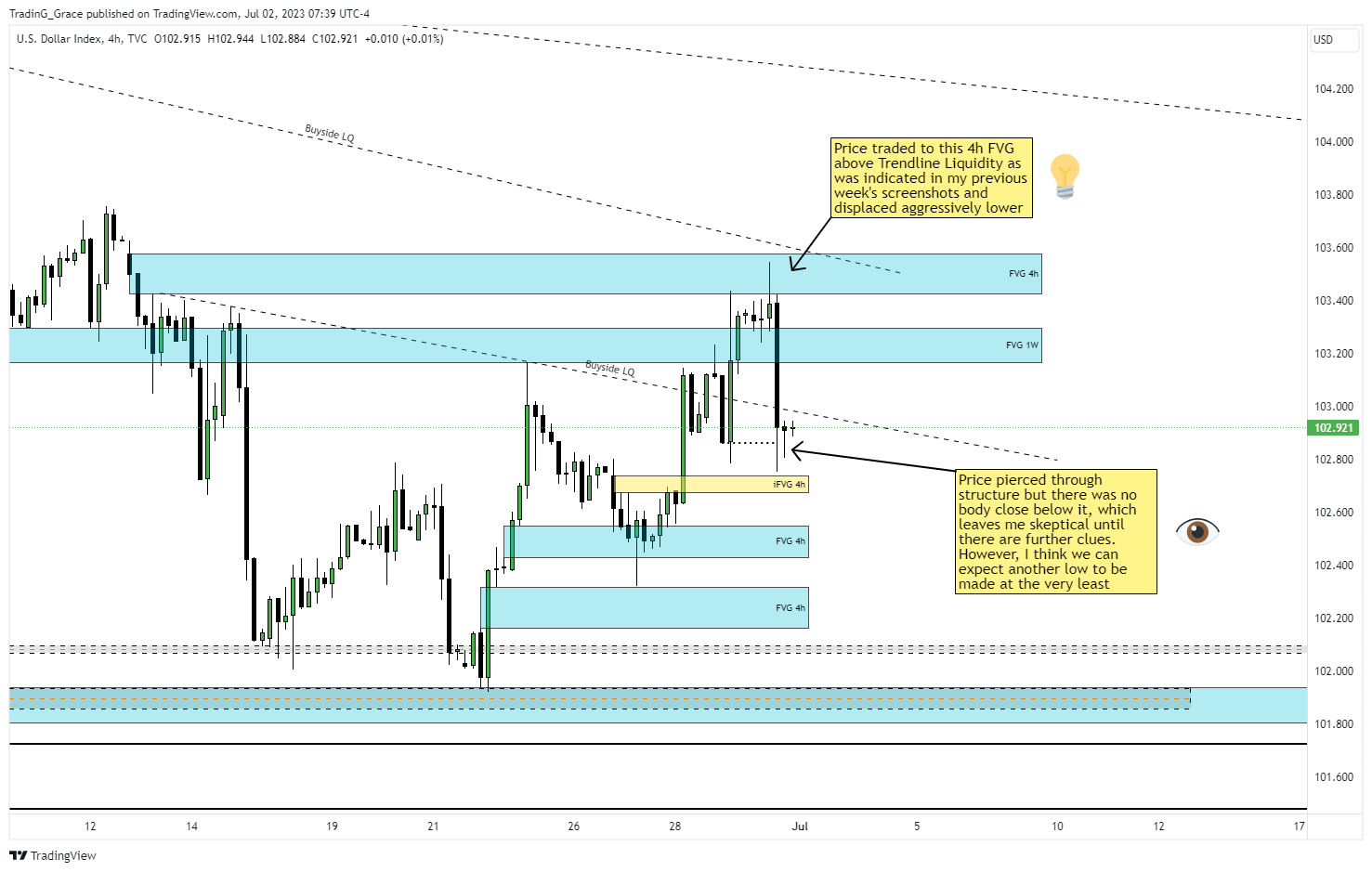
There's a specific type of trader who gets hurt the most during GDP week, and it's not the reckless gambler. It's actually the prepared trader, someone who has done their homework, understands smart money concepts at a surface level, has their levels marked, their biases formed, and their conviction high. That preparation creates overconfidence in the analysis and underestimation of the timing risk.
This trader marks a beautiful discount array on Wednesday. The setup is real. The logic is sound. The entry trigger appears. They take it, because they've done everything right. And then the sweep happens and they're stopped out, often right before the move they identified plays out anyway. It's devastating psychologically because it feels like the market is punishing good work.
What they're missing is that in the day or two before a macro catalyst, good analysis is not sufficient protection against engineered reversals. Smart money doesn't care how clean your levels are. They care where the orders are clustered. And during high-conviction pre-GDP periods, orders cluster around the obvious levels, which is exactly why those levels get swept first.
This same pattern plays out around NFP week liquidity dynamics and Fed meeting uncertainty, any macro window where retail conviction runs high creates the same structural trap.
The Framework: How to Actually Approach GDP Week
Here's my exact process during GDP week, not a philosophy, a repeatable structure:
48 hours before release: Mark your premium and discount arrays on the daily and 4H. Note where BSL and SSL pools sit. Do not take directional trades. Monitor only.
24 hours before release: If price is running into a premium array from below with strong bullish sentiment in the narrative, flag it as a potential trap, not a long entry. The same in reverse for discount. Watch for consolidation that's not clean. Engineered chop before major releases is a fingerprint.
Day of release, pre-announcement: Avoid all entries. Close existing positions if they're in marginal territory. Capital preservation is the trade. This isn't discipline for discipline's sake, in my view the spread, the volatility, and the stop runs make pre-release entries a bad bet for retail traders.
Post-announcement (15-30 minutes): Let the initial spike resolve. Watch for the sweep-and-reverse pattern: initial directional spike clears obvious liquidity pools, then price reverses. The BOS on the 5 or 15-minute chart after this reversal is your first legitimate entry signal. Use your risk calculator to size properly, volatility is still elevated and your stops need to breathe more than normal.
Entry criteria post-GDP: Confirmed BOS, displacement candle, FVG or OB to enter into, realistic target (next major liquidity pool), and a stop that sits outside the reversal structure, not just a round-number pip distance.
This framework doesn't require you to predict GDP. It doesn't require macro expertise. It requires patience and the willingness to let the trap spring without you in it.
Why Sitting on Your Hands Is the Trade
This is the counterintuitive core of everything I've learned about macro weeks: the absence of a trade is a trade. Not passively, actively. You are consciously choosing not to be the liquidity that gets hunted. That choice has a value, and it compounds over time in ways that are hard to quantify but impossible to ignore in your equity curve.
The traders I consistently see avoid the fatal mistakes on funded account challenges are the ones who treat GDP week as an observation exercise until the post-release structure is established. They don't feel FOMO. Or rather, they've trained themselves to recognize FOMO as a signal against entry, not toward it.
For a deeper look at how Q2 2026 market structure is specifically affecting these setups, the piece on Q2 2026 market structure shifts adds useful context on why this year's macro environment requires even more patience before entries.
The hardest trade in smart money concepts isn't the complex multi-timeframe confluence entry. It's the nothing. It's watching the 'perfect' setup form in the wrong window and keeping your hands in your lap. That skill, that one specifically, took me years to build, and I'd rank it above any entry model.
If you're serious about building this kind of disciplined framework around high-impact macro events, the coaching plans at R2F Trading are built around exactly this, not just reading levels, but understanding the psychological architecture that makes retail traders predictable, and engineering yourself out of that pattern.
Next GDP release: don't look for the entry. Look at where you want to enter, and ask yourself who put that setup there, and why.
Harvest Wright
ICT Trading Coach · 10+ Years Experience
Harvest specializes in ICT methodology and has helped traders pass prop firm challenges, develop consistent strategies, and build the psychology needed for long-term profitability.
Book a Free Discovery Call →Master Your Trading Psychology
Psychology is a huge part of trading. Our coaching includes dedicated psychology sessions.
See Coaching PlansFree ICT Funded-Trader Playbook
The setups, the pre-trade checklist, and the risk rules I use. Get it free.