ICT Mentorship 2026: What It Costs and What to Expect
If you've spent any time in ICT trading circles this year, you've probably seen the question come up constantly: is paid ICT mentorship worth it, and what does it actually cost? I've been trading ICT concepts for over a decade. I passed an FTMO Challenge, earned a TradingView Editors' Pick, and finished top 1% in a TradingView paper trading competition. So I want to give you an honest answer, not a sales pitch dressed up as a review.
The ICT mentorship 2026 landscape is more crowded, more expensive, and more confusing than it's ever been. This article covers what paid mentorship actually involves, how it's typically structured, what you should expect to pay, and how to figure out which option fits where you are right now.
Key Takeaway: ICT paid mentorship in 2026 ranges from roughly $150 per week for light-touch coaching to $5,000 for a full four-month program. The price is rarely the deciding factor. The structure, the accountability model, and whether the mentor actually trades ICT concepts themselves are what separate useful mentorship from expensive YouTube recaps.
What ICT Mentorship Actually Involves in 2026
Let's clear something up first. When most traders search "ICT mentorship 2026", they're conflating two very different things: consuming ICT's own free YouTube content versus paying a third-party mentor who teaches ICT-based concepts. Michael J. Huddleston (ICT) has released thousands of hours of free content on his YouTube channel. That material covers order blocks, fair value gaps, market structure, the 2022 model, killzone timing, and much more.
Paid mentorship, whether through ICT directly or through educators who build on his framework, is about acceleration and application. It's the difference between reading a manual and having someone watch you drive and tell you what you're doing wrong in real time.
What does that look like in practice? It typically involves:
- Live trade reviews where a mentor looks at your chart markings, your entries, and your reasoning, and tells you specifically where your logic breaks down.
- Session walkthroughs covering the London open, New York open, or the ICT killzones, so you understand what the model is looking for in real market conditions.
- Framework refinement helping you narrow down from "I know twenty ICT concepts" to "here are the two or three setups I execute with consistency."
- Accountability which forces you to record your analysis before the trade, not after.
The accountability piece is underrated. Most traders who struggle with ICT concepts know the theory. The breakdown happens between knowing and doing. A good mentor closes that gap.
ICT Mentorship Price: What You're Actually Paying For in 2026
Here's the realistic ICT mentorship price range for 2026, using our own coaching plans as a reference point:
Lite: $150 per week. This is best for traders who have already spent meaningful time with ICT's free content and have a basic framework in place. You get structured feedback, accountability check-ins, and guidance on refining your model. It suits someone who understands what a fair value gap is but keeps second-guessing their entries live.
Pro: $250 per week. This tier includes deeper live session analysis, more direct feedback on your trade journaling, and closer work on your specific edge. It's appropriate for traders who are actively running a prop firm challenge or preparing to go live with real capital and want someone looking over their shoulder consistently.
Full Mentorship: $5,000 for four months. This is a serious commitment. Over four months, you work through the full ICT framework systematically, get your confluence model stress-tested, and build the kind of repetition that actually transfers to live trading. The price is significant because the depth is significant. If you're treating this like a course purchase, you'll waste it.
Those numbers put ICT paid mentorship firmly in the mid-to-high range compared to other trading education categories. Is it justified? That depends entirely on where you are and what you do with the access.
The Part Most ICT YouTubers Won't Say
Here's my contrarian take, and it's one I've arrived at after a long time in this space.
Most traders who search for ICT mentorship are not ready for it yet. They think they need a mentor when what they actually need is fifty more hours of focused screen time studying how price moves through liquidity during the New York open. Mentorship accelerates an existing foundation. It doesn't create one from scratch.
I used to think that getting feedback from someone better than me would shortcut the uncomfortable phase of not understanding what I was seeing on the chart. It doesn't. The uncomfortable phase has to happen. Good mentorship makes you feel that discomfort more clearly and more productively, but it doesn't remove it. If you're looking for mentorship to skip past the confusion, you might want to read this first.
There's also a structural problem with how ICT content gets taught by third parties. Because the source material is so vast, many coaches teach the parts they personally find interesting rather than the parts that form a coherent, executable model. You end up learning a lot of ICT vocabulary without having an actual trading process. That's expensive confusion.
A Pattern Worth Naming
There's a type of trader who has consumed every ICT video available, can explain order block theory fluently, marks up charts beautifully during the weekend, and then makes completely different decisions when the market opens Monday morning.
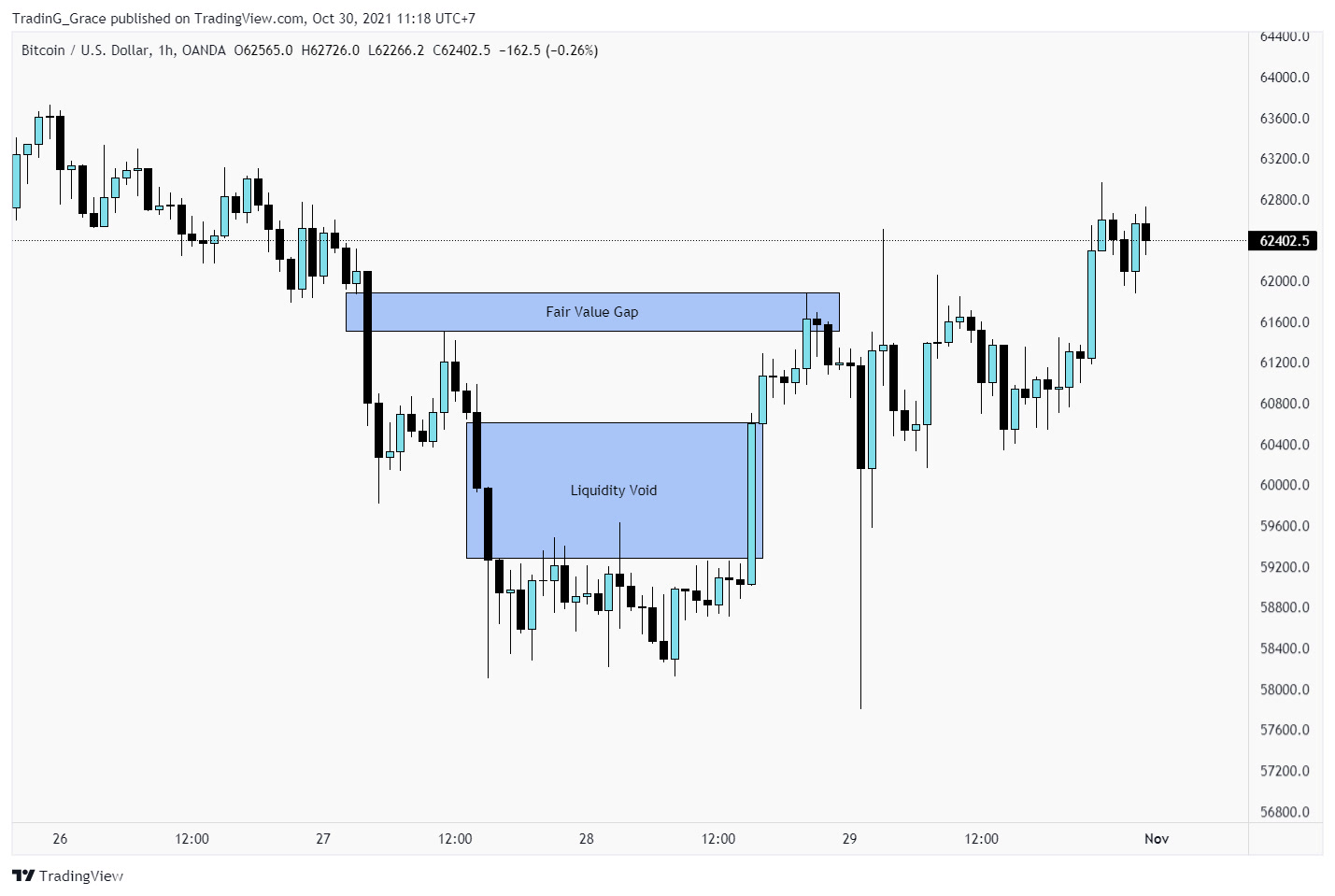
The problem is almost never knowledge. It's that their framework has no decision rule for uncertainty. When the setup is clean in a replay, they can execute. When the market is live and an order block is halfway mitigated and there's a conflicting fair value gap two levels up, they freeze, then enter late, then get stopped out as price returns to the original entry zone they should have used.
This trader keeps buying more content looking for the missing piece. The missing piece is a written, explicit pre-trade checklist that forces a binary yes/no on every entry criterion before price arrives at the level. Not a mental checklist. A written one. The act of writing it before price arrives is what separates consistent execution from reactive guessing.
A Practical Framework: How to Evaluate Any ICT Mentorship
Before paying for ICT mentorship at any price point, work through these four questions:
1. Does the mentor trade the model they teach? This matters more than credentials. Ask them directly what their current go-to setup is, what session they prefer, and what they do when their primary setup isn't there. Vague answers are a red flag. Someone who actively trades ICT concepts can answer these questions in under two minutes.
2. What does accountability look like, specifically? "I'll be available on Discord" is not accountability. Accountability means someone reviews your pre-trade reasoning before the trade, not your post-trade rationalization after it. The review-after-the-fact loop is how traders stay stuck. If you want to understand why, this piece on trade reviews explains the problem clearly.
3. Is there a defined scope? Four months of mentorship with no defined outcome is a subscription, not a program. Know exactly what you should be able to do at the end that you can't do now. "Understand ICT better" is not an outcome. "Execute a confirmed order block entry during the New York open with a defined stop and target, with no second-guessing" is an outcome.
4. What's the entry requirement? Good mentors screen for readiness. If anyone with a credit card can join, the program is designed for volume, not results. This is especially true at the $150-per-week tier, which works best when the trader already has some foundation in place.
A Worked Example: What Mentorship Actually Helps You Do
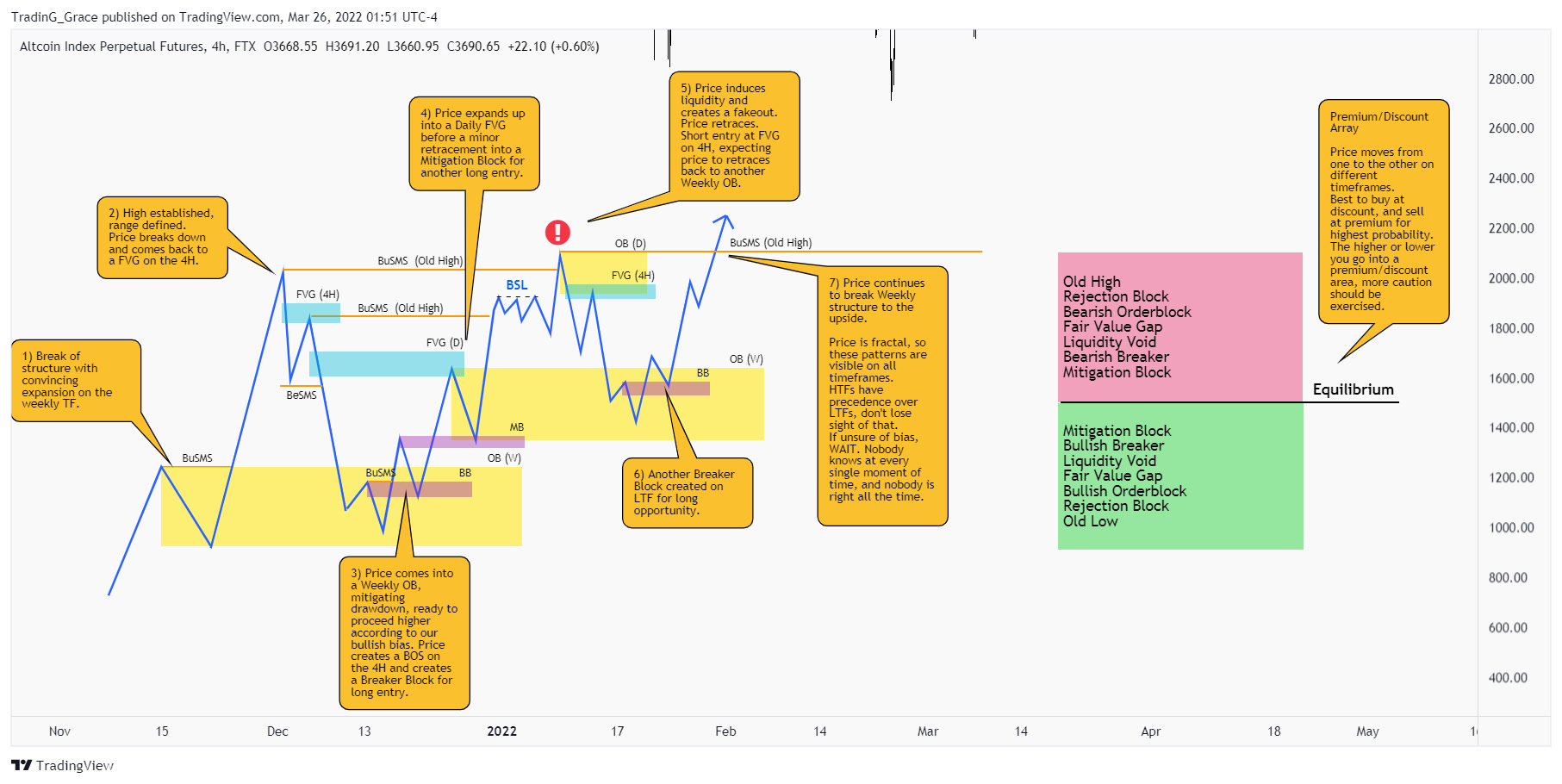
Here's the kind of setup where the difference between self-taught and mentored execution becomes obvious. Picture EURUSD at the London open. Price has swept a prior session low, taking liquidity below equal lows that formed during the Asian range. It retraces into a bullish order block on the 15-minute chart, which sits in discount (below the 50% level of the most recent swing). A fair value gap forms on the 5-minute chart just above the top of that order block during the first 30 minutes of London.
The entry is at the bottom of the 5-minute fair value gap, which also aligns with the top of the 15-minute order block. The stop goes below the low of the order block, ideally with a small buffer below the last swing low that was used to take liquidity. Why there? Because if price trades below that point, the original premise is invalid. The liquidity sweep already happened, the order block was tested, and a continuation lower means the structure has shifted. Holding below a failed order block is not a trade, it's hope.
The target is the opposing liquidity sitting above the swing high that preceded the sell-off. That's where buy-side liquidity rests. You're not guessing a reversal, you're framing a move from a point of sell-side liquidity delivery into a point of buy-side liquidity.
The reason most traders mess this up is that they enter too early, before the liquidity sweep confirms, or they enter at the right level but have the stop too tight because they're sizing to avoid a loss rather than sizing to respect the structure. Use a position sizing tool to anchor your size to the actual stop distance, not the other way around.
Mentorship helps because a mentor will look at that chart with you and tell you which of those three failure modes you keep repeating. You can't always see your own pattern. That's the value.
How R2F Fits Into This
R2F's coaching is built specifically around ICT concepts applied to live market conditions. It's not a course library. The coaching plans are structured around feedback loops, not content delivery. If you're early in your ICT journey and looking for a foundation before committing to mentorship, the crash course is a better starting point than jumping straight into a weekly coaching tier.
For traders who are further along and want to understand why their knowledge isn't translating to consistent execution, this piece on why mentorship doesn't always stick is worth reading before you spend anything.
The Bottom Line on ICT Mentorship Price in 2026
ICT paid mentorship in 2026 is worth it under a specific condition: you are ready to be held accountable to a defined process, and you are willing to have your reasoning challenged, not just your entries. The price range is real. $150 a week for structured guidance, $250 a week for closer work, $5,000 for a full four-month program. None of those numbers are unreasonable if the structure is there and you use it properly.
What is unreasonable is paying for mentorship as a substitute for the screen time, the chart study, and the discomfort of not knowing. No mentor fixes that. The good ones just make sure you're suffering productively.
If you want to talk through which level makes sense for where you are right now, book a free discovery call and we'll be direct with you about whether coaching is the right next step or whether something else should come first.
Harvest Wright
ICT Trading Coach · 10+ Years Experience
Harvest specializes in ICT methodology and has helped traders pass prop firm challenges, develop consistent strategies, and build the psychology needed for long-term profitability.
Book a Free Discovery Call →Take Your Trading to the Next Level
Get personalized 1-on-1 ICT coaching with Harvest Wright. Free discovery call, no commitment.
Book a Free Discovery CallFree ICT Funded-Trader Playbook
The setups, the pre-trade checklist, and the risk rules I use. Get it free.