Signals Groups vs Real Trading Coaching: The Honest Breakdown
Most traders asking about signals group vs trading coaching are really asking a more honest question: can I shortcut this? After ten-plus years trading and working through ICT concepts, passing an FTMO Challenge, and watching traders cycle in and out of every signals group Telegram has ever hosted, here is what I know for certain. The shortcut exists, but it leads somewhere you don't want to go.
Key Takeaway: A signals group gives you trade calls with no transferable skill; coaching builds the decision process so you eventually don't need either. Signals can accelerate your learning curve only if you treat each alert as a case study, not a trade trigger.
The Actual Difference Nobody Explains Clearly
Let's define terms before we go further, because "signals group vs trading coaching" gets muddled in most articles.
A signals group is any service where someone sends you an entry, a stop, and a target. Sometimes they include a one-line reason like "GBPUSD buy 1.2740, SL 1.2700, TP 1.2830." Sometimes they add a chart screenshot. The trade is already decided for you. Your job is execution, not analysis.
Coaching, done properly, is the opposite workflow. You build the analysis. You identify the setup. You justify the entry. A coach challenges your reasoning, points out what you missed, and holds the framework accountable. The outcome of a single trade matters less than whether your process was sound.
Here is the part most people skip: neither format is categorically superior. The problem is almost always misuse.
Where Signals Groups Actually Have Value
I used to be harsher on signals groups than I am now. Here is where I was wrong.
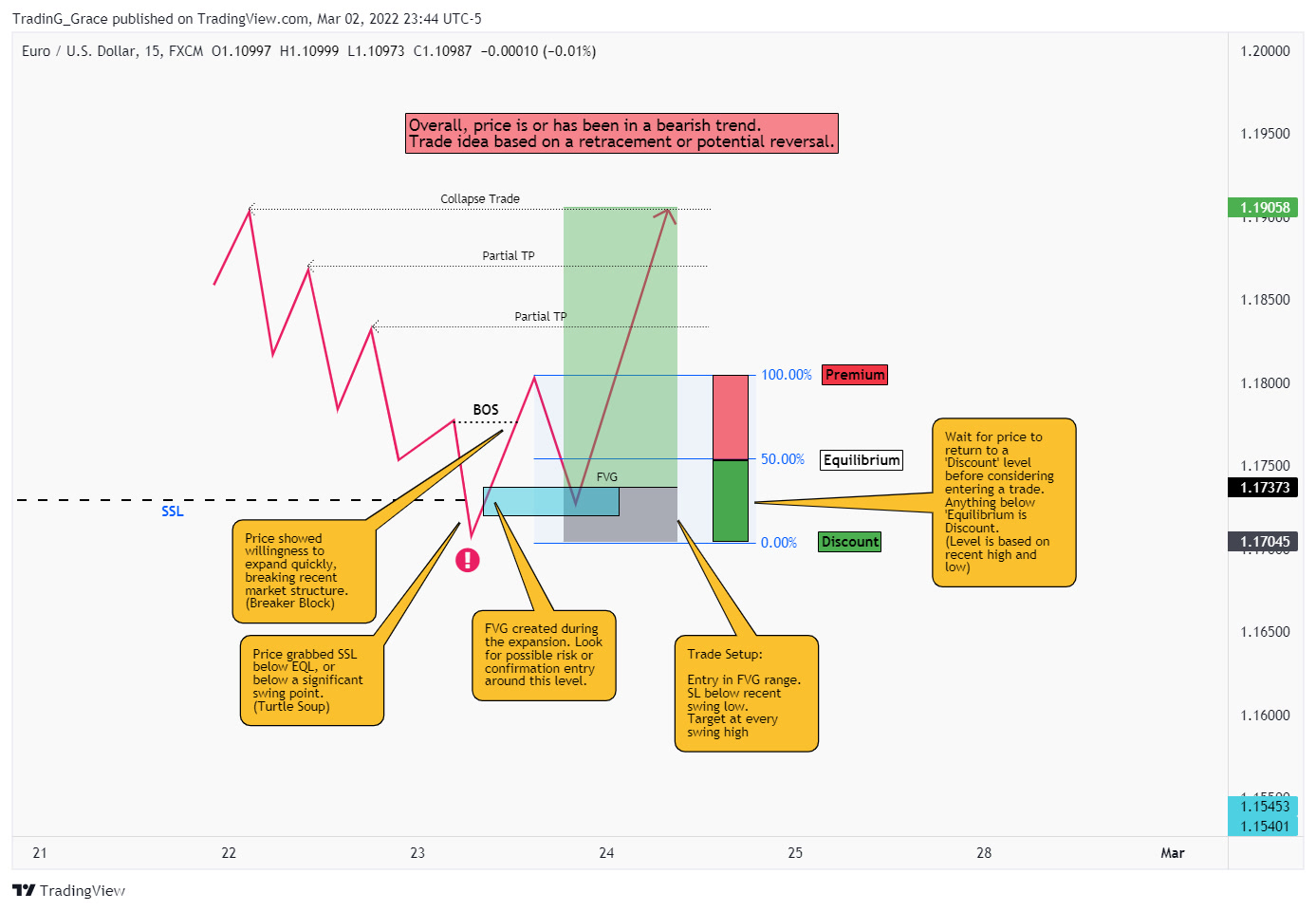
If you are new to ICT concepts and you have never watched a live institutional entry form in real time, a signals group run by someone who actually knows what they are doing gives you something a YouTube video cannot: timing. You can watch the alert fire, pull up the chart yourself, and observe exactly what price was doing at that moment. Was there a Fair Value Gap being filled? Was price sweeping a prior high before reversing? Did the entry come during the London open kill zone or in the middle of dead New York afternoon chop?
That kind of observational learning is genuinely useful, but only if you are journaling the reasoning, not just copying the trade. There is a massive difference between those two behaviors.
The failure mode, and it is very common, is treating a signal as education when it is actually just a trade recommendation. You hit TP, you feel good, you learn nothing. You hit SL, you feel bad, you blame the caller. Neither outcome teaches you anything about why price moved.
If you want to see what rigorous pre-trade analysis actually looks like before you ever follow or ignore a signal, the ICT Fair Value Gap trading checklist is worth reading front to back.
A Worked Example: Coaching Analysis Versus a Signal
Let me make this concrete with an illustrative example.
Picture GBPUSD on the 15-minute chart. Price sweeps the Asian session high just before the London open, then prints a strong displacement candle to the downside, leaving a clean three-candle Fair Value Gap. On the 1-hour, price is trading below a bearish order block that has been respected before. The draw on liquidity is a clean equal-low cluster below.
Entry: short, inside the FVG at the 50% equilibrium of the imbalance. Stop: above the gap and the swept high, because if price reclaims that high, the bearish read is wrong. Target: just above the equal lows, so you aren't relying on price fully sweeping them.
Now, a signals group version of that trade looks like: "GBPUSD short [price], SL [price], TP [price]."
Same trade. Completely different trader coming out the other side. One trader learns how London displacement creates FVG entries, how to identify draw on liquidity, how to position stops relative to structure rather than arbitrary pip counts. The other trader learns that the signal worked this time. Use the risk calculator to at least make sure your position sizing is sound even if you're still working out the analysis piece.
The Trader Who Mistakes Profitability for Skill
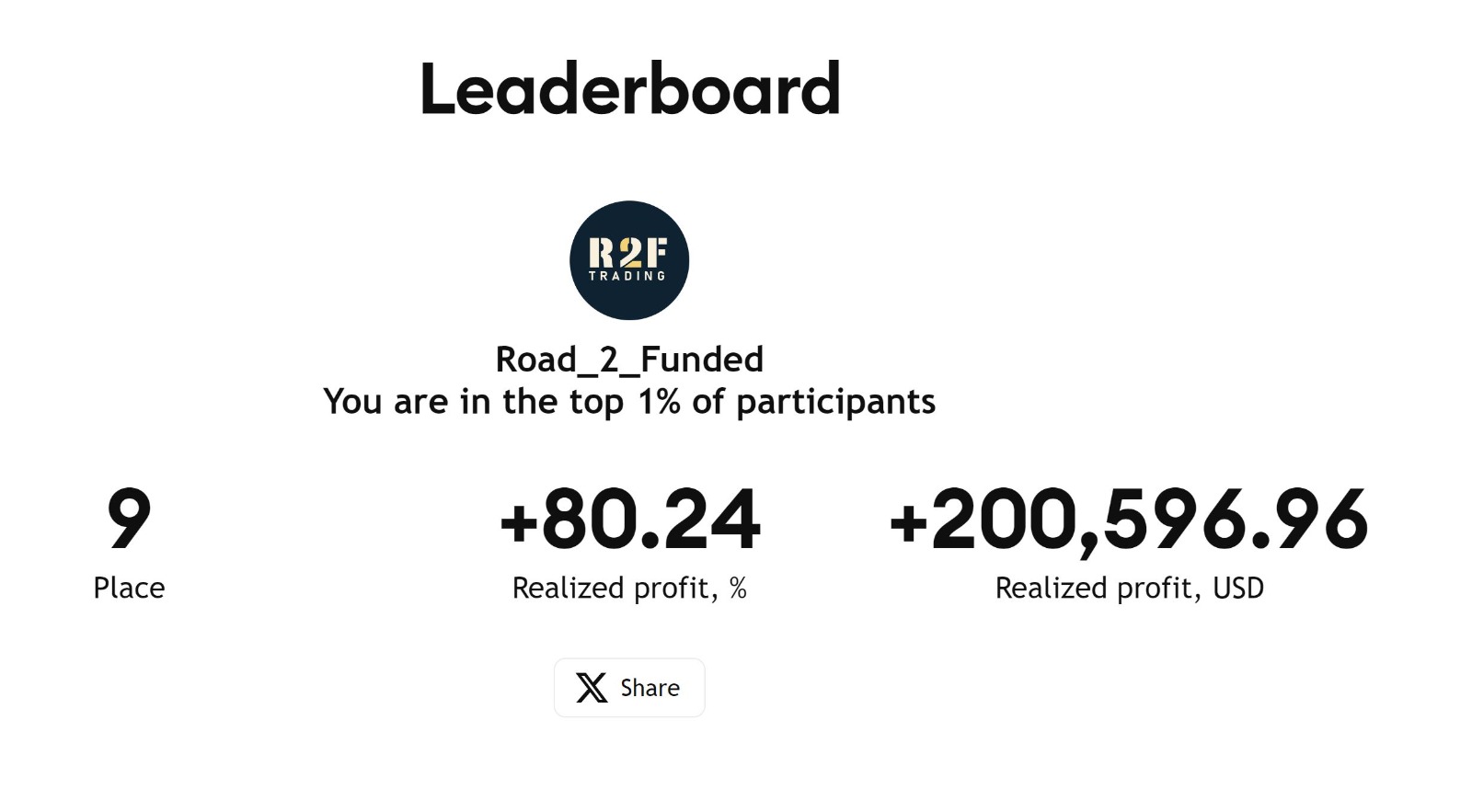
Here is a trader archetype I see constantly in trading communities. They have been in a signals group for four to six months. Their account is up. They feel confident. They start posting win screenshots. Then the caller goes through a drawdown period, or closes the service, or changes their approach. Within weeks, this trader's account is collapsing and they have no idea why.
They were profitable but not skilled. Those are not the same thing. Profitability borrowed from someone else's analysis is as fragile as a borrowed credit score. The moment the external structure disappears, everything falls apart.
This is the core reason why the signals group vs trading coaching comparison matters beyond just philosophy. Dependency is a trading risk that doesn't show up in your account metrics until it's too late. You can read more about the kinds of structural errors that don't become visible until they're catastrophic in this breakdown of funded account mistakes.
A Four-Step Framework to Audit Your Own Development
Regardless of whether you are currently in a signals group or a coaching program, here is a practical test you can run right now.
Step 1: The Blank Chart Test Pull up any major pair on a 15-minute chart from this past week. Cover the right side of the chart. Without anyone's help, annotate: the directional bias from the daily, the relevant order blocks and FVGs on the 1-hour, and the kill zone you would have used to look for entry. If you cannot do this independently, you do not yet have a skill. You have exposure.
Step 2: The Reason Before the Entry For your next ten trades, write the full reason for entry before you enter. Not after. Not "it looked good." The specific structure: what was swept, what imbalance was left, what the draw on liquidity is and why, which timeframe confirmed the direction. If you cannot articulate this in two or three sentences, the trade should not be taken.
Step 3: The Wrong-Trade Post-Mortem When a trade loses, the question is not "why did price go against me." Price doesn't owe you anything. The question is: was my process sound and the outcome just probabilistic variance, or was my process flawed? Signals groups cannot help you answer this. Coaching exists almost entirely to answer this.
Step 4: The Six-Week Independence Benchmark Set a date six weeks out. At that date, you should be able to identify, analyze, and execute at least one complete ICT setup per week without external input. If you cannot hit that benchmark, something in your current education model isn't transferring skill. That is actionable information, not a judgment.
What Coaching Actually Costs Versus What It Returns
Let's be direct about pricing because most articles in this space are vague about it.
At R2F Trading, the coaching plans run at three levels: Lite at $150 per week, Pro at $250 per week, and Full Mentorship at $5,000 for four months. The four-month option works out to roughly $300 per week, but the continuity and depth of feedback across that timeline is fundamentally different from weekly check-ins.
For context: a single funded account challenge at most prop firms costs between $150 and $600 per attempt. Traders who fail three or four challenges without understanding why they failed have already spent more than a month of coaching, with no skill to show for it. The math on dependency is brutal when you run it out over a year.
For traders earlier in their journey who want to understand whether ICT frameworks are even the right starting point, the crash course is a lower-stakes place to begin before committing to any ongoing program.
If you want to hear what past clients say about the coaching, that's on the results page.
The Contrarian Take on "Just Paper Trade Signals"
Common advice in trading communities: "join a signals group, but paper trade it so you learn without risking money." This sounds reasonable. It mostly fails.
Paper trading a signal still does not teach you why the entry was taken. You are still outsourcing the analysis. The only difference is you are also outsourcing the financial consequence, which removes the emotional context that makes trading psychology real. You need skin in the game to learn how you actually behave under pressure, but you need a skill base before that skin-in-the-game is anything other than expensive guessing.
The sequence that actually works: learn the framework through proper study or coaching, observe how signals that match the framework look in real time, then trade your own analysis with small risk. Signals as observation tool, not signals as education replacement.
For a more detailed look at how ICT concepts interact with current market behavior, the Q2 2026 market structure piece is directly relevant to why mechanical signal-following struggles when market structure shifts.
One Last Thing
Ten years in, my view is that the traders who make it got uncomfortable with dependency early enough to do something about it. That discomfort, the moment you realize you do not actually know why a trade worked, is one of the most valuable things that can happen to you.
If you are at that point right now, the discovery call exists specifically for that conversation. Bring your charts, your questions, and your honest assessment of where your process breaks down. That is where the real work starts.
Harvest Wright
ICT Trading Coach · 10+ Years Experience
Harvest specializes in ICT methodology and has helped traders pass prop firm challenges, develop consistent strategies, and build the psychology needed for long-term profitability.
Book a Free Discovery Call →Ready to Get Funded?
Our students pass prop firm challenges in under 60 days with personalized ICT coaching.
Book a Free Discovery CallFree ICT Funded-Trader Playbook
The setups, the pre-trade checklist, and the risk rules I use. Get it free.