
Do You Actually Need an ICT Trading Mentor?
Here's the question nobody in the ICT space wants to answer honestly: most traders who are actively searching for an ICT trading mentor right now are doing so for the exact same psychological reason they've been blowing accounts for two years.
Not because they lack information. Because consuming new information feels like progress.
Key Takeaway: Mentorship readiness is a prerequisite, not a given. Traders who haven't yet confronted the real source of their losses will use a mentor the same way they use YouTube, as dopamine that delays the actual work. If you're in that camp, no mentor alive will fix what's broken.
The Dirty Secret Nobody in ICT Coaching Will Say Out Loud
I've been trading for over a decade. I've watched countless traders come through the ICT community, consume thousands of hours of material, and still blow their prop firm challenges in week three. Ask them why and they'll tell you: "I just need someone to guide me through it." And they're not lying. They genuinely believe that. But wanting guidance and being ready for guidance are two very different things.
The traders who drain a mentor's energy and then blame the mentor when it doesn't work, they don't have a knowledge deficit. They have an accountability deficit. A mentor can give you the tools, the frameworks, the session-by-session breakdowns. What a mentor cannot do is make you sit in front of a chart and do nothing when the setup isn't there.
I used to get this wrong too, early on. I thought I needed more knowledge. I bought courses, read everything I could find, watched every ICT video in existence. What I actually needed was six months of trading the same setup, on the same pair, at the same session, until I understood why it worked instead of just knowing that it worked.
There's a difference. And most traders never find it because they keep moving.
A Real Trade, Because I Want to Be Concrete
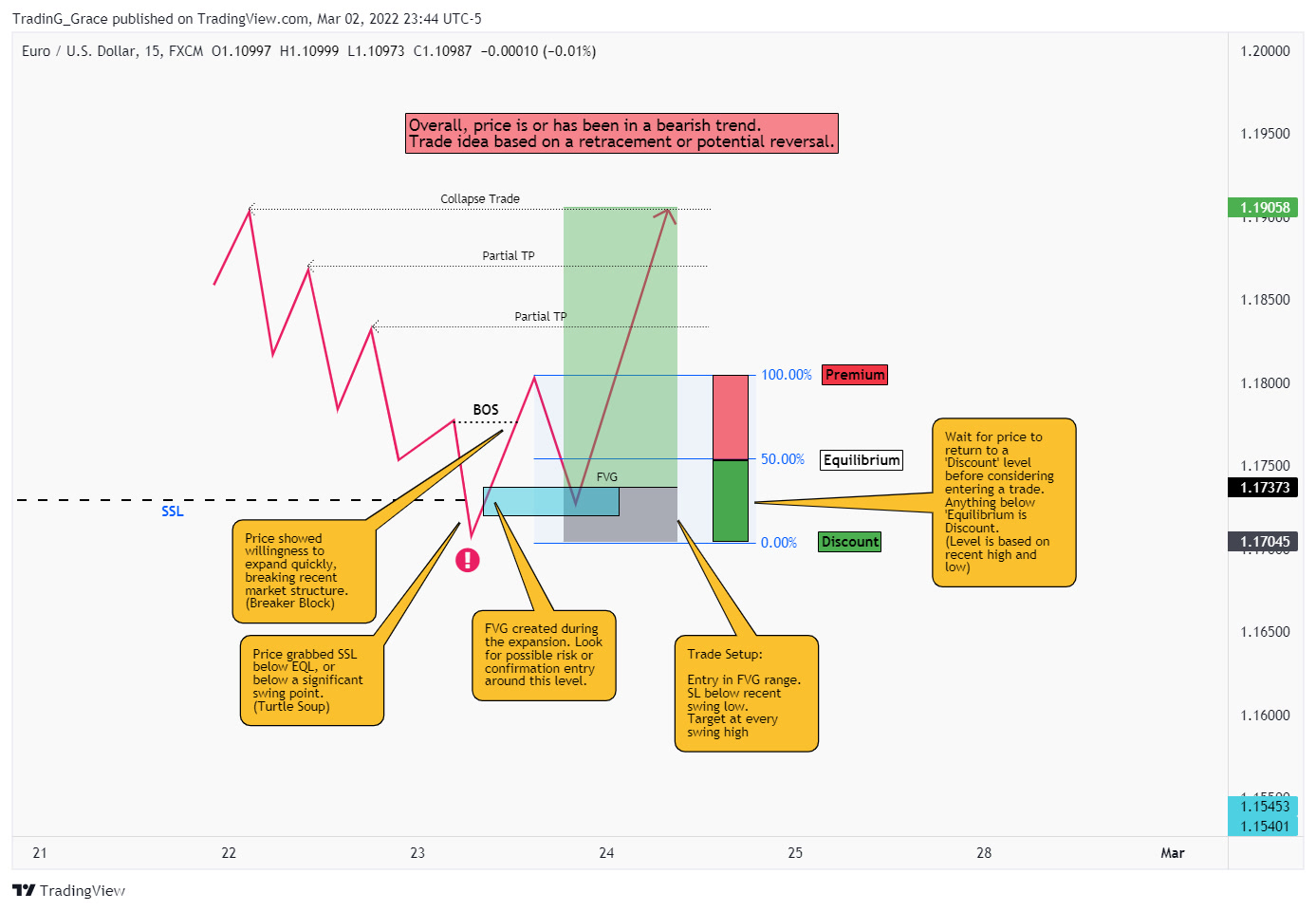
Last Tuesday, September 15th, GBPUSD on the 15-minute chart. London open had just printed a clean displacement candle through the previous day's high, creating a well-defined fair value gap between 1.3142 and 1.3156. I marked the FVG, dropped to the 5-minute to watch for a reaction, and waited.
Price returned to the FVG at 1.3149 at 8:47 AM London time. The 5-minute candle closed bullish inside the gap, and the structure on the 15-minute was firmly bullish with a clear draw on liquidity sitting at the Asian high of 1.3201. I entered at 1.3151, stop at 1.3128, 23 pips of risk, sizing to exactly 0.5% of the account using the risk calculator. Target was the 1.3201 level.
Price reached 1.3198 before the New York open invalidated the move. I'd taken partials at 1.3181 (a prior swing high that acted as an intermediate draw), and the remaining position closed at 1.3188. Overall trade result: 2.1R on the partials, 1.6R average. Not the cleanest exit, but the entry was exactly what it should be.
Now here's what's relevant to this article: a trader who has done six months of screen time on this setup would have taken that trade automatically. A trader who spent that same six months consuming content about FVGs without screen time would have second-guessed the entry, moved the stop, and then either missed it or got shaken out on the first pullback after entry.
Knowledge isn't the variable. Repetition is.
The Three Archetypes Who Genuinely Benefit From a Mentor
Archetype 1: The Technically Competent Trader With a Blind Spot
This trader has been live for at least 6-12 months. They can identify order blocks, FVGs, liquidity sweeps. Their journal is actually filled in. They have a consistently profitable demo record but something breaks down live. The psychology layer, position sizing creep, holding losers, revenge trading after drawdown, is the actual problem. A mentor can see the pattern from outside the emotional experience. This trader gets real value because the foundation is already there.
Archetype 2: The Trader With Raw Ability but No Structure
Occasionally you encounter someone with genuine intuition for price delivery. They catch moves that more systematic traders miss. But they can't articulate why they took a trade, their risk management is all over the place, and three good weeks are always followed by one catastrophic week. Structured mentorship gives this trader a framework to channel what they already feel. The sessions become translation work, not teaching from scratch.
Archetype 3: The Intermediate Trader Making Costly Mechanical Errors
This is someone entering OBs in premium when the draw is below price. Entering FVGs on the 15-minute without checking the hourly bias. Chasing entries after a displacement instead of waiting for the return. These are mechanical errors with identifiable solutions. A mentor who can watch live trades, review recordings, and pinpoint exactly where the breakdown happens can compress years of self-diagnosis into weeks. The key word there is identifiable. The error has a specific name. For relevant context on why this matters, I broke down some of the most common mechanical mistakes in 7 fatal mistakes that kill your funded account challenge success.
The Two Archetypes Who Will Waste Everyone's Time
Archetype 4: The Information Collector
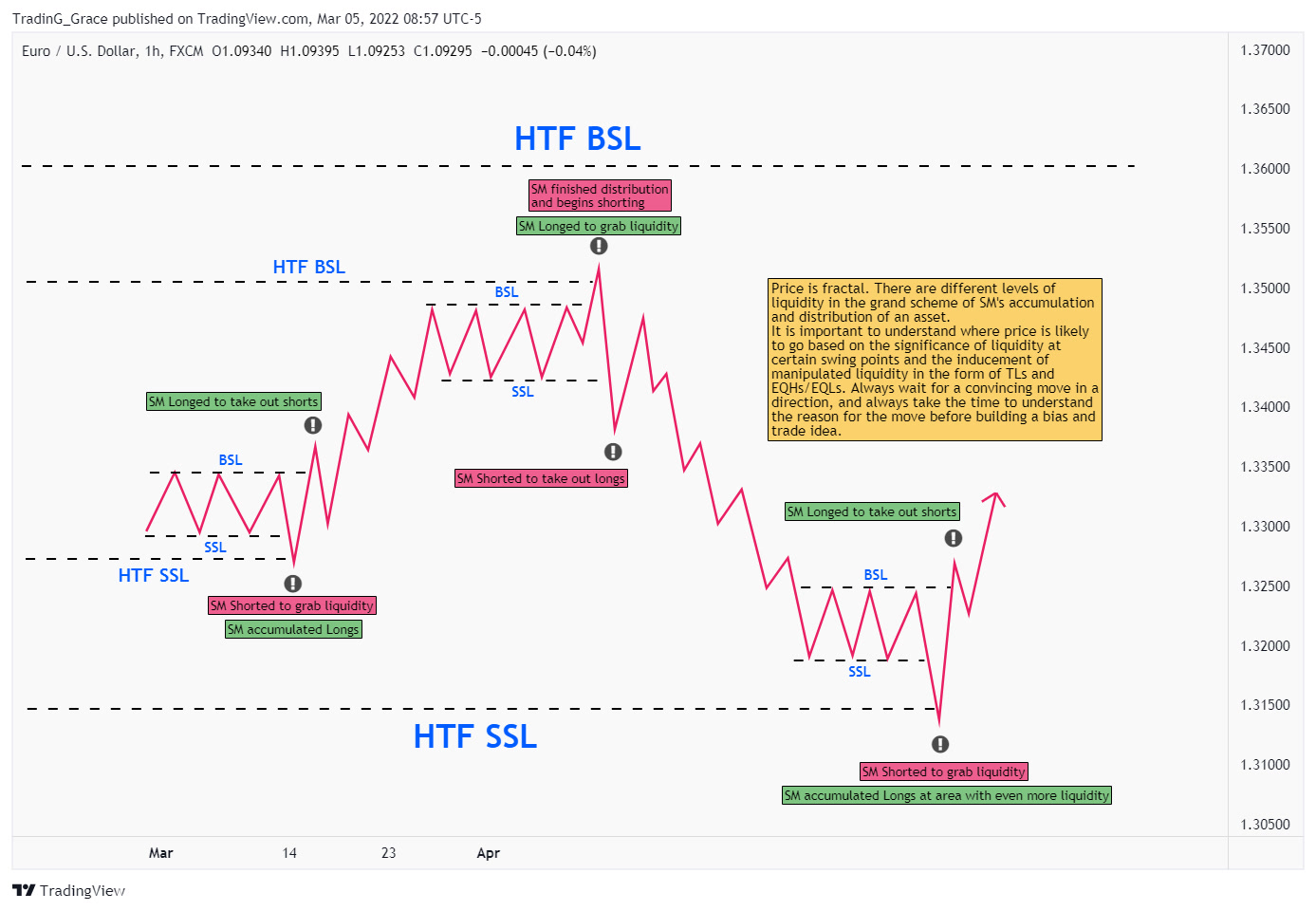
This trader frames their problem as a knowledge problem. They've watched hundreds of hours of ICT content but will still tell you they "don't fully understand" SMT divergence or don't feel confident with time and price theory. They ask specific, sophisticated questions in onboarding calls, questions that reveal they actually do understand the concepts. The issue is they've never sat down and traded one setup for three months straight without changing it.
Give this trader a mentor and they'll do the same thing. Every session becomes a new concept to add to the system. They leave each call excited but never act. Six weeks in, they're researching a different mentor who covers "something their current mentor doesn't."
This is the ICT version of holy-grail seeking. It just looks more sophisticated because the questions sound smart. I've seen threads on trading forums where traders describe jumping between three different ICT-style coaches in 18 months and blaming diminishing returns on the methodology rather than their own avoidance behaviour. The market structure shifts article from Q2 2026 is a good litmus test: if you read content like that and immediately want to overhaul your system, you're likely in this archetype.
Archetype 5: The Emotional Escapist
This trader is in genuine pain. Maybe they've lost real money. Maybe they've failed two or three prop firm challenges. They come to a mentor not looking for skill development but for someone to absorb the emotional weight of trading. They want to be told when to trade and when to step back. They want permission structures that outsource the discomfort of independent decision-making.
The problem isn't the desire for support. The problem is that trading will always demand independent, real-time judgment under uncertainty. No amount of mentor contact hours changes that. And when the mentor inevitably can't be there for every trade, the emotional escapist either freezes or recklessly overrides everything they've been told.
This is also the trader who blames the mentor when it doesn't work. Because on some level, they were asking the mentor to carry something no mentor can carry.
If you suspect you might be in this position, that's not a criticism. It's actually useful self-knowledge. The path forward for this archetype isn't finding a better mentor. It's probably some honest journaling about what specifically you're afraid of, and whether that fear would change if you fully accepted that losses are structural, not failures. Investopedia has a solid breakdown on trading psychology fundamentals if you want somewhere to start with the conceptual framing.
Myth / Reality / What I Actually See
Myth: Struggling traders need an ICT trading mentor to unlock their potential.
Reality: Mentorship accelerates progress for traders who have already done baseline self-work. For traders who haven't, it adds another layer of dependency.
What I Actually See: The traders who get the most out of structured coaching arrive knowing their own weaknesses with some precision. They don't say "I need help with everything." They say "I consistently get the bias right on the 4-hour but I keep entering before the sweep happens and it costs me 40% of my wins." That specificity signals readiness. You can work with that immediately.
The traders who show up saying "I just need structure" almost always mean they need someone else to create accountability they haven't built internally yet. That's a different problem, and it needs to be named as such before any mentorship model will help.
A Practical Readiness Framework: Four Questions to Answer Before You Spend a Dollar on Mentorship
Run through these honestly before you look at any coaching plans:
-
Can you name your single most recurring mistake with a specific example? Not a category like "psychology" or "entries." A specific mistake with a specific trade where it happened. If you can't do this, you need more screen time, not a mentor.
-
Have you traded one setup consistently for at least 90 days without changing it? If the answer is no, the mentor will be working on shifting sand. The setup changes before the lessons compound.
-
What would success look like in 12 weeks, in concrete terms? Not "be consistently profitable." Something like: "Reduce my average losing trade from 1.8R to 1.0R by cutting trades that occur outside Kill Zone timing." Vague goals produce vague outcomes regardless of who's coaching.
-
When you've gotten feedback in the past, from journals, community members, anyone, did you implement it? If your honest answer is "sometimes, but I usually had a reason it didn't apply," that's a pattern worth looking at before paying for more feedback.
If you answered those four questions with specificity and honesty, you're probably in one of the three archetypes that benefit from real mentorship. The results page shows what that looks like in practice. If the questions felt hard to answer, that's actually the most useful information you've gotten today.
What Mentorship Actually Accelerates (and What It Doesn't)
A good ICT trading mentor will compress your timeline on pattern recognition. They'll catch your bias errors before you catch them yourself. They'll give you a session-by-session feedback loop that your journal alone can't replicate because a journal can't ask you clarifying questions.
What mentorship doesn't do: build intrinsic motivation, create discipline that wasn't there before, or substitute for the hours of screen time required to internalize price delivery.
For more context on what funded trading actually demands before you layer coaching on top of it, the truth about funded trading article is worth reading before you make any decisions.
If you've done that self-assessment and you're ready to look at actual options, there are three tiers available here: Lite at $150/week, Pro at $250/week, and a Full Mentorship package at $5,000 for four months of structured work. The right tier depends entirely on where you are in the readiness framework above, not on your budget.
Start with the free discovery call, not to pitch you, but to run through those four questions together and tell you honestly which tier makes sense, or whether screen time should come first.
Harvest Wright
ICT Trading Coach · 10+ Years Experience
Harvest specializes in ICT methodology and has helped traders pass prop firm challenges, develop consistent strategies, and build the psychology needed for long-term profitability.
Book a Free Discovery Call →Master Your Trading Psychology
Psychology is 80% of trading. Our coaching includes dedicated psychological coaching sessions.
See Coaching PlansFree ICT Funded-Trader Playbook
The setups, the pre-trade checklist, and the risk rules I use. Get it free.