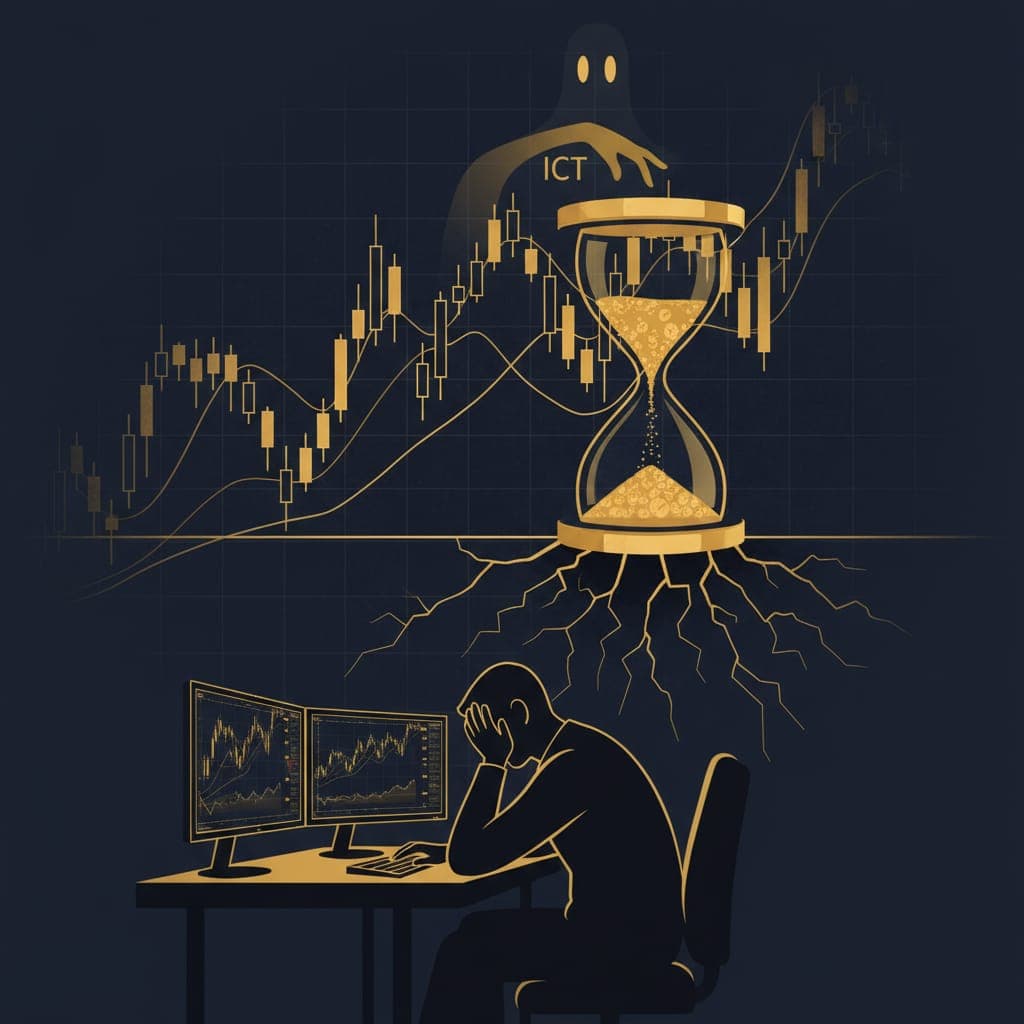
The Calm Trader Myth: Why False Calm Hurts You
Everyone in trading tells you to become emotionless. Stoic. Zen. A robot in human skin who executes entries without feeling a thing. It's the dominant narrative in trading psychology circles, and after more than a decade watching traders blow accounts while chasing that ideal, I'm convinced it's one of the most dangerous pieces of advice in the industry.
Key Takeaway: Artificially suppressed emotion, what I call "false calm", causes ICT traders to skip confirmations and enter setups carelessly, because nothing feels urgent enough to warrant discipline. Traders who stay emotionally aware without being reactive tend to catch the micro-hesitations in price that detached traders miss entirely.
The "Zen Trader" Myth Is Costing You Real Money
Here's what trading psychology content almost never addresses: there's a massive difference between being calm and being switched off. Most traders pursuing emotional flatness achieve the latter. They've trained themselves to feel nothing before a trade, which sounds like discipline until you realise that the feeling of urgency before a trade is actually your brain doing its job. It's pattern recognition. It's your subconscious flagging that something in the setup matters.
When you suppress that entirely, you lose the signal along with the noise.
In ICT methodology specifically, this becomes catastrophic. We're looking for precision. A Fair Value Gap entry isn't just a box on a chart, it's a specific confluence of displacement, liquidity, internal range delivery, and time-of-day alignment. That's a lot of conditions. And when a trader is in a state of low arousal, artificially calm, mentally detached, they're far more likely to glance at a chart and say "looks good enough" rather than methodically running through what actually makes the trade valid.
Careless entries in ICT aren't usually a knowledge problem. They're an arousal problem. And I don't mean that as a metaphor, I mean it in the literal psychophysiological sense. Optimal cognitive performance, including decision-making precision, happens at moderate arousal levels. Not zero. The Yerkes-Dodson law has been demonstrating this since 1908. The trading industry just decided it didn't apply to them.
Myth vs. Reality: What Emotional Flatness Actually Produces
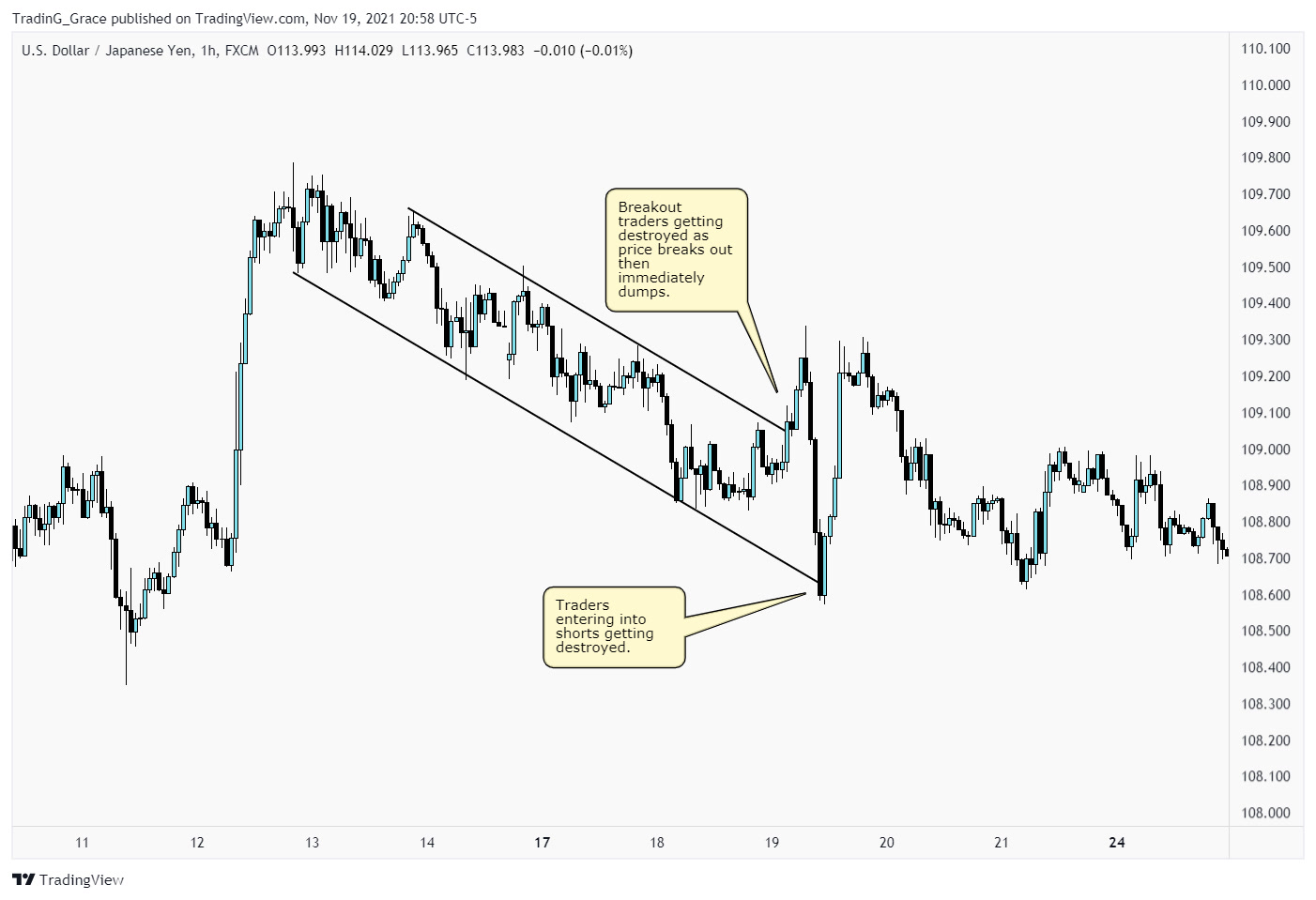
Myth: Eliminating emotion leads to consistent, disciplined execution.
Reality: Eliminating emotion leads to reduced cognitive engagement, which produces sloppy confirmation checks, rushed entries, and a general indifference to setup quality that masquerades as confidence.
What I Actually See: Traders who've spent months training themselves to feel nothing before a trade develop a subtle arrogance around their process. Because they're not feeling fear or greed, they assume their judgment is clean. But they're not checking their bias against the higher timeframe. They're not asking whether London already swept the liquidity this entry depends on. They're clicking in because the chart looks like the thing they trade, and that's not an ICT entry. That's a pattern-matching guess dressed up in ICT language.
The traders I see doing well? They still feel something before a trade. Not anxiety that paralyses them. More like a heightened attentiveness. A mild internal friction that prompts them to slow down and actually verify what they think they see.
The Archetype I Keep Seeing Blow Up
There's a specific trader type that shows up in trading forums constantly, and their story is almost always the same. They've read every book on trading psychology. They've journalled obsessively. They've meditated before sessions, done breathing exercises, eliminated all emotional response. And their win rate is well below what their setups should produce.
When you dig into their trade logs, the pattern is obvious: they're entering FVGs that haven't fully formed, OBs that are sitting in premium rather than discount, and taking trades during killzones where the preceding session already ran the liquidity they need. Not because they don't know better, they do. Because nothing in their emotional state flagged it as wrong. The calm felt like confirmation. It wasn't.
This is the trader who tells you they have "no emotional attachment" to their trades, then reveals they're sizing inconsistently and taking setups in ranging markets because "it looked clean." False calm breeds inconsistency. It just doesn't announce itself the way panic does.
If you're making systematic errors on ICT setups and you can't figure out why, this is worth examining. Check out the ICT fair value gap trading checklist, specifically ask yourself whether you're running through it with actual attention or just ticking boxes while mentally elsewhere.
A Worked Example
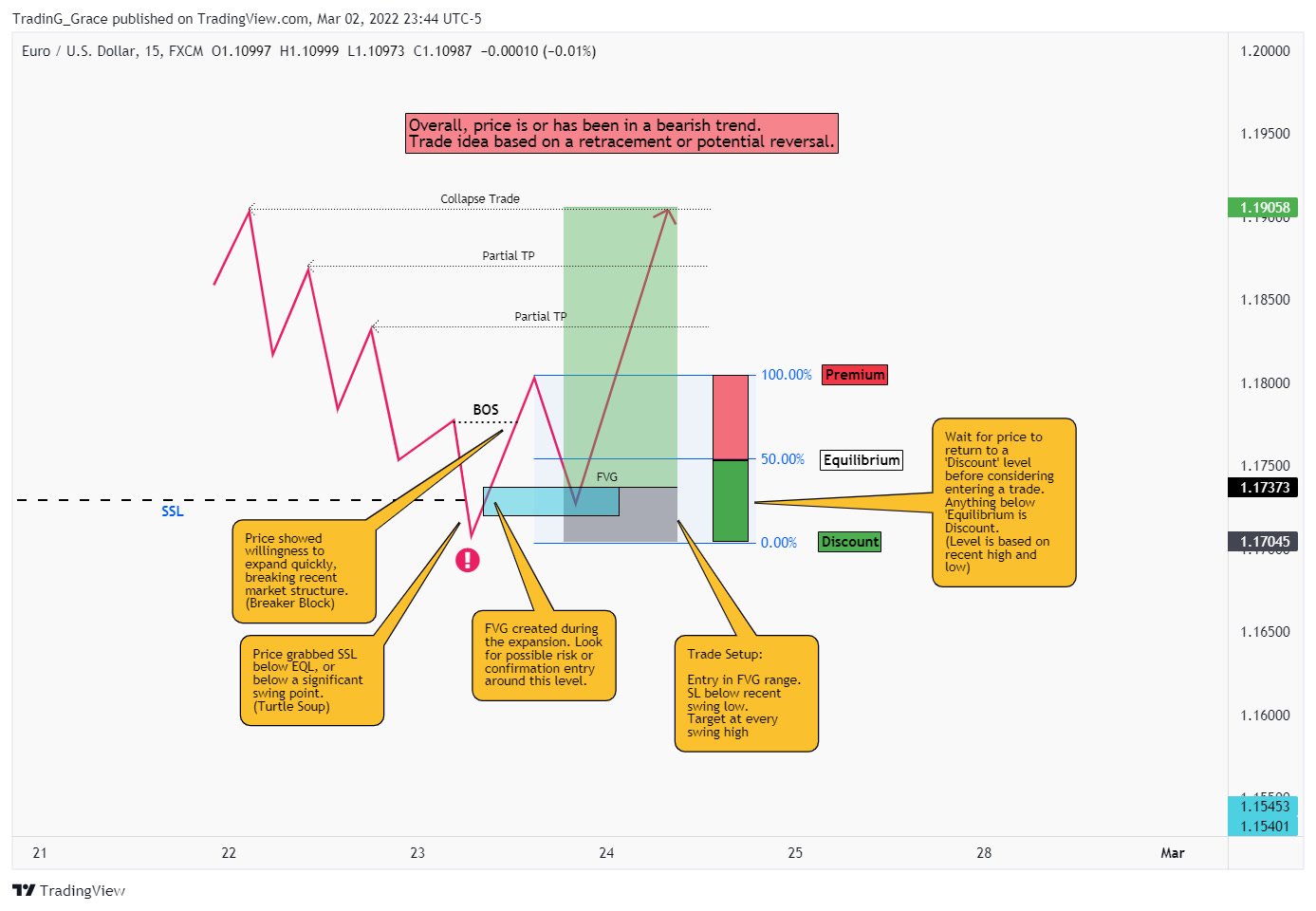
I used to get this wrong too. For a while, I thought emotional numbness was the goal.
Here's the kind of trade I mean. Picture GBPUSD on the 15-minute chart. The London session opens with a displacement candle that leaves a clean FVG. The higher timeframe is in a discount array, weekly bias is bullish, and the NY open is approaching. Everything looks aligned. The long goes in around the 50% of the FVG, with the stop below the gap and the target at the previous day's high. Clean setup, sensible risk, strong thesis.
Except something got missed. On the 4-hour chart there's a clear set of equal highs between the entry and the target, buy-side liquidity that hasn't been swept. In a calm, detached state, it's easy to run the checklist quickly and never actually look at what the 4-hour is saying. Price runs into those equal highs, stalls, and retraces hard enough to take the stop, then carries on to the target later without the trader.
The frustrating part isn't the loss. Losses happen. It's reviewing the chart afterward and seeing that the 4-hour liquidity was completely obvious. The better plan would have been to treat those equal highs as the first target, or wait for them to be swept and enter on the retrace. The analysis was fine. The engagement wasn't. That mild friction, the internal signal that says wait, check this again, had been trained out.
The Practical Framework: Using Emotional Awareness as a Confirmation Layer
Here's exactly how I'd suggest reframing this, and it's something you can apply in your next session:
Step 1, Notice the feeling, don't suppress it. Before entering any trade, do a quick internal check. Are you feeling nothing? That's worth noting. Zero arousal before a genuinely good ICT setup is unusual, good setups have multiple confluences converging, and that convergence, when you actually see it, produces a mild alertness. If you feel nothing, ask why. Are you actually switched on right now, or are you just clicking?
Step 2, Use mild anxiety as a checklist trigger. If something feels slightly off, an edge of hesitation, a faint discomfort, don't override it with "I'm being emotional." Instead, use it as a prompt to re-examine one specific element. HTF bias confirmed? Liquidity already swept, or still pending above/below? Are you in premium or discount on the entry timeframe? A lot of the time, that hesitation is pointing directly at the thing you haven't properly checked.
Step 3, Separate reactive emotion from informative emotion. Reactive emotion is FOMO pulling you into an extended move. Reactive emotion is rage-trading after a loss. That does need to be managed. Informative emotion is the slight internal friction that says this setup doesn't feel as clean as yesterday's. That's worth listening to. The goal isn't no emotion, it's learning to distinguish between the two. This takes reps, not suppression.
Step 4, Build a position-sizing habit that resets your state. Every time you size a position, run your numbers through a risk calculator manually, not from memory. This forces a moment of deliberate engagement that breaks the autopilot state. You cannot be detached while doing the arithmetic of what you're actually risking. It anchors you back into the trade.
For more on how market conditions in Q2 2026 are demanding sharper confirmation discipline, this piece on why market structure shifts are breaking traditional ICT setups covers exactly why sloppy execution is getting punished harder right now than it was even six months ago.
What 10 Years Actually Teaches You About Emotion in Trading
A one-year trader thinks the goal is to feel nothing. A ten-year trader knows the goal is to feel the right things at the right times and be honest about what those feelings are telling you.
Emotional awareness is not the enemy of trading psychology. False calm is. The market doesn't reward detachment, it rewards precision. And precision requires engagement. You cannot be fully engaged and fully switched off at the same time. Pick one.
The results you're chasing, consistent funded account performance, disciplined execution, setups that actually play out the way the HTF suggested they would, those don't come from becoming robotic. They come from building a relationship with your own cognitive state that's honest enough to catch yourself when you're just going through the motions.
If you've been struggling with systematic errors you can't explain, and you've already ruled out strategy problems, it might be worth looking at why funded account challenges fail, because the pattern described there overlaps heavily with what false calm produces in execution.
The Actual Next Step
For your next five trades, keep a second column in your journal. Not just what the setup was, but what you felt in the 60 seconds before you entered. Not to eliminate whatever you find there. To understand it.
You might discover that your best trades have something in common emotionally. And that's not a weakness to manage. That's a signal to use.
If you want to work on this with actual structure and accountability, the coaching plans cover trading psychology as a core component, not an afterthought. From the Lite tier at $150/week through to Full Mentorship over four months, the psychological side of ICT execution gets addressed specifically, not generically. Or if you want to talk through where you're at first, book a free discovery call and we'll figure out together what's actually going on.
Harvest Wright
ICT Trading Coach · 10+ Years Experience
Harvest specializes in ICT methodology and has helped traders pass prop firm challenges, develop consistent strategies, and build the psychology needed for long-term profitability.
Book a Free Discovery Call →Ready to Get Funded?
1-on-1 ICT coaching built around prop firm rules, from a trader who has passed an FTMO Challenge.
Book a Free Discovery CallFree ICT Funded-Trader Playbook
The setups, the pre-trade checklist, and the risk rules I use. Get it free.