Scalping vs Swing Trading: Which Style Fits You?
Scalping vs Swing Trading: The Honest Truth About Which Style Actually Works
After 10+ years in the markets and a TradingView Editors' Pick along the way, I've seen plenty of traders struggle because they chose the wrong style. The scalping vs swing trading debate isn't about which is "better", it's about which fits your DNA as a trader.
Let me share what I've learned from my own trading, passing an FTMO Challenge, a top 1% finish in a TradingView trading competition, and coaching traders.
Key Takeaway: Choosing between scalping and swing trading isn't about which strategy performs better in backtests, it's about honestly assessing your personality, schedule, and stress tolerance, then committing fully to the style that matches who you actually are, not who you want to be.
Understanding Scalping vs Swing Trading Through ICT Concepts
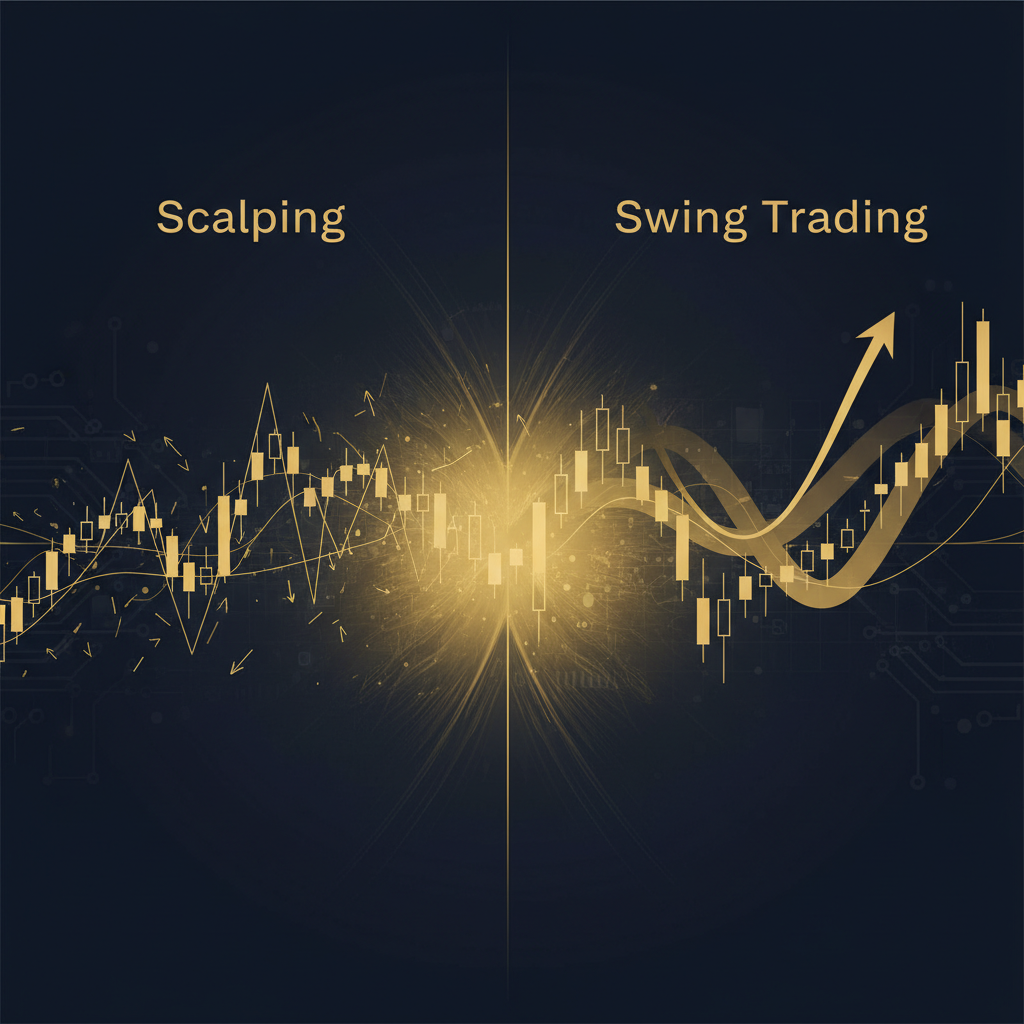
Scalping involves taking multiple trades daily, holding positions for minutes to hours, targeting 5-20 pip moves. Swing trading captures larger market moves over days to weeks, targeting 50-200+ pip swings.
Both styles work with ICT concepts, but they require completely different mindsets and execution approaches.
The Scalping Reality Check
Scalping isn't what social media shows you. Those flashy 50-trade-per-day accounts? A lot of them don't last.
Real scalping using ICT concepts focuses on:
- Fair Value Gaps (FVGs) during high-probability sessions
- Order block reactions at key liquidity levels
- Liquidity grabs around significant highs and lows
- Premium/discount arrays for precise entries
Traders who do well at scalping tend to share specific traits. They're naturally focused, handle stress well, and can make split-second decisions without second-guessing.
But here's the brutal truth: in my view, scalping is the harder style to stick with. The constant decision-making creates mental fatigue. Commission costs eat into profits. And one emotional revenge trade can wipe out a week's gains.
The Swing Trading Advantage
Swing trading aligns better with how institutional money actually moves. And when market structure shifts start breaking traditional ICT setups, I think swing traders have more time to notice and adapt.
Swing traders using ICT concepts focus on:
- Weekly/daily order blocks for major reversals
- Institutional order flow during key economic events
- Large liquidity pools that create sustained moves
- Market structure breaks that signal trend changes
The psychological advantage is huge. You have time to analyze, plan, and execute without the pressure-cooker environment of scalping.
Personality-Based Recommendations: Which Are You?
You're Built for Scalping If:
The Characteristics:
- You thrive under pressure and make quick decisions confidently
- You can trade during specific market sessions (London/New York overlap)
- You have 4-6 hours daily for active screen time
- You can handle multiple losing trades without emotional spiral
- You're naturally detail-oriented and process-focused
The Lifestyle Requirements:
- Flexible schedule during market hours
- Quiet, distraction-free environment
- Strong internet connection and backup systems
- Higher starting capital (commissions impact smaller accounts more)
ICT Strategy Focus: Scalpers should master ICT fair value gap trading and understand how liquidity grabs work in real-time.
You're Built for Swing Trading If:
The Characteristics:
- You prefer thorough analysis over quick decisions
- You can hold positions overnight without losing sleep
- You have limited time for market monitoring
- You think in terms of weekly/monthly profit targets
- You're comfortable with larger unrealized drawdowns
The Lifestyle Requirements:
- Full-time job or other commitments
- Ability to check charts 1-2 times daily
- Patience to wait for high-probability setups
- Emotional stability during multi-day drawdowns
ICT Strategy Focus: Swing traders should focus on order blocks during ranging markets and trading setups during Fed uncertainty.
Side-by-Side Comparison
Here's how I'd sum up the trade-offs:
Scalping:
- More trades, so more decisions and more chances to make emotional mistakes
- Costs like spreads and commissions matter much more
- Needs long, focused screen time
- Higher stress and burnout risk
Swing Trading:
- Fewer trades and more time to think each one through
- Costs matter less relative to the size of the move
- Fits around a job or other commitments
- Better work-life balance, but you have to sit through overnight and multi-day swings
The Hybrid Approach: Best of Both Worlds?
Some traders combine both styles strategically. They swing trade their core positions and scalp around major levels for additional profits.
This works if you:
- Have mastered one style first
- Can mentally separate the two approaches
- Have sufficient capital for both strategies
- Understand how different timeframes interact
But attempting both as a beginner is a recipe for confusion and losses.
Common Mistakes That Kill Both Styles
Whether you choose scalping or swing trading, avoid these fatal mistakes that kill funded account challenges:
- Fighting your natural personality, Forcing yourself into the wrong style
- Inconsistent position sizing, Using different risk models randomly
- Mixing timeframe analysis, Scalping off daily charts or swing trading off 1-minute
- Ignoring session characteristics, Not understanding when your style works best
- Emotional switching, Jumping between styles after losses
Making Your Decision: A Framework
Here's my systematic approach to help you choose:
Step 1: Honest Self-Assessment Answer these questions truthfully:
- How much time can you dedicate to active trading?
- How do you handle stress and quick decisions?
- What's your available trading capital?
- What are your monthly income needs?
Step 2: Paper Trade Both Styles Spend one month paper trading each approach using ICT concepts. Track not just profits, but your emotional state and engagement level.
Step 3: Start Small Once you choose, start with micro lots or small position sizes. Focus on consistency over profits initially.
Step 4: Get Proper Training Whether you choose scalping or swing trading, proper mentorship accelerates your learning curve. My coaching plans are 1-on-1, so the sessions fit your chosen style and personality.
The Bottom Line
There's no universal "best" choice in the scalping vs swing trading debate. Patient, methodical traders can do really well swing trading. High-energy traders can thrive in the fast pace of scalping.
The key is honest self-awareness and choosing the style that aligns with your natural strengths.
Your trading style should feel like you're swimming with the current, not against it. When you find that alignment, profitability becomes a natural outcome rather than a constant struggle.
If you're still unsure which path fits you best, book a free discovery call where we can discuss your specific situation and create a personalized roadmap for your trading journey.
Remember: the best trading style is the one you can execute consistently for years, not months. Choose accordingly.
Harvest Wright
ICT Trading Coach · 10+ Years Experience
Harvest specializes in ICT methodology and has helped traders pass prop firm challenges, develop consistent strategies, and build the psychology needed for long-term profitability.
Book a Free Discovery Call →Master Your Trading Psychology
Psychology is a huge part of trading. Our coaching includes dedicated psychology sessions.
See Coaching PlansFree ICT Funded-Trader Playbook
The setups, the pre-trade checklist, and the risk rules I use. Get it free.