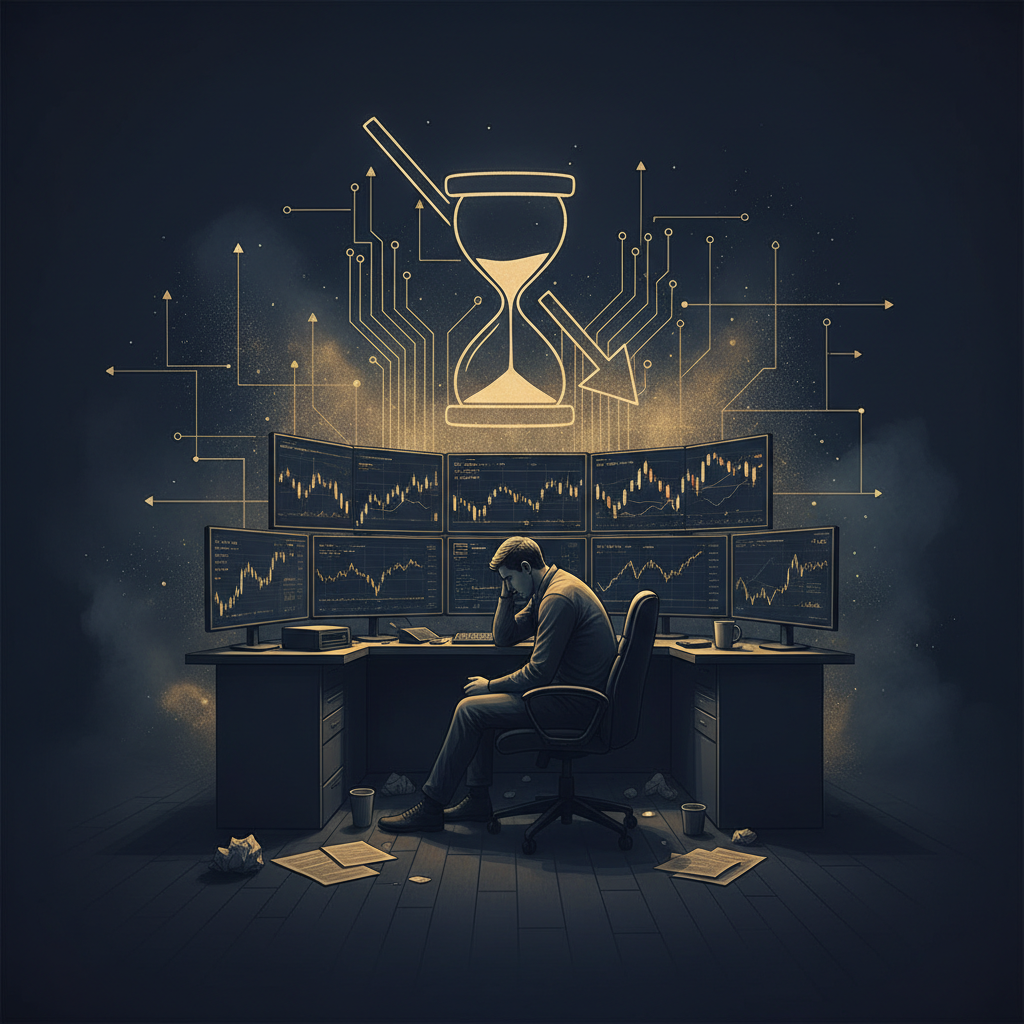
The Quiet Session Trap: Why Patience Kills Traders
Picture a New York session in the post-lunch drift. GBPUSD is locked in a tight range on the 15-minute chart. No displacement. No real narrative. The Asian session high was swept clean in the early London hours, and since then, price has just... sat there, breathing slowly like something half-asleep.
The trader has been at their desk for four hours.
Key Takeaway: Sitting at the charts during low-volatility sessions doesn't build discipline, it wears down your ability to assess setups accurately. The moment patience becomes a justification for screen time, you're already in the trap. The hard protocol is knowing exactly when to close the platform and walk away.
Around hour three, the thought arrives: I've put the time in. I've been patient. I deserve this setup. That sentence, "I deserve this setup", is one of the most dangerous thoughts a trader can have. And it doesn't feel dangerous when it arrives. It feels earned. I've had it plenty of times myself.
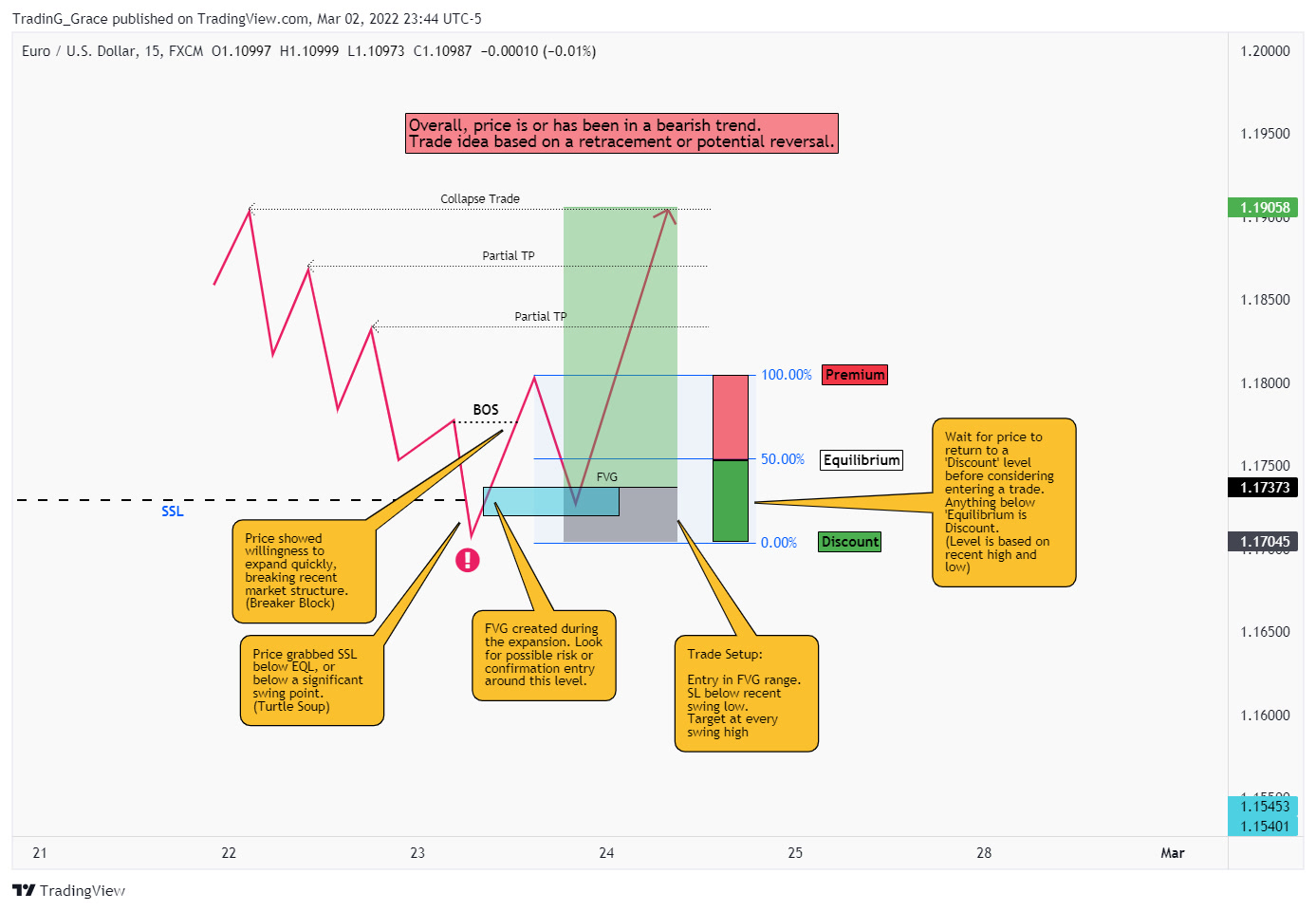
Here's the kind of trade that follows. There's a small Fair Value Gap left behind from a London push that morning, a legitimate imbalance, technically. Price comes back to it in the early afternoon, and the trader goes long with a stop below the gap, targeting the New York AM high. It looks like a decent R multiple on paper.
Price wicks into the entry, holds for a few minutes, then slowly rolls over into the stop.
Here's the thing: the setup wasn't wrong on paper. It had structural logic. What was wrong was the context, and the context got missed because the trader had been staring at the chart so long they stopped seeing it clearly. The FVG came from a displacement that happened while the Asian range was being swept. It was a second-leg imbalance, not a primary institutional move, and it was being traded hours after the session that created it. With fresh eyes in the first thirty minutes of a session, they wouldn't have touched it. After four hours, their pattern recognition had shifted from seeing to wanting.
That distinction is everything.
What Actually Happens to Your Brain After Hour Two
There's a specific cognitive deterioration that sets in during quiet sessions, and it has nothing to do with laziness or lack of focus. It's almost the opposite. When you're genuinely focused on something that isn't delivering stimulus, a ranging market, a dead session, price oscillating in the middle of a weekly range, your brain starts compensating. It begins manufacturing significance from noise.
Psychologists call this apophenia: the tendency to perceive patterns in random or ambiguous data. Traders experience it as suddenly "seeing" an order block that wasn't compelling an hour ago, or convincing themselves a consolidation is actually accumulation, or deciding that a minor wick qualifies as a liquidity sweep when in better conditions they'd have laughed it off.
In smart money concepts terms, this is the moment B-grade setups start looking like A-grade setups. And the insidious part? The longer you've sat there, the more patient you feel, so taking the trade feels like a reward for discipline rather than a surrender to boredom.
I used to get this completely backwards. In my earlier years, I thought the traders who sat at screens for six, seven, eight hours were the serious ones. The committed ones. I thought walking away was quitting. What I've learned, the hard way, across enough quiet Tuesdays and slow Fridays to fill a decent-sized journal, is that extended screen time during low-volatility sessions isn't discipline. It's exposure to a psychological hazard.
The Archetype I See Constantly
There's a pattern that shows up everywhere in trading communities, and it looks like this: a trader is doing reasonably well in high-volatility environments, London open, news events, the first 90 minutes of New York. Their entries are clean, their patience is genuine, their risk management holds. Then a slow week hits. Nothing moves. And over three or four sessions, the same trader begins taking trades they would never have taken in better conditions.
The trades aren't random. They're always just barely within the trader's rules. There's a FVG present, but it's in a range, not after a displacement. There's an Order Block visible, but price is in the middle of the weekly range, not approaching it from a clear premium or discount. There's a liquidity level above, but it's been sitting there for two days with no acceleration toward it.
Every box on the checklist gets a half-tick. And the trader posts the setup in a forum and asks "does this look valid to you?", which is itself the tell. When you have to ask if a setup is valid, you already know it isn't. You're looking for permission, not confirmation.
This archetype doesn't overtrade in the traditional sense. They don't take twenty trades a day. They take one or two, but those one or two happen specifically when the market has given them nothing and their patience has quietly curdled into something that only looks like patience from the outside.
Why 'Smart Money Concepts' Makes This Worse Before It Makes It Better
This is the contrarian take that most ICT content creators won't tell you, because it complicates the marketing of the methodology: smart money concepts gives you more ways to rationalize a bad trade, not fewer.
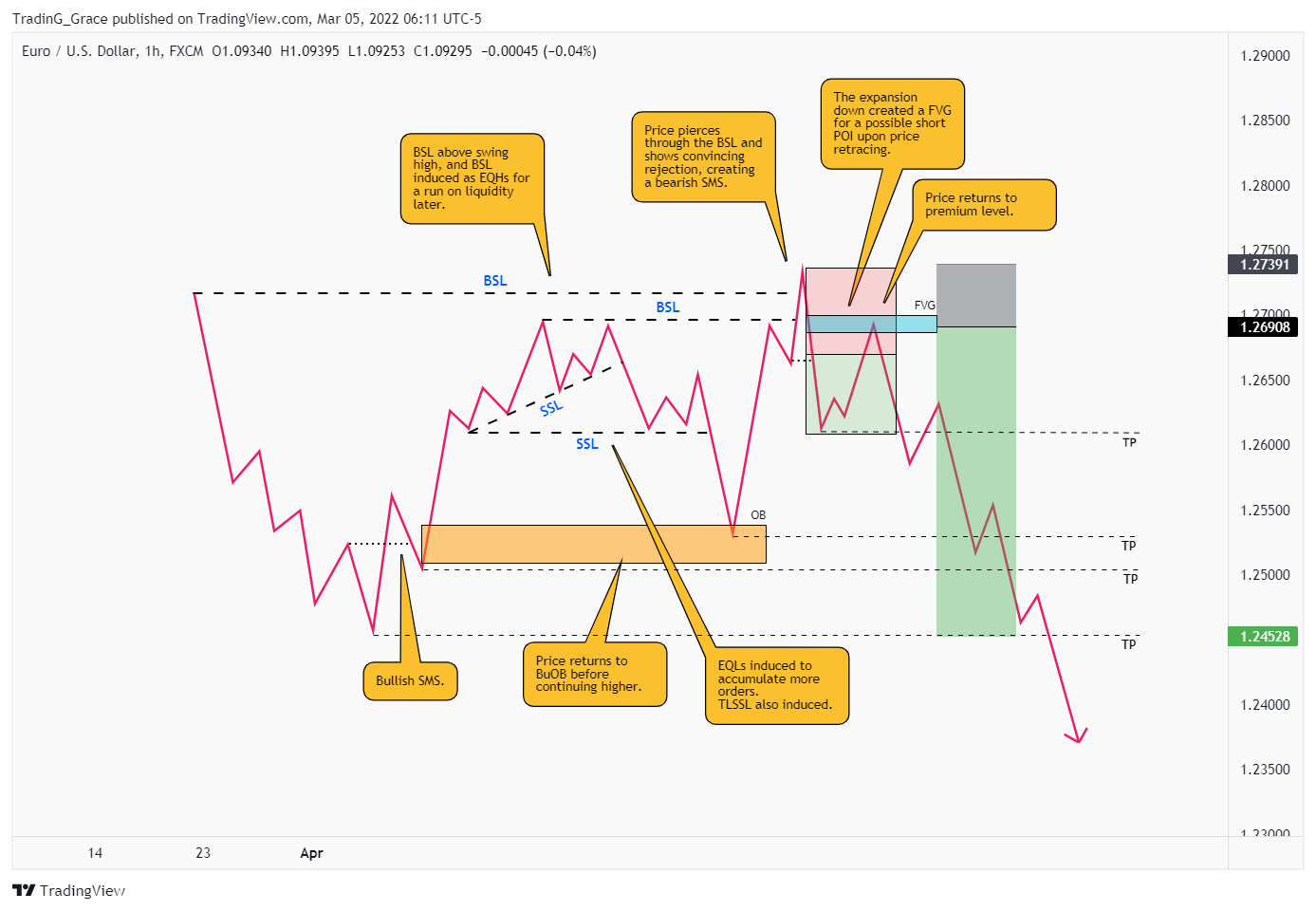
When you have a complete framework, Order Blocks, Fair Value Gaps, Breakers, Mitigation Blocks, ICT Power of 3, session timing, premium/discount arrays, you have a rich vocabulary for justifying almost any price action as "institutional." A lazy FVG becomes "mitigation." A random consolidation becomes "accumulation." A failed order block becomes "a breaker." The more tools you have, the more a bored brain can reach for one to validate what it wants to see.
This is why I'd argue that a thorough understanding of smart money concepts requires an equally thorough understanding of when the concepts don't apply, specifically, during ranging, low-volatility sessions where institutional fingerprints are ambiguous at best. It matters even more when market structure shifts produce long consolidation phases, because that's when the "quiet session trap" springs most often.
The ICT FVG checklist approach I use has nine pre-trade confirmations precisely because of this, half of those filters exist not to confirm entry, but to veto it when the market isn't offering what it looks like it's offering.
The Protocol That Actually Works
After enough painful Tuesday afternoons, I built a set of hard rules around session time limits. Here's exactly how it works in practice:
Step 1, Set a session window before you open the platform. Not a vague intention, an actual timer. For London, that's 6:30 AM to 9:30 AM EST. For New York, 8:30 AM to 11:30 AM EST. Outside of those windows, the platform doesn't open unless there's a specific macro event with a defined time.
Step 2, Mark your A-grade criteria before price moves. Before the session starts, I write down on paper (not typed, physically written) the exact conditions that would produce an A-grade entry. For a long on EURUSD, that might be: displacement above Asian high, FVG left behind on 5m, price returns to 50% of FVG during first 30 minutes of NY, confluence with -OB on 15m, not in premium on daily. That list gets written before I see how the session opens. This pre-commitment is the single most effective technique I've found for preventing boredom-manufacture.
Step 3, At the 90-minute mark, re-evaluate whether the session has produced a valid structure. Not whether a setup has appeared, whether the structural conditions for a setup exist. If price is ranging inside yesterday's range with no displacement, no swept liquidity, no narrative on the higher timeframe, the honest answer is: there is no trade today. Logging that assessment and closing the platform is the correct action.
Step 4, Never extend past your session window. The rule is absolute. It doesn't matter if price "looks like it might do something." Price always looks like it might do something to a brain that has been watching it for three hours. Close the platform. Go for a walk. The chart will exist tomorrow.
For position sizing on the trades that do meet A-grade criteria, I keep everything through the risk calculator, non-negotiable, because clean entries still require clean sizing, and the discipline of one reinforces the discipline of the other.
If you're newer to this framework and some of the structural concepts I've mentioned feel unfamiliar, the crash course covers the foundational vocabulary in detail before we get into session psychology.
The Uncomfortable Truth About Screen Time
Here's what a decade of trading teaches you that twelve months doesn't: the market doesn't reward presence. It rewards selectivity. The best traders I've observed, across TradingView, funded trader leaderboards, prop firm results, are not the ones sitting at charts for eight hours. They're the ones who can look at a session, determine that nothing qualifies, and feel genuinely satisfied with that outcome.
That psychological comfort with inaction? It's trained, not natural. And the training isn't "be more patient." The training is building such specific, unambiguous criteria for what A-grade looks like that the absence of A-grade is immediately obvious, and doesn't require three more hours of staring to confirm.
In my experience, the difference between selective, criteria-based trading and undisciplined screen time usually isn't talent. It's this: knowing when the chart has nothing to offer and having the self-awareness to recognize that the urge to stay is the boredom talking, not the market.
If this resonates with where you are right now, particularly if you're running a funded account challenge and can't afford to let a slow session bleed your buffer, take a look at the 7 fatal mistakes that kill funded account challenges. The quiet session trap shows up more than once on that list, just wearing different clothes.
The next time you're at hour three of a ranging session and you find yourself thinking "I've been so patient today, this setup deserves a shot", that thought is the trap announcing itself. Recognize it. Name it. Close the platform.
The trade you don't take on a dead Tuesday is often the trade that keeps your week intact.
Ready to build the structural criteria that make session discipline automatic rather than willpower-dependent? The coaching plans break down exactly how to approach this, from the Lite plan at $150/week through to full mentorship. Or if you want to talk through where your current process is breaking down first, book a free discovery call.
Harvest Wright
ICT Trading Coach · 10+ Years Experience
Harvest specializes in ICT methodology and has helped traders pass prop firm challenges, develop consistent strategies, and build the psychology needed for long-term profitability.
Book a Free Discovery Call →Ready to Get Funded?
Our students pass prop firm challenges in under 60 days with personalized ICT coaching.
Book a Free Discovery CallFree ICT Funded-Trader Playbook
The setups, the pre-trade checklist, and the risk rules I use. Get it free.