Boredom Trading: Why Sitting Still Is a Skill
The Myth: Bad Setups Are Your Biggest Enemy
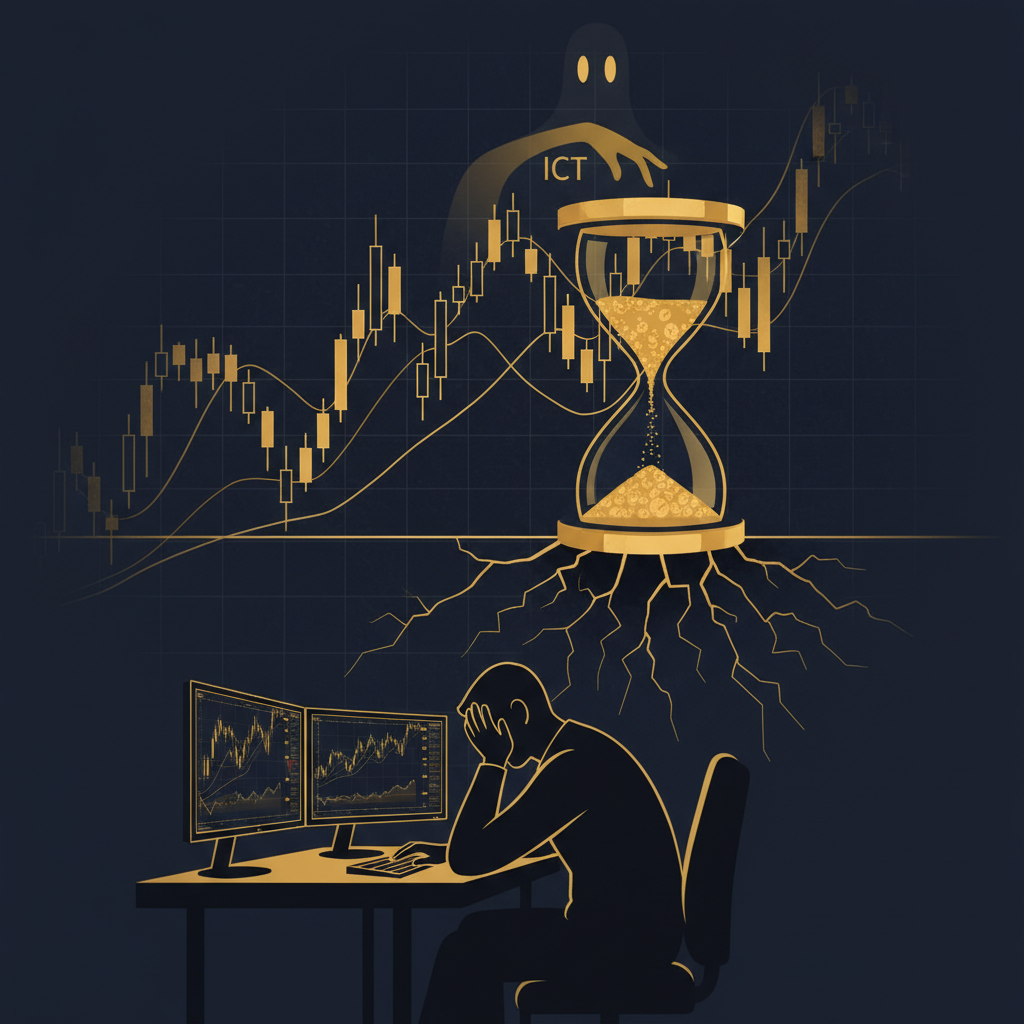
Most traders believe their biggest threat is entering a bad setup. They obsess over perfecting their entries, fine-tuning their ICT order blocks, and analyzing every fair value gap until their eyes bleed. But after 10+ years in the markets, I've come to think boredom trading is at least as dangerous as a bad setup, and it gets far less attention.
A common pattern I see: a trader who can spot a proper liquidity grab or premium/discount array just fine still gives back money because they can't sit on their hands when the market offers nothing.
Key Takeaway: Perfecting your setups matters far less than developing the discipline to sit on your hands when no setup exists, because the trades you force out of boredom can drain your account just as surely as a flawed entry.
Why Boredom Trading Is the Real Account Killer
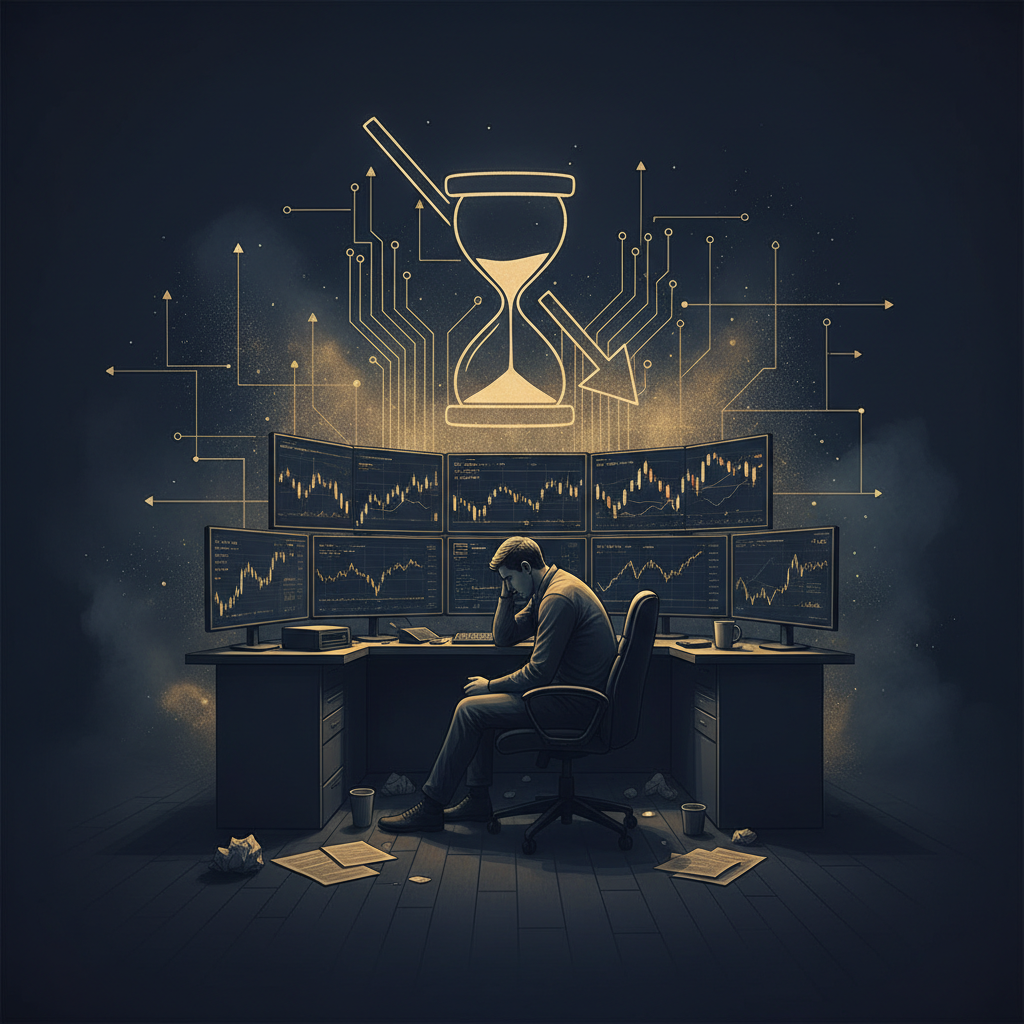
Let me paint you a picture. It's London lunch on a Tuesday. The London move is done, New York hasn't woken up yet, and you're staring at choppy, sideways price action that looks like a cardiogram of someone having a seizure. Your ICT concepts are screaming "STAY OUT", no clear market structure breaks, no obvious liquidity pools, no clean premium/discount zones.
But you've been sitting there for three hours. Your FTMO challenge deadline is approaching. Your friends are posting P&L screenshots on Twitter. That voice in your head whispers, "Just take one small trade. What could go wrong?"
Everything. Everything could go wrong.
The Boredom Trading Death Spiral
Here's how it typically unfolds:
- The Itch: You start rationalizing marginal setups
- The Scratch: You take a low-probability trade "just to stay active"
- The Spiral: One bad trade leads to revenge trading
- The Explosion: You blow your daily loss limit or worse
In my experience, this slow grind of forced trades on quiet days is one of the most common ways prop firm accounts get into trouble.
The Psychology Behind Boredom Trading
Why do intelligent traders who understand ICT concepts inside and out still fall into this trap? It comes down to three psychological drivers:
1. Action Bias in Trading
Research from behavioral economics shows humans have an inherent "action bias", we feel compelled to do something even when doing nothing is the optimal choice. In football, goalkeepers facing penalties almost always dive left or right, even though staying in the center can be the better bet (research published in the Journal of Economic Psychology).
Trading amplifies this bias. We open our charts expecting to trade, not to watch. But good ICT trading is mostly waiting, with short bursts of execution.
2. The Buzz of Being in a Trade
Being in a trade, win or lose, gives you a buzz. That feeling doesn't care whether it came from a good fair value gap trade or a random scalp that got lucky. During boring market conditions, traders chase that buzz by forcing setups that don't exist.
3. Social and Financial Pressure
Prop firm challenges create artificial pressure to perform within specific timeframes. Add social media bragging and the fear of missing out, and you have a perfect storm for impatient decision-making.
What This Looks Like
Picture a trader who is up nicely for the month and then hits a week of market doldrums. No clear ICT setups, no obvious smart money moves. Just noise.
Instead of protecting the gains, they start forcing trades on the 5-minute chart, chasing micro fair value gaps that have no business being traded. A few days of that can undo a good month. And the frustrating part is that normal volatility usually comes back soon after, with clean setups that would have been worth waiting for.
A common pattern I see is a trader who can identify good order blocks and premium/discount arrays but can't resist trading during London lunch or the late New York session. What helps is having set rules for what to do when the urge to trade hits during low-probability periods. I call these "Boredom Protocols".
The Solution: Boredom Protocols for ICT Traders
Protocol 1: The Three-Question Filter
Before any trade during slow market conditions, ask:
- Would I take this setup during prime London/New York overlap?
- Does this align with my daily bias and higher timeframe structure?
- Am I trading the setup or trading my emotions?
If any answer is "no," close your charts.
Protocol 2: Productive Boredom Activities
Instead of forcing trades, use boring market periods for:
- Reviewing past trades and journaling
- Studying higher timeframe structure for tomorrow's bias
- Working on non-trading skills
- Physical exercise or meditation
Protocol 3: The "Boring Day" Win
Redefine success. A day where you correctly identified poor market conditions and took zero trades is a massive win. I track these "boring day wins" just like profitable trades in my journal.
When Boredom Trading Makes Sense (Spoiler: Almost Never)
I'm not advocating for never trading during quiet periods. Sometimes, the best ICT setups occur during seemingly boring times, like a perfect fair value gap rebalance during London lunch that sets up the New York session.
The key is trading the setup, not the boredom. If you find yourself rationalizing why a marginal setup "might work," you're probably boredom trading.
Common Boredom Trading Mistakes I See
Mistake 1: Scalping Random Fair Value Gaps
Traders see a tiny FVG on the 1-minute chart and convince themselves it's a valid ICT setup. Without higher timeframe context or clear liquidity targets, these trades are just gambling with fancy terminology.
Mistake 2: Trading Every Order Block
Not every order block deserves your attention. During boring markets, traders lower their standards and trade weak OBs that have no business being entered. This connects to many of the fatal mistakes that kill funded account challenges.
Mistake 3: Overcomplicating Simple Concepts
Boredom leads to analysis paralysis. Traders start combining 15 different ICT concepts into one trade, creating complexity where none is needed.
The April 2026 Market Reality
Currently, we're seeing exactly these conditions. April's ranging markets are testing every trader's patience. Slow, ranging stretches like this are exactly when boredom trades creep in.
This environment separates disciplined ICT traders from gamblers. The traders who master boredom now will capitalize when volatility returns.
Your Next Steps
If you recognize yourself in this article, you're not alone. Boredom trading is addressable through proper education and accountability. In my coaching programs, we spend significant time building these psychological defenses because technical skills mean nothing without emotional control.
Here's what you can do starting today:
- Audit your last 50 trades and identify which ones were "boredom trades"
- Calculate the P&L impact of eliminating just those trades
- Implement the three-question filter before every entry
- Consider booking a free discovery call to discuss how proper mentorship can accelerate this process
The Bottom Line
Bad setups are obvious enemies, you see them coming and can prepare defenses. Boredom is insidious. It masquerades as opportunity, whispers about missed profits, and convinces you that "just this once" won't hurt.
After a decade in these markets and earning recognition as a TradingView Editors' Pick, I can tell you with certainty: your ability to sit on your hands during boring markets will determine your long-term success more than any ICT concept you'll ever learn.
The market will always be there tomorrow. Your account might not be.
Master your boredom, and you'll master your trading.
Want more insights on trading psychology and ICT concepts? Check out our trading insights for comprehensive market analysis and strategy breakdowns.
Harvest Wright
ICT Trading Coach · 10+ Years Experience
Harvest specializes in ICT methodology and has helped traders pass prop firm challenges, develop consistent strategies, and build the psychology needed for long-term profitability.
Book a Free Discovery Call →Ready to Get Funded?
Our students pass prop firm challenges in under 60 days with personalized ICT coaching.
Book a Free Discovery CallFree ICT Funded-Trader Playbook
The setups, the pre-trade checklist, and the risk rules I use. Get it free.