
The Silence Before the Move: Trading Stillness
There's an earlier version of me who would roll out of bed right before the London session, still half-asleep, immediately check his phone for overnight price action, scroll through three Twitter threads about DXY, read a Reuters headline he only half-understood, and then, still processing all of it, open TradingView and start marking up charts. That trader was always confused about why his smart money concepts setups kept failing. The concepts were right. The execution was a mess.
The problem wasn't his ICT knowledge. It was the noise he carried into the session before price moved a single pip.
Key Takeaway: The gap between two traders who both understand smart money concepts and get opposite results from the same order block often comes down to what happened in the 20 minutes before they opened their chart, not their technical knowledge.
What Performance Psychology Actually Says About This
There's a concept in elite sports psychology called pre-performance routines, and you see it in everything from shooting to professional golf. The idea is that top performers don't just prepare their skills. They prepare their attentional state. They deliberately transition from everyday cognitive noise into a focused, low-narrative mental state before execution.
Trading content never talks about this. Every YouTube video about smart money concepts goes straight to the chart. Here's the displacement candle, here's the FVG, here's your entry. Nobody talks about what's happening neurologically when you sit down already loaded with bias from overnight news, a losing trade yesterday, or the anxiety of a running position you're already up on.
When you carry narrative into the session, "Dollar looks weak this week," "I heard NFP is going to be hot," "I'm already up 3% this month so I need to protect it", you're not reading price. You're confirming a story. And smart money concepts require exactly the opposite. They require you to follow institutional footprints, not pre-written narratives.
The two-traders-same-order-block problem? One of them walked in clean. The other walked in with a bias. A lot of the time, that's the whole explanation.
What This Looks Like
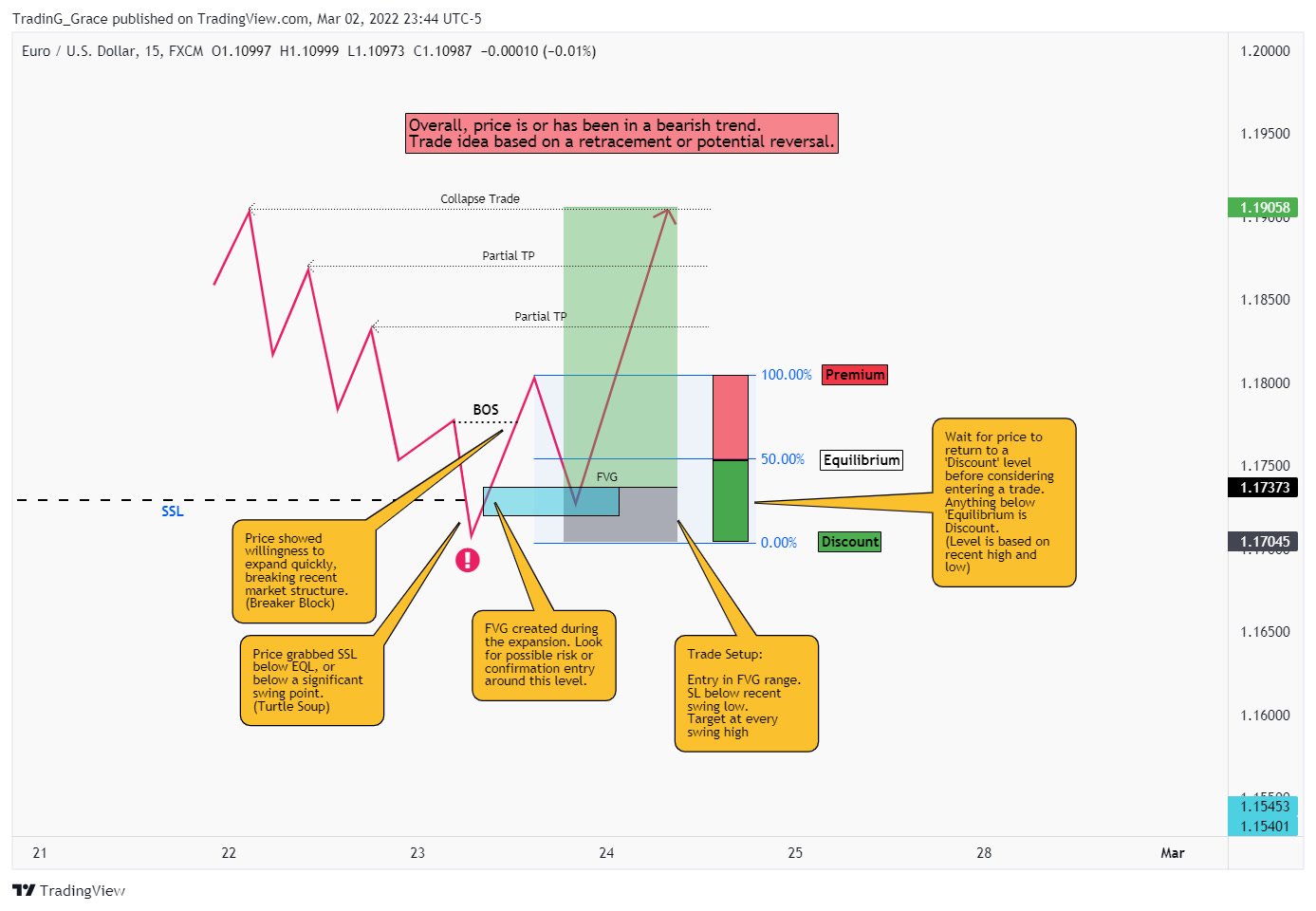
Here's the kind of situation I mean.
Picture GBPUSD on the 15-minute going into the New York open. A bearish order block formed on the 1-hour after a clean displacement lower during London. There's a proper market structure break, an FVG below price, and the OB sits in premium of the prior dealing range. Everything lines up for a short, with the stop above the order block high (if price closes through it, the bearish idea is dead) and the target at the sell-side liquidity under the London low.
Now picture the trader read a headline that morning about the Bank of England, and somewhere in the back of their head they're thinking pound strength. Price retraces into the OB, they hesitate, and they pass because it "didn't feel right." Then price leaves without them.
That isn't a knowledge failure. That's a state failure.
Now run the same kind of setup on a morning where they did the ritual below first. Same chart reading, same entry logic, same stop placement below or above the order block, same liquidity target. The difference is they walk in with no story about which way the pair "should" go that day, so when price reaches the level they just execute the plan.
Same technical framework. Two completely different mental states at the moment the chart opens.
The Archetype I See Constantly
Here's a pattern I notice with a certain type of ICT trader, often someone who's been at this for a while, understands the concepts well enough to mark up a solid chart, and still can't get consistent results.
This trader is a morning headline absorber. Watches the economic calendar religiously, reads three macro takes before the session, has alerts set for every news release. And somehow, every time a genuinely clean smart money concepts setup appears on their chart, they're either not in it or they've inverted their bias entirely. They'll see a perfect bearish OB in premium, with SMT divergence confirmed on a correlated pair, and talk themselves out of shorting it because they read somewhere that "risk-on sentiment is returning."
The cruel irony is that their chart analysis is usually correct. Price does exactly what the setup suggested. They just weren't present enough to take it, because their brain was running a competing narrative in the background.
This isn't discipline in the traditional sense. It's not about being "more focused" or "trusting the process" (meaningless phrase). It's a structural problem with when information enters the system relative to when decisions need to be made.
The 20-Minute Pre-Session Ritual (Exactly What I Do)
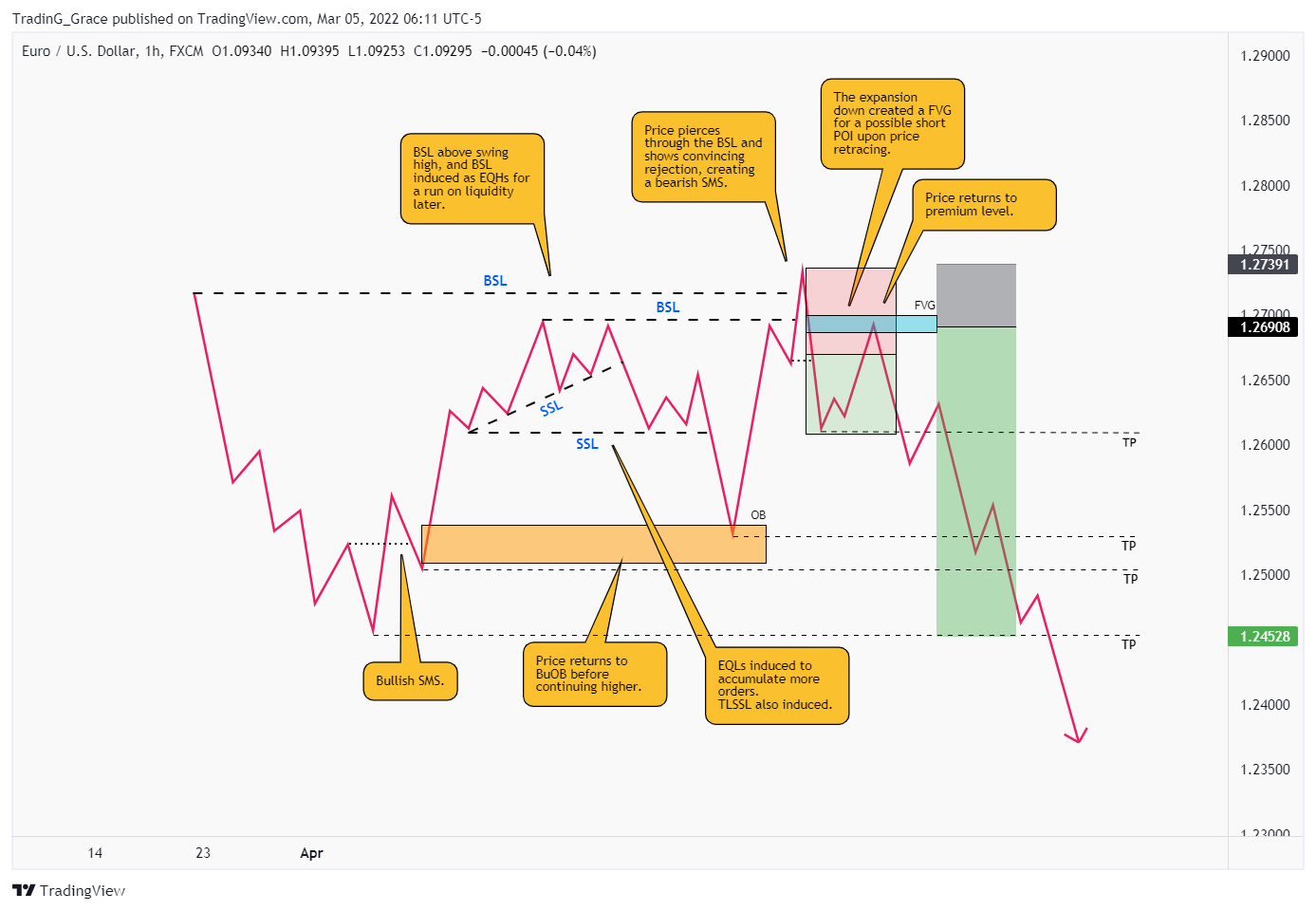
This isn't meditation advice. I'm not telling you to light a candle or do breathwork. This is a specific sequence built around how ICT analysis actually functions, and you can start using it today.
The sequence runs like this:
Minutes 1 to 5: Information blackout. No charts. No phone. No financial news. Put the device face down. This isn't about clearing your mind, it's about stopping the inflow of competing narratives before you've done your top-down analysis. One headline can anchor your bias fast. Kill the feed before it starts.
Minutes 6 to 12: Top-down, context-first analysis, highest timeframe only. Open your chart, but start only on the Weekly or Daily. No indicators, no lower timeframes. Ask one question: Where is price in the dealing range? Premium, discount, or equilibrium? Write it down on paper (not a note on screen, writing by hand makes it stick better). This gives you a directional bias grounded in price structure, not news.
Minutes 13 to 17: Mark your levels, then close the chart. Identify the key HTF order blocks, FVGs, and liquidity pools for the session. Mark them. Then close the chart and walk away for three minutes. This sounds counterintuitive. The reason it works: when you return, you're seeing the levels with fresh eyes, not the eyes of the trader who just marked them with emotional investment. Tiny distinction. Massive difference in execution.
Minutes 18 to 20: Bias statement, written. Before you drop to your entry timeframe, write one sentence: "Price is in [premium/discount], my directional bias is [long/short], and I will only consider setups that align with this." If no setup aligns with the bias when you drop to the 5 or 15-minute chart, you don't trade. That's it. That's the rule.
This ritual isn't about being more patient or disciplined in the generic sense. It's about making the technical reading of smart money concepts the only voice in the room when you sit down to execute.
For more on how to apply this kind of structured approach when markets are moving erratically, the piece I wrote on why Q2 2026 market structure shifts are breaking traditional ICT setups is worth reading alongside this one, a lot of what's happening in price action right now punishes reactive, narrative-driven traders more than it used to.
The Contrarian Point Most ICT Traders Won't Accept
Here's what 10 years of doing this has taught me that a one-year trader almost never believes: the more you know about smart money concepts, the more dangerous pre-session bias becomes.
Early on, you don't know enough to rationalize a bad trade with sophisticated-sounding logic. But after a year or two of genuine study, your brain becomes very good at constructing plausible ICT narratives to support whatever emotional position you've already taken. You can make an order block justify almost any entry if you're motivated enough. You'll cite the right confluence, use the right terminology, reference the right liquidity pool, and still be dead wrong because the actual setup wasn't there and you manufactured the story to support a pre-existing bias.
Experience makes this worse, not better, until you build the ritual that separates the analysis from the emotion before you ever touch the entry button.
If you've been struggling with execution consistency specifically, not identifying setups, but pulling the trigger correctly on the ones you see, the ICT Fair Value Gap trading checklist I put together goes into the pre-trade confirmation process in detail and pairs well with this ritual.
What Changes When You Actually Do This
When you run this consistently, the first thing you tend to notice is fewer trades, and cleaner ones. The ritual filters out the trades you only wanted to take because of a narrative you imported from outside the chart.
You'll also notice your post-trade review changes. When you lose a trade that was set up correctly, you accept it faster. When you win, you understand exactly why. The emotional static is lower across the board because you entered with less of it.
That's the real edge in smart money concepts that nobody puts in a YouTube thumbnail. Not a new order block variation. Not a refined entry model. Twenty minutes of silence before the session that removes everything except what price is actually telling you.
If you want to take this further and understand how position sizing fits into the mental framework, because nothing destroys pre-session calm faster than a position that's too large, the risk calculator on this site is a good starting point for getting that variable out of your head before you sit down.
And if you're at the point where you want structured accountability around this kind of execution consistency, the coaching plans I offer range from $150/week up to a full 4-month mentorship at $5,000, and the framework above is the kind of thing we go deep on inside those programs.
Otherwise, start tomorrow. Before the London open. Twenty minutes. No charts, no news, one written bias statement. Do it for two weeks and see what changes.
Harvest Wright
ICT Trading Coach · 10+ Years Experience
Harvest specializes in ICT methodology and has helped traders pass prop firm challenges, develop consistent strategies, and build the psychology needed for long-term profitability.
Book a Free Discovery Call →Ready to Get Funded?
1-on-1 ICT coaching built around prop firm rules, from a trader who has passed an FTMO Challenge.
Book a Free Discovery CallFree ICT Funded-Trader Playbook
The setups, the pre-trade checklist, and the risk rules I use. Get it free.