
The Boredom That Kills ICT Traders
There's a particular kind of suffering that only rule-based traders understand. It's not the sting of a stop-out. It's not the anxiety before a news event. It's sitting in front of a chart during London pre-killzone, structure clean, no displacement, no FVG worth touching, and feeling your hands start to itch. You know the setup isn't there. You know it. And yet your brain starts doing something insidious: it starts finding one.
Fear and greed get the attention, but the real enemy of solid ICT trading psychology is often boredom.
Key Takeaway: Boredom during low-probability ICT sessions is a mental trap, not a character flaw. Traders who handle it well usually aren't more disciplined than you. They've built a specific protocol for idle time that prevents their brains from manufacturing setups out of dead market conditions.
Why ICT Traders Are Uniquely Vulnerable to This
Here's what nobody on YouTube will tell you, because it doesn't make for a good thumbnail: the better you get at ICT concepts, the more dangerous boredom becomes.
Think about that for a second.
When you're new, you can't identify a mitigation block from a regular candle. You can't see inefficiency cleanly. The chart is overwhelming noise. But after six, twelve, eighteen months of deep study? You see setups everywhere. Your pattern recognition is trained, firing constantly, looking for the familiar shapes, displacement, imbalance, liquidity sweep, reaction. The problem is that a well-trained brain doesn't distinguish between "there's a real setup forming" and "I've been staring at this chart for 90 minutes and need something to happen."
Here's how I think about it: your brain doesn't need an actual reward to get going. The possibility of one is enough. So during a dead, drifting session, when price is grinding sideways in some mid-range purgatory with no killzone confluence and no clean institutional order flow, your brain doesn't sit quietly. It starts making a case. That FVG from three hours ago? Still valid, probably. That little consolidation at the 50% of the recent range? Could be an order block. Maybe.
And that's where the account goes to die.
I've seen this pattern repeat in trade journals, forum threads and Discord servers where traders post their blown accounts. The screenshot often shows the same thing: a trade taken before the killzone on a quiet day, with a vague justification that reads like a stretch.
The Archetype: The Competent Trader Who Manufactures Urgency
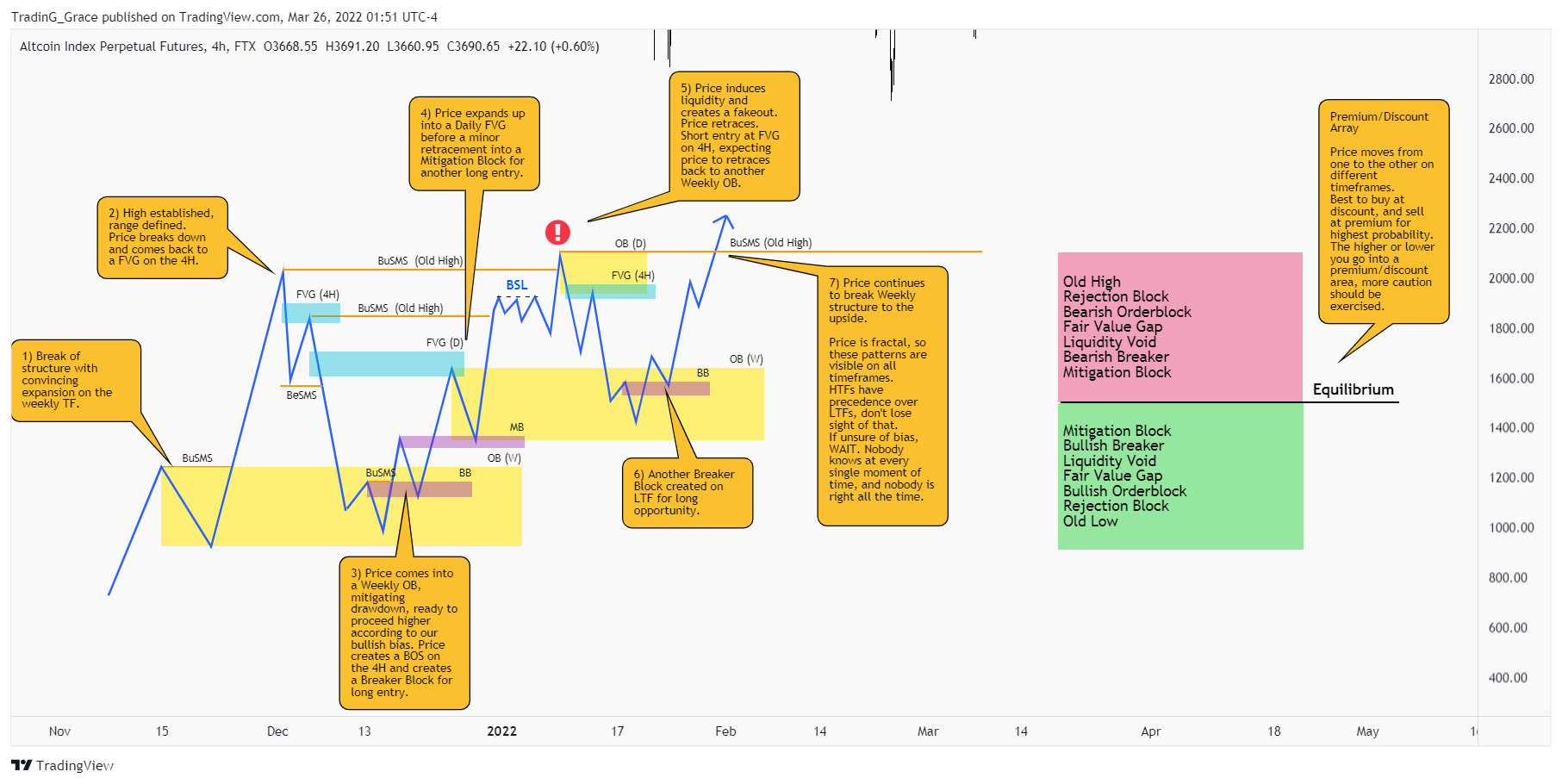
There's a specific trader profile I see struggle with this in quiet months. This person isn't a beginner. They understand premium and discount. They can draw out HTF PD arrays. They know the killzones. Their backtesting results are solid. Their performance during high-volatility months, October, November, January, is genuinely impressive.
But when markets go quiet, as they can in a slow May, this trader starts manufacturing urgency. They'll take an entry on a 15-minute FVG that was formed three sessions ago and never tapped, not because it's a high-probability location, but because it's there, and they've been watching screens for an hour and a half. They'll enter off an order block that was already tested and mitigated on the previous day's New York session, convincing themselves the second tap is valid. It rarely is.
The tell? Look at their trade times. Cluster of losses between 6:00, 8:30 AM London, before the killzone proper opens. Or between 12:00, 2:00 PM New York, that notorious dead zone between NY AM and PM sessions. Not because they don't know better. Because they do know better, and boredom overrides it anyway.
If you've read my breakdown on why funded account challenges implode, you'll recognize this as one of the quieter killers on that list. It doesn't feel dramatic. It feels like a reasonable trade. That's what makes it lethal.
A Worked Example
Picture GBPUSD on the 15-minute chart, London session, before the killzone opens.
Price has been consolidating since the Asia session high was swept. There's a FVG left by a minor displacement on the previous day's NY close. Technically, it hasn't been violated. Technically, HTF bias is bullish. It's worth marking and watching.
It's not worth trading yet. The displacement that created that FVG wasn't clean: one sluggish candle with a poor body to wick ratio, no real conviction behind the move. The London killzone hasn't opened. There's no SMS (shift in market structure) on the lower timeframe confirming any entry. There's just a gap on the chart, and the fact that you've been watching screens for seventy minutes.
The early entry at that FVG is exactly the kind that gets tagged and stopped out when price dips to sweep the early-session lows. The proper entry comes later, inside the killzone: price sweeps the early low, displaces back up, and you enter on the LTF confirmation with the stop below the swept low, targeting the inefficiency up toward the Asian high.
The gap between those two trades is the entire game.
It comes down to the ability to sit with seventy minutes of nothing and not flinch.
The Cognitive Reframe That Actually Works
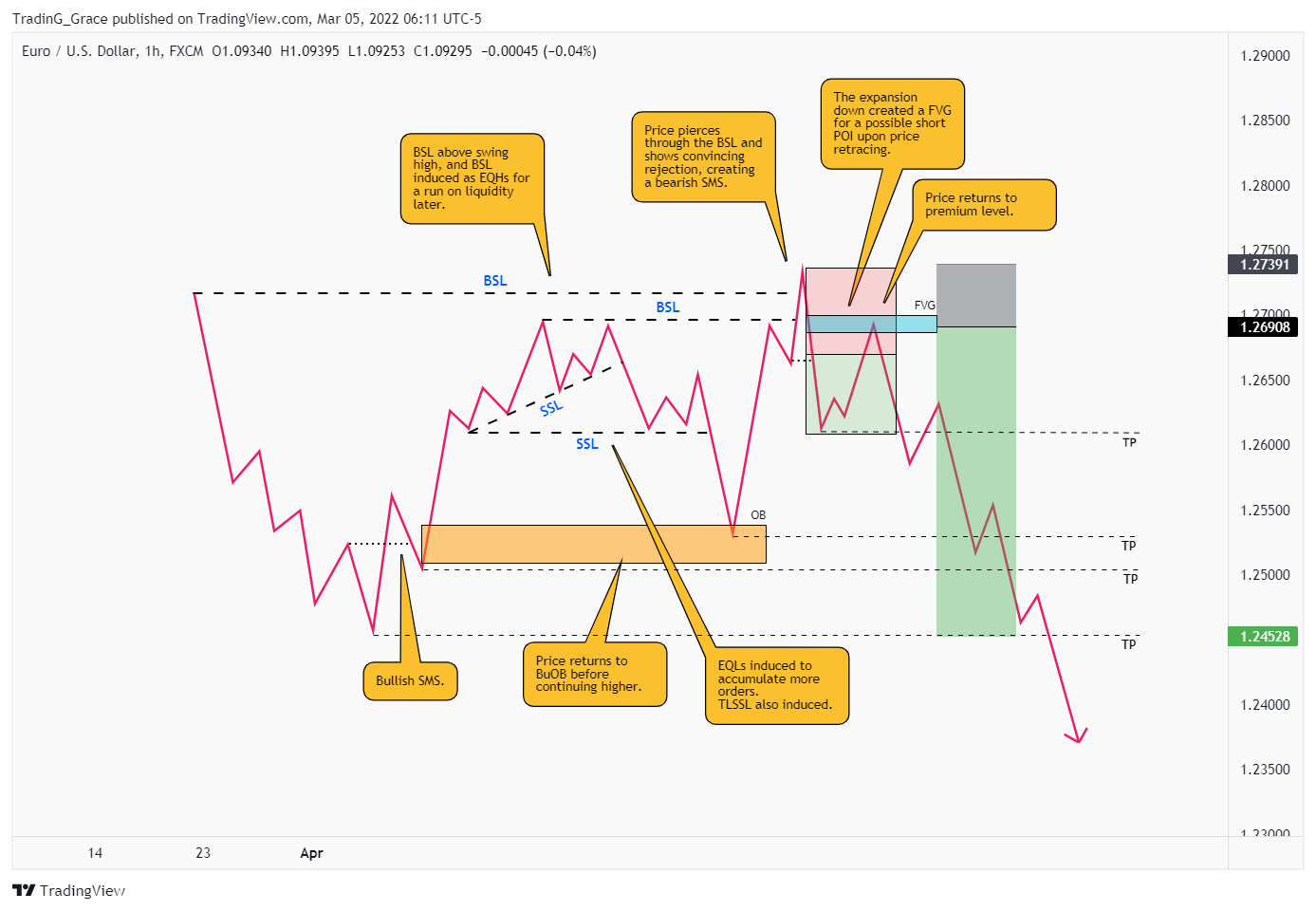
Here's where I want to challenge the conventional wisdom directly: telling yourself to "be patient" doesn't work. It's not a strategy. Patience without a framework is just willpower, and willpower is a depleting resource, especially during a two-hour dead zone in a week where markets have done absolutely nothing for four days straight.
The reframe that actually works, and I mean the one that changed how I approach dead sessions after years of getting this wrong, is this:
Treat not trading as the trade.
That sounds simple, but the implementation is specific. When I'm in a dead session and my brain starts building a case for a marginal setup, I don't tell myself to wait. I treat the abstention as an executed position. I literally log it. I open my trade journal and write something like: "Pre-killzone, identified FVG, no LTF confirmation, no clean displacement. Did not enter. This is a trade: short boredom, long process."
That logging behavior satisfies the brain's need to do something. It closes the anticipation loop without actually putting capital at risk. Over time, the logging starts to give you a bit of the satisfaction you were seeking from the bad entry. It sounds almost too simple to work. It isn't.
For more on how I think about entry confirmation specifically, the ICT FVG trading checklist covers the nine pre-trade filters I run before every FVG entry, several of which exist specifically to catch boredom trades before they become real ones.
The Idle Session Protocol (Use This Today)
Here's the actual framework. Not theory, the specific routine I run during dead sessions, developed from burning real money on manufactured setups before I figured this out.
Step 1, Define the session type before the session starts. Before London opens, I categorize the day: High Probability (clear HTF bias, killzone alignment, upcoming catalyst) or Low Probability (ranging conditions, mid-week May drift, no clear institutional narrative). If it's LP, my rules change entirely. The bar for entry doubles.
Step 2, Set a hard no-trade window. Pre-killzone (before 8:00 AM London, before 9:30 AM New York) is a no-trade zone on LP days. Non-negotiable. Not because setups can't occur there, they can, but because, in my experience, the cost of the boredom trades taken in that window outweighs the occasional genuine setup captured. I use TradingView's session highlighting feature to grey out those windows visually. When the chart looks different, my brain treats it differently.
Step 3, Log the manufactured setups you didn't take. Every time boredom builds a case for a marginal entry and you decline it, write it down. Pair, time, reason you almost entered, reason you didn't. Review this log weekly. You will start to see your own boredom patterns, specific times, specific market conditions, specific setup types your brain gravitates toward when it's idle.
Step 4, Use idle time for HTF analysis, not LTF watching. The mistake is staying on the 5-minute chart during dead sessions. Zoom out. Annotate the weekly. Update your daily bias. Look at correlated pairs. The moment you drop to execution timeframes with nothing to execute, you're setting the trap for yourself. If you want to understand how shifting market structure affects this dynamic, the Q2 market structure breakdown is worth reading before next week's sessions.
Step 5, Use your risk calculator to pre-size the next real trade. Channel the preparation energy into something productive. Calculate your position size for the killzone trade you're waiting on. It keeps you engaged with the process without letting you wander into the chart looking for excuses.
The Uncomfortable Truth About 'Sell in May'
May can be a rough month for ICT traders. A lot of traders expect a seasonal drift heading into summer (the old Sell in May idea), and when it shows up it creates long stretches of exactly the market structure ICT setups need not to be: ranging, inefficient, choppy, without clean institutional order flow. The killzones still happen. Setups still form. But the signal-to-noise ratio drops, and the gaps between genuine high-probability entries stretch out.
A trader who finds plenty of clean setups in a busy month might find far fewer in a slow one. That's not failure. That's the market. But boredom convinces you it's failure, that you're missing something, that you've lost your edge, that you need to find the setup that isn't there.
You haven't lost your edge. You're just in a dead week. Log the no-trades. Run the protocol. Wait for the killzone.
If you're currently in a funded challenge and feeling this pressure acutely, have a look at the coaching plans available here, the Lite tier at $150/week is specifically structured for traders who already understand the setups and need accountability around execution discipline rather than concept education.
Or if you want to dig into whether boredom trading is part of a wider pattern in your approach before committing to anything, book a free discovery call and we can look at your journal together.
The trade you don't take in the dead session is often worth more than the two you do take in the killzone. That's not a platitude. That's arithmetic, every boredom trade that stops out costs you not just the loss, but the drawdown headroom you needed for the real one that came forty minutes later.
Sit with the discomfort. Log the manufactured setup you almost took. Call it a trade.
That's the protocol. That's the edge.
Harvest Wright
ICT Trading Coach · 10+ Years Experience
Harvest specializes in ICT methodology and has helped traders pass prop firm challenges, develop consistent strategies, and build the psychology needed for long-term profitability.
Book a Free Discovery Call →Ready to Get Funded?
Our students pass prop firm challenges in under 60 days with personalized ICT coaching.
Book a Free Discovery CallFree ICT Funded-Trader Playbook
The setups, the pre-trade checklist, and the risk rules I use. Get it free.