
The Boredom That Blows Accounts
Everyone wants to blame the blowup on greed. Or revenge trading. Or fear pulling them out of winners too early. Those are real problems, I'm not dismissing them, but in ten years of living inside trading psychology at a granular level, the loss that actually ends funded accounts most often doesn't come from rage or panic. It comes from a Tuesday afternoon in May when the market hasn't done anything meaningful in six hours and your brain quietly convinces you that this consolidation breakout is about to go.
It won't. But you'll take it anyway.
Key Takeaway: Boredom-driven trades, not revenge trades, are the primary account killer during low-volatility sessions like May's seasonal chop. Boredom masquerades as confidence, bypasses your rules checklist, and targets the exact moment your ICT framework has no valid setup to offer.
Why May Is the Perfect Petri Dish for This Problem
There's a reason the old Wall Street adage "Sell in May and go away" has survived decades of market evolution. It isn't just folklore. Institutional participation genuinely thins out heading into summer. Volatility compresses. The clean displacement moves that ICT setups depend on, the kind that create textbook Fair Value Gaps with real separation, the kind where you can see London session smart money clearly engineering liquidity, those become rare. You might get one clean session in five.
This year, May 2026 has been delivering exactly that. EURUSD spent most of the first week grinding between 1.0820 and 1.0870, chopping through every potential OB on the 15-minute chart without conviction. GU was worse. The DXY sat in a fog. If you came to the charts looking for ICT setups during New York AM sessions this week, you largely came up empty.
And that's where the psychological trap springs.
If you want context on how Q2 2026 market structure has been behaving more broadly, I wrote about it in detail in this piece on why Q2 structure shifts are breaking traditional ICT setups. The short version: the setups haven't disappeared, but the frequency has dropped. And frequency is exactly what boredom exploits.
What Boredom Actually Looks Like in Real Time
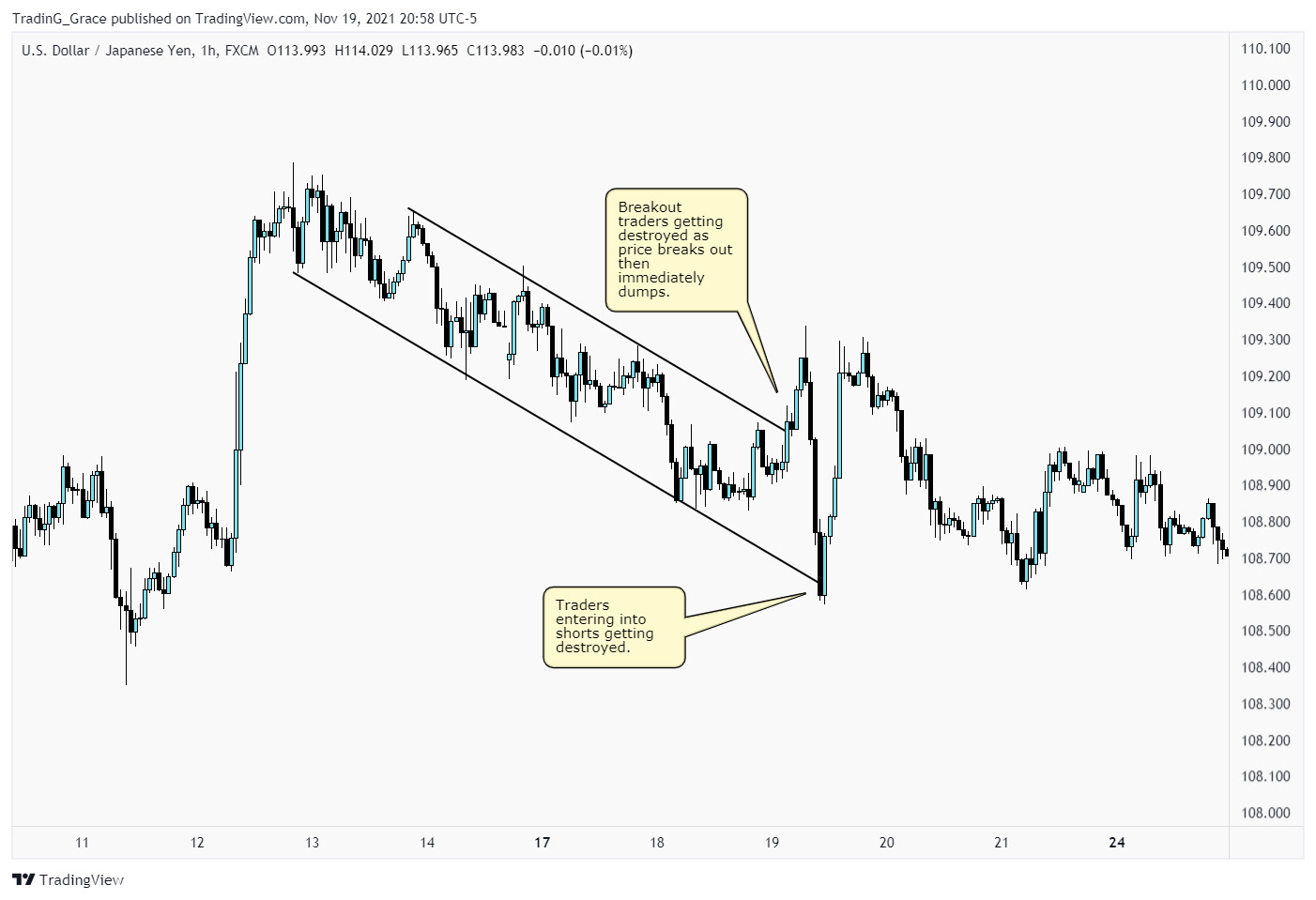
Here's what I want you to understand about boredom in a trading context: it doesn't feel like boredom. That's the insidious part.
By the time you're about to enter the bad trade, you're not yawning and clicking buttons randomly. You're alert. You've been watching the chart for two hours. You've built a narrative. You've identified what looks like a consolidation above an old swing high, potential buy-side liquidity sitting there. You've told yourself that price has respected a certain 4H level twice already. Everything feels like a setup.
That feeling is manufactured. Your brain, understimulated for hours, started doing what human brains do when deprived of input: it started pattern-matching aggressively to create stimulation. The ICT framework gave it the vocabulary. Boredom gave it the motivation. And now you're about to risk 1% of your funded account on a setup that doesn't have half the confirmations you'd normally require.
The archetype I see constantly in trading forums, in prop firm challenge postmortems, in the comment sections under losing trade screenshots: it's the trader who posts a chart with seven different markup labels on it, an OB here, an FVG there, a "potential" SIBI, a "possible" liquidity sweep, and asks why the trade failed. The markup isn't analysis. It's retrospective storytelling. All of that labeling happened after the boredom decision was already made. The labels were recruited to justify a trade that was entered because sitting still became unbearable.
I used to do this. Not as a beginner, I was past the beginner stage. This was year three or four, when I knew enough ICT concepts to weaponize them against myself. Knowing the terminology made me better at constructing fake setups. That's a hard thing to admit, but it's true.
The Actual Trade That Reminded Me This Year
Let me give you something concrete. Last week, Thursday, April 30th, New York session, I was watching GBPUSD on the 15-minute chart. London had been completely dead. No displacement, no real structure break, price just oscillating around 1.2695-1.2720.
By 10:15 AM EST, I had a markup on the chart: a bearish OB sitting at 1.2718, formed the previous Tuesday. Below price sat equal lows at 1.2681, obvious buy-side inducement, textbook sell-side liquidity target. The story wrote itself. Price sweeps the OB, I short from 1.2716, stop at 1.2731 (15 pips), targeting the equal lows at 1.2683 for roughly a 2.2R trade, risking 0.5% of account.
I didn't take it. Not because I suddenly found discipline from nowhere, I didn't take it because I ran it through the framework I'll describe below and it failed at step two. There was no displacement into that OB. Price had drifted into it. Drift isn't displacement. That distinction sounds minor. It isn't. Drift means no institutional commitment. Displacement means someone with size moved price with purpose. Without displacement, an OB is just a colored rectangle on a chart.
Where this story gets honest: I had the order typed in. Entry, stop, target, size. My finger was on the button. What stopped me was not willpower. It was a rule I'd made structural, literally written on a card next to my monitor, that I don't enter OB trades without confirmed displacement on the same timeframe or one below. That rule exists because of boredom. I built it after losing 1.8% on a similar non-displacement OB entry during a slow session in late 2023, watching price chop through my level three times before hunting my stop.
How to Rewire the Idle Hours: A Structural Framework
The solution to boredom trading isn't "be more disciplined." That's useless advice. Discipline in the abstract means nothing when you're two hours deep in a ranging session and your prefrontal cortex has quietly gone on break.
The solution is structural. You build the rules during clarity and make them frictionless to follow during the session, not easier, frictionless. Here's how I approach it:
Step 1: Pre-session qualification (before the chart is even open) Every morning, I check the economic calendar (I use the CME Group's FedWatch and event calendar alongside TradingView's built-in calendar). If there are no high-impact events within the session window and the previous session produced no displacement on the daily or 4H chart, I write "Observation Only" in my trade journal for that session before I open a single chart. Not "low probability", observation only. The label matters. It removes the ambiguity that boredom exploits.
Step 2: The three-confirmation minimum rule For any ICT setup to qualify during a low-volatility session, it must hit all three: (1) displacement creating the FVG or OB, not drift, displacement; (2) the entry must be in discount on the relevant swing (below the 50% equilibrium for longs, above for shorts, use your risk calculator to make sure position sizing reflects the wider stops these sessions often require); (3) there must be identifiable external liquidity beyond the target, not just a swing low or high sitting in the middle of structure.
If it hits two out of three, it's not a "borderline" trade. It's a no-trade. Full stop.
Step 3: Redirect the idle energy deliberately When I'm in an observation-only session and price is doing nothing, I use the time for one specific task: higher timeframe markup on a pair I'm not actively watching. Building out weekly/daily structure for NAS100, for instance, during a slow EURUSD morning session. The brain gets stimulation. The charts stay clean. The funded account survives.
This isn't about staying busy for the sake of it, it's about giving the pattern-recognition engine in your brain something legitimate to chew on, so it stops manufacturing fake setups in the charts you're supposed to be leaving alone. If you're working on ICT concepts and want to dig deeper into what separates valid FVG entries from the boredom-bait versions, the FVG trading checklist I put together here covers exactly that.
The Confidence Disguise
One last thing, because it's the part most trading psychology content skips entirely.
When you're about to take a boredom trade, you don't feel uncertain. That's what makes it so dangerous compared to revenge trading. Revenge trades often feel wrong, there's an emotional signature to them, a heat behind them that you can learn to recognize with experience. Boredom trades feel calm. Considered. Almost professional. You've been patient for hours. You've waited. This must be the setup.
That calm confidence is the tell, not the green light. After a long, slow session with no valid structure, sudden conviction about a marginal setup should be treated as a red flag, not a signal. Real setups, in my experience, don't require convincing. When a London displacement creates a genuine FVG and price returns to fill it cleanly in discount with buy-side liquidity above, you don't reason yourself into that trade. You see it immediately. The reasoning only starts when the setup isn't really there.
If you're carrying a funded account through May and June, bookmark that distinction. If the most compelling argument for entering a trade is the amount of time you've spent watching the chart, log off. The market will still be there tomorrow.
For a broader look at the funded account pitfalls that compound this kind of psychological error, this breakdown of the seven fatal mistakes in funded account challenges is worth reading alongside this one, particularly the section on overtrading in low-volatility windows.
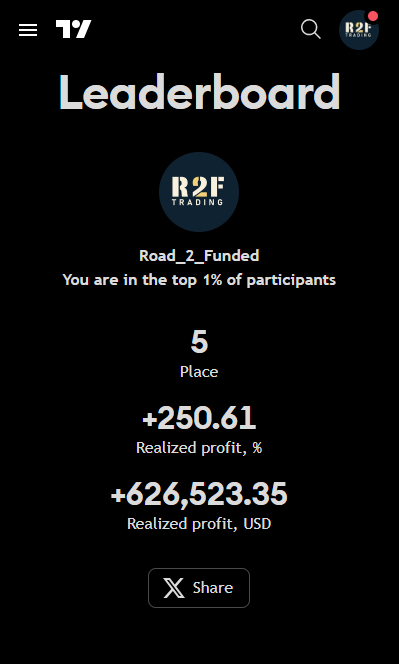
If you want to work through your specific session habits and build a rule structure that actually holds under pressure, the coaching plans here at R2F are built around exactly this kind of structural work, not theory, not YouTube recaps, but live session accountability and framework-building. The Lite plan at $150/week is a realistic starting point if you're navigating prop firm challenges right now. The results page shows what that kind of focused work actually produces.
But even if you don't take that step today, start with the card next to the monitor. Write your non-negotiables during a clear-headed moment, not during the session. Let the rule do the work your willpower can't sustain at hour three of a ranging May market.
Harvest Wright
ICT Trading Coach · 10+ Years Experience
Harvest specializes in ICT methodology and has helped traders pass prop firm challenges, develop consistent strategies, and build the psychology needed for long-term profitability.
Book a Free Discovery Call →Ready to Get Funded?
Our students pass prop firm challenges in under 60 days with personalized ICT coaching.
Book a Free Discovery CallFree ICT Funded-Trader Playbook
The setups, the pre-trade checklist, and the risk rules I use. Get it free.