
Why Winning Trades Still Destroy Traders
Everyone talks about how losses destroy traders. The sleepless nights, the revenge trades, the blown accounts that follow a string of red. And yes, losses hurt. But after tracking 90 days of my own trade journal obsessively, what I found was the opposite of what every trading psychology book will tell you.
My three worst drawdown spirals, the ones that genuinely shook my confidence in smart money concepts as a methodology, didn't follow losing streaks. They followed winning ones.
Key Takeaway: A lucky win on a bad setup is neurologically more dangerous than a clean loss on a good one. When your brain gets rewarded for poor process, it encodes that process as correct, and that's when disciplined traders quietly start falling apart.
The Myth That's Costing You More Than Your Losses
Myth: Psychological damage in trading comes from losing.
Reality: Psychological damage comes from disconnected feedback, when outcomes and process don't match. A win on a bad setup is the most dangerous form of disconnected feedback there is.
What I Actually See: Traders who've taken a string of losses are often humble, curious, and coachable. Traders who've just had a four-week winning streak? They're the ones who stop journaling, start sizing up too fast, and skip the pre-trade checklist they spent months building. I've watched this pattern repeat with students across every experience level. And I've lived it myself.
Here's the neuroscience behind why. When you execute a trade, even a sloppy one, and it wins, your brain releases dopamine. Not a little. A lot. The dopamine hit from a variable reward (you didn't know if it would win) is actually larger than the hit from a predictable one. This is the same mechanism behind slot machines. Your brain doesn't evaluate why the trade worked. It just knows you did something, and then good things happened. So it encodes that something as a behavior worth repeating.
Now imagine you took a shortcut. You saw what looked like a Fair Value Gap on the 15-minute chart, skipped the higher timeframe bias confirmation, entered anyway, and banked 2R. Your brain doesn't know you got lucky. Your brain thinks you found something. It will nudge you toward that shortcut again, harder next time, because now there's precedent.
This is the confidence trap. And smart money concepts traders are especially vulnerable to it.
Why ICT Traders Are Particularly at Risk
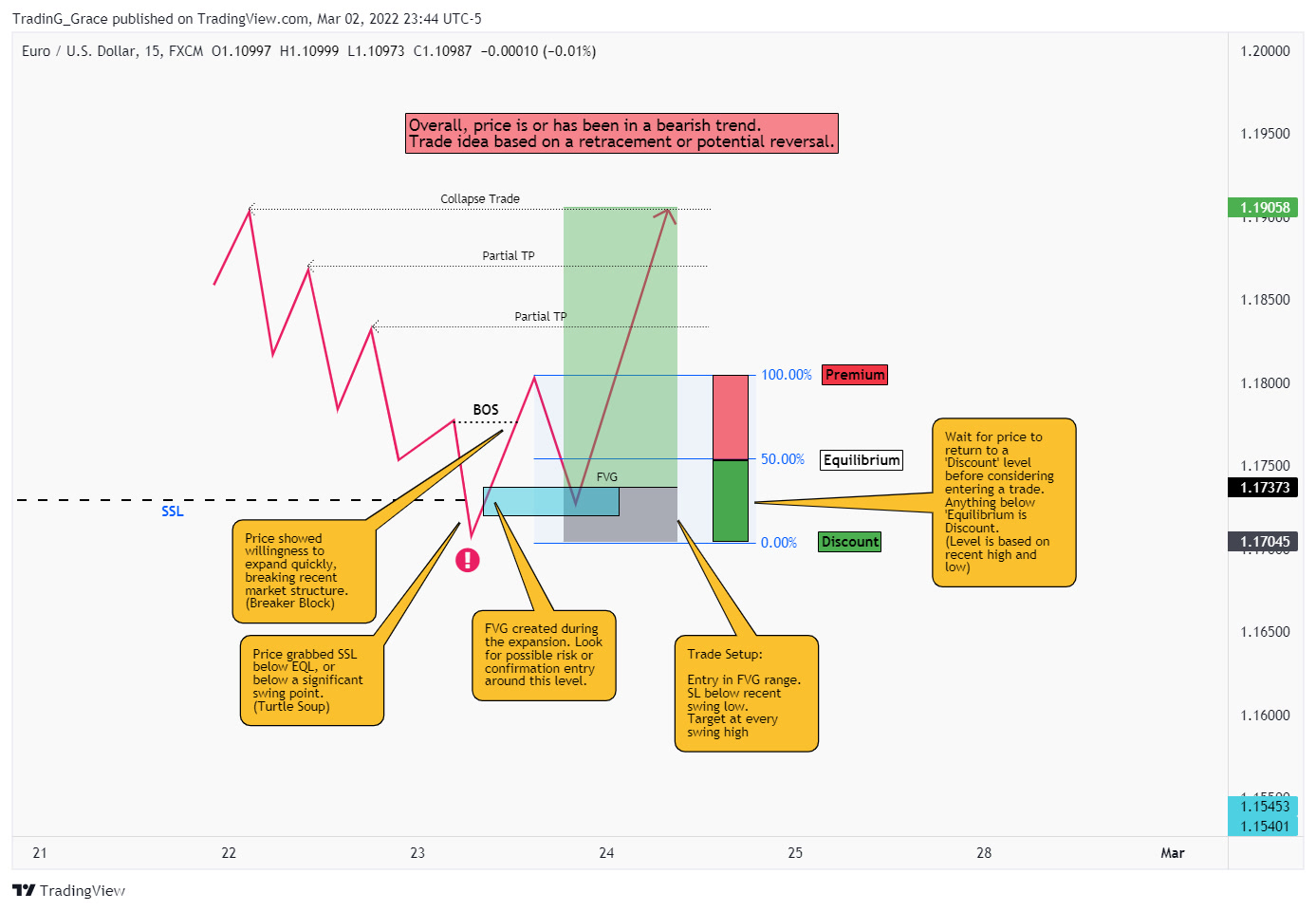
The smart money concepts framework, order blocks, Fair Value Gaps, liquidity sweeps, displacement, is rich enough that you can almost always find something on the chart that justifies a trade in hindsight. That's not a criticism of the methodology. It's a warning about how our pattern-recognition brains interact with it.
After a winning streak, I've watched traders start seeing OBs everywhere. Every minor wick becomes a liquidity grab. Every small imbalance becomes a tradeable FVG. The confluences they used to require, higher timeframe PD array alignment, kill zone timing, clear market structure shift, quietly get dropped, one at a time, because each individual shortcut got rewarded at least once.
I used to get this wrong too. Badly.
In Q3 of what I now call my "confidence year," I'd had six consecutive weeks of solid green. I was passing FTMO challenges almost on autopilot. My 15-minute entries on Cable were printing. And then, without realizing it, I started entering on 15-minute FVGs without confirming the 1-hour displacement that should precede them. Just skipping that one step. Tiny shortcut. Felt justified each time.
For three weeks, the market rewarded me anyway. Then it didn't, for six straight weeks. The drawdown that followed wasn't caused by bad luck or a regime change in the market. It was caused by a habit I'd been building during the winning streak, invisible to me until the losses exposed it.
When I went back through the journal, the pattern was undeniable. The winning trades from weeks three and four of that streak had technically poor entry reasons. I'd written things like "feels clean" and "strong displacement", but the 1H context wasn't there. The wins were real. The process was broken. And the broken process outlasted the wins.
A Real Trade That Illustrates the Trap
Let me make this concrete. Back in February, on GBPUSD, 15-minute chart, London open session. Price had been grinding lower through the Asian range, and I spotted what looked like a clear FVG between 1.2634 and 1.2641 forming after a three-candle displacement sequence. On the surface, textbook.
I entered long at 1.2636. Stop at 1.2621, 15 pips below the FVG low. Risk was 0.7% of account. Target was the 1H inefficiency sitting at 1.2694, roughly 3.8R clean.
It hit target. Beautiful trade on paper. But here's what I wrote in my journal that night, which I almost didn't notice until I reviewed it a week later:
"Skipped 4H bias check, HTF was actually still bearish. Entered on feel. FVG looked too clean to pass up."
The trade worked. But I had entered against the 4-hour trend, skipping a core rule I'd had in my playbook for two years, because the 15-minute picture was too pretty to ignore. The market rewarded me. My brain filed that away. Two weeks later, I did the same thing, same skip, same justification, and price ran my stop within 20 minutes and continued 80 pips against me.
That second trade? Clean execution of a broken habit. Built during a win.
If you want to go deeper on how ICT entry confirmations should stack before you ever touch the trigger, I broke down the full nine-step checklist in ICT Fair Value Gap Trading: 9 Pre-Trade Confirmations That Separate Profitable FVG Entries From Losers. Read that alongside this article and you'll see exactly where the gaps form.
The Student Who Couldn't Understand His Own Drawdown
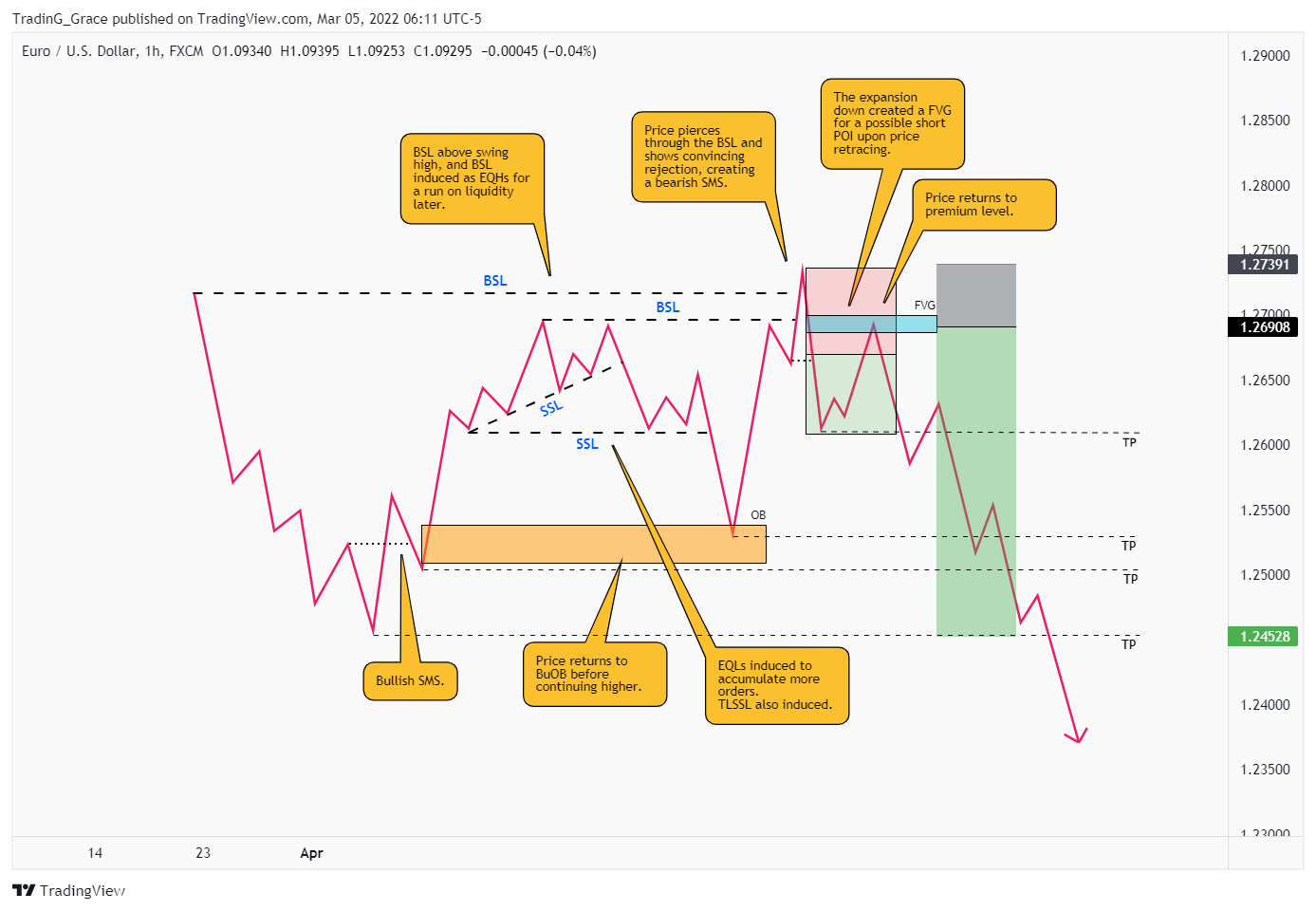
A student of mine, let's call him M, came to me in November frustrated and confused. He'd passed his first FTMO 100K challenge, traded the funded account well for six weeks, then blew through 8% drawdown in nine trading days. He couldn't explain it. His win rate going into the drawdown had been 68% over 40 trades. He felt sharp. Confident. Ready.
When we sat down and went through his journal together, the picture was clear. Weeks four and five of that funded account had been exceptionally strong, but three of his biggest winners had come from entries he'd taken outside his session windows. He trades London open exclusively. Three times, he'd entered during the New York overlap, outside his rules, and all three had run significantly in his favor.
Those three wins told his brain: session windows are optional. So in weeks seven and eight, he started entering the New York session regularly. No higher-timeframe alignment check, no kill zone discipline, just reacting to short-term price action in a session his entire strategy hadn't been built around. The losses came fast.
His 68% win rate hadn't made him safer. It had made him feel untouchable, right up until the moment his rewired habits met a less forgiving market.
After we did a full session breakdown and rebuilt his pre-trade checklist with hard session filters, M went on to post a result that he's genuinely proud of. But it took undoing what the winning streak had quietly done to his process. You can see similar patterns in how funded account psychology unravels in 7 Fatal Mistakes That Kill Your Funded Account Challenge Success, worth reading if any of this sounds familiar.
The Process Audit: What to Do After a Winning Streak
Most traders do post-mortems after drawdowns. Almost nobody audits their process after winning streaks. That asymmetry is the problem. Here's the exact framework I use, and now require every student in my coaching programs to run, after any period of five or more consecutive winning trades:
Step 1, The Entry Reason Audit Go back through each winning trade. Not the outcome. The entry reason. Write one sentence explaining why you entered, based purely on what you knew before price moved. If you can't write that sentence clearly, the trade was discretionary in a way you didn't acknowledge at the time.
Step 2, Rule Compliance Check For each trade, check it against your written rules, not your memory of your rules. Did you have 4H bias confirmed? Was it inside your session window? Did a market structure shift occur on the entry timeframe before you triggered? Score each trade: compliant, partially compliant, or non-compliant. Be brutal. A winning trade that was non-compliant is a liability, not an asset.
Step 3, Identify the Shortcuts Look for patterns in your non-compliant winners. Are you consistently skipping the same step? Higher timeframe confirmation? Displacement check? Kill zone timing? One skipped step that keeps getting rewarded is a habit forming in real time. Name it explicitly in your journal.
Step 4, The Confidence Recalibration After any streak of five-plus wins, deliberately drop your position size by 25% for the next ten trades. Not because you're losing confidence, because you're protecting your discipline during a period when your brain is most likely to take shortcuts. Use a risk calculator and make this a mechanical rule, not a feeling-based one.
Step 5, The Streak Journal Entry Write a single journal entry titled "What this streak might be hiding." Force yourself to identify at least one thing you did less rigorously during the winning period. If you can't find anything, you're not looking hard enough.
This isn't about being paranoid after a good run. It's about understanding that your brain is a reward-learning machine that doesn't distinguish between process quality and outcome quality. You have to make that distinction consciously, every single time. TradingView's community research on trader behavior consistently shows that overconfidence peaks right before the largest individual drawdowns, this framework is the structural defense against that.
The Real Edge in Smart Money Concepts
Here's what a year-one trader doesn't understand about smart money concepts that becomes obvious after a decade: the methodology isn't your edge. Your consistency in applying the methodology is your edge.
OBs, FVGs, liquidity sweeps, displacement, these are observable, repeatable phenomena in market structure. They work. But they work in context, stacked with confluences, at the right time, in the right session. The moment you start peeling away those contextual requirements, because a shortcut worked once, twice, three times, you're no longer trading the methodology. You're trading a corrupted version of it that looks like the methodology but has been quietly hollowed out by your own winning trades.
The Q2 2026 market environment has made this even more relevant, with structure shifts catching a lot of traders off-guard who'd gotten comfortable with their setups. I covered the adaptation side of this in Why Q2 2026 Market Structure Shifts Are Breaking Traditional ICT Setups if you want the tactical read alongside this psychological one.
Undisciplined winners are more fragile than consistent losers who are actively learning. A losing trader who journals properly, identifies the gap in their smart money concepts application, and adjusts, that trader is on a clear trajectory. A winning trader who's been quietly rewarded for skipping steps? They're building toward a drawdown they won't see coming, because their last 20 trades told them everything was fine.
What to Do Right Now
Pull up your last 20 trades. Not your P&L. Your entry reasons. For each one, ask: if this trade had lost, would I have been satisfied with why I took it?
If the answer is yes, you're trading process. If the answer is no, you got lucky, and your brain has already started learning the wrong lesson.
That single question, run honestly after every trade, is worth more than most trading courses.
If you want to do this work with someone in your corner, someone who's been through the winning-streak drawdown cycle personally and built a system to catch it early, take a look at the coaching plans at R2F. From Lite at $150/week to Full Mentorship at $1,000 for four months, the structure is built specifically around accountability during both losing and winning periods. Or if you're not sure where you are yet, book a free discovery call and we'll figure it out together.
Harvest Wright
ICT Trading Coach · 10+ Years Experience
Harvest specializes in ICT methodology and has helped traders pass prop firm challenges, develop consistent strategies, and build the psychology needed for long-term profitability.
Book a Free Discovery Call →Ready to Get Funded?
Our students pass prop firm challenges in under 60 days with personalized ICT coaching.
Book a Free Discovery CallFree ICT Funded-Trader Playbook
The setups, the pre-trade checklist, and the risk rules I use. Get it free.