Retail Sales Week: How Smart Money Fakes Direction
How Smart Money Concepts Expose the Retail Sales Trap
Every time a high-impact economic release hits the calendar, I watch the same movie play out. Retail Sales data drops. Price spikes hard in one direction. Retail traders pile in chasing momentum. And within minutes — sometimes seconds — the move reverses violently and leaves a trail of wrecked accounts in its wake.
This week, Retail Sales data is front and center, and if you're trading USD pairs without understanding smart money concepts, you are the liquidity they're hunting. I've been trading these events for over a decade, passed FTMO Challenges with this exact approach, and I've seen this manipulation sequence play out hundreds of times. Today I'm going to show you exactly how it works and — more importantly — how to position yourself on the right side of it.
Why the Initial Spike Is Almost Always a Lie

Let me be direct with you: the first move after a major economic release is engineered more often than it is genuine. That's not a conspiracy — it's mechanics. It's smart money concepts applied in real time.
Here's the uncomfortable truth about Retail Sales week. In the 4–6 hours before the release, price on major USD pairs like EURUSD, GBPUSD, and DXY tends to compress into a tight consolidation range. To most traders, this looks like the market is waiting for news. And technically, it is. But what's really happening underneath is more deliberate.
Institutions are not passive. They don't sit back and wait for the number to drop and then react. They're positioning before the release, identifying where retail stop orders are clustered above and below that consolidation range, and they are preparing to use those orders as fuel.
When Retail Sales prints — whether it beats or misses — the initial move frequently serves one purpose: grab liquidity. If price breaks upward first, it's sweeping buy-stop orders sitting above the range. If it breaks downward first, it's sweeping sell-stop orders below. Either way, retail traders who positioned in anticipation of the number, or who chase the first candle, get their stops triggered and their entries filled at the worst possible price.
This is the ICT concept of a liquidity sweep in its purest form. And if you want to go deeper on understanding the difference between a genuine stop hunt and a full liquidity grab, I wrote a detailed breakdown here: ICT liquidity grab vs stop hunt — 8 questions every trader asks and my brutal honest answers.
The Three-Phase Sequence Smart Money Uses on News Releases
Once you see this sequence, you'll never look at news candles the same way again. Here's the playbook:
Phase 1 — Pre-Release Consolidation (The Coil)
In the 2–4 hours before Retail Sales, identify the dealing range on the 15-minute chart. Mark the highs and lows of that consolidation clearly. These levels represent the liquidity pools — buy stops resting above the highs, sell stops resting below the lows.
Do not trade inside this range. Do not anticipate direction. Your job in Phase 1 is simply to map the battlefield.
Also identify your higher timeframe (4H or daily) premium and discount arrays. Is price currently trading in a premium zone where institutions would want to sell? Or a discount zone where they'd want to buy? This gives you your directional bias for where the real move is likely to go after the manipulation is complete.
Phase 2 — The Release Spike (The Fake)
The number drops. Price moves sharply — let's say EURUSD surges 40 pips upward on a worse-than-expected Retail Sales print (weak USD narrative). Your screen looks green. Every instinct says buy.
Don't.
Watch what happens in the next 1–3 candles on the 1-minute chart. If that initial spike:
- Sweeps the high of the pre-release consolidation range
- Fails to displace aggressively beyond it
- Returns back inside the range quickly
…then you are watching Phase 2 in action. That spike just collected buy-stop liquidity from traders who had pending orders above the range. Smart money has now sold into that buying pressure, filling their short positions at premium prices.
This is exactly the same manipulation dynamic I covered in the context of CPI week — if you want to see how the playbook adapts across different data releases, this CPI trading strategy breakdown shows the identical pre-positioning mechanics at work.
Phase 3 — Displacement and the Real Move (The Entry)
After the liquidity grab, watch for displacement. This is the ICT concept that confirms institutional involvement and tells you the fake is done.
Displacement is a strong, aggressive, full-bodied candle (or sequence of candles) that moves decisively away from the swept level, typically leaving a Fair Value Gap (FVG) in its wake. On a Retail Sales release, this displacement candle usually appears 3–10 minutes after the initial spike.
If price swept above the pre-release range and then displaces downward with a strong bearish candle, that's your confirmation. The fake was up. The real move is down.
Your entry is on the retracement back into the FVG left by that displacement candle. Your stop goes above the liquidity sweep high. Your target is the opposite side of the range, the next significant draw on liquidity, or the 4H discount array you identified in Phase 1.
According to Investopedia's breakdown of momentum trading, chasing initial momentum without structural confirmation is one of the most common retail trading errors — and news releases amplify this mistake exponentially.
What This Looks Like in Practice on USD Pairs
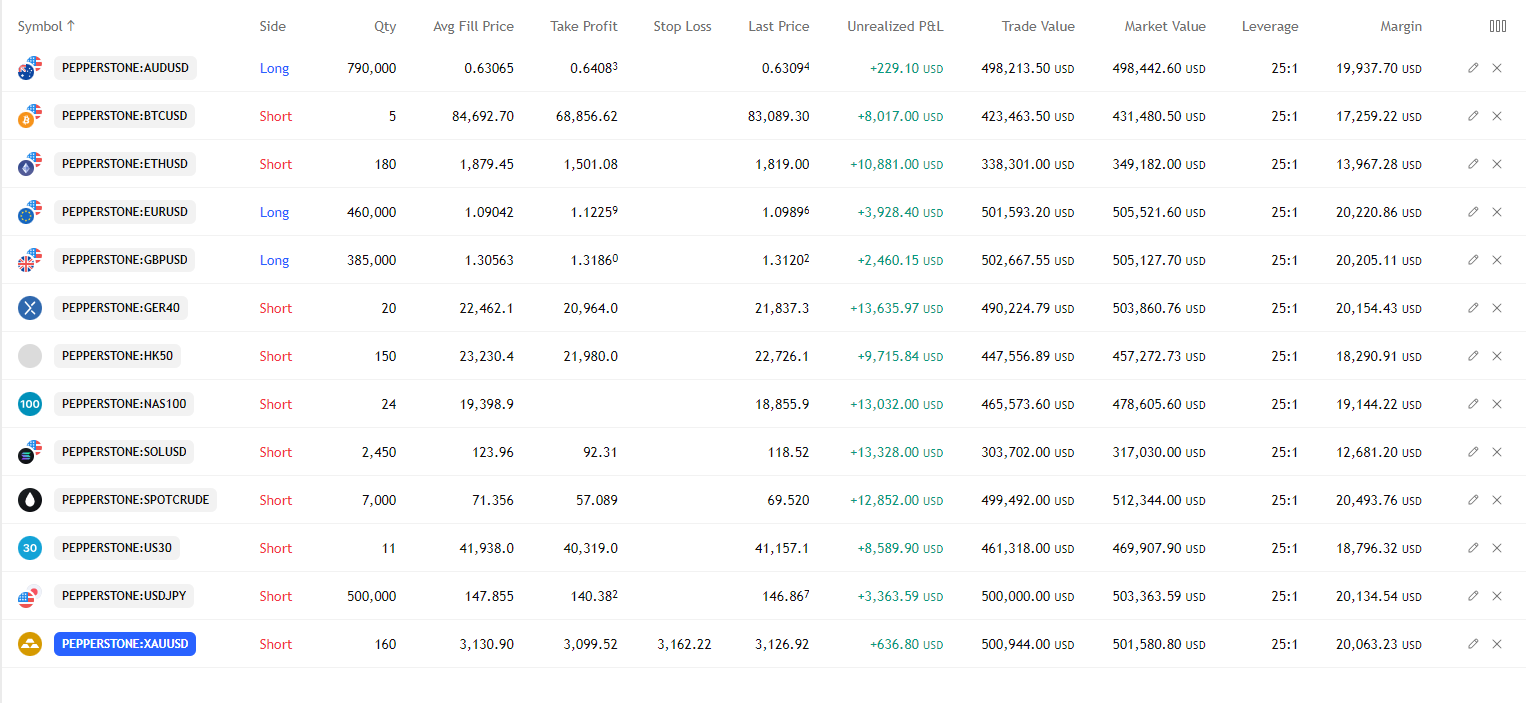
Let me walk you through a realistic Retail Sales scenario on EURUSD this week.
Pre-release (8:00–8:30 AM EST): EURUSD has been consolidating between 1.0850 and 1.0880. Buy stops are sitting above 1.0880. Sell stops are below 1.0850. The daily chart shows price is in a premium zone, suggesting the higher-probability real move is lower.
Release (8:30 AM EST): Retail Sales comes in below expectations. Dollar weakness narrative dominates. EURUSD spikes to 1.0898, sweeping the buy stops above 1.0880. The 1-minute candle closes above range highs.
3 minutes later: A sharp bearish displacement candle forms, dropping price back below 1.0880 and closing around 1.0858. A Fair Value Gap is left between 1.0880 and 1.0872.
Entry: Price retraces into the FVG at 1.0875. You enter short. Stop at 1.0902 (above the sweep high). Target at 1.0810 — the next significant sell-side liquidity pool identified on the 4H chart.
This is not prediction. This is reading the manipulation sequence after it confirms, not before. That distinction is everything.
For a similar framework applied to NFP week setups, this 48-hour NFP liquidity playbook uses the same Phase 1–3 logic and is worth reading alongside this piece.
The Three Mistakes Traders Make on News Week
Mistake 1 — Trading the announcement candle. The first candle after a news release is manipulation by definition. You don't have enough information to know if the move is real yet. Wait for the sweep and displacement sequence to confirm.
Mistake 2 — Ignoring the higher timeframe context. A bullish spike on EURUSD means nothing if the daily chart says price is deep in a premium zone with an unfilled bearish order block overhead. Always frame your bias before the release, not during it.
Mistake 3 — Moving stops to break-even too early. After a news-driven displacement trade triggers, price often retests the FVG entry zone before continuing. Traders who move stops too tight get shaken out of winning trades. Trust your structure. If the sweep and displacement confirmed, give the trade room.
I've seen these three mistakes kill funded account challenges repeatedly. If you're preparing for or currently in a prop firm challenge, you'll want to read the 7 fatal mistakes that kill funded account challenge success — several of them apply directly to news week trading.
Building This Into Your Repeatable Process
The smart money concepts framework isn't magic. It's a systematic way of reading what price is actually doing versus what it appears to be doing on the surface. The Retail Sales manipulation sequence I've described above is repeatable because institutional behavior around liquidity is repeatable. Banks need to fill large orders. Retail stop orders provide that liquidity. This happens every news cycle, on every major economic release.
According to CME Group's educational resources on market microstructure, large institutional participants necessarily impact price as they build and exit positions — understanding this dynamic is fundamental to reading market manipulation sequences accurately.
Your edge is knowing where the stops are, recognizing the sweep when it happens, and waiting for displacement to confirm before entering. That's the entire framework. Simple to understand, difficult to execute under pressure without practice and guidance.
What to Do Next
If you've been trading news releases the old way — watching the number, guessing direction, chasing the spike — this week is your opportunity to apply a completely different approach. Map your pre-release ranges tonight. Identify your higher timeframe bias on the major USD pairs. And tomorrow when the data drops, watch for the three-phase sequence instead of reacting to the headline.
If you want me walking alongside you in real time as you develop this skill, I work with traders at every level through our coaching plans — from Lite at $150/week for traders who need targeted feedback, to Full Mentorship at $1,000 for 4 months for those who want the complete transformation. The students who've committed to learning smart money concepts properly consistently tell me this approach changed not just their results but how they see the market entirely — you can read some of their stories on the student results page.
If you're not sure where to start, the easiest next step is to book a free discovery call and we'll figure out exactly where you are and what you need.
Retail Sales week is here. Smart money already knows what it's going to do. The only question is whether you're going to be the liquidity — or the trader reading the play.
Ready to Get Funded?
Our students pass prop firm challenges in under 60 days with personalized ICT coaching.
Book a Free Discovery CallFree ICT Trading Checklist
The exact checklist I use before every trade. Get it free.